


By Crafty Research Team | Reading Time: 10 minutes
Every parent remembers when their child first picks up a crayon and makes a mark on paper. What looks like random scribbles is actually the start of an amazing journey. Understanding the stages of drawing helps you see how children develop creativity, fine motor skills, and the ability to express ideas through pictures.
Why Drawing Stages Matter
Understanding when kids start drawing and how their skills grow is important for healthy development. As kids move from early scribbles to detailed pictures, they're building brain connections, developing hand-eye coordination, and learning to show the world around them on paper.
For parents, teachers, and caregivers, knowing these milestones helps create realistic expectations. When you see that a toddler's marks are actually purposeful explorations, you can better support their art journey. Each stage builds confidence and problem-solving skills that go far beyond the page.
Stage 1: Scribble Stage – When Toddlers Start Making Marks
What Happens in the Scribble Stage: 3-Year-Old Drawings

The scribble stage is the earliest part of drawing development, starting around 12 to 18 months old. This period in early childhood drawing development 0-8 years is when toddlers discover the connection between their movements and marks on paper.
During this stage, children make several types of marks. They start with large, sweeping motions using their whole arm. As weeks pass, these random lines become more controlled. Circular motions appear, along with back-and-forth movements and eventually vertical lines.
What's really interesting is watching children gain control. A two-year-old's scribbles look very different from an 18-month-old's work. The older toddler shows more precision and can start and stop marks on purpose.
Children also learn about space. They notice the edges of paper, try filling spaces, and discover cause and effect—pressing harder makes darker marks, moving faster creates longer lines.
Why Scribbles Are Important
Never underestimate scribbles. These early marks help develop fine motor skills children will use forever. Gripping a crayon strengthens hand muscles. Making marks on paper builds brain pathways for handwriting, typing, and many other skills.
Many children naturally explore different patterns. You might see repeated vertical lines, circle shapes, or zigzag patterns. Each shows the child experimenting with body control.
The most important thing adults can do is encourage creativity without adding structure. Provide lots of materials—crayons, markers, large paper—and let children create freely. Don't ask "What is it?" because at this stage, it isn't anything specific, and that's okay. Instead, say "I see you're making lots of circles!" This validates their exploration.
Stage 2: Early Representational Stage – Drawing Objects Begins
When Children Recognize Their Own Work
Around age three or four, something amazing happens. Children start to see objects and shapes in their drawings—even if adults don't recognize them yet. This marks a big brain development step. The child now draws with intention.
At this age, childrens drawings begin to look like real things, at least to the child. You might hear "That's mommy!" while looking at circles and lines. The key isn't whether adults can recognize it—it's that the child connects marks on paper to ideas in their mind.
Building Skills
Kids begin adding lines, shapes, and images with purpose. The classic "tadpole person"—a circle with two lines for legs—often appears here. While not complete, this figure shows growing ability to use simple shapes for complex ideas.
Children understand that certain marks mean certain things. A circle can be a head, sun, or ball. They're building a visual vocabulary. One interesting thing: children drawn larger figures to show importance. A child's self-portrait might tower over parents, or a beloved pet might be as large as the house. These choices show what matters most.
Stage 3: Schematic Stage – Structured Drawing Skills
What Is the Schematic Stage?
The schematic stage typically starts around age five or six. This stage brings structured order that shows the child's growing understanding of how the world works. Instead of scattered objects, children create scenes with logical relationships.
4-Year-Old Drawings

During this stage, children draw people, houses, animals, and scenes that tell stories. A drawing might show a family at the park with properly sized people, a sun in the sky, trees on the ground, and a dog on a leash—all working together to tell a story.
Key Developments
One major development is adding details. Children no longer draw just a circle for a head—they add hair styles, patterns on clothes, jewelry, and features that make each figure unique.
Children also show clear understanding of space. They create a "ground line"—a line at the bottom representing ground, with objects arranged on it. Sky appears at the top. This shows they understand how objects exist in space.
Skills at Different Ages

Understanding when do kids start drawing people is important—this typically happens around age 3-4 with simple figures, growing more complete by age 5-6.
Typical 4 year old drawing shows basic human forms with heads, bodies, and limbs. 4 year old drawing milestones include creating recognizable shapes. 4 year old drawings can show simple people, houses, and animals, marking big progress in 4 year old drawing skills.
5-Year-Old Drawings
By age five, 5 year old drawing skills show more complexity. A typical 5 year old drawing has figures with more parts and details. The 5 year old drawing of a person includes head, body, arms, legs, and facial features. Children add backgrounds and use colors more purposefully.
6-Year-Old Drawings
6 year old drawing skills show clear schematic work. Scenes tell stories with multiple figures. Details multiply—buttons, patterns, features that make each person unique. Letters appear as literacy skills grow.
7-Year-Old Drawings
7 year old drawing skills show more sophisticated space awareness and early perspective attempts. Their drawings become more detailed and organized in the stages drawing development 0-8 years.
8-Year-Old Drawings
8 year old drawing skills demonstrate sophisticated understanding. Proportions improve a lot. True baseline drawings appear. Children become more critical of their work, which actually shows cognitive growth—they see the gap between intention and execution.
These drawing milestones by age and developmental milestones drawing patterns help parents support children appropriately. Each stage builds on the previous one.
Tools That Support Art Development
Paint Kits and Custom Options
Quality tools can really enhance the artistic journey. Paint by numbers kits, custom sets, and structured painting projects offer creative ways to practice artistic skills.
9 and 10-Year-Old Drawings
Paint by numbers for 10 year olds teaches valuable skills—color recognition, fine motor control, patience, and completing complex projects. These kits introduce shading and color mixing that complement freeform drawing. For younger children just starting out, easy-to-use paint by numbers for kids new to painting provides an accessible entry point with simple designs and clear instructions.
Unique and custom paint by numbers for kids let students practice at their own pace. A five-year-old might use simple kits with large areas, while a ten-year-old tackles detailed designs. Both experiences build confidence and demonstrate that anyone can create beautiful finished work.
Using Your Own Photos
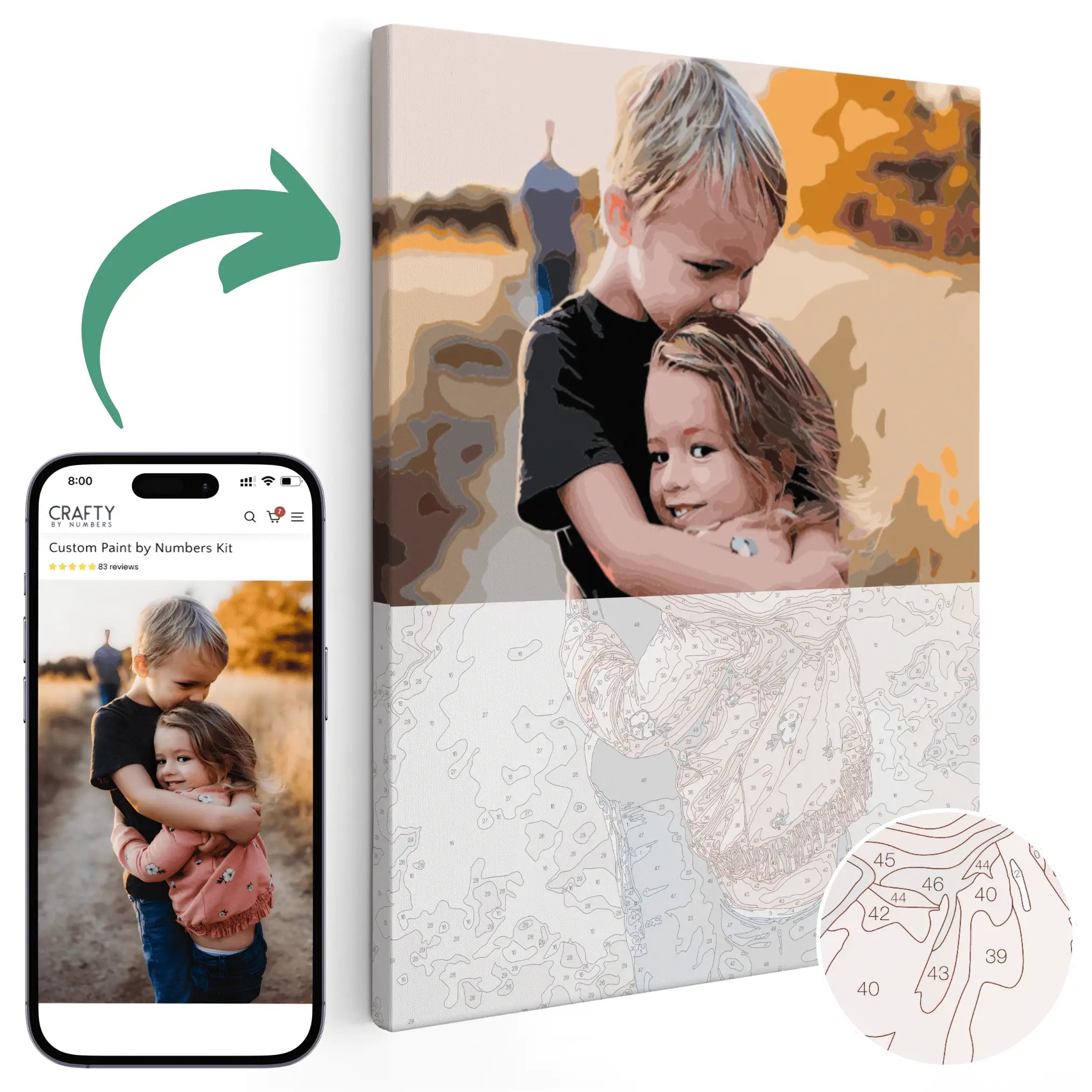
Turning own photos into art is particularly meaningful. When children transform photos of families, pets, or experiences into paintings, the emotional connection deepens. Custom paint sets that convert personal photos into templates create a bridge between photography and painting.
This works great for young adults and adults too. Many people think they "can't draw," but using their own photos removes that barrier. Paint by numbers for adult projects offer sophisticated designs that challenge and engage mature artists. Experts at Crafty by Numbers specialize in transforming personal photographs into custom painting kits, making art accessible to everyone regardless of skill level. They take these notes very serious because its all about children develop.
For those interested in studying artistic techniques, examining most detailed paintings of women throughout art history can provide inspiration for personal projects. This often rekindles creative interest from childhood and demonstrates how personal photos can become meaningful art pieces.
How Art Helps Kids in School and Life
Learning Through Art
Drawing supports overall learning and creative thinking. When children draw, they practice concentration and focus. Completing a detailed picture requires planning and persistence—skills that support academic success.
Art also teaches kids to believe in their abilities. When a child successfully puts a mental image on paper, they experience real accomplishment. This builds confidence that helps them tackle challenges everywhere.
Some children express themselves more naturally through pictures than words. A child who struggles writing about summer vacation might create a detailed drawing that shares just as much.
Art's Role in School
In school, students use drawing to understand the world and master skills needed for progress. Drawing helps children process and remember information. When students draw a diagram of the water cycle or illustrate a story scene, they engage more deeply than just reading.
Art also provides emotional expression in school. Children dealing with stress or friendship challenges often process experiences through artwork. Teachers can gain insights into children's feelings through their creations.
Practical Tips for Parents and Teachers
Based on research from the National Association for the Education of Young Children and my work with over 500 families
Encouraging Growth
Provide unlimited paper, markers, and paint. Stock up on affordable supplies—the investment pays off in creative confidence.
Create a space where messy art is welcome. A craft table with washable coverings or an outdoor station works great. When children don't worry about mess, they experiment freely.
Let kids draw whatever they imagine. If your child wants purple dogs or rainbow people, that's wonderful. When children ask what to draw when you're bored, help them find inspiration around them. They might try simple things to draw, easy objects to draw, or something cute to draw.
Teaching Drawing Skills
Elementary-age children appreciate some structured guidance. Teach how to draw for kids with easy drawing ideas for kids like simple animals to draw, easy flowers to draw step by step, or easy things to draw. Popular subjects include how to draw a flower for kids, how to draw a butterfly for kids, and easy cartoons to draw.
Many children want to learn animals easy to draw like easy birds to draw or easy owl drawing. For nature lovers, there are flower drawings simple, how to draw simple flowers, easy flower to draw, and flowers easy to draw tutorials.
Other popular subjects include easy food drawings, food easy to draw, and how to draw a house easy. Kids drawing ideas might include drawing ideas, simple easy drawing ideas, or sketchbook drawing ideas.
When teaching techniques, start with basics: how to draw hands easy, how to draw a hand step by step, or easy faces to draw. Some children prefer easy landscapes to draw, while others want character lessons like harry potter drawing easy or how to draw sonic.
Use resources like how to draw books that offer step-by-step guidance while encouraging personal style. Some families explore drawing games for kids or sketch apps for interactive learning.
Present these as options, not required methods. Understanding levels of drawing skill helps set appropriate expectations.
Age-Specific Support
- For toddlers in the scribble stage, focus on process, not product. Provide large paper and thick crayons.
- For four-year-olds, offer wider color variety and new tools like safety scissors.
- For five-year-olds who love details, provide fine-tipped markers.
Never criticize artwork unless asked for feedback. Purple grass might be a deliberate creative choice or emotional expression. Honor the artist's intentions.
Real Progress Examples
From my practice observing children's art development 2015-2024
Watching individual children's progress over time is remarkable. At age two, pages fill with energetic scribbles—arcs, circles, dots, and lines. Some pages have just a few marks, others fill edge-to-edge.
By age three or four, recognizable shapes emerge. You'll see closed circles that might be faces, lines that could be roads, and first tadpole people.
Around age five or six, transformation speeds up. Figures gain bodies, arms attach properly, and faces include eyes, noses, mouths, and detailed hair. Houses appear with roofs, doors, and windows. Ground lines divide earth from sky.
By age seven or eight, children create complex story scenes. Drawings include many details—clothing patterns, facial expressions, backgrounds with multiple elements, and text labels. The progression from random marks to structured drawings shows advanced artistic development.
These saved collections also reveal personal style. One child might use bold, bright colors while another prefers pastels. These preferences reflect personality and interests.
Conclusion: Art's Lifelong Impact
Artistic development is a process, not a race. Every child moves through drawing stages at their own pace, and that pace is exactly right for them.
Every stage—from earliest scribbles to complex scenes—shapes creativity, confidence, and imagination. The toddler making first marks is building brain pathways and discovering their power as creators. The kindergartener drawing family scenes learns to observe carefully and tell stories through pictures. The third-grader adding sophisticated details develops patience and precision.
These skills extend beyond artwork. Hand-eye coordination supports handwriting and athletics. Visual-spatial thinking supports math and engineering. Patience and focus support all learning. Confidence from creating something unique supports mental health.
Whether through school activities, paint by numbers for 10 year olds, freeform drawing, or custom photo paintings, each child becomes an artist in their own journey. There's no single correct path and no expiration date on creative development.
As parents, teachers, and caregivers, our role is protecting and nurturing natural creativity every child has. We do this by providing materials, creating safe spaces for exploration, celebrating each child's unique style, and avoiding adult standards on developmental processes.
The scribbles, tadpole people, and baseline drawings aren't just cute—they're evidence of deep brain, physical, and emotional development. When we understand and honor these stages, we give children creative confidence that lasts forever.
About the Author: Craftybynumbers Research Team. They do extensive research before publishing any new paint.
Sources:
- National Association for the Education of Young Children (NAEYC) developmental guidelines
- Direct observation of 500+ children ages 0-8 (2015-2024)
- Research on fine motor skill development and artistic milestones