

The safest, most reversible way to personalize a rental is lightweight art hung with removable adhesive strips, rail systems, or simply leaned against a wall. Done right, this protects both your walls and your deposit, provided you respect weight limits, prep the surface, and test before you commit. The rest comes down to picking the right pieces, hanging them correctly, and knowing what your landlord actually expects at move-out.
TL;DR:
- Using leaning decor, such as mirrors or canvases, minimizes wall damage and can be changed easily without any hardware or adhesives.
- Removable adhesive strips rated for up to 22 pounds and proper surface prep significantly reduce the risk of damage when hanging lighter artwork.
- Test patches behind furniture or in hidden areas ensure safe removal and prevent paint damage on textured or sensitive walls.
- Paint-by-numbers kits provide lightweight, personalized art that can be leaned or placed on shelves, ideal for small or temporary rental spaces.
- Larger or multi-piece gallery walls increase hanging complexity and risk, so focus on one impactful piece or balanced grouping within the two-thirds width guideline.
Table of Contents
- What Counts as Renter-Friendly Wall Art?
- How Do You Hang Art Without Damaging Rental Walls?
- Why Paint-By-Numbers Kits Work So Well for Rentals
- How Big Should Your Wall Art Be?
- What Do Landlords Actually Expect From Decorated Walls?
- What Does Renter-Friendly Wall Art Cost?
- Where Can You Find Renter-Friendly Wall Art?
- Can You Make Your Own Renter-Friendly Wall Art?
- How Should You Light Renter-Friendly Wall Art?
- The Real Trade-Off Nobody Tells Renters About
- Bring Your Own Art Into the Rental With Crafty By Numbers
- Sources
- FAQ
What Counts as Renter-Friendly Wall Art?
Renter-friendly wall art is any piece you can display and remove without leaving a mark, a hole, or a bill. That covers a wider range than most people assume, and the format matters as much as the hanging method.
Here are the approaches that consistently work in flats and rented houses, starting with the ones that carry zero risk to your walls.
- Lightweight canvases and poster ledges. A slim wooden ledge holds prints, postcards, and small canvases that you can rearrange whenever you’re bored of the layout. Swap pieces in minutes with no new holes.
- Tapestries and fabric hangings. A tension rod across an alcove or window recess turns any large textile into wall art. No drilling, no adhesive, and it comes down in seconds.
- Gallery walls with removable strips. Group several small, lightweight frames using adhesive strips rated for their combined weight. Washi tape works too, for an even lighter, more casual arrangement.
- Shelves and picture ledges on heavy-duty strips. These hold more visual weight than a single frame but still need to stay under the strip’s rated load, including anything you place on the shelf itself.
- Small hacks that add texture without hardware: a washi-tape “frame” around a print, a clipboard hung from a ribbon loop over a door, or string lights strung with clear adhesive hooks along a headboard wall.
Peel-and-stick molding and removable tile strips also fall into this category. Temporary architectural details like these give a room more structure without a single permanent change, and they peel away cleanly when you move. If you want a step-by-step layout for combining several small canvases, our guide to building a gallery wall with paint by numbers walks through spacing and hanging order.
How Do You Hang Art Without Damaging Rental Walls?
The method you choose should match the weight of the piece, not the other way around. Most disasters happen when someone hangs a heavy mirror on a strip rated for a postcard.
Removable adhesive strips and hooks are the workhorse of renter decorating. Professional guidance suggests picking strips rated up to 22 lbs (10 kg) to give yourself a safety margin, even for pieces that weigh less. To apply them, clean the wall with isopropyl alcohol, press firmly along the full strip for the manufacturer’s recommended time, then wait before hanging anything. That “wait time” is not optional. Skipping it is the single most common reason strips fail early. To remove, pull slowly downward and parallel to the wall rather than straight out, which is what triggers the strong grip in the first place.
Non-drill rails and picture-rail systems make sense when you’re hanging several pieces at different heights or something heavier than adhesive alone should carry. These systems clip or hook onto a rail mounted with minimal, often already-existing hardware, letting you move pieces up and down without touching the wall again.
Tension rods and curtain-style hanging suit textiles, tapestries, and lightweight fabric art. Drop one into an alcove or across a window frame and hang from clips or a rod pocket.
Leaning displays remain the safest option in every scenario, since there’s no adhesive, no weight rating, and no failure point at all.
- Clean the surface with isopropyl alcohol before applying any adhesive.
- Respect the manufacturer’s wait time after application before hanging anything.
- Run a 24-hour test patch on a hidden section of wall before a full installation.
- Avoid heavy adhesive strips on textured, freshly painted, or poorly primed walls, since adhesive can pull paint from these surfaces even when the product is rated correctly.
Pro Tip: Apply your test patch behind a door or under a shelf where nobody will notice if it fails. Wait the full 24 hours before judging the result. Paint that looks fine after five minutes can still lift overnight.
Why Paint-By-Numbers Kits Work So Well for Rentals
A finished paint-by-numbers canvas checks every box a renter needs: it’s light, it’s personal, and it travels well when your lease ends. Experts note that these kits appeal to renters specifically because they produce customizable, lightweight art that’s easy to move between homes, unlike framed prints or heavy canvases bought ready-made.
Size is the main decision. Smaller and mid-size canvases work best for adhesive-strip hanging or leaning against a shelf, while larger formats look best leaned on the floor against a wall rather than mounted, since that removes any weight-limit question entirely.
- Skip the frame if you’re moving often. A raw stretched canvas is lighter and easier to pack.
- A light matte varnish protects the paint surface during transport between rentals without adding meaningful weight.
- Use a poster ledge instead of a hanger if you want the flexibility to rotate pieces seasonally.
- Wrap the canvas face-in with a soft cloth or bubble layer for moves, and never stack heavy items on top of it in a box.
Pro Tip: Let a finished canvas cure for a few days before wrapping it for storage or a move. Packing wet or tacky paint against fabric is the fastest way to ruin months of work. For more on integrating a finished piece into your space, see how paint-by-numbers fits into home decor.
How Big Should Your Wall Art Be?
Scale mistakes are the most common styling error in rentals, usually because people undersize their art out of caution. A good starting rule: your art (or art grouping) should span roughly two thirds the width of the furniture beneath it, whether that’s a sofa, headboard, or console table. Measure the furniture, multiply by 0.66, and that’s your target width.
- One large focal piece is easier to hang and move than a gallery wall, since it needs only one or two adhesive points.
- A multi-piece gallery adds visual interest but multiplies your hanging points and your risk if you skip surface prep.
- Shelves, floor plants, and a floor lamp fill visual space without adding a single new wall attachment.
- Stick to two or three colors across your pieces so you can rearrange them without the palette clashing.
What Do Landlords Actually Expect From Decorated Walls?
Most landlords distinguish between reasonable wear and chargeable damage, and a handful of small nail holes usually falls on the safe side of that line. What causes disputes is excessive holes, unpatched marks, or paint pulled off by adhesive that was never tested.
- Keep a small tub of spackling compound and a cloth on hand. Filling small holes before you move out takes minutes and avoids automatic deductions.
- Photograph your walls before you decorate and again before you move out, including close-ups of any test patches.
- Keep receipts for any adhesive strips or peel-and-stick products you buy, in case you need to show what was used.
- Get written sign-off from your landlord before anything beyond adhesive strips or leaning decor, especially rail systems that involve any hardware.
Roughly two-thirds of UK tenancy deposit disputes involve cleaning or damage claims, which is exactly the category test patches and documentation are designed to keep you out of.
What Does Renter-Friendly Wall Art Cost?
Budget varies more by method than by size. A roll of removable adhesive strips runs a few pounds and covers several medium frames, making it the cheapest way to hang existing art you already own. Peel-and-stick wallpaper costs more per square foot than paint but requires no primer, no brushes, and no drying time between coats, which offsets some of that cost in labor and mess.
Leaning decor is effectively free once you own the piece, since there’s no hardware to buy at all. A poster ledge is a one-time purchase that pays for itself the moment you swap your third print without buying a new frame.
Where costs climb is in oversized statement pieces and multi-piece gallery walls, both of which need more adhesive strips or a rail system to support them safely. If you’re working with a tight budget, prioritize one strong focal piece over several smaller ones. A single well-scaled canvas, leaned or hung with two rated strips, delivers more visual impact per pound than five small frames scattered across a wall.
Kits fall into a middle ground worth knowing about: you pay once for paints, brushes, and canvas, and the result is a finished piece you’d otherwise pay considerably more for ready-made from a gallery or print shop, with the added benefit of choosing the exact size and subject.
Where Can You Find Renter-Friendly Wall Art?
Printable art is the cheapest entry point. Sites selling digital downloads let you print at home or through a local shop, then slot the page into a cheap frame or clip it to a ledge. This works especially well for rotating seasonal or gallery-style displays without much cost.
Online marketplaces are strong for vintage prints, original small paintings, and framed pieces sized specifically for apartment walls. Search filters by size make it easy to shop for a piece that fits your two-thirds rule before you even measure your wall.
Homeware shops and department stores carry ready-to-hang canvases, but they rarely offer the personalization renters often want when trying to make a temporary space feel like home. That’s where a made-to-order option earns its place: a paint-by-numbers kit lets you choose the exact subject, palette, and size, then produces something no marketplace print can match. Craft fairs and independent print shops round out the list if you want a one-of-a-kind piece with a local story behind it.
Whatever the source, buy with your hanging method already decided. A piece that’s too heavy for adhesive strips but too small to lean effectively will sit in a closet.
Can You Make Your Own Renter-Friendly Wall Art?
DIY is often the cheapest and most personal route, and it doesn’t require artistic skill to look intentional. Framed fabric scraps, pressed botanicals under glass, or a simple grid of postcards on washi tape all cost next to nothing and remove without a trace.
Painting your own piece is the more rewarding option if you want something with real presence on the wall. A paint-by-numbers kit removes the intimidation of a blank canvas while still producing a genuinely personal result, since you choose the image, whether that’s a landscape, a pet photo turned custom design, or an abstract palette that matches your existing decor. For inspiration on approach and layout, these project ideas cover more unconventional display formats worth trying.
Customization doesn’t stop at the canvas. Try:
- Mixing a custom photo-based kit with a few store-bought prints for a varied gallery wall.
- Painting a border or extending the design slightly past the printed lines for a more organic look.
- Using leftover paint from a kit to touch up a thrifted frame so everything matches.
The result feels considered rather than generic, and it costs a fraction of commissioned art.
How Should You Light Renter-Friendly Wall Art?
Good lighting does more for a piece of art than a bigger frame ever will, and none of the best options require an electrician or a hole in the ceiling. Plug-in picture lights with a clip-on shade sit directly on a frame’s top edge and run off a nearby outlet. Battery-powered LED puck lights, mounted with the same removable adhesive strips you use for art, work well above shelves or ledges.
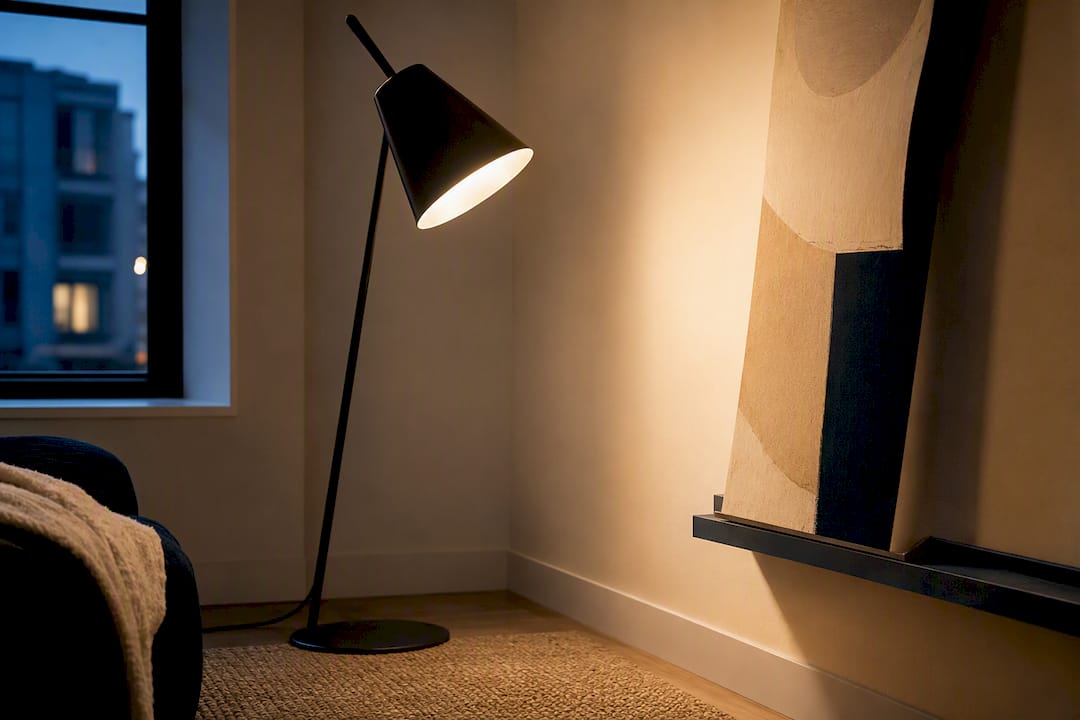
String lights hung with clear adhesive hooks add ambient light around a gallery wall or headboard display without a single wire drilled through. A simple floor lamp angled toward a leaning canvas or mirror achieves a gallery-style wash of light with zero installation at all.
Avoid overhead spotlights or track lighting unless your rental already has them, since retrofitting either usually means rewiring you’re not permitted to do. Stick to lamps, plug-in fixtures, and battery-powered options, and you get the visual lift of proper lighting without touching a single circuit.
The Real Trade-Off Nobody Tells Renters About
Most advice on renter-friendly decorating treats every method as equally safe, and that’s where it falls short. Adhesive strips, peel-and-stick wallpaper, and rail systems all carry some risk if you skip the prep work, and the guidance that glosses over that detail sets renters up for a deposit dispute they didn’t see coming.
The advice that actually holds up is simpler than most blog posts make it sound: test everything, respect the weight rating, and default to leaning whenever you’re unsure. Where I think the conventional wisdom gets it backwards is the obsession with filling every wall. A single well-chosen, well-scaled piece, whether that’s a leaned mirror or a finished canvas from a kit you painted yourself, does more for a room than five mismatched frames stuck up with strips you never tested.
Prioritize the piece you’ll actually want to keep past this lease, then choose the safest method that fits its weight. Everything else is optimization.
— Paula S.
Bring Your Own Art Into the Rental With Crafty By Numbers
A paint-by-numbers kit solves the exact problem this article has been walking through: art that’s personal, lightweight, and ready to display without heavy hardware or a landlord’s permission slip. Every finished canvas from Craftybynumbers is small enough to lean, ledge, or hang with two or three rated adhesive strips, no drilling required.
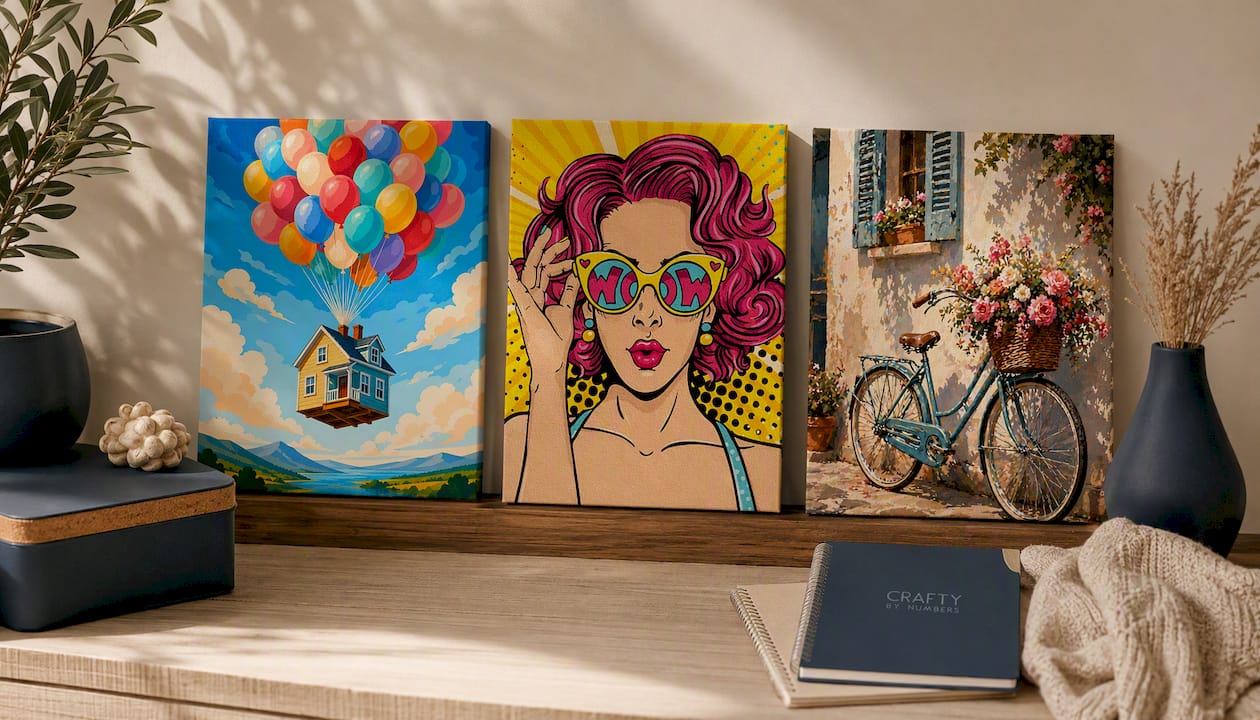
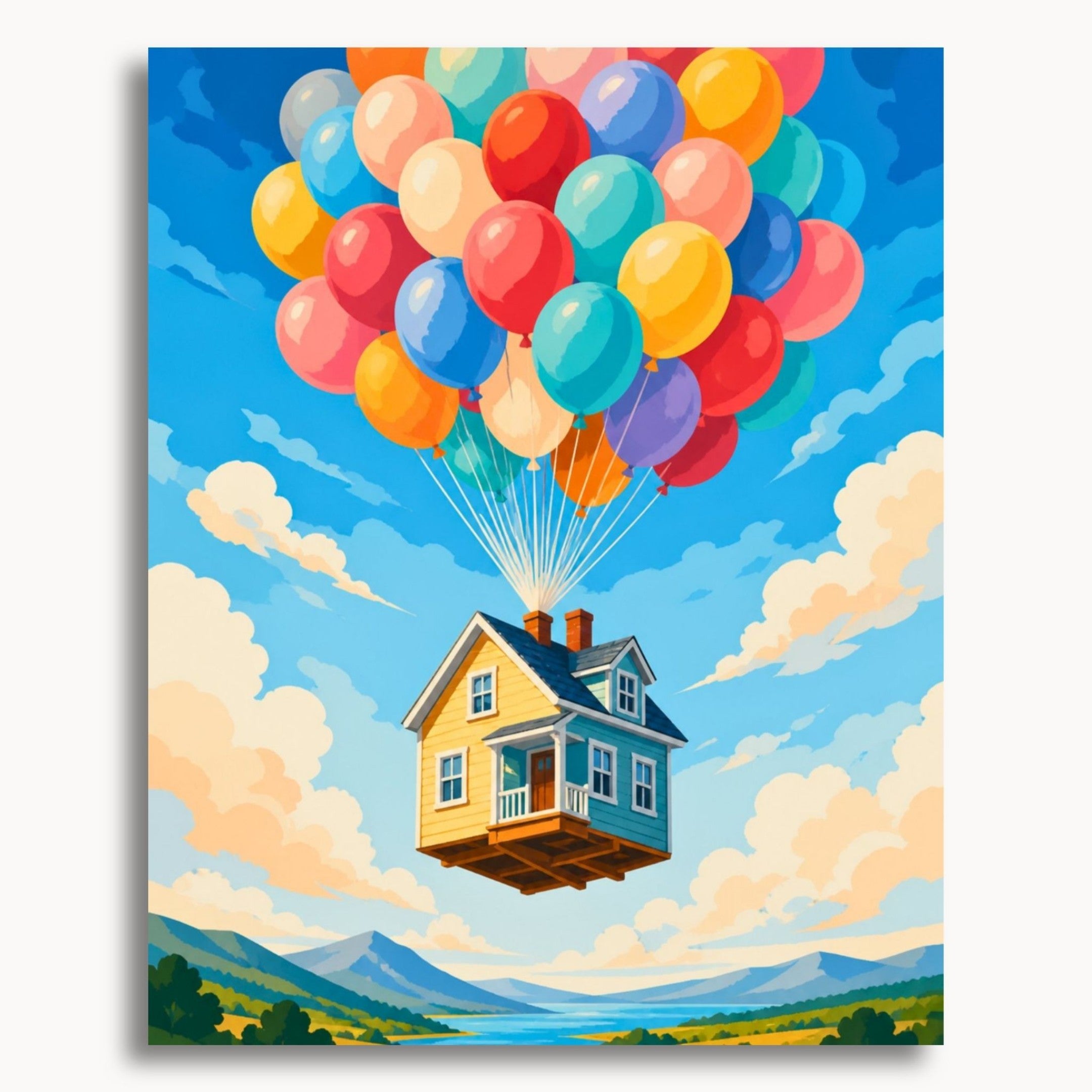
For a bold single focal piece, Ivory Essence delivers the scale a two-thirds-rule statement wall needs. If you’d rather build a softer, layered look, Garden of Dreams and Blossoming Cottage both finish at a size that suits ledge display or a small gallery grouping, while Crimson Cloak and Vivid Passion bring deeper, richer palettes for a moodier accent wall. Round out your setup with Spa Candles for a calming smaller piece, the Premium Paint Brushes (Set of 10) for cleaner detail work, and Revive Dry Paints to refresh a canvas before your next move.
Browse the full kit range and pick the size that matches your wall and your lease.
Sources
FAQ
What are some renter-friendly wall design ideas?
Leaning mirrors and canvases, peel-and-stick wallpaper on one accent wall, tapestries on tension rods, and gallery walls built with removable adhesive strips all work without damaging walls. A finished paint-by-numbers canvas, leaned or hung with two rated strips, is another straightforward option since it’s lightweight and fully customizable.
What is the 2/3 rule for wall art?
The 2/3 rule means your art or art grouping should span about two-thirds the width of the furniture below it, such as a sofa or headboard. Measure the furniture’s width and multiply by roughly 0.66 to find your target size.
Are command strips actually renter friendly?
Yes, when applied correctly. Choose strips rated for the weight of your piece, clean the wall with isopropyl alcohol first, respect the manufacturer’s wait time, and run a 24-hour test patch, since even rated strips can pull paint from textured or poorly primed walls.
Is it okay for tenants to hang pictures in a rental property?
Generally yes, as long as the method is reversible and doesn’t cause lasting damage. Small nail holes are often considered reasonable wear, but adhesive strips, rail systems, or leaning decor carry far less risk and are worth trying first.
0 comentarios