

Personalized art strengthens relationships by turning shared memory and deliberate intent into a visible, everyday anchor. If you want one immediate action: pick a photo that captures a moment only the two of you would recognize, or order a collaborative paint-by-numbers kit and set a date to work on it together. Expressive arts research shows that creative activities open a non-threatening channel for emotions that words often can’t carry. Psychologists describe displayed personal images as memory systems that make meaningful experiences a regular part of the home environment. Craftybynumbers, trusted by 120,000+ satisfied customers, offers kits with pre-printed canvases, high-quality acrylic paints, and detail brushes designed for exactly this kind of shared project.
Table of Contents
- Why does personalized art work so well for couples?
- What types of personalized art fit different relationship goals?
- How do you choose a piece that actually deepens connection?
- How to create a collaborative art project as a couple
- How to present the piece and keep its meaning alive
- What are the most common pitfalls with personalized art gifts?
- Key Takeaways
- Why collaborative art is worth the minor awkwardness
- Craftybynumbers kits: a low-friction starting point for couples
- Useful sources
- FAQ
Why does personalized art work so well for couples?
The role of personalized art in relationships goes beyond decoration. Expressive arts interventions create a non-threatening alternate channel for communication, helping couples express complex emotions and build attunement — the sense of being genuinely understood. An autoethnographic study found increased self-reflexivity, communication, and trust after collaborative art activities, with short-term friction giving way to longer-term gains.
Psychologists use the term “visual anchor” to describe how a displayed personal image keeps a meaningful memory active in daily life. A piece tied to your shared story doesn’t just sit on the wall; it reinforces narrative identity — the ongoing story a couple tells about who they are together. Research from the Society for Personality and Social Psychology confirms that self-relevance is a strong predictor of aesthetic appreciation, even beyond familiarity with the work itself.
A randomized controlled trial on expressive arts therapy with married individuals found significant improvements in both marital empathy and emotional stability, with gains maintained over time. That’s not a small effect.
Four core mechanisms explain why the impact is so durable:
- Nonverbal communication: Art expresses what conversation sometimes can’t, especially around vulnerability or desire.
- Memory anchoring: A displayed piece keeps a shared moment emotionally present rather than archived.
- Ritualizing milestones: Creating or commissioning a piece marks transitions — anniversaries, moves, new chapters — in a tangible way.
- Shared creative experience: Making something together builds attunement through collaboration, not just the finished product.
An AI-mediated drawing study with 20 couples (N = 40) found that guided creative tools can foster self-reflection and partner understanding. Still, participants in separate research reported stronger emotional responses to human-made work, where perceived intentionality matters.
What types of personalized art fit different relationship goals?
| Format | Emotional fit | Effort | Typical timeline | Best use case |
|---|---|---|---|---|
| Handmade (DIY) | High intimacy, imperfection adds meaning | High | A weekend | Anniversaries, personal milestones |
| Commissioned piece | Deep narrative, professional finish | Low (for recipient) | 4–12 weeks | Major milestones, long-distance gifts |
| Photo-based print | Strong memory recall, candid moments | Very low | 1–3 days | Quick gifts, everyday display |
| Paint-by-numbers kit | Collaborative, playful, low-friction | Medium | 1–2 weeks | Date nights, shared projects |
| AI-assisted art | Novel, exploratory, guided reflection | Low–medium | Hours to days | Couples who prefer structured prompts |
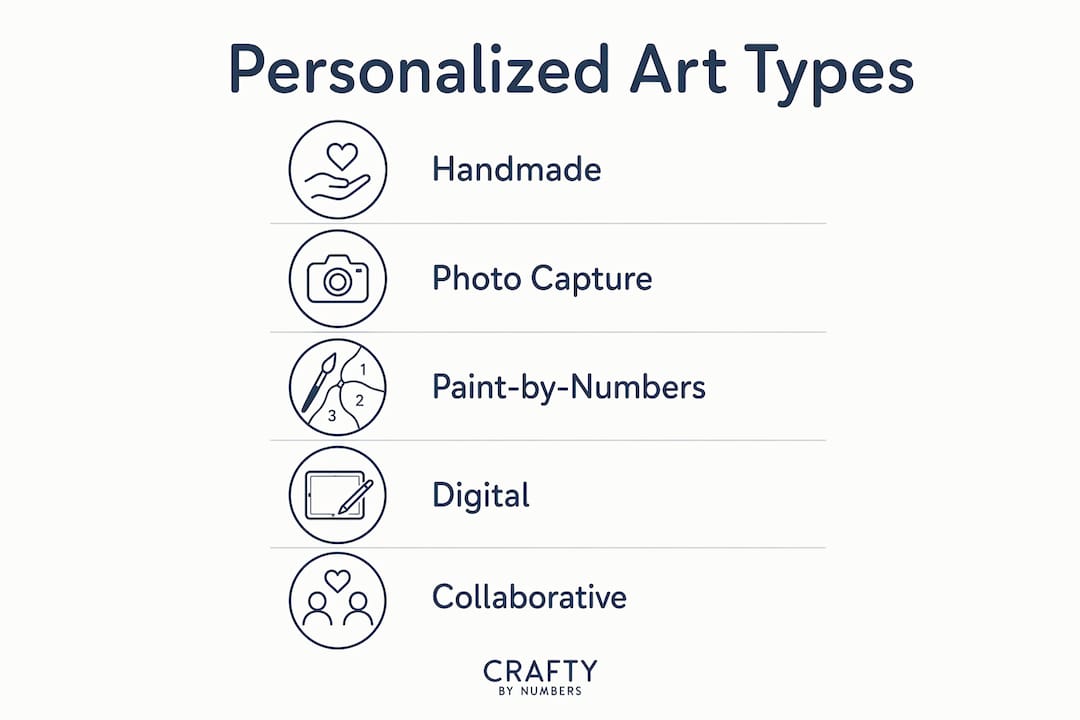
Candid, emotionally authentic moments consistently outperform staged portraits for memory recall — a detail worth keeping in mind when choosing a photo. For milestone-focused pieces like weddings or anniversaries, narrative-driven formats tend to carry the most emotional weight over time.
Paint-by-numbers kits occupy a specific niche: they lower the barrier to entry for couples who don’t consider themselves artists, while the act of painting together generates the shared experience that makes the finished piece meaningful. Cultural context matters too. Some couples prefer private display (a bedroom, a study) over public-facing walls, and in some households, figurative portraits carry different connotations than abstract or landscape imagery. Choosing a format that fits both partners’ comfort with visibility is part of the process.
How do you choose a piece that actually deepens connection?
Choose for symbolic relevance, not technical perfection. A slightly blurry photo of a moment that mattered will outlast a flawless studio portrait every time.
Before you commit to a format or image, work through these questions:
- What specific memory, value, or inside reference does this capture?
- Does my partner want this displayed publicly, or kept private?
- If the piece involves my partner’s image or story, do I have their implicit or explicit consent?
- What’s my realistic timeline — a weekend DIY, a 1–2 week kit, or a 4–12 week commission?
- Am I choosing this for them, or for how I want to see us?
Pro Tip: To gauge your partner’s preferences without spoiling a surprise, ask neutral questions: “Would you rather have art in the bedroom or the living room?” or “Do you prefer bold colors or softer tones?” Their answers tell you what you need to know.
On symbolism: colors carry weight (warm tones read as intimate; cooler palettes feel more contemplative), and specific dates, locations, or motifs embedded in a piece give it layers of meaning that deepen over years. For choosing photos that translate well into custom art, candid shots with natural light and genuine expressions tend to produce the strongest results. Understanding how kits are made can also help you set realistic expectations around timelines and customization options.
How to create a collaborative art project as a couple
Collaborative creation improves attunement and gives both partners ownership of the finished piece. The process matters as much as the result.

Choose your image or concept together. Spend 15 minutes browsing photos or discussing a scene that holds meaning for both of you. Agreement at this stage prevents friction later.
Set the ritual and intent. Decide in advance: this is a date, not a chore. Clear the table, put on music you both like, and agree that imperfection is part of the point.
Allocate roles. With a paint-by-numbers kit, one partner might handle background sections while the other focuses on detail work. This keeps the activity genuinely collaborative rather than one person watching the other paint.
Create. A single session of 90–120 minutes is usually enough to make meaningful progress without fatigue. Kits from Craftybynumbers include a pre-printed canvas, high-quality acrylic paints, and detail brushes, so there’s no prep work beyond opening the box.
Reflect. When you finish or pause, talk about what you noticed — about the process, about each other. This reflection step is what converts a fun activity into a bonding experience with lasting effect.
Pro Tip: Resist the urge to “fix” your partner’s sections. Letting each person’s contribution show in the final piece is what makes it genuinely shared.
How to present the piece and keep its meaning alive
Placement and ritual determine whether a piece becomes a living visual anchor or fades into background decor.
- Visibility vs. privacy: High-traffic areas (living rooms, hallways) maximize daily reinforcement; private spaces (bedrooms, studies) preserve intimacy. Match placement to the piece’s emotional register.
- Sightlines: Hang at eye level for the person who will see it most. A piece you walk past without noticing has lost its function.
- Rotation: As your collection grows, rotate pieces seasonally or around anniversaries so each one gets renewed attention.
- Maintenance: Dust regularly, avoid direct sunlight to prevent fading, and frame pieces properly to protect them for decades.
- Updating: When a piece no longer reflects where you are as a couple, don’t retire it — add to the collection rather than replacing it. The older piece becomes part of the timeline.
Simple rituals keep the meaning active. On your anniversary, spend five minutes in front of the piece and name one thing you remember from when it was made. Repositioning it to a new wall can feel like a fresh start without losing the history.
Pro Tip: Photograph the finished piece and save it with a short note: the date, what you were celebrating, and one sentence about how it felt. That metadata turns the image into a time capsule you’ll be glad you kept.
What are the most common pitfalls with personalized art gifts?
The most frequent failure modes are mismatched aesthetics, violated privacy, and using art to paper over a real problem rather than express genuine feeling.
Mismatched taste is the most common. You love bold, graphic art; your partner prefers soft watercolor tones. The fix is simple: involve them in the style choice, even if the subject is a surprise. Asking “which of these two styles do you prefer?” costs nothing and saves a lot.
Privacy and consent matter more than most people expect. A large portrait of your partner displayed in a shared living space is a decision that affects them. If there’s any doubt about whether they’d want it there, ask before you hang it, not after.
Over-polishing kills authenticity. Emotionally authentic, imperfect moments are stronger memory cues than technically perfect images. Resist the urge to edit every flaw out of a source photo.
Using art to fix a problem is the most serious pitfall. A personalized gift cannot substitute for a conversation that needs to happen. Art works as an amplifier of connection that already exists, not as a repair tool for a relationship under strain.
When a piece misses the mark, the repair is straightforward: acknowledge it, laugh about it if you can, and treat it as data about your partner’s preferences. A misstep handled with humor often brings couples closer than a perfect gift would have.
Pro Tip: For culturally mixed couples, discuss display norms early. What’s considered a warm, personal touch in one cultural context can feel intrusive or overly sentimental in another.
Key Takeaways
Personalized art strengthens relationships by creating visual anchors, opening nonverbal communication channels, and turning shared creative effort into durable emotional memory.
| Point | Details |
|---|---|
| Start with emotional relevance | Choose a candid, meaningful moment over a technically perfect image — authenticity drives memory recall. |
| Use the four core mechanisms | Nonverbal expression, memory anchoring, milestone rituals, and shared creation all contribute to lasting connection. |
| Match format to your goal | Kits suit collaborative date nights; commissioned pieces fit major milestones; photo prints work for everyday display. |
| Placement and ritual matter | A piece displayed at eye level with a simple annual reflection ritual stays emotionally active rather than fading into decor. |
| Craftybynumbers for low-friction projects | Kits with pre-printed canvases, acrylic paints, and detail brushes give couples a structured, beginner-friendly collaborative project. |
Why collaborative art is worth the minor awkwardness
Most couples I’d recommend this to are skeptical at first. The idea of sitting down to paint together sounds either too precious or too messy. What the research actually shows is that the friction is the point. The expressive arts study noted short-term conflict during collaborative projects, but longer-term gains in trust and communication. That’s not a bug — it’s how attunement actually builds.
The couples who get the most out of personalized art aren’t the ones who produce the most polished piece. They’re the ones who stay curious about each other during the process. A paint-by-numbers kit is a surprisingly good vehicle for that: structured enough to reduce decision fatigue, open enough to let personality show through. The finished canvas ends up on the wall, and every time one of you walks past it, you remember the evening you made it. That’s the whole mechanism, right there.
Start small. Pick one image. Set one evening aside.
Craftybynumbers kits: a low-friction starting point for couples
If you want a structured, low-stress collaborative project without sourcing materials or making design decisions from scratch, a Craftybynumbers kit is the most direct path.
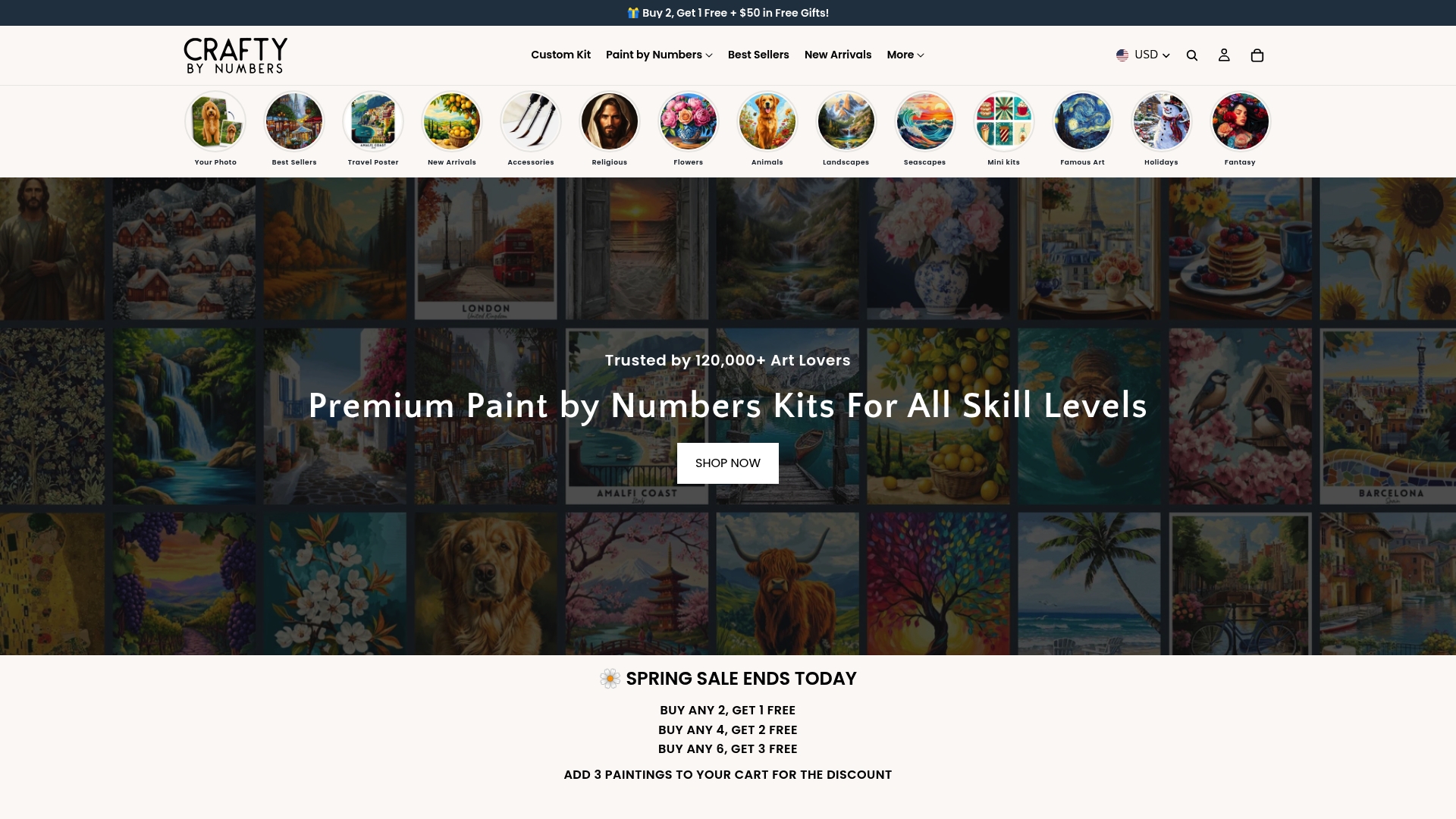
Each kit includes a pre-printed canvas, high-quality acrylic paints, and detail brushes, so the only decision left is which image speaks to you both. With 120,000+ satisfied customers, the quality and ease of use are well established. Five kits worth considering for couples:
- Ivory Essence: Soft, elegant tones that work beautifully as a bedroom or living room anchor.
- Garden of Dreams: A romantic, narrative-rich scene suited to anniversary gifts or milestone moments.
- Blossoming Cottage: Warm and home-focused, ideal for couples building a shared space together.
- Gentle Sakura: Subtle and emotionally resonant, a strong choice for couples who prefer understated display.
- Crimson Cloak: Bold and dramatic, for couples who want the finished piece to make a statement.
Browse the full collection at Craftybynumbers and find the kit that fits where you are right now as a couple. Kits also work as wedding gifts for couples who’d rather receive an experience than an object.
Useful sources
- Drawing Closer: Expressive Arts and Romantic Relationships — Lesley University thesis on collaborative art and attunement; primary source for communication and trust findings.
- Venus and Mars on Canvas (ACM DOI) — User study on AI-mediated drawing for couples; useful for understanding guided creative tools.
- The Psychology of Personalized Art — Accessible overview of visual anchors and narrative identity in home display.
- Machine-Made Artwork Just for You? (SPSP) — Research on self-relevance and aesthetic appreciation; explains why personalized pieces resonate more deeply.
- Expressive Arts Therapy and Marital Empathy (JRPCT) — Randomized controlled trial on expressive arts therapy outcomes for married couples.
- The Power of Personalized Artwork — Practical design commentary on authenticity and emotional resonance in custom pieces.
- 12 Meaningful Ways to Personalize Your Wedding — Practical milestone personalization ideas for couples at major life transitions.
- Artistic Wedding Photography Techniques — Candid storytelling approaches and display as narrative in living spaces.
FAQ
Does personalized art actually improve relationship quality?
Yes. Expressive arts research shows significant improvements in marital empathy and emotional stability, with gains maintained at five-month follow-up in a randomized controlled trial.
Is human-made art more emotionally effective than AI-generated art?
Generally, yes. Participants in multiple studies reported stronger emotional responses to human-made work, where perceived intentionality plays a key role, though self-relevant AI-generated images can approach the same level of appreciation.
What’s the easiest way for couples to create personalized art together?
A paint-by-numbers kit is the lowest-friction option: no design decisions, no sourcing materials. Craftybynumbers kits include a pre-printed canvas, acrylic paints, and detail brushes, and a single session of 90–120 minutes is enough to make meaningful progress.
How do you avoid giving a personalized art gift that misses the mark?
Prioritize emotional authenticity over technical perfection, and check consent before displaying anything publicly. Asking neutral preference questions in advance (color palette, display location) gives you the information you need without spoiling a surprise.
How does personalized art evolve with a relationship over time?
Add new pieces at milestones rather than replacing older ones, so the collection becomes a visual timeline. Simple rituals, like an annual reflection in front of a piece, keep its emotional meaning active rather than letting it fade into background decor.
0 comentarios