

Personalized art kits are custom painting sets built from a photo you choose, converted through digital mapping into a numbered canvas you paint yourself. Understanding how personalized art kits are made reveals a process that blends image processing software, human review, and careful material assembly. Craftybynumbers has served over 120,000 customers using this exact workflow, turning personal photos into structured, paint-ready canvases. The result is a creative experience that feels nothing like buying a generic gift off a shelf.
How personalized art kits are made: the full creation process
Creating a custom painting kit follows six distinct stages. Each stage directly affects the quality of the finished canvas and how enjoyable the painting experience will be.
1. Image selection and optimization
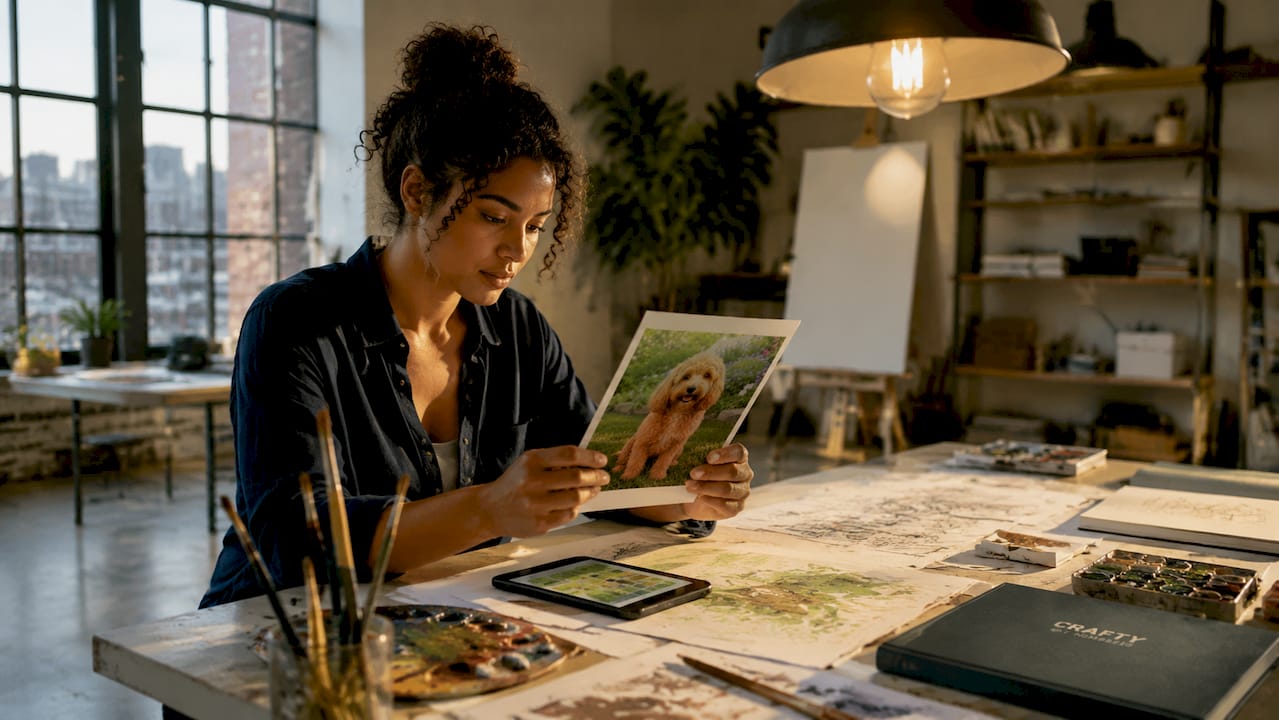
The process starts with your photo. Makers look for images with strong contrast, clear subjects, and good lighting. Dull or blurry photos get adjusted for brightness, sharpness, and composition before any digital work begins. A well-prepared image produces cleaner color zones and a more satisfying painting result.
2. Digital mapping into color zones
Software segments the optimized image into numbered color zones. Each zone corresponds to a specific paint color. Custom paint by numbers kits typically include 24 to 50 or more acrylic paint colors, each matched to a numbered zone on the canvas. More colors mean finer detail and a more realistic final painting.
3. High-resolution canvas printing
The mapped design gets printed onto canvas at high resolution. Numbers appear inside each color zone so you always know which paint to apply. The print quality at this stage determines how readable the zones are and how cleanly the finished painting looks when complete.
4. Paint preparation and numbering
Each paint color gets mixed to match the digital map exactly, then poured into a numbered pot. Paint preparation is one of the most labor-intensive steps. A mismatch between pot number and canvas number ruins the painting experience, so accuracy here is non-negotiable.
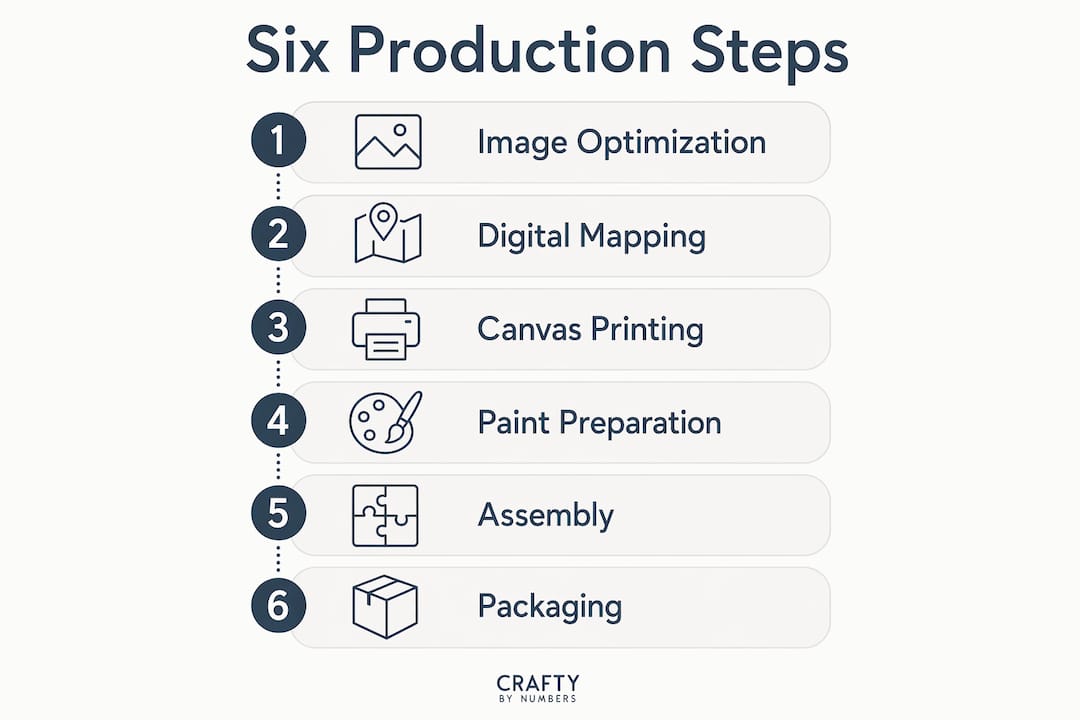
5. Assembly and quality control
Kits are assembled with the printed canvas, numbered paint pots, and detail brushes. Every kit undergoes quality inspection before packaging to confirm all components are present and correctly labeled. A missing paint pot or misprinted canvas gets caught at this stage, not after the kit reaches you.
6. Packaging and delivery
Completed kits are packaged to protect the canvas from damage in transit. Some makers include printed instructions or reference photos of the original image. A 16" x 20" kit typically takes 20–40 hours to complete, so the packaging also sets expectations for the time commitment ahead.
Pro Tip: Request a digital preview of your mapped canvas before the kit goes to print. Reviewing the numbered zones lets you catch any color or composition issues before they become permanent.
How do personalized kits compare to standard art gift kits?
The difference between a personalized and a standard kit is not just the image. It runs through every layer of the product.
Standard kits use stock designs, mass-produced canvases, and pre-mixed paint sets that ship identically to every buyer. Personalized kits start from scratch with your image, which means the canvas, the color palette, and the number of paint zones are all built specifically for that photo. A standard kit of a generic landscape uses the same 24 colors for every customer. A personalized kit of your dog might require 38 colors to capture the exact coat pattern.
The emotional difference is just as significant. Personalized kits provide higher perceived value than mass-produced gifts because they involve active creative engagement. The recipient does not just receive an object. They spend hours creating something meaningful from a memory they already own. That active participation is what makes personalized kits a stronger gift choice for birthdays, anniversaries, and family milestones.
| Feature | Personalized kit | Standard kit |
|---|---|---|
| Image source | Your own photo | Stock design |
| Color palette | Custom matched to your image | Fixed set |
| Paint count | 24–50+ colors | Typically 24 colors |
| Emotional value | High, tied to personal memory | Generic |
| Production time | Made to order | Mass produced |
| Skill level suitability | All levels, guided by zones | All levels |
Key differences at a glance:
- Personalized kits require individual image processing for every order.
- Standard kits ship faster because no custom production step exists.
- Personalized art transforms a passive gift into an active creative experience.
- Custom color matching produces a more accurate likeness of the original photo.
What role do software, AI, and manual review play?
Automated software handles the heavy lifting of image segmentation, but it does not work alone. The hybrid approach of software plus human review is what separates a high-quality kit from a frustrating one.
AI mapping software is specifically trained for face recognition to maintain likeness while simplifying images for painting. That training matters because faces are the hardest part of any portrait kit to get right. Eyes, in particular, require accurate zone placement or the painted result looks nothing like the subject.
Human reviewers step in after the automated pass. They check facial features, fine details, and edge zones that the algorithm misread. Manual corrections after automated mapping are especially critical for facial features and intricate details that AI algorithms often misinterpret. Skipping this review step is the most common reason a finished painting looks “off.”
The digital preview stage is where you, as the customer, become part of quality control. Reviewing a digital preview before printing is a best practice for customer satisfaction that many makers overlook in favor of faster automation. Approving the preview means you see the exact numbered layout before it becomes a physical canvas.
Pro Tip: When uploading your photo, choose an image where the subject fills most of the frame. Busy backgrounds force the software to create more zones, which can make the painting harder to complete.
Key quality checkpoints in the process:
- Automated segmentation creates the initial color zone map.
- AI face recognition preserves likeness in portrait kits.
- Human reviewers correct errors in eyes, hair, and fine edge details.
- Customer approval of the digital preview locks in the final layout.
- A second quality check during assembly confirms paint numbers match canvas zones.
How do personalized art kits enhance creative expression?
Personalized kits do more than produce a painting. They create a structured creative experience that works for beginners and experienced painters alike.
The numbered zone system removes the intimidation of a blank canvas. You always know what color goes where, which means you can focus entirely on the act of painting rather than the decisions behind it. Paint Me Like, one of the well-known names in custom kits, balances simplicity and detail specifically to support beginners and experienced painters in equal measure. That design philosophy shows up in how zones are sized and how colors are grouped.
The stress relief benefit is real and well documented. Personalized kits offer stress relief, mindfulness benefits, and shared enjoyment across age groups. Painting a numbered canvas requires focused attention on a single small zone at a time. That narrow focus is exactly the kind of present-moment engagement that reduces anxiety. It is the same mechanism behind adult coloring books, but with a more personal and rewarding result.
Kits also work well as shared activities. A family painting night built around a custom photo of a family pet or vacation memory gives everyone a role in creating something they will want to display. Diamond painting kits follow a similar process, involving design digitization, canvas printing, and quality control, and they appeal to the same audience for the same reasons.
Popular kit types for hobbyists include:
- Custom paint by numbers: Photo converted to numbered acrylic painting zones.
- Diamond painting: Photo converted to a grid filled with resin diamonds.
- Watercolor kits: Simplified image outlines with watercolor paint sets.
- Sketch-to-paint kits: Lightly printed pencil outlines for mixed-media work.
Key Takeaways
Personalized art kits are made through a six-step process combining digital image mapping, AI-assisted segmentation, manual review, high-resolution canvas printing, and careful paint assembly to produce a unique, photo-accurate painting experience.
| Point | Details |
|---|---|
| Six-step production process | Image optimization, digital mapping, canvas printing, paint prep, assembly, and quality control all shape the final kit. |
| AI plus human review | Automated mapping handles segmentation, but human reviewers correct facial features and fine details the software misses. |
| Custom vs. standard kits | Personalized kits use 24–50+ matched colors and a unique canvas; standard kits ship the same product to every buyer. |
| Digital preview matters | Approving a digital preview before printing is the single best way to catch errors before they become permanent. |
| Creative and emotional value | Active painting from a personal photo creates stronger emotional connection than any passive gift. |
Why the technology behind these kits deserves more credit
Most hobbyists assume a personalized kit is just a photo with numbers slapped on it. After years of working with paint-by-numbers projects and watching how Craftybynumbers approaches custom kit production, I can tell you that assumption undersells the process significantly.
The part that surprises people most is how much human judgment still drives quality. The AI does the fast work. A trained human reviewer does the accurate work. That combination is not a workaround for imperfect software. It is the correct approach, and makers who skip the human review step produce kits that disappoint. You can usually tell the difference the moment you see the digital preview: a well-reviewed map has clean zone edges and recognizable faces. A purely automated one looks muddy around the eyes and hairline.
My advice for hobbyists choosing a custom kit is simple. Ask whether the maker offers a digital preview. If they do not, that tells you something about their quality process. The paint numbering system also matters more than most buyers realize. A kit with 40 well-matched colors will produce a far more satisfying result than one with 20 approximate colors, even if the canvas size is identical.
Personalized kits are one of the few creative products that get better the more you understand how they are made. Knowing the process makes you a smarter buyer and a more patient painter.
— Paula S.
Craftybynumbers custom kits: where the process meets the painting
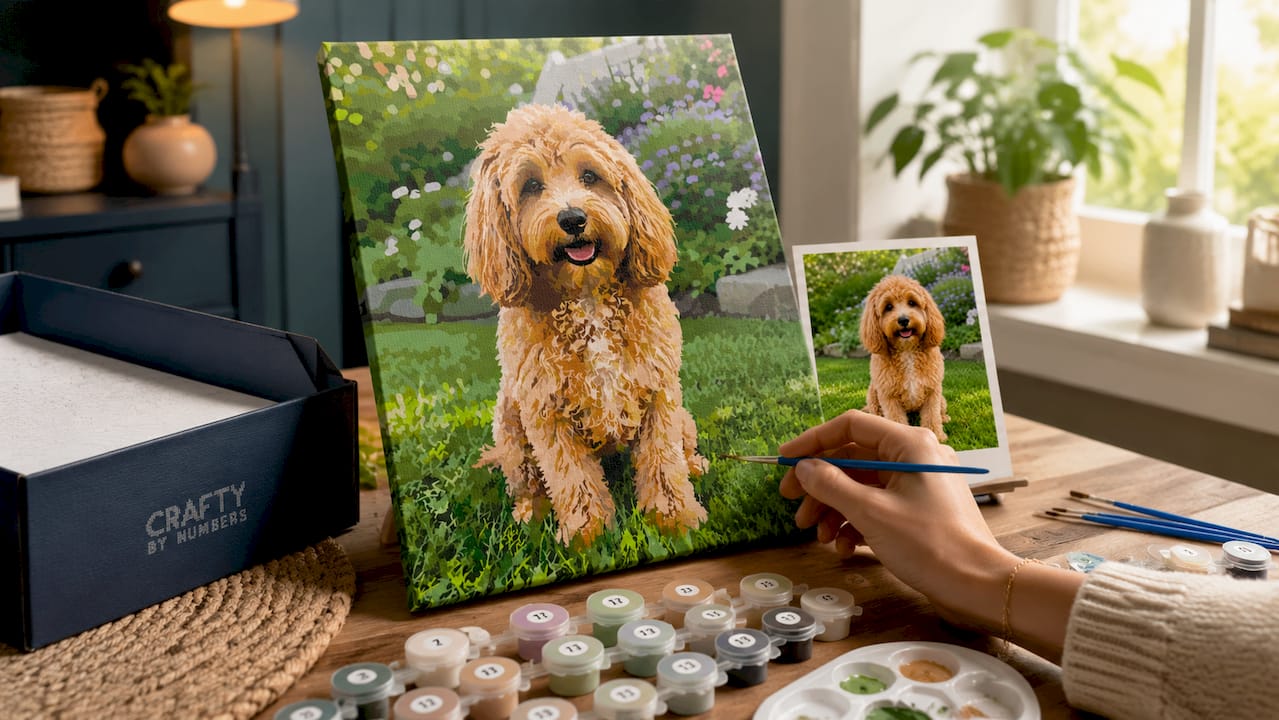
Craftybynumbers builds every custom paint by numbers kit from your photo using the exact process described above: image optimization, digital zone mapping, high-resolution canvas printing, and numbered acrylic paints matched to your image.
Each kit includes a pre-printed canvas, high-quality acrylic paints, and detail brushes selected for the complexity of your design. Craftybynumbers focuses on vibrant color palettes and detailed artwork, so the finished painting is worth displaying. With over 120,000 satisfied customers, the brand has refined its process to balance ease of use with a result that genuinely looks like your photo. If you are ready to turn a favorite memory into a painting, the beginner-friendly kits at Craftybynumbers are a strong place to start.
FAQ
What is the first step in making a personalized art kit?
The first step is image optimization. The chosen photo is adjusted for brightness, contrast, and composition before digital mapping begins.
How many paint colors does a personalized kit typically include?
Most personalized kits include 24 to 50 or more acrylic colors, each mixed and numbered to match the specific zones on your custom canvas.
Why do personalized kits require human review if software does the mapping?
AI mapping software often misreads facial features and fine details. Human reviewers correct these errors to ensure the painted result accurately resembles the original photo.
How long does it take to complete a personalized paint by numbers kit?
A standard 16" x 20" kit takes approximately 20–40 hours to complete, depending on the complexity of the image and the number of color zones.
Are personalized art kits suitable for beginners?
Yes. The numbered zone system guides painters of all skill levels, removing the need for freehand drawing or color mixing decisions during the painting process.
0 comments