

What is paint by numbers difficulty level?
Paint by numbers difficulty level measures how challenging a kit is to complete, based on three core factors: the number of colors included, the size of each numbered section on the canvas, and the complexity of the subject being painted. These three variables work together to determine how much time, patience, and brush control you’ll need.
Most kits fall into three tiers:
- Easy: Few colors, large sections, minimal fine detail. Suitable for children with some adult help.
- Medium: Moderate color count, smaller sections, more subject detail. A solid starting point for beginners.
- Advanced: Many colors, tiny sections, intricate subjects requiring prior experience and steady hands.
Difficulty also shapes how long a project takes. Simpler kits can be finished in a single session, while advanced ones often stretch across multiple weeks. Getting the level right from the start makes the difference between a relaxing hobby and a frustrating one.
Table of Contents
- What factors actually determine how hard a kit is?
- How to match difficulty to your skill level and goals
- What expert experience tells us about difficulty and enjoyment
- Common challenges at each difficulty level
- Craftybynumbers kits for every skill level
- Key Takeaways
- FAQ
What factors actually determine how hard a kit is?
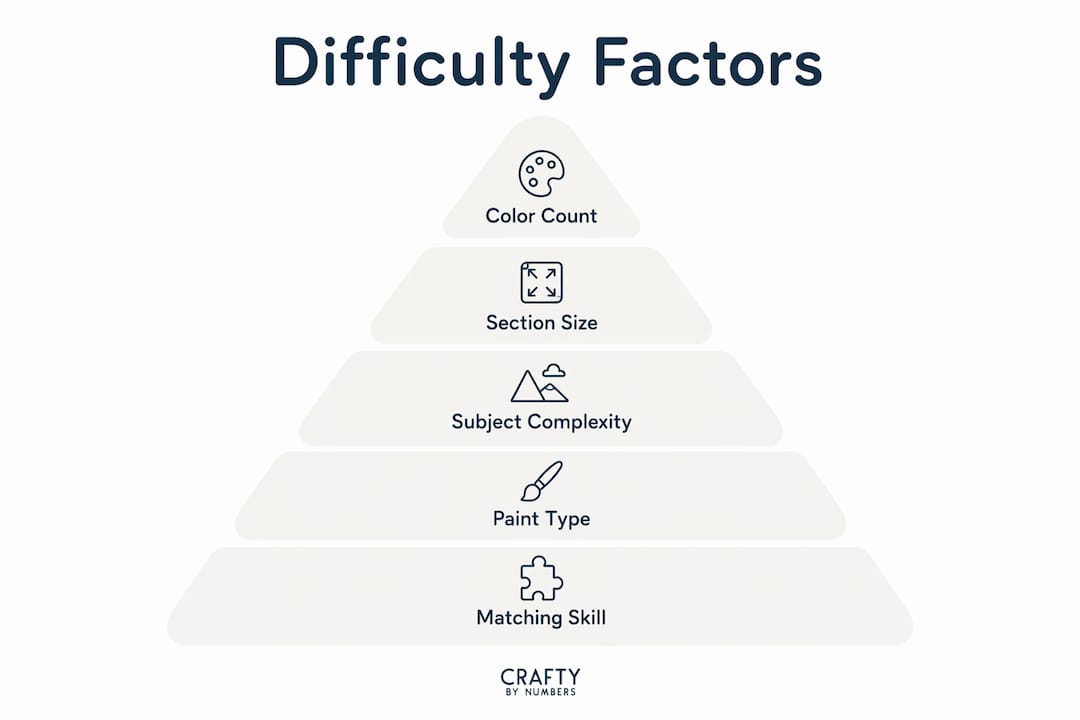
Color count
Color count is the most immediate signal of difficulty. Fewer colors simplify the process; more shades push you toward greater realism and more complex blending decisions. Beginners typically do best with kits that have a relatively low number of colors. Experienced painters can handle more without losing their footing.
Key color count ranges:
- Beginner friendly kits have relatively few colors, making them fast to complete
- Intermediate kits offer a moderate number of colors, good for building confidence
- Advanced kits include many colors and reward patience and planning
Section size
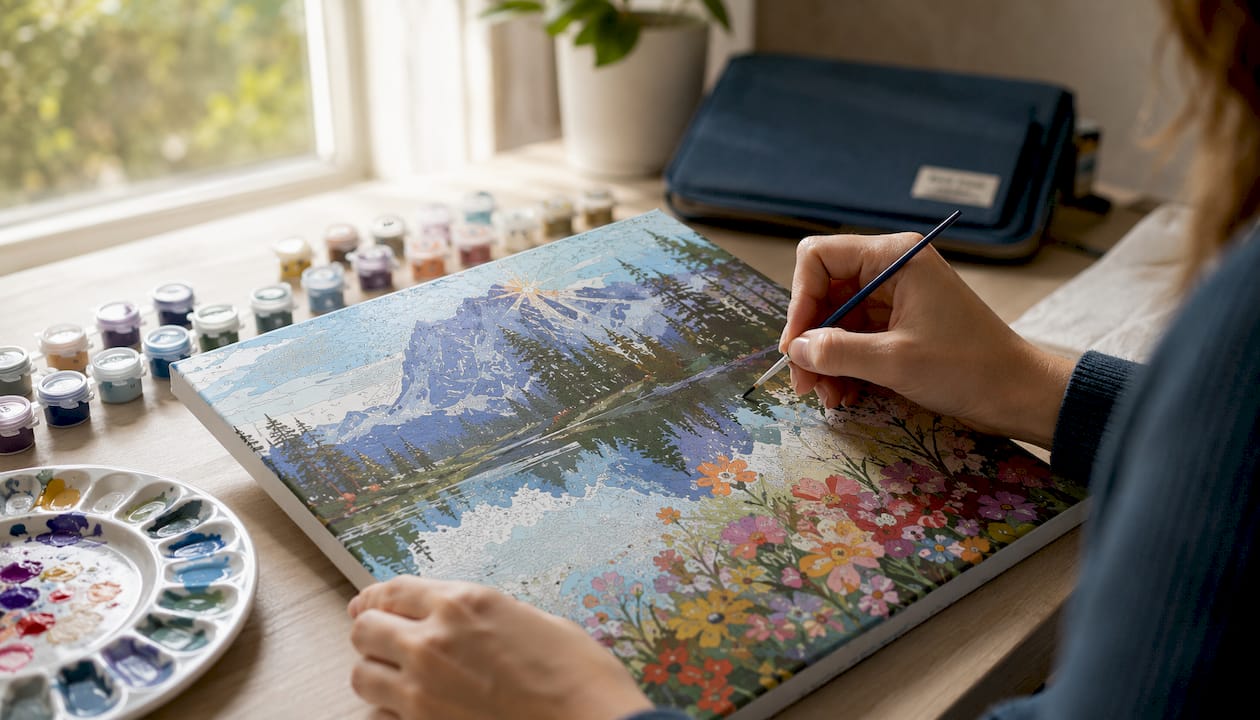
Smaller sections demand more precision. A large, open area of sky is forgiving; a cluster of tiny numbered cells in a portrait’s shadow requires a steady hand and a fine brush tip. Finer detail raises both difficulty and time commitment in ways that color count alone doesn’t capture.
Subject complexity
A mountain landscape with broad color fields reads easier than a vintage car with chrome reflections and layered shadows. Subjects with overlapping elements or intricate features require advanced planning and brush control beyond what the color count suggests. This is why two kits with identical color counts can feel completely different to paint.
Paint type
Pre-mixed paints remove one variable entirely. Mix-your-own kits add a layer of skill, since getting the right shade depends on your eye and your technique. This factor matters less than section size or color count, but it’s worth checking before you buy, especially if you’re new to acrylics.
How to match difficulty to your skill level and goals
The right difficulty level isn’t the hardest one you can technically finish. It’s the one that keeps you engaged without tipping into frustration.
For beginners: Start with kits under 20 colors and large, clearly defined sections. The beginner’s guide to easy art projects from Craftybynumbers is a practical place to orient yourself. Subjects like simple landscapes or bold floral designs give you early wins that build real confidence.
For kids: Parents consistently choose easy kits with large sections and minimal complexity. The goal is enjoyment and a sense of accomplishment, not technical precision. Choosing a subject the child actually loves, an animal, a favorite scene, matters as much as the difficulty rating.
For casual hobbyists: Medium difficulty hits the sweet spot. You’re challenged enough to stay interested but not so overwhelmed that the canvas sits unfinished on a shelf.
For experienced painters: Advanced kits with 40+ colors and fine detail sections are where the craft gets genuinely satisfying. Kits like the Snow Sunset Mountain or the Vintage Car offer the kind of layered complexity that rewards multiple sessions and careful technique.
Pro Tip: Move up one difficulty tier only after you’ve completed two or three kits at your current level. Jumping too fast is the most common reason painters abandon the hobby.
Progression tips:
- Finish at least two kits at your current level before stepping up
- Try a medium kit with a subject you find visually interesting, not just technically manageable
- Use a fine-tipped brush for small sections even when the kit doesn’t require it; it builds control faster
What expert experience tells us about difficulty and enjoyment
Niche paint-by-numbers specialist Paula S. puts it plainly: choosing a kit that’s too easy leaves you bored, while one that’s too hard leaves you defeated. The goal is to land in the middle, where the work feels absorbing.
That description maps almost exactly onto what psychologist Mihály Csíkszentmihályi called flow state): a condition of full absorption where challenge and skill are in balance. Paint by numbers is one of the few hobbies that lets you engineer that balance deliberately, by simply choosing the right kit.
The therapeutic angle is real, too. Art-making links to reduced anxiety and enhanced cognitive engagement, and research from Drexel University found that art activity lowers cortisol levels regardless of skill level. When difficulty is well-matched, the stress-relief benefits compound: you’re absorbed, not anxious, and the finished piece gives you something concrete to feel good about.
Craftybynumbers reports over 120,000 satisfied customers, and the pattern holds across skill levels: painters who choose appropriately challenging kits are the ones who come back for more.
Common challenges at each difficulty level
Every tier has its own friction points. Knowing them in advance saves a lot of frustration.
Easy kits: The challenge here is actually boredom. Large sections fill quickly, and if the subject doesn’t interest you, the project can feel mechanical. Kids sometimes lose focus before finishing. Choosing a subject with genuine personal appeal solves most of this.
Medium kits: Color management becomes the main obstacle. With 20–39 colors, keeping track of which paint goes where requires attention. Painters sometimes mix up similar shades, especially in low light. Working in a well-lit space and capping paint pots immediately after use prevents most mistakes.
Advanced kits: Tiny sections are the real test. A kit like Moraine Lake with its layered water reflections and mountain detail demands patience and a fine brush. The most common error at this level is rushing, applying paint before an adjacent section dries, which muddies the edges. Working in small zones and letting each area dry fully before moving on keeps the detail clean.
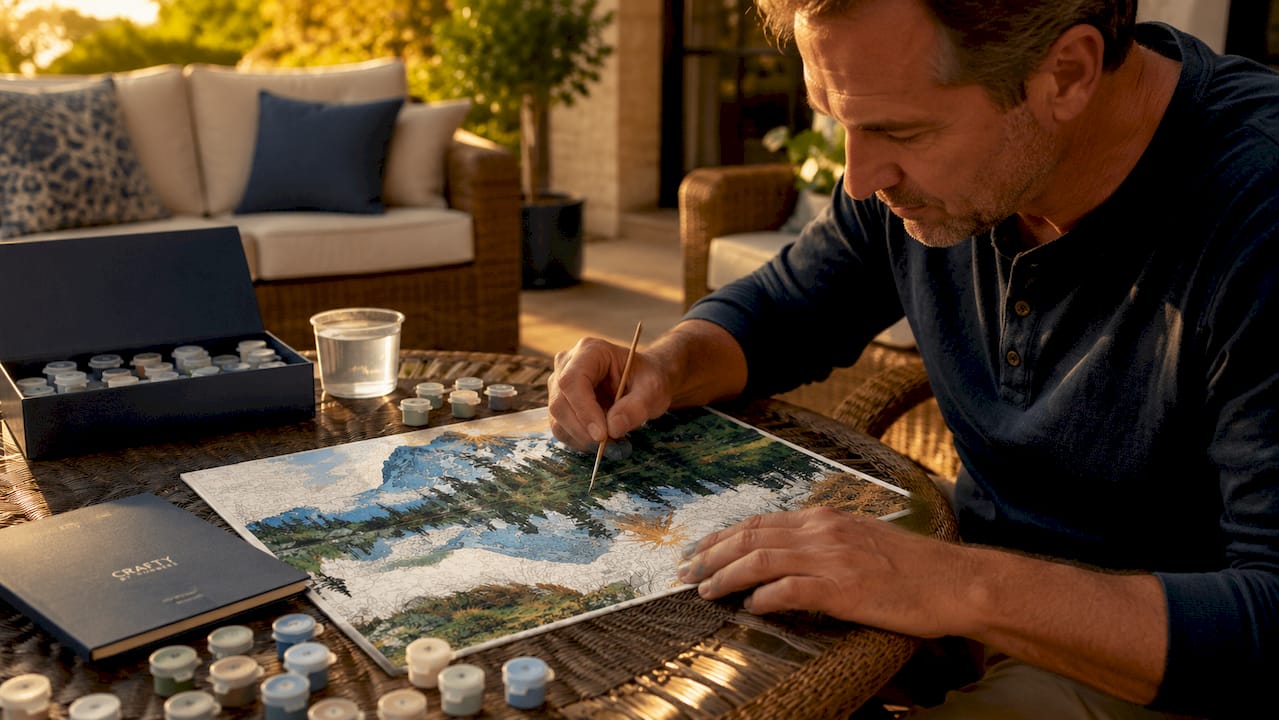
Across all levels, covering numbers completely and applying two thin coats rather than one thick one produces a cleaner result. That’s true whether you’re painting a simple floral or a complex mountain scene.
Craftybynumbers kits for every skill level
Picking the right kit difficulty is half the work. Finding a kit worth finishing is the other half.
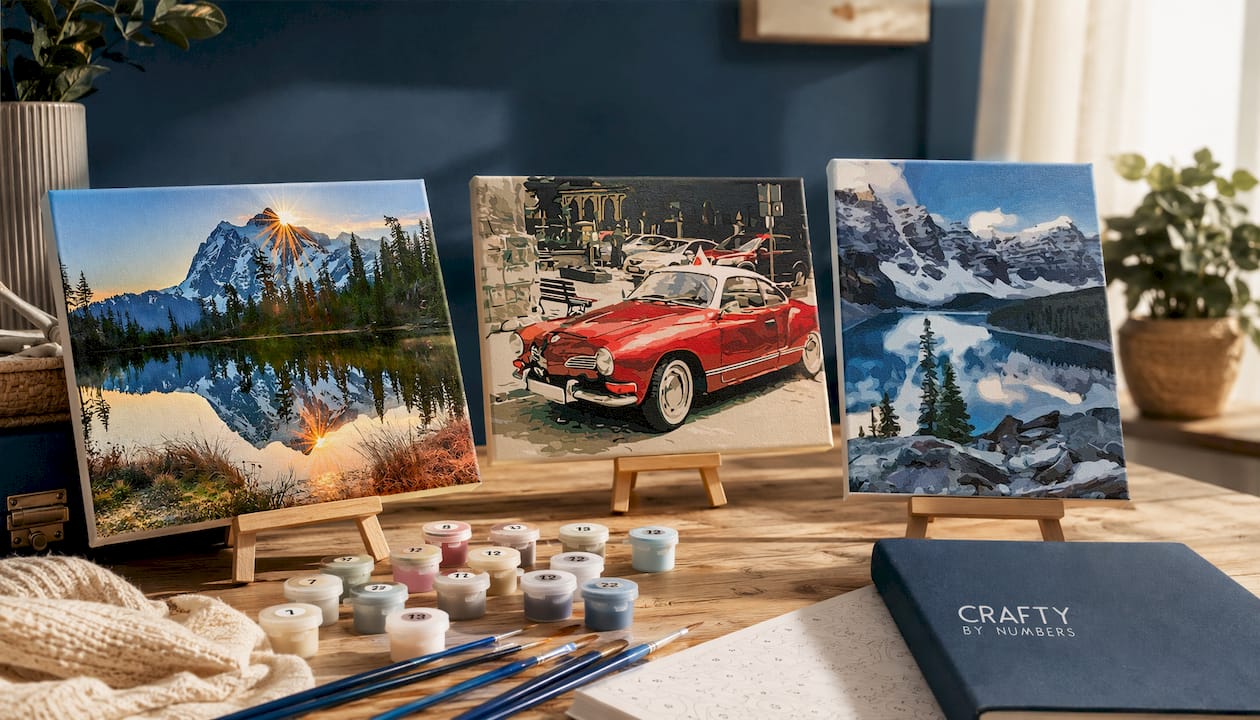
Craftybynumbers designs kits across the full difficulty range, from large-section beginner canvases to detailed advanced scenes with vibrant, pre-mixed acrylic palettes. Every kit ships with a pre-printed canvas, quality brushes, and all the paints you need, so the only variable is how much challenge you want. The Snow Sunset Mountain suits painters ready for layered color work. The Vintage Car rewards anyone who wants fine detail and a showpiece result. For a middle-ground challenge with stunning scenery, Moraine Lake delivers both. Browse the full collection at Craftybynumbers and filter by difficulty to find the kit that fits where you are right now.
Key Takeaways
Paint by numbers difficulty level is determined by color count, section size, and subject complexity, and matching that level to your skill is what makes the hobby genuinely enjoyable.
| Point | Details |
|---|---|
| Three core difficulty factors | Color count, section size, and subject complexity together determine how challenging a kit is. |
| Beginner color range | Kits under 20 colors are best for beginners; experienced painters can handle 40 or more. |
| Completion time varies | Simpler kits finish in a single session; advanced kits often require multiple sessions over weeks. |
| Flow state and stress relief | Art-making lowers cortisol levels and promotes flow when difficulty matches your current skill. |
| Craftybynumbers range | Craftybynumbers offers kits across all difficulty levels, from beginner canvases to detailed advanced scenes. |
FAQ
How difficult is paint by numbers?
Difficulty varies by kit. Easy kits suit children and absolute beginners, medium kits work well for casual hobbyists, and advanced kits are best for painters with prior experience handling fine detail and larger color counts.
Is painting by numbers good for the brain?
Yes. Research shows art-making reduces anxiety and supports cognitive engagement, and paint by numbers is particularly effective because the structured format lets you reach a flow state without needing prior artistic training.
How long does it take to complete a paint by numbers?
Simpler kits can be finished in less than a day, while advanced kits with many small sections typically take multiple sessions spread over several weeks, depending on how much time you paint each sitting.
What color count should a beginner choose?
Beginners do best with kits under 20 colors, which keep the process manageable and let you build brush control before tackling more complex palettes.
0 comentarios