

Paint by numbers is a structured art activity that reduces stress by lowering cortisol, activating the parasympathetic nervous system, and guiding the mind into a calm, focused state. No prior art skill is required. The paint by numbers stress relief benefits are backed by clinical research, embraced by art therapy programs at institutions like the Cleveland Clinic, and increasingly recommended by wellness professionals for adults seeking a low-pressure creative outlet. This article covers the science, the setup, and a practical approach to making paint by numbers a real part of your mental health routine.
How paint by numbers reduces stress and promotes relaxation
Forty-five minutes of creative activity significantly reduces cortisol in 75% of participants, regardless of skill level. That finding, from a 2016 study published in Art Therapy, means you do not need to be a trained artist to get measurable physiological relief from painting.
The reason paint by numbers works so well is the structure itself. Dr. Gina Sam, a gastroenterologist who studies the gut-brain connection, notes that paint by numbers eliminates cognitive load by removing creative decision-making entirely. You are not choosing colors, composing a scene, or worrying about technique. You simply match numbers to paint. That simplicity is what makes flow state accessible to everyone.
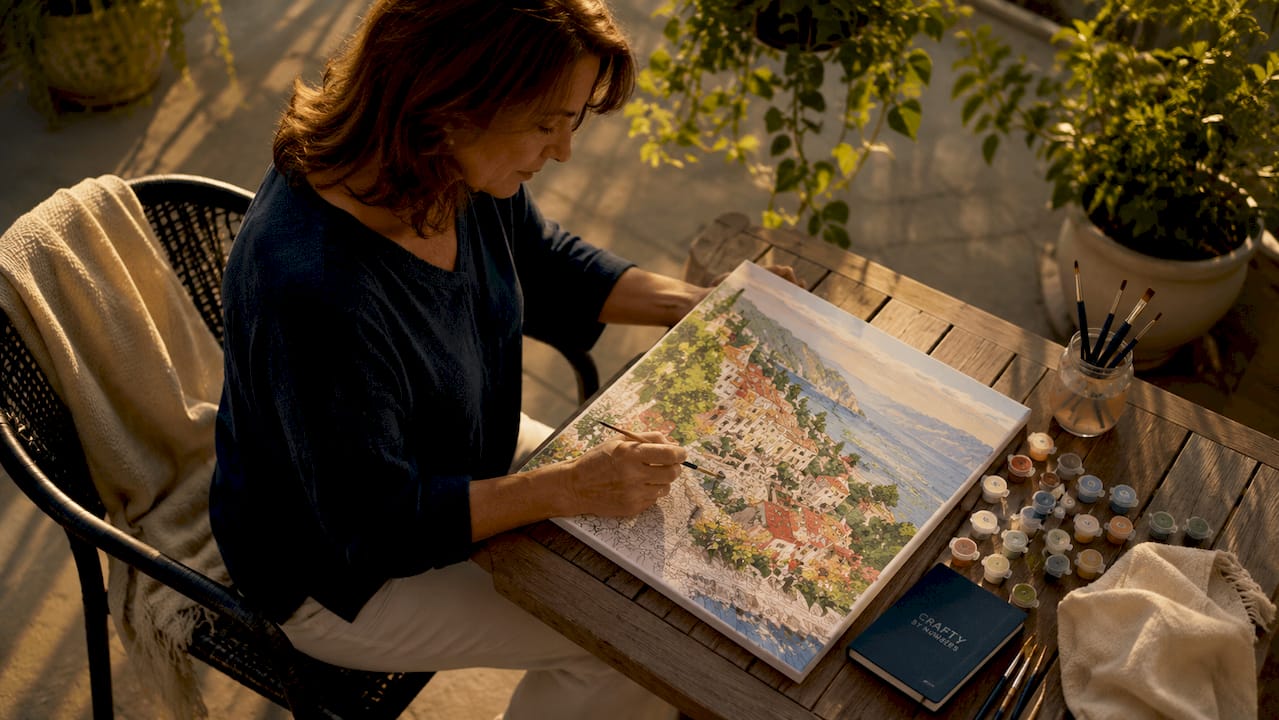
Flow state is the mental condition where you are fully absorbed in a task, and time seems to disappear. Structured creative tasks exclude decision fatigue, making flow easier to reach than with open-ended art forms. Once you enter flow, your brain stops cycling through anxious thoughts. That interruption of rumination is one of the most direct mental health benefits of painting.
Research published in Frontiers in Psychology confirms that structured art activities activate the parasympathetic nervous system, the branch responsible for rest and digestion. This is the physiological opposite of the fight-or-flight stress response. Your heart rate slows, your muscles relax, and your body shifts into recovery mode.
The benefits extend beyond the session itself. A 2025 systematic review in Psychiatria Danubina, analyzing 14 randomized controlled trials, found that visual art therapy reduces anxiety across sessions as short as 15 minutes. Even brief painting sessions produce measurable results.
Key mechanisms behind the stress relief:
- Cortisol reduction through sustained, gentle focus
- Parasympathetic nervous system activation
- Interruption of anxious thought loops through mindful engagement
- Digital detox effect from screen-free, hands-on activity
- Mood lift from completing a visible, satisfying task
Pro Tip: Choose kits with cool blues, soft greens, or muted earth tones. These color palettes reinforce the calming effect of the activity itself. Warm, saturated reds and oranges can be stimulating, which works against relaxation.
What tools and setup do you need to start?
The barrier to entry for paint by numbers is genuinely low. A standard kit includes a pre-printed canvas with numbered sections, a set of acrylic paints labeled to match, and a selection of detail brushes. You also need a small cup of water for rinsing brushes and a paper towel or cloth for blotting.
Beyond the kit itself, your environment matters more than most guides acknowledge. Good lighting prevents eye strain and keeps the session comfortable. A dedicated, clutter-free surface signals to your brain that this is a calm, intentional space. Comfortable seating with back support lets you paint for 30–45 minutes without physical tension creeping in.
Choosing the right kit for your experience level is the most important setup decision. Here is a comparison of kit types to help you decide:
| Kit type | Complexity | Canvas size | Best for |
|---|---|---|---|
| Beginner | Low, large numbered sections | 8" x 10" | First-time painters, short sessions |
| Intermediate | Moderate detail, more colors | 12" x 16" | Adults with some practice |
| Advanced | Fine detail, 30+ colors | 16" x 20" and up | Experienced painters seeking immersion |
| Personalized | Custom photo-to-canvas | Varies | Meaningful, emotionally engaging projects |
Craftybynumbers offers kits across all these levels, with over 120,000 satisfied customers. Their pre-printed canvases use a clear numbering system that makes understanding paint numbering straightforward even for complete beginners.
For adults new to creative hobbies, beginner art projects with simple compositions and fewer colors are the right starting point. Complexity can increase as confidence builds.
Pro Tip: Paint in the evening under warm lamp light rather than overhead fluorescent lighting. Evening sessions replace screen time before bed, and warm lighting aids sleep quality by supporting your body’s natural wind-down process.
How to use paint by numbers for maximum stress relief
A deliberate approach to each session amplifies the relaxation benefits. Rushing through a kit to finish it treats painting as a chore. Treating it as a mindful practice is what produces the stress relief.
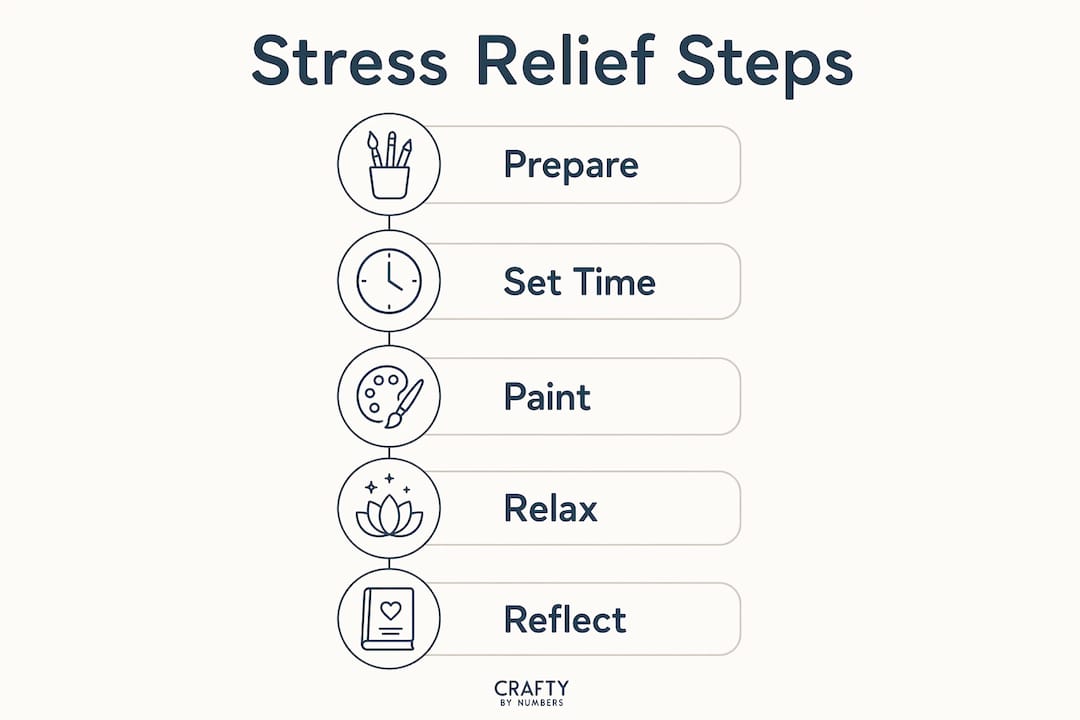
Follow this sequence for each session:
- Prepare your space. Set out your kit, water cup, and brushes before you sit down. A ready workspace removes friction and signals the start of a dedicated break.
- Set an intention. Spend 10 seconds deciding that this session is for relaxation, not for finishing the painting. That mental shift changes how you engage with the activity.
- Start with larger sections. Fill in the bigger numbered areas first. This builds momentum and gives you early visible progress without demanding fine motor precision.
- Paint mindfully. Focus on the physical sensation of the brush, the color going onto the canvas, and the sound of the bristles. This is the mindfulness painting technique that interrupts anxious thinking.
- Breathe deliberately. Take a slow breath in before each new section. Exhale as you apply the paint. This simple rhythm deepens the parasympathetic response.
- Close without judgment. When your session ends, set the canvas aside without critiquing the result. Sanford Behavioral Health’s clinical perspective confirms that focusing on process over product is what makes art-based self-care most effective.
Research supports sessions of 30–45 minutes as the sweet spot for stress reduction. Shorter sessions still help, but the cortisol reduction documented in the 2016 Art Therapy study was measured at the 45-minute mark. Aim for that window when your schedule allows.
The most common mistake adults make is treating every brushstroke as a test. Painting outside the lines slightly does not ruin a kit. Perfectionism during a relaxation activity defeats its purpose entirely.
Pro Tip: Before you start painting, take five slow breaths and consciously relax your shoulders. Tension held in the upper body is the first physical sign of stress, and releasing it before you begin primes your nervous system for the calming session ahead.
How to build paint by numbers into a self-care routine
A single session relieves stress in the moment. A consistent practice builds resilience over time. The Cleveland Clinic’s Arts & Medicine program reports 73% mood improvements and 61% stress reductions among participants in ongoing art therapy programs. Consistency is what produces those numbers.
Scheduling matters. Treat your painting session the same way you treat a gym session or a medical appointment. Block 30–45 minutes on specific days and protect that time. Adults who paint at the same time each week report that the habit becomes self-reinforcing. The anticipation of the session itself becomes a stress buffer.
Paint by numbers also works well as a digital detox tool. Replacing one evening of scrolling with a painting session breaks the cycle of passive screen consumption. Dr. Diana Rangaves notes that creative hobbies lower stress through the relaxation response, a mechanism Harvard Health Publishing and Drexel University research have both documented. The gut-brain axis benefits from this response too, with reduced stress hormones improving digestive function.
Complementary wellness activities that pair well with a regular painting practice:
- Journaling for 5 minutes after each session to note your mood
- A short meditation or breathing exercise before you begin
- Gentle stretching or a short walk to transition into a calm state
- Listening to instrumental music or ambient sound while painting
- Sharing finished pieces with friends or family for social connection
That last point matters more than it sounds. Painting as a social activity adds an emotional wellness layer that solo practice does not provide. Group painting sessions reduce isolation and create shared positive experiences. Sanford Behavioral Health confirms that art therapy works best when combined with other self-care practices to maximize emotional regulation.
Tracking your progress keeps motivation high. After each session, rate your stress level on a simple 1–10 scale. Over four to six weeks, most adults see a clear downward trend on their high-stress days. That visible data makes the habit easier to maintain.
Key Takeaways
Paint by numbers reduces stress through cortisol reduction, parasympathetic nervous system activation, and mindful focus, with the strongest benefits appearing in consistent sessions of 30–45 minutes.
| Point | Details |
|---|---|
| Cortisol drops in 45 minutes | A 2016 Art Therapy study found cortisol reductions in 75% of participants after one session. |
| Structure enables flow state | Numbered sections remove decision fatigue, making calm focus accessible to any skill level. |
| Environment amplifies results | Warm lighting, comfortable seating, and screen-free space deepen the relaxation response. |
| Process beats product | Focusing on the act of painting, not the finished result, is what produces the mental health benefit. |
| Consistency builds resilience | Regular sessions, paired with journaling or meditation, create cumulative mood and stress improvements. |
Why I think paint by numbers is underrated as a stress tool
Most stress relief advice points to meditation, exercise, or therapy. Those are all valid. But they all carry a barrier: meditation requires mental discipline most stressed people do not have on demand, exercise requires physical energy, and therapy requires scheduling and cost. Paint by numbers requires none of those things.
What I have found, both personally and in watching others pick up the habit, is that the structure is the secret. Open-ended creative activities like sketching or journaling can actually increase anxiety in people who feel they are “not creative.” Paint by numbers sidesteps that entirely. There is no wrong answer. You follow the numbers, and something beautiful appears.
The mood shift I noticed after consistent evening sessions was not dramatic. It was quiet. I slept better. I felt less reactive the following morning. My focus during work improved in ways I did not immediately connect to the painting. That kind of slow, cumulative benefit is exactly what the Cleveland Clinic’s data reflects, and it is the kind of benefit that does not show up in a single session.
The one thing I would push back on is the idea that paint by numbers is only for beginners. Advanced kits with 30 or more colors and fine detail sections are genuinely absorbing for experienced painters. The complexity scales with you. That scalability is what makes it a sustainable long-term self-care practice rather than a novelty you abandon after one kit.
If you have been dismissing paint by numbers as a children’s activity, reconsider. The science behind it is serious, and the barrier to starting is almost zero.
— Paula S.
Craftybynumbers kits worth trying for stress relief
Craftybynumbers has built its reputation on kits designed specifically for the kind of calm, absorbing experience this article describes. Over 120,000 adults have used their kits, and the quality of the pre-printed canvases and acrylic paints reflects that track record.
Two kits stand out for stress relief specifically. The Ivory Essence uses a soft, muted palette that reinforces the calming effect of the painting session. The Garden of Dreams features a nature-inspired composition that pairs well with the mindful, process-focused approach described above. Both include pre-printed canvases, high-quality acrylic paints, and detail brushes. If you want to give the experience as a gift, Craftybynumbers also offers a gift card for anyone who could use a creative self-care option. Browse the full collection at Craftybynumbers to find the kit that fits your pace.
FAQ
Does paint by numbers actually reduce stress?
Yes. A 2016 Art Therapy study found that 45 minutes of creative activity reduces cortisol in 75% of participants, regardless of skill level. Paint by numbers produces this effect because its structured format lowers cognitive load and promotes a calm, focused state.
How long should a paint by numbers session be for stress relief?
Sessions of 30–45 minutes produce the most documented stress relief benefits. A 2025 systematic review in Psychiatria Danubina found anxiety reductions in sessions as short as 15 minutes, so even brief sessions are worthwhile.
Do I need any art experience to benefit from paint by numbers?
No prior experience is needed. The numbered system removes all creative decision-making, which is precisely why it works as a stress relief tool for adults at every skill level.
Can paint by numbers help with sleep?
Evening paint by numbers sessions replace screen time and support the body’s natural wind-down process. Warm lighting during the session further aids sleep quality by avoiding the stimulating effect of blue screen light.
Is paint by numbers considered art therapy?
Paint by numbers shares the core mechanisms of formal art therapy, including cortisol reduction, parasympathetic activation, and mindful focus. It is not a clinical treatment, but the Cleveland Clinic’s Arts & Medicine program reports outcomes consistent with what structured painting activities produce.
0 comments