

Pick paint by numbers if you want a result that looks like an actual painting and you don’t mind picking up a brush. Pick diamond painting if you want something closer to mindless, repetitive assembly you can do while watching TV. Paula S. has spent enough time comparing both crafts, alongside findings on diamond painting’s lower skill curve and longer completion times, to say the choice usually comes down to whether you want to paint or you want to relax with tweezers in hand.
TL;DR:
- Diamond painting takes about two to three times longer than paint by numbers for the same canvas size due to the manual placement of thousands of drills.
- Both crafts cost similarly, with entry kits around $15 to $30, but time spent per dollar differs, making diamond painting more time-consuming.
- Diamond painting produces a textured, sparkling final piece that looks best under direct light, while paint by numbers offers a smoother, more traditional painting appearance.
- Diamond painting has minimal mess but requires careful organization of drills, whereas paint by numbers involves brush cleaning and paint odor considerations.
- Beginners can achieve a professional-looking result in both crafts with simple techniques; choose diamond painting for stress relief and paint by numbers for developing brush skills.
Table of Contents
- What Is Diamond Painting?
- What Is Paint by Numbers?
- Paint by Numbers vs Diamond Painting: The Real Differences
- Materials, Setup, and Workspace: What You Actually Need
- How Long Do These Projects Actually Take?
- Which Craft Looks Better on the Wall?
- Which Craft Fits Your Life Right Now?
- Quick Pros and Cons Checklist
- What Makes Crafty By Numbers Kits Work for Beginners
- Common Challenges and How to Fix Them
- Cleaning Up and Storing Work Between Sessions
- How Much Artistic Skill Do You Actually Need?
- Will the Finished Piece Actually Last?
- Trying Both Taught Me What Actually Matters
- Ready to Start Your First Paint by Numbers Kit?
- Sources
- FAQ
What Is Diamond Painting?
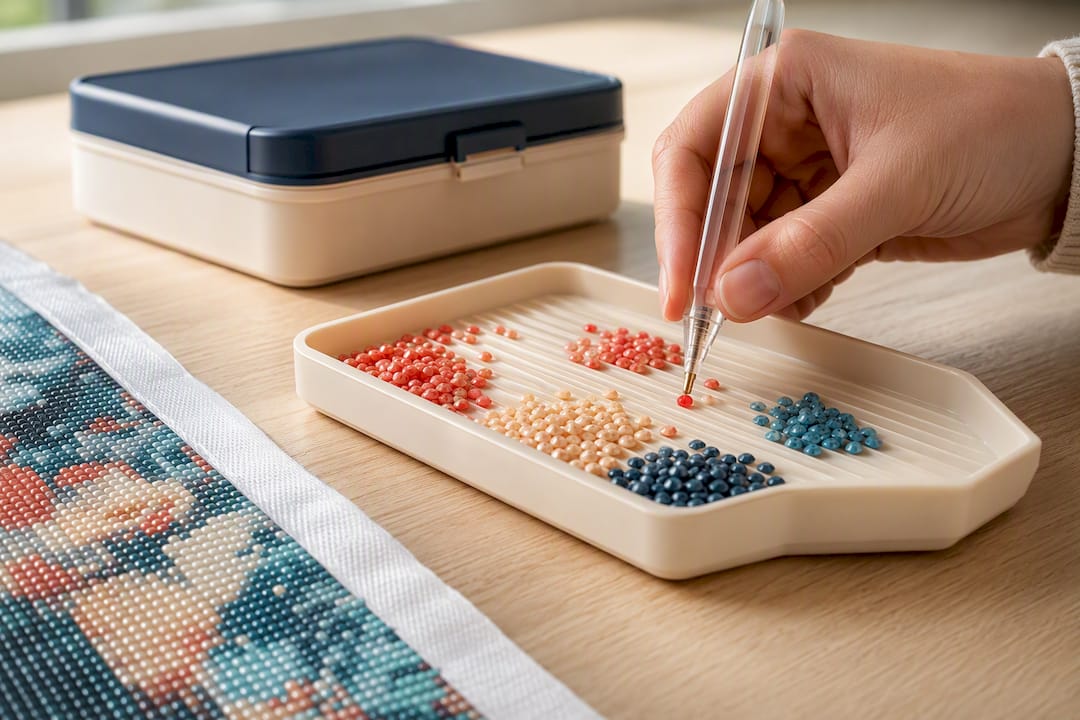
Diamond painting works like a mosaic. You get a sticky adhesive canvas printed with a color-coded pattern, and instead of paint, you press tiny resin “diamonds” (facets) onto matching numbered sections using a pen-like applicator called a stylus. The kit typically includes:
- A pre-printed adhesive canvas rolled or flat-packed
- Small bags or vials of resin drills sorted by color code
- A stylus (applicator pen) with wax or clay in the tip to pick up drills
- A tray for sorting and rolling drills into place
- Sometimes a light pad underneath to make the canvas symbols easier to see
Drills come in two shapes, round or square. Round drills are faster and more forgiving of small placement errors, since a slight tilt doesn’t leave a visible gap. Square drills lock together edge to edge for a denser, more finished look, but they demand more patience and better spacing.
Canvases also vary by drill coverage. Full-drill kits cover the entire canvas in resin for a bold, glittering final piece. Partial-drill kits leave some printed background exposed, which cuts total placement time significantly. A small partial-drill canvas (roughly 20x25cm) might take a beginner several hours spread across a few sittings; a full-drill piece at 40x50cm can take significantly longer.
Pro Tip: Sort your drills into the tray by color number before you start a session. Hunting through mixed bags mid session is the single biggest time waster in diamond painting.
What Is Paint by Numbers?
Paint by numbers gives you a canvas printed with faint numbered outlines, each number corresponding to a specific acrylic paint color. You dip a brush into the matching numbered paint pot and fill in that section, section by section, until the outlines disappear under color and a full image emerges. A standard kit includes:
- A pre-printed canvas (often on stretched frame or a flat roll)
- Individually numbered acrylic paint pots matched to the canvas
- A set of detail brushes in a few sizes
- A printed reference image showing the finished piece
Kits vary widely in difficulty. Simpler designs use large numbered blocks and a limited palette, ideal for a first try. More detailed pieces, including custom kits made from a personal photo, use dozens of subtle color shades and finer numbered regions that reward a steadier hand.
Technique matters more here than in diamond painting. Thin, even coats prevent streaking and keep the numbers from bleeding through unevenly. Painting light colors before dark ones avoids muddying adjacent sections, and letting each region dry fully before touching a neighboring color keeps edges crisp. Basic blending and brush control techniques used by working artists translate directly to sharper, more professional-looking results even on a numbered canvas.
Pro Tip: Load your brush, then wipe most of the paint off on the pot’s rim before applying it. A thin first coat that you build up beats one thick, drippy layer every time.
Paint by Numbers vs Diamond Painting: The Real Differences
Here’s where the decision actually gets made. Both crafts are beginner-friendly, but they ask different things of your hands, your patience, and your living room.
| Factor | Diamond Painting | Paint by Numbers |
|---|---|---|
| Skill required / learning curve | Very low, mostly repetitive placement | Low to moderate, brush control helps |
| Time to complete | Longer, often 2 to 3 times slower for equal canvas size | Faster for equivalent detail level |
| Mess and portability | Minimal mess, drills can scatter, travels well in a sealed tray | Some paint smell and brush cleanup, less travel friendly while wet |
| Cost range | Entry kits generally start at about $15 to $30, with premium full-drill kits costing significantly more | Entry kits generally start at about $15 to $30, with premium detailed kits at higher price points |
| Final look / displayability | Glittering, textured, catches light differently at angles | Looks like an actual hand-painted piece, flat matte or satin finish |
| Tactile experience | Repetitive placement, satisfying “click” of drills settling | Brushwork, blending, visible strokes and texture |
By the numbers: Hobby comparison guides estimate that diamond painting takes roughly 2 to 3 times longer than paint by numbers for a canvas of the same size, mostly because placing thousands of individual drills simply takes longer than brushing in a section of color.
Cost overlaps more than most people expect. Entry-level kits in both crafts run about $15 to $30, mid-range kits land around $30 to $65, and premium large-format or highly detailed kits (including custom photo kits) climb toward $60 to $150 depending on size and detail. Neither craft is meaningfully cheaper across the board. The real cost difference shows up in time invested per dollar, not price tags.
Mess is where diamond painting pulls ahead. There’s no paint, no brush rinsing, no smell. The trade-off is that loose drills roll off tables and end up in carpets if you’re not using a tray with a lid. Paint by numbers needs a rinse cup, a paper towel, and a well-ventilated space, but nothing scatters across the floor.
Materials, Setup, and Workspace: What You Actually Need
Getting started with either craft takes less setup than most people assume, but a few small additions make sessions smoother.
- Clear a flat, well-lit surface. A kitchen table or desk works fine; diamond painters especially benefit from a light pad underneath the canvas to make faint symbols visible.
- Keep your kit organized before you start. Sort diamond drills into a labeled tray, or arrange paint-by-numbers pots in numerical order so you’re not hunting mid-session.
- Use a canvas mat or old towel underneath. It catches stray drills or paint drips and protects your table surface.
- Store unfinished work rolled or flat in a dust-free spot. A tube or large flat folder keeps a half-done canvas from creasing or collecting pet hair between sessions.
- Seal finished pieces properly. Diamond paintings benefit from a light coat of sealant glue brushed over the surface to keep drills from popping loose over time. Paint-by-numbers pieces look sharper and last longer with a thin coat of matte or satin varnish once fully dry.
Optional upgrades worth the small cost: extra fine-tip brushes for detailed paint-by-numbers work, a second stylus tip for diamond painting so one person can work while another sorts drills, and a rolling storage cart if you’re juggling more than one project at a time. Our guide on canvas setup and materials covers this in more depth.
Pro Tip: Photograph your canvas before storing it mid-project. If a section peels or a paint pot dries out, you’ll have a reference for exactly what needs fixing later.
How Long Do These Projects Actually Take?
Expect a small canvas (roughly 20x25cm, partial coverage) to take four to eight hours total in either craft, spread across several sessions rather than one sitting. Medium canvases (30x40cm) usually require multiple sessions totaling many hours, and larger or highly detailed pieces can take even longer, especially full-drill diamond paintings or complex paint-by-numbers kits.
A few things stretch or shrink that timeline:
- Full-drill diamond canvases take noticeably longer than partial-drill versions of the same size.
- More numbered colors in a paint-by-numbers kit means more pot switching and drying time between adjacent sections.
- Skill genuinely speeds things up. Brush control improves fast in paint by numbers, and drill placement speed in diamond painting climbs the more sessions you log.
- Session length matters more than raw hours. Thirty to sixty minutes a few times a week produces steadier progress than one exhausting all-day marathon.
A simple way to track pace: photograph your canvas at the end of each session and note the date. Watching visible progress accumulate, even slowly, is part of what makes both crafts feel rewarding rather than tedious.
Which Craft Looks Better on the Wall?
Diamond painting reads as texture and shimmer. Step back a few feet in good lighting and full-drill pieces genuinely sparkle, shifting subtly as you walk past. Up close, though, you see individual facets rather than a smooth image, and the effect depends heavily on how much light hits the canvas.
Paint by numbers reads as a painting, because it is one. Brushstrokes, blended edges, and matte or satin paint mimic traditional artwork whether viewed from three feet or ten. It photographs better for framed gifts and tends to get mistaken for hand-painted original art more often.
- Diamond painting: best displayed under direct or angled light to show off the sparkle effect.
- Paint by numbers: displays consistently well under any lighting, including dim rooms.
- Framing: diamond paintings often use shadow-box frames to accommodate the raised surface; paint-by-numbers canvases fit standard picture frames or stretcher bars.
- Perceived as “fine art”: paint by numbers wins this comparison more often, since finished pieces resemble traditional paintings rather than craft mosaics.
If the goal is a piece that guests assume you painted yourself, paint by numbers gets you there faster.
Which Craft Fits Your Life Right Now?
Match the craft to your actual situation, not just your interest level.
- Want to learn real painting skills? Choose paint by numbers. Brush control, blending, and color layering are transferable skills that carry into freehand painting later, backed by the same blending fundamentals professional artists rely on.
- Want a zone-out, low-effort meditative craft? Choose diamond painting. There’s no technique to master, just steady repetitive placement that’s easy to do while distracted or tired.
- Traveling or working in tight spaces? Diamond painting packs into a small sealed tray with no liquid mess, making it the better travel companion.
- Doing this with kids or shaky hands? Diamond painting’s larger drills are easier to grip than a fine detail brush, making it more forgiving for limited dexterity or shorter attention spans.
Quick decision checklist: Do you want the finished piece to look hand-painted, or are you fine with a textured mosaic effect? Do you have 20 minutes here and there, or long uninterrupted blocks of time? Does mess-free portability matter more to you than the process feeling artistic?
Quick Pros and Cons Checklist
Paint by numbers pros:
- Produces a genuinely painting-like finished look
- Builds real brush and blending skills over time
- Dries flat and frames easily in standard frames
- Faster completion for equivalent detail level
Paint by numbers cons:
- Requires brush cleanup and some paint smell
- Less forgiving of shaky technique on fine detail
Diamond painting pros:
- Very low skill barrier, no brush technique needed
- Minimal mess and easy to transport
- Satisfying, repetitive, meditative process
Diamond painting cons:
- Takes noticeably longer per canvas
- Final look depends heavily on lighting angle
Neither craft beats the other outright. They solve different problems.
What Makes Crafty By Numbers Kits Work for Beginners
Some paint by numbers kits ship with a pre-printed canvas, matched acrylic paints in numbered pots, and detail brushes sized for both broad fills and fine edges. That combination is what turns a first-timer into someone who actually finishes a wall-worthy piece, rather than abandoning a half-painted canvas in a drawer.
Many customers have worked through such paint by numbers kits, which often feature detailed artwork, vibrant color palettes, and a finished product designed to be hung with pride.
A few scenarios where specific kits make sense:
- Buying a meaningful gift? A custom kit built from your own photo turns a memory into wall art.
- Want a fast, satisfying win as a first project? A simpler floral design gets you to a finished, frameable piece without a steep learning curve.
- Curious whether paint by numbers relieves stress the way people claim? Research on art activity and lower stress hormone levels backs that up, and our own piece on paint by numbers and mental health goes deeper into why the repetitive brushwork calms a busy mind.
Paula S.'s take, backed by customer feedback patterns across those 120,000-plus orders: beginners do best when the first kit is simple enough to finish in under 10 hours. Confidence built early carries into more ambitious, detailed projects later.
Common Challenges and How to Fix Them
Diamond painters run into three recurring problems: drills that won’t stick, mismatched color numbers, and canvas wrinkling. A weak adhesive canvas loses tack over time, especially in humid rooms, so store unused sections covered with the plastic sheet that comes in the kit. If two color numbers look nearly identical, hold both bags next to a bright window before placing either, since indoor lighting flattens subtle shade differences. Wrinkles usually come from rolling the canvas the wrong direction; roll it image side out, not in.
Paint-by-numbers beginners struggle most with paint bleeding under the printed lines and pots drying out mid-project. Bleeding usually means the brush was overloaded. Dab excess paint off before touching the canvas, and always let one color dry before starting an adjacent section. Dried-out paint pots respond to a drop of water mixed in with a toothpick, though pots left open for days sometimes can’t be saved. Keep pots closed between color switches, even mid-session.
Both crafts share one frustration: losing your place on a large canvas. A simple fix is covering completed sections with a spare cloth or the plastic backing sheet, so your eye and hand stay focused only on the active working area.
Cleaning Up and Storing Work Between Sessions
Diamond painting cleanup takes under a minute. Fold the tray’s lid closed to keep sorted drills from mixing, cover the sticky canvas section with its plastic film, and roll the whole thing loosely with the image facing out. Stray drills that end up on the floor are easiest to spot with a flashlight held at a low angle, since the resin catches light even in dim rooms.
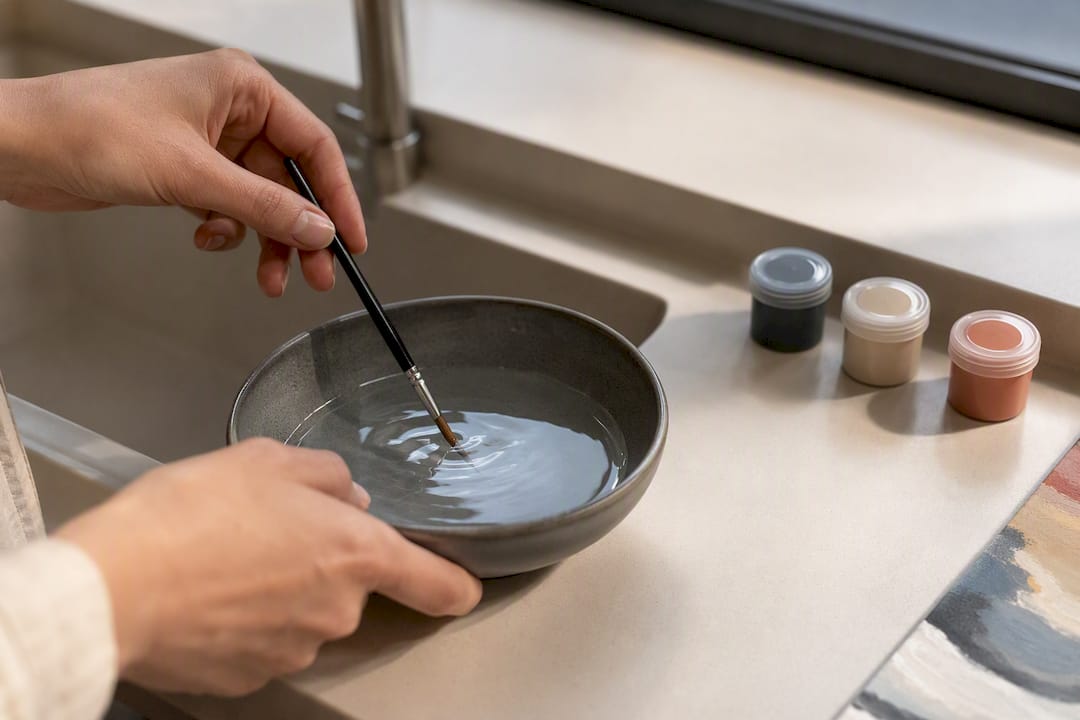
Paint by numbers needs a slightly longer routine. Rinse brushes immediately in warm water before paint dries in the bristles, since dried acrylic is far harder to remove and shortens brush life fast. Snap the lids on paint pots firmly, wiping the rim first so dried paint doesn’t prevent a tight seal later. Lay the canvas flat somewhere dust won’t settle on wet sections, or loosely drape a paper towel over finished areas once they’re dry to the touch.
For both crafts, avoid folding a canvas sharply, since creases in the printed backing can show through the finished surface later. A flat closet shelf or a large art portfolio case works well for in-progress storage. If you’re working on more than one project at a time, label each with the date started. It’s an easy way to track which piece has been sitting the longest and might need a session soon.
How Much Artistic Skill Do You Actually Need?
Diamond painting asks almost nothing of you creatively. There’s no color mixing, no brush pressure to manage, no risk of a “wrong” stroke. The creative decisions were made for you when the canvas was printed, which is precisely why it appeals to people who want a craft without any performance pressure attached.
Paint by numbers asks more, even though it’s still built for beginners. You’re choosing how much paint to load, how thin to spread it, and how carefully to stay inside the printed lines. None of that requires formal art training, but it does involve small creative decisions every few minutes. That’s also why the skills transfer. Someone who spends a year on paint-by-numbers kits often develops enough brush confidence to try light freehand painting afterward, something diamond painting doesn’t build toward in the same way.
Neither craft demands prior experience to produce a satisfying result on day one. The difference is what you walk away with beyond the finished canvas. Diamond painting gives you a relaxing hour. Paint by numbers gives you a relaxing hour and a slowly growing set of actual painting instincts.
Will the Finished Piece Actually Last?
Both crafts hold up well for years when finished and stored correctly, but they age differently. Diamond painting’s resin drills are durable and colorfast, resistant to fading from normal indoor light. The vulnerability is adhesion. Without a sealant coat, drills can loosen over years, especially in a piece that gets bumped often or hangs somewhere temperature swings widely, like near a window or a heating vent.
Paint-by-numbers pieces, once varnished, behave like any acrylic painting. Acrylic is a genuinely durable medium that resists cracking and fading far better than watercolor, and a light matte or satin varnish coat adds a protective layer against dust and minor moisture. Unvarnished pieces are more vulnerable to surface scuffing if brushed against something, but the paint itself doesn’t degrade quickly.
For either craft, keeping the finished piece out of direct, prolonged sunlight and away from high humidity extends its life the most. A piece sealed properly and framed behind glass or in a shadow box can realistically last decades without visible deterioration.
Trying Both Taught Me What Actually Matters
Most people ask which craft is “better,” but that’s the wrong question. The better question is what you’re actually looking for on a Tuesday evening. Some nights call for the meditative, no-decisions repetition of diamond painting. Other nights call for the small satisfaction of watching a brushstroke turn a blank numbered section into something that looks hand-painted.
If you’re still unsure, start with whichever kit feels less intimidating to open tonight, not the one that sounds more impressive to mention later. A finished simple project beats an abandoned ambitious one every time.
Try one, then try the other eventually. Most hobbyists who stick with either craft end up doing both depending on their mood, and there’s no reason to pick just one lane permanently.
— Paula S.
Ready to Start Your First Paint by Numbers Kit?
If paint by numbers is the craft you’re leaning toward after weighing the mess, the time, and the finished look, Crafty By Numbers gives you a faster path to a frameable result than starting from a blank canvas and a color wheel.
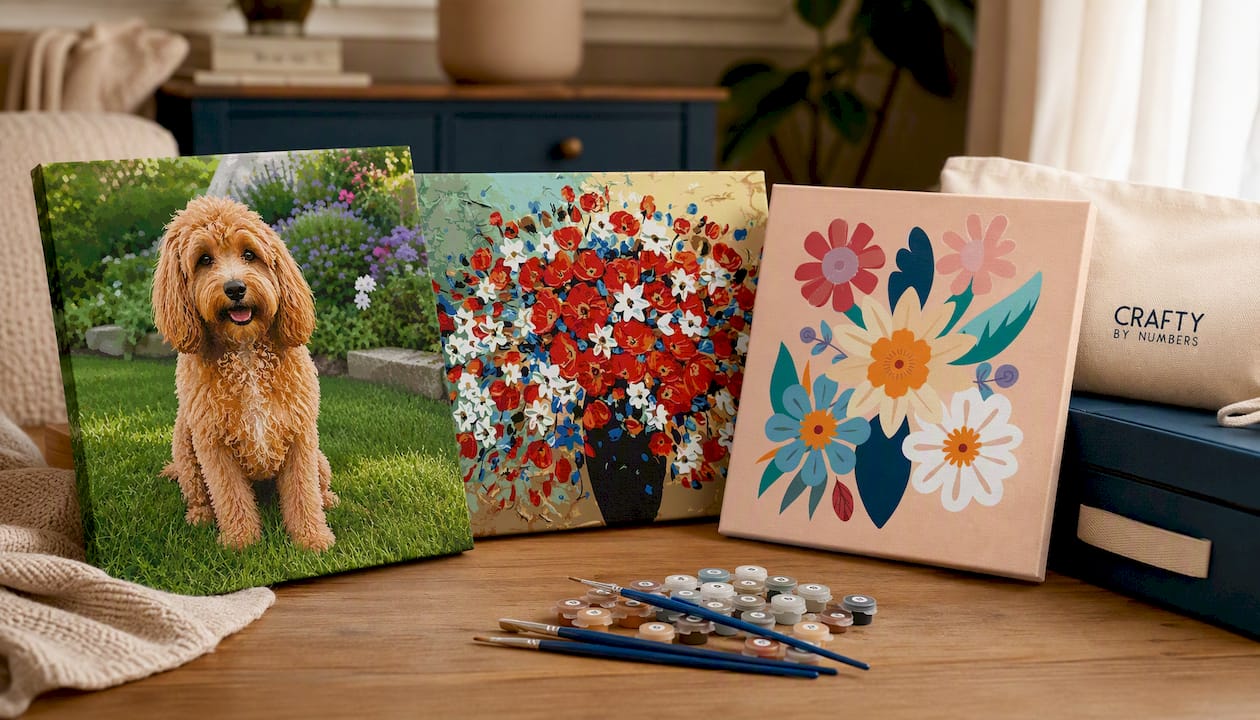
Choosing which kit to start with is easier once you know your goal. Want something personal? The Custom Paint by Numbers kit turns your own photo into a numbered canvas, ideal for gifts or a keepsake you’ll actually want on the wall. Want a floral piece that looks impressive without a steep learning curve? Bouquet of Colors delivers a vibrant, mid-level design built for a satisfying finish. Want the lowest-commitment starting point possible? Daisy Delight is built for a first-timer who wants a quick, confidence-building win.
Every box ships with the numbered canvas, matched acrylic paints, and detail brushes needed to start the same day it arrives, no separate supply run required. Pick the kit that matches your first goal and get painting tonight.
Sources
- Drexel University — art activity linked with lower stress hormones
- Seattle Artist League — blending techniques for painters
- TryPaintByNumbers — Diamond painting vs paint by numbers: Which to choose?
FAQ
Do People With ADHD Like Diamond Painting?
Many people with ADHD report that diamond painting’s repetitive, low-decision structure helps them focus, since the small physical task of sorting and placing drills gives restless hands something steady to do while the mind settles.
Is It Illegal to Sell Completed Diamond Paintings?
Selling a finished diamond painting made from a kit you legally purchased is generally fine, but reselling a piece based on copyrighted artwork or a photo you don’t have rights to can create legal issues, so stick to original designs or licensed kits if you plan to sell.
What Is the Best Technique to Paint by Numbers?
Apply thin, even coats and let each color dry before painting an adjacent section, since proper blending and brush control prevents bleeding and gives the finished piece a smoother, more professional look.
Is Diamond Painting Hard for Beginners?
No, diamond painting has one of the lowest learning curves of any craft since it only requires matching numbers and pressing drills into place, though full-drill canvases take considerably longer to finish than partial-drill designs.
Which Craft Finishes Faster, Paint by Numbers or Diamond Painting?
Paint by numbers typically finishes faster for a canvas of the same size, since diamond painting can take roughly 2 to 3 times longer due to the sheer number of individual drills that need placing.
0 commentaire