

Pick a beginner-labeled, 16×20 pre-stretched canvas kit with pre-sorted paint pots and clear printed numbers. That single choice removes more friction than any technique tip. You get a stable surface, readable sections, and enough paint to cover every area twice. For paint by numbers beginners, the fastest path from box to finished painting is a kit designed to let you succeed on the first try, not after three frustrating attempts.
- Pre-stretched canvas: no warping, no setup, hangs straight when done
- Numbered, pre-sorted paint pots: no guessing which color goes where
- Multiple brush sizes (at least three): right tool for large fills and fine edges
- Clear reference image: lets you check your progress at a glance
Craftybynumbers beginner kits check every one of these boxes, and the easy art projects guide on their site walks you through what to expect before you even open the box.
Key Takeaways
A beginner-labeled 16×20 pre-stretched kit, good lighting, and the large-to-small painting order are the three things that most reliably get a first painting finished and hung.
| Point | Details |
|---|---|
| Kit selection | Choose a beginner-labeled 16×20 pre-stretched canvas kit with 20–30 color pots. |
| Painting order | Work large-to-small, finish all sections of one color before switching. |
| Two-coat rule | Apply two thin coats per section for clean coverage and no visible numbers. |
| Time expectation | A standard 16×20 beginner kit takes roughly 15–30 hours across multiple sessions. |
| Craftybynumbers | Ivory Essence, Garden of Dreams, and Blossoming Cottage are beginner-ready kits with pre-stretched canvas and quality acrylics. |
Table of Contents
- What does a beginner paint-by-numbers kit include?
- Are paint-by-numbers kits suitable for absolute beginners?
- How do you choose the right beginner kit?
- How to paint a kit: step-by-step order and technique
- Practical tips and common beginner mistakes to avoid
- How long does a beginner paint-by-numbers project take?
- Finishing, framing, and displaying your completed painting
- Why Craftybynumbers kits work well for beginners
- Ready to start? Here’s what to grab first
- Sources
- FAQ
What does a beginner paint-by-numbers kit include?
A standard kit ships with more than most people expect. According to the beginner guide at GrannyHobby, modern adult kits typically contain:
- Pre-printed numbered canvas: Either pre-stretched on a wooden frame or rolled. Pre-stretched is ready to hang; rolled needs a frame or stretcher bars later.
- Numbered acrylic paint pots: Usually 20–30 small pots, each labeled to match a number on the canvas. Check that lids seal tightly so paint doesn’t dry between sessions.
- Brushes (2–4 sizes): A wide flat brush for large fills, a medium round for mid-size sections, and a fine detail brush for edges and tiny areas.
- Reference image: A printed photo of the finished painting. Keep it nearby the whole time.
- Instructions sheet: Basic steps and color key. Read it before you open a single paint pot.
Some kits add a paint tray or organizer stand, a varnish or Acrylic Medium Gloss Gel for finishing, and hanging hardware. These extras matter more than they look. A paint organizer keeps 24 open pots from tipping over mid-session, and a gloss gel gives the finished piece a gallery-ready sheen.
Are paint-by-numbers kits suitable for absolute beginners?
Yes, completely. The numbered system does the compositional thinking for you. You match a number on the canvas to the same number on a paint pot and fill the section. No color theory, no freehand drawing, no mixing required.
The kits work especially well for:
- Adults seeking stress relief: The repetitive, focused motion is genuinely calming. Craftybynumbers has a whole page on the mental health benefits of the hobby.
- Gift buyers: A complete kit needs nothing extra to get started.
- Hobbyists returning to art after years away: The structure removes the blank-canvas anxiety.
- Parents painting alongside kids: Beginner kits have sections large enough for less precise brushwork.
One honest note on expectations: your first kit will take longer than you think, and a few sections will need touching up. That’s normal. The learning curve flattens quickly, usually by the second or third kit.
How do you choose the right beginner kit?
The biggest mistake new painters make is picking a kit that looks beautiful in the product photo but is too complex to finish. A few features separate a satisfying first project from an abandoned one.
Checklist before you buy:
- Labeled difficulty (look for “beginner” or “easy”)
- Canvas size around 16×20 inches: large enough to see the numbers, small enough to finish
- 20–30 color pots (fewer means faster; more means richer detail)
- Pre-stretched canvas over rolled
- At least three brush sizes included
- Clear, high-contrast number printing on the canvas
GenTwenty’s buying guide flags two common budget-kit problems worth knowing: thin or chalky paint that needs four or five coats to cover, and lightweight canvases that warp when wet. Checking product reviews for mentions of paint coverage before you buy saves a lot of frustration.
Pro Tip: Avoid custom-photo kits for your very first project. Photo conversions often produce dozens of tiny, irregular sections that are genuinely difficult to fill cleanly. Start with a designed subject, then try a custom kit once you’ve finished one.
| Feature | Beginner-friendly | More challenging |
|---|---|---|
| Section size | Large, clear sections | Small, intricate sections |
| Color count | 20–24 colors | 30+ colors |
| Canvas type | Pre-stretched | Rolled (needs framing) |
| Subject | Landscapes, florals | Portraits, cityscapes |
| Difficulty label | Marked “easy” or “beginner” | Unmarked or “advanced” |
How to paint a kit: step-by-step order and technique
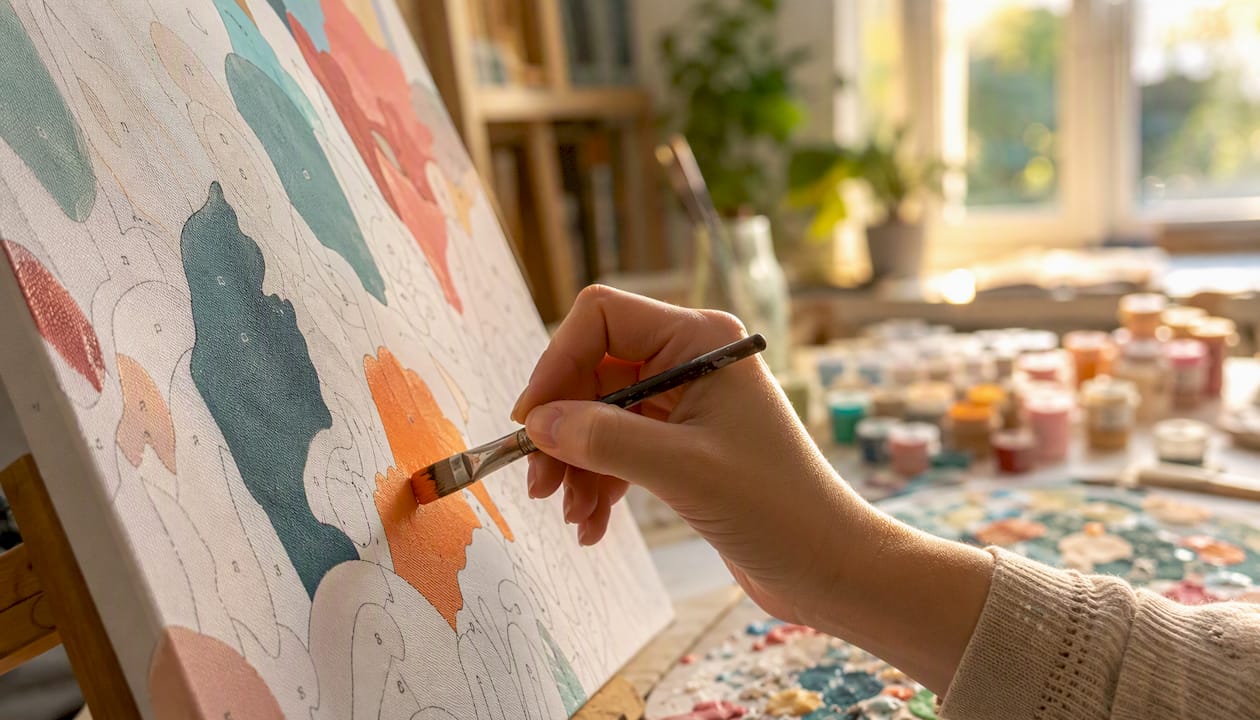
Work large-to-small and complete all sections of one color before moving to the next. That approach saves brush-cleaning time and keeps your workflow steady. Here’s how a first session should go:
- Set up your workspace. Flat table, good lighting (a daylight LED at 5,000–6,500K makes number reading much easier), a cup of clean water, and paper towels within reach.
- Organize your paints. Open all pots and arrange them by number. A paint organizer stand keeps them upright and visible.
- Pin or tape the reference image where you can see it without moving your head.
- Start with the largest color sections. Pick the color that covers the most canvas area and fill every section with that number before moving on.
- Use the right brush size. Wide flat brush for large fills, medium round for mid-size areas, fine detail brush for edges and small sections.
- Apply two thin coats, not one thick one. Let the first coat dry (10–15 minutes for acrylics), then apply a second. This covers the printed numbers cleanly and gives even color.
- Work top-to-bottom on the canvas to avoid resting your hand on wet paint.
- Rinse your brush before switching colors. Wipe on a paper towel until the water runs clear.
- Touch up at the end. Once everything is dry, check for missed spots or thin coverage and fix them with a fine brush.
Brush size guide:
| Brush size | Best use |
|---|---|
| Wide flat (size 6–8) | Large background areas, sky, water |
| Medium round (size 3–4) | Mid-size sections, foliage, general fills |
| Fine detail (smallest brush) | Edges, small sections, outlines |
Pro Tip: When two colors share a border, paint the darker color first and let it dry fully before painting the lighter color next to it. Light paint over dark wet paint picks up the dark pigment and turns muddy.
Practical tips and common beginner mistakes to avoid
Most first-kit frustrations come from a handful of fixable habits.
Do:
- Reseal paint pots between uses. Acrylic dries fast and a dried pot is wasted paint.
- Use larger brushes for large areas. A fine brush on a big section takes three times as long and leaves streaks.
- Keep sessions to 1–2 hours. Fatigue leads to sloppy edges.
- Work in good light. Numbers that look clear in daylight can be nearly invisible under a warm incandescent bulb.
Don’t:
- Over-dilute paint with water. A drop or two is fine for flow; more than that and the pigment thins out and won’t cover the canvas.
- Rush drying time between coats. Wet paint over wet paint smears.
- Use a single brush for the whole painting. Switching sizes is what makes the difference between a flat result and a polished one.
Common fixes:
- Numbers showing through: Add a third thin coat once the second is fully dry.
- Tiny sections: Use a toothpick dipped in paint for sections smaller than a pencil eraser.
- Wrong color in a section: Let it dry completely, then paint the correct color over it. Acrylic covers acrylic cleanly once dry.
How long does a beginner paint-by-numbers project take?
A typical 16×20 beginner kit takes roughly 15–30 hours to complete. That’s spread across multiple sessions, not a single weekend.
- Easy kits (fewer colors, larger sections): 8–15 hours
- Standard beginner kits (16×20, 20–30 colors): 15–30 hours
- Detailed or intermediate kits (30+ colors, small sections): 30+ hours
The most practical approach is 1–2 hour sessions, organized by color. Finishing all sections of one color per session gives you a visible sense of progress each time you sit down, which keeps the project from stalling. Trying to “finish a region” of the canvas instead often means switching colors constantly and cleaning brushes every few minutes.
Finishing, framing, and displaying your completed painting
Let the finished painting dry for at least 24 hours before you do anything else. Acrylic paint feels dry to the touch in minutes but continues curing underneath, and varnishing too early traps moisture.
Varnish options:
- Matte varnish: Reduces glare, suits landscapes and portraits.
- Gloss varnish: Adds depth and vibrancy, great for florals and colorful scenes.
- Acrylic Medium Gloss Gel: The Acrylic Medium Gloss Gel from Craftybynumbers works as both a protective coat and a color-enhancing finish. Brush it on in thin, even strokes.
Framing:
- Pre-stretched canvas hangs as-is with the included hardware.
- Rolled canvas needs stretcher bars or a standard frame.
- A simple floating frame adds a gallery look without covering the painted edges.
Display ideas: wall gallery with other finished pieces, framed as a gift, or a photo of the finished painting shared on social media. Craftybynumbers has a community page where painters share completed work.
Why Craftybynumbers kits work well for beginners
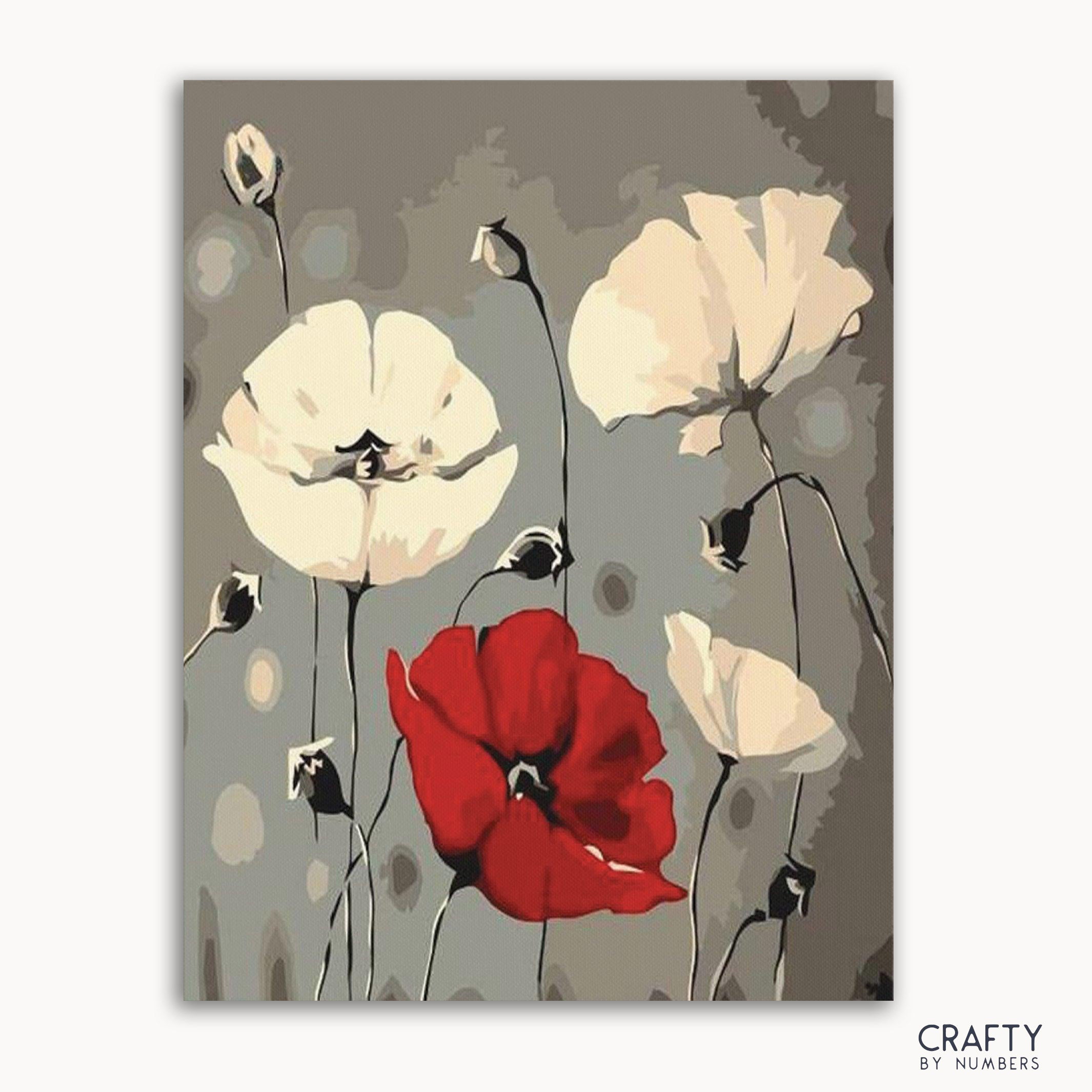
Craftybynumbers kits are built around the things that actually help a first-time painter finish: clear number printing, quality acrylic paints with real pigment density, and a brush set matched to the kit’s complexity. Over 120,000 customers have completed kits, which is a meaningful signal that the system works.
What’s in every Craftybynumbers kit:
- Pre-printed numbered canvas (pre-stretched options available)
- High-quality acrylic paint pots, numbered and pre-sorted
- Multiple brush sizes
- Reference image
- Step-by-step instructions
The brand also publishes step-by-step tutorials specifically for first-time painters, so support doesn’t end at the box.
Three beginner-friendly designs worth considering:
- Ivory Essence: A soft, neutral subject with large sections. Ideal for a true first kit because the color palette is forgiving and the sections are easy to fill cleanly.
- Garden of Dreams: A floral scene with a satisfying color range. Larger sections dominate, so progress feels fast.
- Blossoming Cottage: A pastoral subject with clear color divisions. Pre-stretched and frame-ready when finished.
Craftybynumbers kits are designed so that a beginner’s first painting looks good enough to hang. The numbered system, quality paints, and included tutorials remove the guesswork that stops most people from finishing their first project.
What actually matters about starting paint by numbers
Most articles focus on technique. The real barrier for beginners isn’t technique. It’s finishing. A half-done painting sitting on a shelf for three months is the most common outcome, and it almost always traces back to a kit that was too complex, too small, or too poorly made to stay satisfying past the first session.
The kits that get finished are the ones that give you visible progress every single time you sit down. Large sections fill fast. A limited color palette means fewer brush changes. Pre-stretched canvas means you can hang it the moment it’s done. Those aren’t luxury features; they’re what separates a hobby you keep from one you abandon.
Two or three kits in, you’ll want more detail, more colors, more challenge. That’s the right time to step up. Start simple, finish it, and the confidence that follows is worth more than any technique tip.
Ready to start? Here’s what to grab first
Craftybynumbers makes it straightforward to go from reading this to painting tonight. The beginner kits ship with everything you need: pre-stretched canvas, numbered acrylic paints, brushes, and a reference image. No extra supplies required.

Three kits that work well as a first project: Ivory Essence for the simplest start, Garden of Dreams for a floral scene with fast visible progress, and Blossoming Cottage for a pastoral piece that looks frame-ready when done. If you want a bit more visual drama, Sunset on the Amalfi and Lanterns on the Water are still beginner-appropriate with slightly richer palettes. For a gift with cultural depth, Sacred River Teaching is a strong choice.
Two add-ons worth picking up alongside your kit: the Paint Organizer Stand keeps your pots upright and visible during a session, and the Acrylic Medium Gloss Gel gives your finished painting a polished, protective coat. Browse the full beginner range at Craftybynumbers and pick the 16×20 pre-stretched option when it’s available.
Sources
- Paint by Numbers for Adults: Beginner Guide
- How to Choose the Right Paint by Numbers Kit for Beginners - GenTwenty
FAQ
What is the best way to start paint by numbers as a beginner?
Pick a beginner-labeled 16×20 pre-stretched canvas kit with 20–30 pre-sorted paint pots and at least three brush sizes. Set up good lighting, organize your paints by number, and start with the largest color sections first.
Is there a trick to paint by numbers?
The most effective habit is finishing all sections of one color before cleaning your brush and moving to the next color. It saves time and keeps your workflow consistent.
What is the easiest subject to paint as a beginner?
Florals and simple landscapes with large, clearly defined sections are the most forgiving. Kits like Ivory Essence or Blossoming Cottage from Craftybynumbers are designed with exactly this in mind.
In what order should you paint by numbers?
Work large-to-small: fill the biggest sections first, then mid-size areas, and finish with fine details. Within that, complete every section of one color before switching to the next.
0 comments