

Paint-by-numbers works as a mindfulness practice for beginners, and yes, it delivers real relaxation with almost no skill required. Starter kits offer pre-mixed paints and clear numbered sections, so you get a calm, focused session and a display-ready piece without any painting experience.
TL;DR:
- Smaller kits with fewer colors and simple borders are better for short, calming sessions and reduce decision fatigue for beginners.
- The rhythmic, repetitive strokes and focus on process over outcome help quiet mental noise and support sustained attention.
- Limiting sessions to 20 to 40 minutes and establishing a pre-paint ritual foster mindfulness and prevent rushing or frustration.
- Finishing a small, well-chosen kit provides a sense of achievement and motivates ongoing practice, especially when displayed as wall art.
- Personalizing the experience with meaningful subjects or ambient music deepens mindfulness and emotional connection during painting.
Table of Contents
- What’s Inside a Mindful Paint-by-Numbers Kit?
- Why Does Painting by Numbers Reduce Stress?
- How Do You Paint Mindfully With a Kit?
- How Do You Choose a Beginner-Friendly Kit?
- Which Craftybynumbers Kits Work Best for Beginners?
- What Trips Up Most Beginners (and How to Fix It)?
- Can You Personalize a Kit for Deeper Mindfulness?
- What Benefits Go Beyond Stress Relief?
- How Should You Care for and Display a Finished Painting?
- A Personal Take on Building the Habit
- Ready to Start Your First Mindful Painting Session?
- Sources
- FAQ
What’s Inside a Mindful Paint-by-Numbers Kit?
A standard mindful paint-by-numbers kit is built to remove decision-making, not add to it. Most kits marketed for adult relaxation include three pre-printed art boards or one larger canvas, six to twelve pots of acrylic paint, and two to three brushes, designed to be finished across several short sittings rather than one long marathon.
Some kits follow this same basic formula, with a few additions that matter for beginners:
- A pre-printed canvas with numbered sections corresponding to specific paint colors
- Pre-mixed acrylic paint pots, already matched to the canvas, so there’s no color theory to learn
- Two to three detail brushes, often including one fine-tip round brush for small areas
- A printed color-reference guide showing the finished design
Canvas size shapes the whole experience. A smaller board, something like a 20 by 30 centimeter piece, suits a 20 to 30 minute session and travels well if you want to paint at the kitchen table one day and the sofa the next. Larger canvases, closer to 40 by 50 centimeters, reward patience over multiple weeks and give you more surface to lose yourself in during longer stretches. The pre-mixed paint and numbering aren’t just about speed. They remove the two decisions that usually stall a beginner (what color, and where), leaving your attention free to stay on the brush itself.
Why Does Painting by Numbers Reduce Stress?
The mindfulness benefit doesn’t come from making a masterpiece. It comes from where you put your attention while you’re making it.
Art practitioners describe two very different mindsets in creative work: outcome-first, where you’re judging the result the whole time, and process-first, where you’re simply paying attention to the brushwork itself. Shifting to a process-first mindset is what actually produces the calming effect, according to art practitioners who study creative wellbeing. Fixating on whether section 14 looks “good enough” pulls you straight back into the judgmental, evaluative mode that mindfulness is supposed to switch off.
That’s also why the repetitive, rhythmic nature of paint-by-numbers matters more than it looks. Loading a brush, filling a small shape, rinsing, reloading, is not exciting, but that’s the point. Creative mindfulness exercises that engage the senses in a repetitive way help quiet the mental noise that builds up over a normal day, in much the same way that focused breathing does.
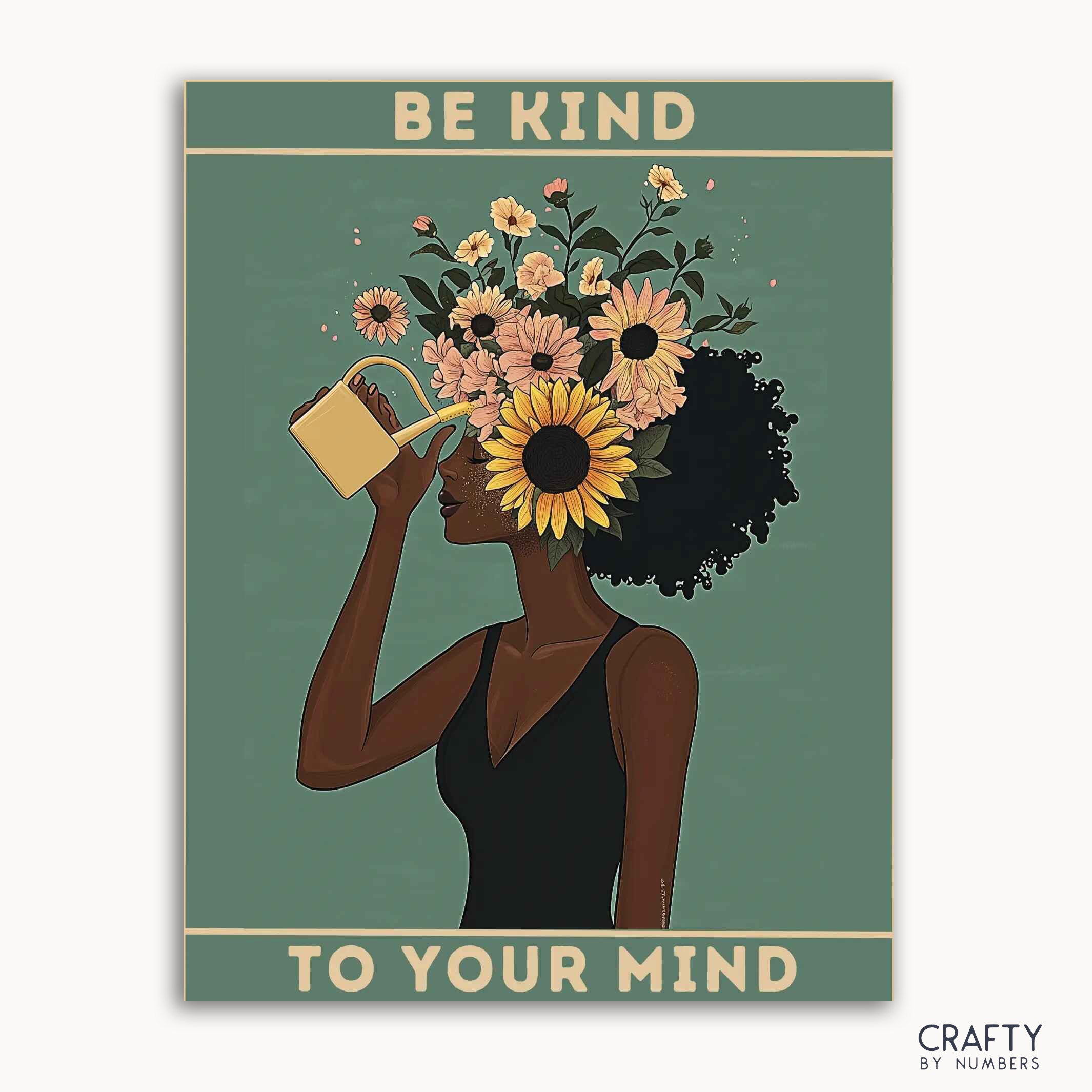
Craftybynumbers has written about this in more depth on its own mental health and paint-by-numbers guide, which covers how the hobby fits into a broader stress-relief routine.
Quick fact: Kits built for relaxation are intentionally sized for multiple short sessions rather than one sitting, which is part of why they suit busy adults better than a blank canvas ever could.
- Rhythmic, repetitive strokes support sustained attention without demanding technical skill
- Short sessions (20 to 40 minutes) fit around a workday better than open-ended art projects
- Numbered sections remove the anxiety of a blank page
How Do You Paint Mindfully With a Kit?
You don’t need a studio. You need about twenty uninterrupted minutes and a plan for what to do with your hands and your attention.
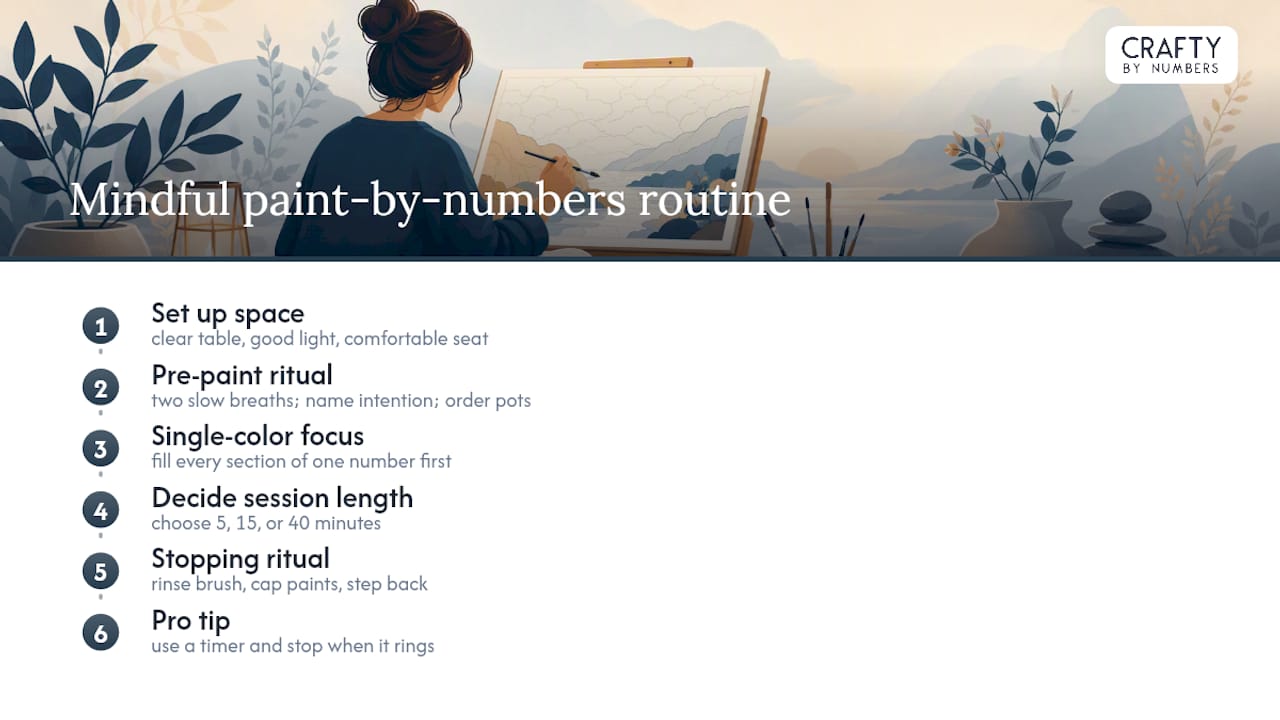
1. Set up your space first. Clear a small patch of table, get decent light (natural light or a warm desk lamp beats overhead fluorescents), and sit somewhere your back won’t complain after ten minutes. A tidy, deliberately arranged workspace acts as a signal to your brain that it’s time to slow down, the same way a made bed signals morning is over.
2. Run a short pre-paint ritual. Take two slow breaths. Name one small intention out loud or in your head, something like “I’m just going to paint, not judge.” Then lay your paint pots out in numerical order so you’re not hunting for color 7 halfway through a stroke.
3. Paint one color at a time. Pick a single number, fill every matching section on the canvas before switching colors. This single-color focus is the heart of the practice. Let your breathing settle into the rhythm of the brush, inhale on the lift, exhale on the stroke.
4. Decide your session length up front. Fifteen minutes works for a lunch break. Forty minutes suits an evening wind-down. Even five-minute creative sessions can build a calming habit over time, so don’t feel you need a long block of free time to make it count.
5. End with a stopping ritual. Rinse your brush, cap your paints, and step back to look at what’s done, not what’s left. Stopping mid-color rather than mid-frustration keeps the next session easy to start.
Pro Tip: If you find yourself rushing to “finish,” set a timer instead of a stopping point. When it goes off, put the brush down wherever you are, even mid-stroke. That trains you to stop because time is up, not because you’re chasing a result.
How Do You Choose a Beginner-Friendly Kit?
The wrong kit turns a relaxing hobby into a frustrating one, so a few practical checks up front save you a lot of grief later.
- Lower color counts. A kit with 24 colors and clear, well-spaced borders paints far more calmly than one with 60 tiny sections crammed together.
- Smaller canvas sizes for short sessions. A compact board finishes in a handful of sittings and gives you the satisfaction of completion sooner, which matters when you’re building a new habit.
- Textured canvas material. A slightly textured, artist-grade canvas holds acrylic paint better than thin paper and feels more like “real” painting under the brush.
- Pre-mixed, good-coverage acrylics. Paint that goes on smoothly in one coat means less time correcting patches and more time in the actual practice.
- At least one small round detail brush. Fine details need a proper point, not just a flat brush stretched thin.
- A clear printed reference guide. You want to glance at the finished image without hunting through a phone app mid-session.
- A hang-ready finished piece. Check whether the canvas comes framed, or ask whether a simple frame is easy to add, since displaying your work is part of what makes the habit stick.
Kits marketed specifically for relaxation, including gift-oriented ranges recognized in UK contemporary gift awards, tend to build these features in by design rather than as an afterthought.
Which Craftybynumbers Kits Work Best for Beginners?
These are the practical, in-stock starting points worth looking at first, each suited to a slightly different mood or skill comfort level.
- Ivory Essence: A soft, muted palette that’s forgiving for first-timers who want a calm subject with minimal color contrast to manage.
- Garden of Dreams: A florals-and-greens design that rewards patience with a genuinely display-worthy result once finished.
- Blossoming Cottage: A smaller-scale scene that suits shorter evening sessions without sacrificing visual detail.
- Colorful Doorways: Bold, saturated colors for readers who want energy on the wall rather than a muted palette.
- Colorful World Map: A large-format option, better suited to longer sessions or a project you share with a partner over several weekends.
- Pop Art Girl: Graphic, high-contrast blocks of color for anyone who prefers a modern, gallery-style finish.
- Crimson Cloak: Deeper, moodier tones for readers who find rich, saturated color more calming than pastels.
- Premium Paint Brushes (Set of 10): Worth adding to any kit above if you want finer control on detail work than the included brushes offer.
What Trips Up Most Beginners (and How to Fix It)?
Almost every new painter hits the same three snags, and none of them mean you’re bad at this.
Chasing a perfect edge. Beginners often try to keep every line razor sharp, which turns a relaxing session into a tense one. The fix is simple: paint the center of each section confidently and clean up edges with a small brush afterward, once the main color has dried. Perfection isn’t the goal here, presence is.
Losing patience with drying time. Acrylic paint dries fast, sometimes too fast if your workspace is warm or dry. Working section by section in numerical order, rather than jumping around the canvas, keeps wet edges from smearing into finished areas.
Feeling like progress is too slow. A larger canvas can look barely touched after a full session, which discourages some beginners before the habit takes hold. Starting with a smaller board, or breaking a big canvas into “today I’ll finish this corner” goals, keeps the motivation loop intact.
Overthinking color choice. Ironically, some painters second-guess a pre-mixed paint even though the numbering already made the decision for them. Trust the number. The whole point of the format is that the creative decision was already made, so your job is just to apply it.
None of these problems mean the hobby isn’t for you. They mean the process needs a small adjustment, and understanding why painting kits reduce artistic fear can help reframe early frustration as a normal part of learning a new rhythm.
Can You Personalize a Kit for Deeper Mindfulness?
Standard kits work well on their own, but small personal touches can turn a generic session into a more meaningful one. Choosing a subject that means something to you, a childhood pet, a favorite travel photo, a color palette that matches your mood that week, gives the process an emotional anchor that a random landscape doesn’t.
Some painters slow the ritual further by playing the same piece of music every session, so the brain starts associating that sound with calm focus before the brush even touches canvas. Others journal a single line after each sitting: what came up, what felt easy, what felt rushed. That small habit turns painting into a feedback loop rather than a one-off activity.
You can also adapt the physical kit itself. Swapping in a finer detail brush for intricate areas, working the background in slower, deliberate passes while saving fine details for a sharper mental state, or deliberately leaving one section blank to finish another day all give you more control over pacing. None of this requires extra skill. It just means treating the kit as a flexible tool rather than a fixed set of instructions, which is closer to how a process-first mindset is supposed to work in the first place.
What Benefits Go Beyond Stress Relief?
Stress relief gets most of the attention, but it’s not the only thing regular painting sessions build. Concentration is the more surprising one. Filling small numbered sections for twenty minutes trains sustained attention in a low-stakes way, and that skill quietly transfers to other tasks that need focus without pressure.
Emotional expression is the other underrated benefit. Choosing a moody, saturated design on a hard week, or a soft pastel one when you want gentleness, gives you a nonverbal outlet that doesn’t require explaining yourself to anyone. Painters often notice patterns in which kits they reach for during different moods, which is its own small form of self-awareness.
There’s also a quieter benefit around finishing something. Adult life doesn’t offer many small, complete, visible wins. A finished canvas, however modest, is proof you stuck with something end to end, and that feeling carries over into how you approach other unfinished projects in your week.
How Should You Care for and Display a Finished Painting?
Let the canvas cure fully before framing, acrylic paint can feel dry to the touch within hours but keeps hardening for several days underneath. Keep the finished piece out of direct sunlight long-term, since UV exposure fades pigment over months and years the same way it does with any acrylic artwork.
A simple frame, even an inexpensive one, turns a finished canvas from “craft project” into “wall art,” and seeing it daily reinforces the sense that the practice produced something real. Rotating finished pieces between rooms, or between a display wall and a drawer, keeps the visual reminder fresh instead of fading into background wallpaper. For anyone building a mindful painting habit, that visible marker of progress is often what keeps the next session on the calendar.
A Personal Take on Building the Habit
Most people overestimate how much time this hobby needs and underestimate how much patience it builds. Five minutes with a brush, done consistently, changes your relationship with focus more than one long weekend session ever will. The mistake I see beginners make constantly is treating the first kit like a test of artistic talent, when it’s really just a test of whether you can sit still and follow a number for a little while.
Start smaller than you think you need to. Value the process over the finished canvas, at least for the first few sessions, and the calm follows naturally. If you want more structure around building that habit, Craftybynumbers has practical guidance on staying patient with paint-by-numbers worth reading before you pick up a brush.
— Paula S.
Ready to Start Your First Mindful Painting Session?
Some paint-by-numbers kits include everything in one box: pre-mixed paints, numbered guidance, and detail brushes, so there’s no separate trip for supplies and no guessing about color mixing before you’ve even started relaxing.
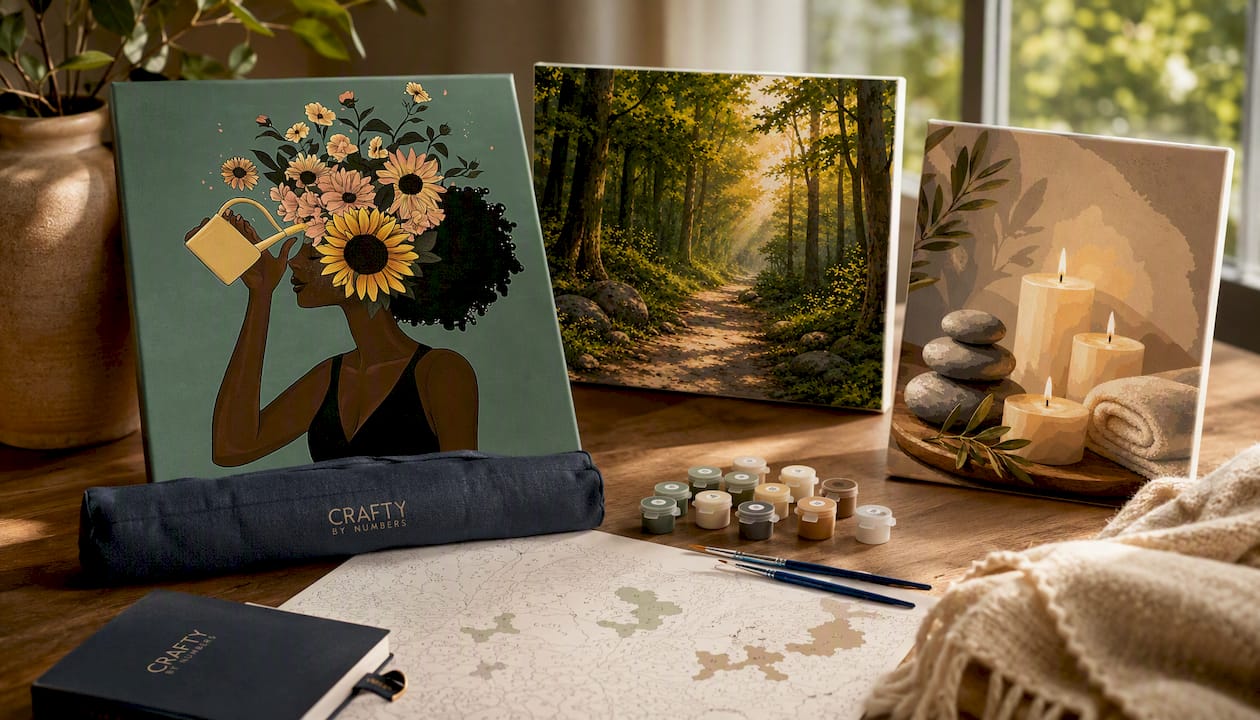
If you’re weighing where to begin, Ivory Essence and Blossoming Cottage are both built around forgiving color counts and clear borders, exactly the traits that keep a first session calming instead of frustrating. Pair either one with the Premium Paint Brushes set if you want finer control on detail sections from the start. Try a starter kit for a week, one short session at a time, and see whether the routine settles your evening the way it has for over 120,000 Craftybynumbers customers already. Pick a canvas, clear a small patch of table, and see what twenty quiet minutes with a brush actually feels like.
Sources
- Mindful Crafts: Geometric Paint-by-Number Kit | Chronicle Books (via SFMOMA Museum Store)
- Process vs outcome-based art (Shelley Skail)
- The art of mindfulness | Lion’s Roar
FAQ
How long does a mindful paint-by-numbers session take?
Most sessions run 20 to 40 minutes, though even five minutes of focused painting can build a calming habit over time.
Is paint-by-numbers actually good for stress relief?
Yes, the repetitive, process-first nature of filling numbered sections helps quiet evaluative thinking, which is the mechanism behind most of its calming effect.
What kit is best for a complete beginner?
Look for lower color counts and clear borders. Craftybynumbers’ Ivory Essence and Blossoming Cottage kits are both designed with forgiving palettes for first-timers.
Do I need any painting experience to start?
No. Pre-mixed paints and numbered sections remove the two decisions, color choice and placement, that usually intimidate new painters.
How do I clean acrylic paint off brushes?
Rinse brushes in lukewarm water immediately after each color, since dried acrylic is much harder to remove than wet paint and can stiffen bristles permanently.
0 comentarios