

Relaxation through art means using process-focused creative activity, whether painting, drawing, clay work, or even viewing a painting, to deliberately calm the nervous system and reduce psychological stress. You don’t need talent. You don’t need a finished product. The benefit comes from the doing, not the result.
Three things to know right now:
- A small but well-designed study found that 45 minutes of art making produced statistically significant reductions in salivary cortisol, the body’s primary stress hormone, along with participant reports of relaxation and flow.
- The American Art Therapy Association (AATA) defines art therapy as a mental health profession that uses active art-making within a psychotherapeutic relationship, which is distinct from everyday creative relaxation, though both draw on the same core mechanism: externalizing emotion through image-making.
- You can start today with a brief creative session, such as a 10-minute doodle or a structured paint-by-numbers kit. Research supports benefits after sessions ranging from 10 to 45 minutes, with some studies showing significant physiological changes only with sessions closer to 45 minutes.
Key Takeaways
Relaxation through art works because process-focused creative activity shifts attention away from stressors, activates the parasympathetic nervous system, and produces measurable reductions in cortisol and inflammatory markers.
| Point | Details |
|---|---|
| Core mechanism | Art calms the nervous system through parasympathetic activation, flow states, and emotional externalization, not artistic skill. |
| Fastest first activity | A 20-minute paint-by-numbers session removes decision fatigue and helps beginners enter flow quickly. |
| Timebox rule | Sessions of 10–45 minutes, three to five times a week, build a reliable stress-relief habit. Studies show significant cortisol reduction at the 45-minute mark, not earlier. |
| When to seek therapy | Self-directed art suits everyday stress; a credentialed ATCB art therapist is appropriate for trauma, clinical anxiety, or depression. |
| Evidence note | A A 2024 meta-analysis found a standardized mean difference indicating small-to-moderate improvements. of ~0.38; a cortisol study (n=39) showed significant reductions after 45 minutes, but sample sizes remain small. |
| Craftybynumbers kits | Structured kits with pre-matched paints and numbered canvases reduce setup friction and support the process-focused practice the research recommends. |
Table of Contents
- What is relaxation through art, and how does it work in the brain?
- Why art calms the mind: the emotional and psychological mechanisms
- Which art activities calm the nervous system?
- How to build a short, repeatable art practice
- Self-directed art vs. professional art therapy: which do you need?
- Seven time-boxed exercises to try today
- What does the research actually show?
- What I’ve learned from watching people pick up a brush for the first time
- Craftybynumbers makes the first session the easiest one
- Sources
- FAQ
What is relaxation through art, and how does it work in the brain?
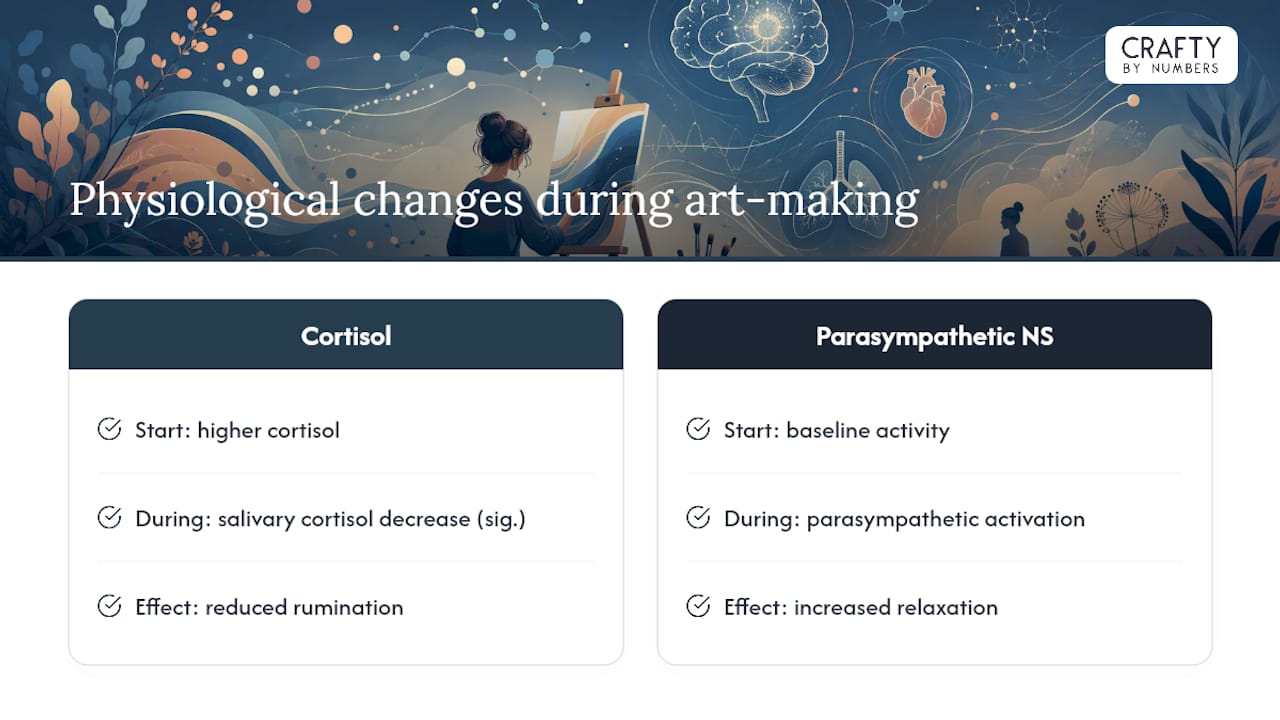
Art-making engages the parasympathetic nervous system, the “rest-and-digest” branch that counteracts the fight-or-flight stress response. When you focus on mixing colors or shaping clay, your prefrontal cortex narrows its attention to a manageable sensory task, which quiets the default mode network, the mental chatter responsible for rumination and worry.
The biomarker evidence is striking. Research from King’s College London found that viewing original art in a gallery reduced cortisol by an average of Research has reported reductions in cortisol of about 22% compared to just 8% for reproductions, along with lowered pro-inflammatory markers IL-6 by roughly 30% and TNF.-α by roughly 28%. That’s a meaningful physiological shift from something as passive as standing in front of a painting.
Statistic to know: Gallery viewing of original art reduced cortisol by ~22% and pro-inflammatory markers by up to ~30%, according to research from King’s College London’s Institute of Psychiatry, Psychology & Neuroscience.
Active art-making adds another layer: the dopamine reward pathway. Each small decision, choosing a color, completing a section, seeing a shape emerge, triggers a micro-reward signal. Over a session, those signals accumulate into a genuine sense of calm accomplishment. The Mayo Clinic Proceedings note that arts participation can support physical markers like blood pressure and sleep in certain settings, reinforcing the idea that the body responds to creative engagement in measurable ways.
Why art calms the mind: the emotional and psychological mechanisms
The relaxation effect doesn’t come from making something beautiful. It comes from shifting your attention to the process, and giving your emotions a physical form outside your head.
Four mechanisms drive this:
- Mindful attention (moving meditation). Art-making functions as what practitioners call a “moving meditation”, engaging attention networks in a way that seated, silent meditation doesn’t. For people who find stillness difficult, the physical act of holding a brush or pressing clay gives the restless mind something concrete to anchor to.
- Flow states. When a task is challenging enough to hold attention but not so hard it causes frustration, the brain enters a flow state: time distorts, self-consciousness drops, and stress recedes. Structured activities with clear steps, like filling numbered sections on a canvas, are particularly good at inducing this state.
- Emotional externalization. The AATA emphasizes that images can express what words cannot. Putting a feeling into color or shape gives it a boundary, which reduces its psychological weight. You can look at what you made and feel a sense of control over something that felt formless.
- Positive distraction and sensory anchoring. Focusing on texture, the drag of a brush, the smell of paint, the coolness of clay, lowers cognitive load and keeps attention in the present moment. This is sometimes called positive distraction, and it’s one reason tactile media like clay and collage tend to work quickly for anxious people.
You can read more about painting for emotional release and how creative expression translates internal states into something visible and manageable.
Pro Tip: If perfectionism is your main barrier, set a rule before you start: this piece will never be shown to anyone. That single decision removes the performance pressure that blocks most beginners from entering flow.
Which art activities calm the nervous system?
Many modalities work. The right one for you depends on your sensory preferences, mobility, and how much decision-making you want to handle. Here’s a practical menu:
- Watercolor painting. Forgiving by nature because the medium blends and flows on its own. Mistakes become texture. Best for perfectionists who need a medium that resists rigid control.
- Mandala drawing or coloring. Repetitive, symmetrical mark-making reliably invites calming autonomic responses. Best for people who want structure without needing artistic skill.
- Clay or air-dry sculpting. Highly tactile, which makes it one of the fastest routes to sensory anchoring. Best for people who are kinesthetic learners or who carry physical tension in their hands.
- Collage. Low-pressure because you’re assembling rather than creating from scratch. Cutting and arranging images is rhythmic and meditative. Best for people who feel intimidated by a blank canvas.
- Painting to music. Letting sound guide mark-making removes the need for a plan. Best for people who respond strongly to auditory input.
- Viewing art. As the King’s College London data shows, even looking at original artwork produces measurable physiological changes. Best for days when active making feels like too much effort.
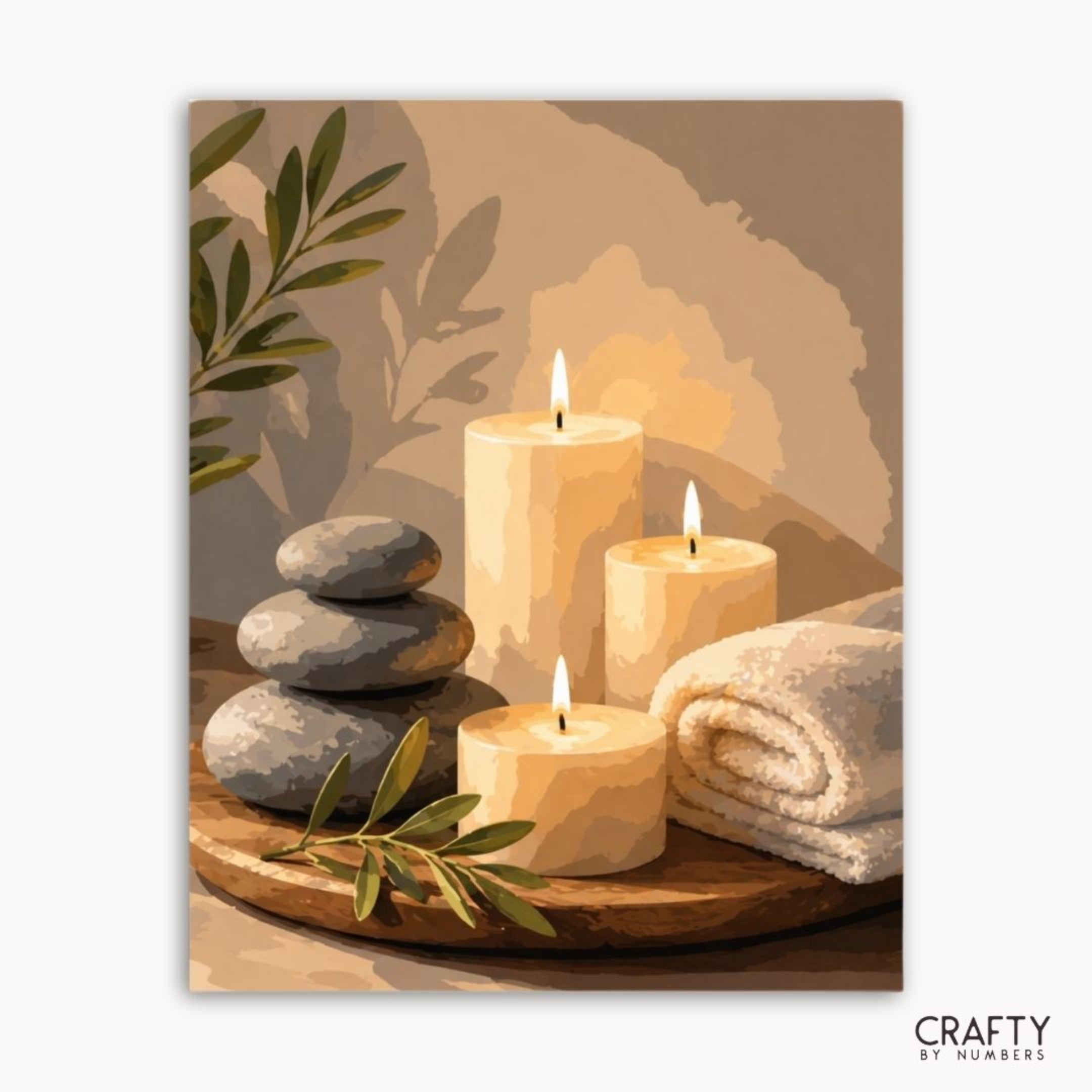
- Paint-by-numbers kits. Structured kits like the Spa Candles design, the Sacred River Teaching kit, or the Cozy Armchair theme remove nearly all decision fatigue. The numbered canvas tells you exactly where each color goes, so your brain can relax into the process rather than plan it. Best for absolute beginners or anyone whose stress level is already high before they sit down.
For affordable supplies, basic acrylic sets, watercolor pads, and air-dry clay are all available at craft stores like Michaels or online for under $20. The barrier to starting is genuinely low.
How to build a short, repeatable art practice
A reliable practice is short, process-focused, and scheduled. Aim for sessions of 10–45 minutes, three to five times a week; evidence from studies suggests that physiological benefits, such as cortisol reduction, are most reliably achieved with sessions around 45 minutes.
Here’s a simple setup routine:
- Prepare materials the night before. Set out your paints, brushes, and canvas so there’s no friction between deciding to start and actually starting. Protecting the first two minutes of a session is what keeps the habit alive.
- Set a timer. Twenty minutes is a good default. The timer removes the open-ended pressure of “I should keep going” and gives you permission to stop without guilt.
- Choose one simple prompt. “Paint only blues and greens today.” “Fill this section of the canvas.” “Make ten small marks without lifting the brush.” A constraint focuses attention and prevents the blank-canvas paralysis that kills momentum.
- Remove outcome pressure explicitly. Say it out loud or write it at the top of your page: “This is for process, not product.” Verywell Health notes that therapeutic benefit comes from the process, not artistic quality, which means a messy session is a successful one.
- Finish with a brief ritual. Clean your brushes, look at what you made for 30 seconds without judgment, and close the session deliberately. A small ritual signals to your nervous system that the wind-down is complete.
Pro Tip: Structured kits, especially paint-by-numbers, are the fastest way to eliminate decision fatigue. When the canvas is already numbered and the paints are pre-matched, your only job is to paint. That’s exactly the low-cognitive-load condition that lets flow happen fastest.
For more on building this kind of habit from scratch, the beginner painting habit guide at Craftybynumbers walks through the setup in practical detail.
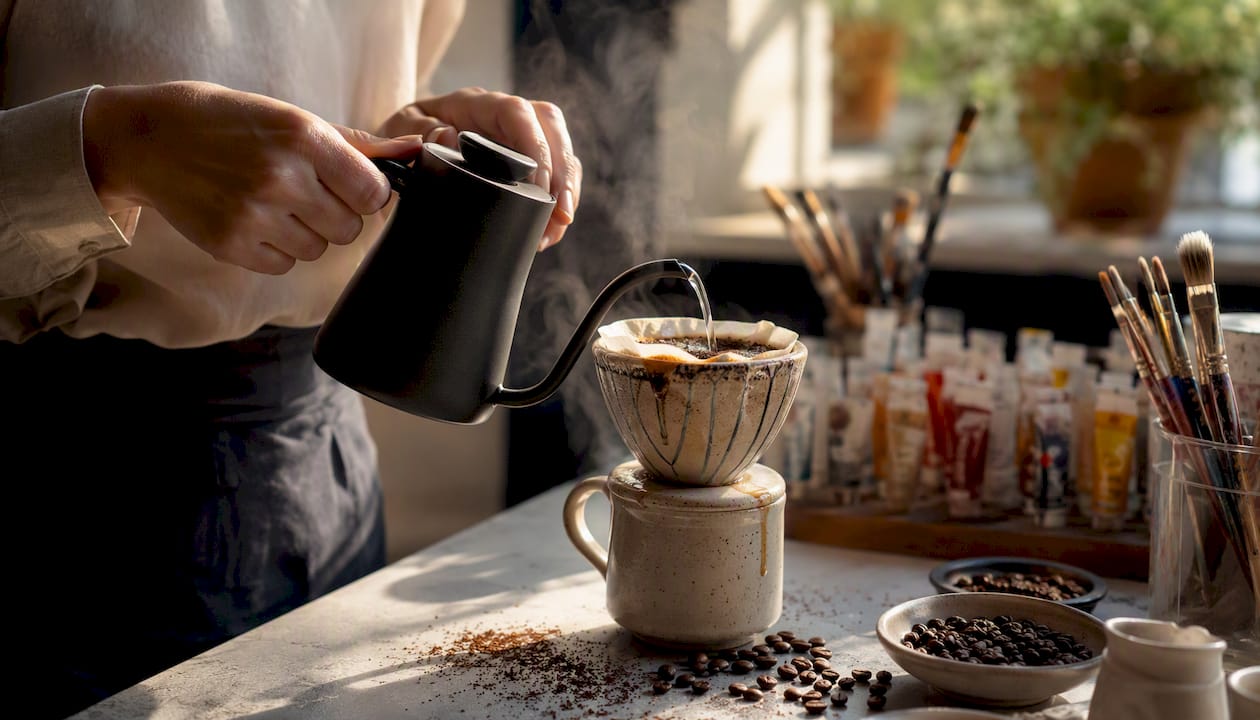
Pairing your session with a small sensory ritual, like brewing a cup of coffee before you sit down, can also cue your brain that creative time is beginning. Research on manual coffee rituals and creative focus suggests that deliberate pre-practice routines help shift attention away from stressors and toward the task at hand.
Self-directed art vs. professional art therapy: which do you need?
Self-directed art-making is excellent for everyday stress management. Professional art therapy is a clinical service for deeper emotional work or diagnosed mental health conditions. They’re not the same thing, and conflating them can lead people to either underuse one or expect too much from the other.
Key differences:
- Training and credentials. Art therapists hold a master’s-level degree and are credentialed by the Art Therapy Credentials Board (ATCB). A casual creative practice has no such requirement.
- Therapeutic goals. Clinical art therapy targets specific mental health outcomes, trauma processing, anxiety disorders, grief, within a structured therapeutic relationship. Self-directed art targets general well-being and stress reduction.
- Risk management and confidentiality. A licensed art therapist is trained to handle emotional material that surfaces during sessions. If you’re working through significant trauma or a mental health crisis, that professional container matters.
- Process and externalization. Both approaches use the same core mechanism, but the AATA notes that art therapy involves active art-making within a psychotherapeutic relationship, meaning the therapist’s role is integral, not optional.
When to seek a credentialed art therapist: If you’re experiencing persistent anxiety, depression, PTSD, grief, or any condition that significantly impairs daily functioning, self-directed art is a complement to professional care, not a replacement. To find a credentialed therapist, search the AATA’s therapist locator at arttherapy.org.
This article provides general information about creative relaxation practices, not clinical advice. If you’re experiencing significant mental health symptoms, please consult a qualified mental health professional.
Seven time-boxed exercises to try today
These work regardless of skill level. Pick one and do it before the day ends.
- 5-minute blind contour drawing. Draw your hand without looking at the paper. The goal is to break the habit of judging your lines. Pure process, zero product pressure.
- 10-minute doodle fill. Draw a large irregular shape on paper and fill it with any repeated pattern: dots, lines, spirals. Repetitive mark-making calms the nervous system quickly.
- 15-minute watercolor puddles. Drop wet paint onto wet paper and watch it spread. No brushwork, no control. Let the medium do the work. Art in Healthcare recommends water-based color experiments as a reliable way to calm a busy mind.
- 20-minute mandala coloring. Print a free mandala template or use a coloring book. Work from the center outward. The symmetry and repetition are the point.
- 20-minute paint-by-numbers session. Open a structured kit, set a timer, and fill one section at a time. The numbered system removes all planning. This is the fastest route to flow for most beginners.
- 30-minute collage. Cut images from old magazines without a plan. Arrange them on paper until something feels right. Glue it down. Done.
- 45-minute unfocused painting. Put on music, choose two or three colors, and paint whatever the music suggests. No subject, no reference image. The cortisol study cited earlier used a 45-minute session of this kind of open art-making and found significant stress hormone reductions.
Starter kit for beginners: A paint-by-numbers kit covers everything you need: a pre-printed numbered canvas, matched acrylic paints, and brushes. You’ll also want a small cup of water, a paper towel, and a flat surface. Total setup time: under three minutes.
What does the research actually show?
The evidence for art-based relaxation is real but not yet definitive. Here’s an honest summary.
What the studies support:
A 2024 systematic review and meta-analysis of visual art therapy trials found small-to-moderate improvements across some outcomes, with a standardized mean difference of approximately 0.38 for change-from-baseline analyses. That’s a meaningful signal, not a dramatic one. The review also flagged low overall study quality and significant heterogeneity across trials, meaning the methods and populations varied enough to make sweeping conclusions premature.
The cortisol findings are more specific. The n=39 art-making study showed statistically significant salivary cortisol reductions after a single 45-minute session. The King’s College London gallery-viewing data showed cortisol reductions of 22% for original art versus 8% for reproductions. Both are small-sample findings, but they point in a consistent direction.
Evidence snapshot: SMD ~0.38 in the 2024 meta-analysis; cortisol reduced after 45 minutes of art-making (n=39); gallery viewing of original art cut cortisol by ~22%.
Where the evidence is weak:
Most studies use small samples, short timeframes, and self-report measures. Few are randomized controlled trials. The field needs larger, more rigorous studies before any clinical claims can be made with confidence.
How to use this in practice:
The evidence is strong enough to justify trying art-based relaxation as a regular stress management tool. It’s not strong enough to replace medical or psychological treatment for clinical conditions. Use it as a complement, not a cure.
What I’ve learned from watching people pick up a brush for the first time
The most common mistake people make when they try art for relaxation is treating it like a performance. They sit down, make a mark, decide it looks wrong, and stop. The session ends before the nervous system has had time to shift.
What the research actually shows is that the physiological change, the cortisol drop, the parasympathetic activation, takes time to accumulate. The 45-minute cortisol study didn’t find significant reductions at the five-minute mark. The benefit builds across a session. That means the first ten minutes of any creative practice are almost always uncomfortable, and pushing through that discomfort is where the relaxation lives.
The other thing worth saying plainly: structured formats work. A paint-by-numbers kit, a mandala template, a coloring book, these aren’t “cheating.” They’re tools that reduce the cognitive overhead of starting, which is the single biggest barrier most people face. Once you’re in the flow of filling a numbered section or following a pattern, the nervous system doesn’t care whether you invented the composition. It responds to the process.
Try one of the time-boxed exercises above tonight. While even brief sessions can be relaxing, studies found significant physiological benefits after 45 minutes.
Craftybynumbers makes the first session the easiest one
Knowing the theory is one thing. Having everything ready when you sit down is another. Craftybynumbers paint-by-numbers kits for stress relief are built around exactly the low-friction setup this article describes: a pre-printed numbered canvas, pre-matched acrylic paints, and detail brushes, all in one box. No color mixing decisions, no blank canvas anxiety, no supply runs.
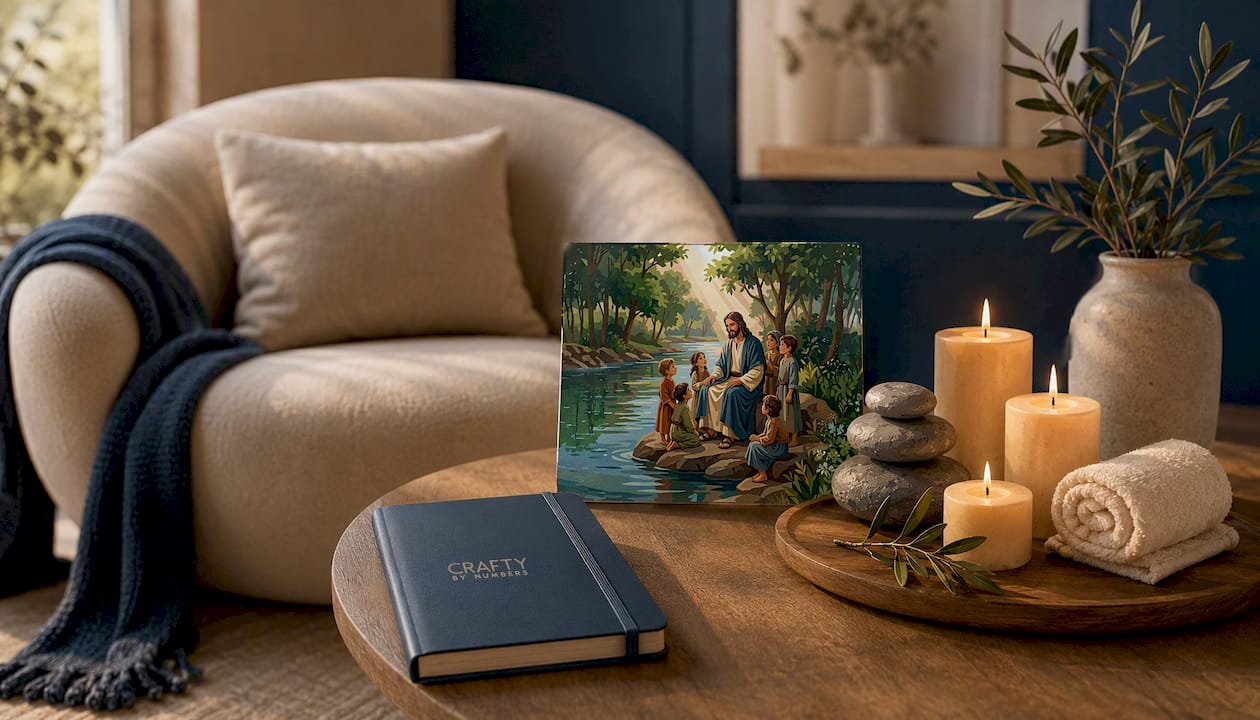
A paint-by-numbers kit example pairs a calming visual theme with a structured numbered system, so your first session can be 20 minutes of pure process focus rather than 20 minutes of figuring out where to start. Over 120,000 customers have used Craftybynumbers kits to build exactly the kind of short, repeatable creative practice described here.
Browse the full kit collection at Craftybynumbers and pick a theme that genuinely appeals to you. That small act of choosing a subject you like is itself the first step toward a practice you’ll actually return to.
Sources
- Reduction of Cortisol Levels and Participants’ Responses Following Art Making
- The positive impact of art on the body - King’s College London
- Systematic review and meta-analysis of visual art therapy
- The intersection of art and health: How art can help promote well-being - Mayo Clinic Proceedings
- Serenity on the Canvas: How Art Can Promote Relaxation and Well-being
- Art for Relaxation - Art in Healthcare
- Art Therapy: What Is It and More - Verywell Health
This article is general information, not a substitute for advice from a qualified doctor. Consult a qualified healthcare professional about your own circumstances before acting on anything here.
FAQ
How does art help with relaxation?
Art-making activates the parasympathetic nervous system and reduces cortisol, the body’s primary stress hormone. A study of 45-minute art sessions found statistically significant salivary cortisol reductions, and the process of focusing on a creative task quiets the mental rumination that drives stress.
What art activities calm the nervous system most effectively?
Repetitive, structured activities, such as mandala drawing, watercolor puddles, and paint-by-numbers, tend to produce calming effects quickly because they reduce decision-making and anchor attention to sensory details. Tactile media like clay also work well for people who carry physical tension.
What is the difference between art for relaxation and professional art therapy?
Self-directed art-making is a general well-being practice anyone can use for everyday stress. Art therapy, as defined by the American Art Therapy Association, is a clinical mental health profession requiring a master’s degree and credentialing, used to address specific psychological conditions within a therapeutic relationship.
Do you need artistic skill to benefit from relaxation through art?
No. Verywell Health and the AATA both emphasize that therapeutic benefit comes from the process, not the quality of the finished piece. Beginners consistently report relaxation and flow in structured sessions, regardless of prior experience.
Recommended
- Mental Health with Paint by Numbers: Relaxing Way to Unwind – Crafty By Numbers
- Paint by Numbers Stress Relief Benefits for Adults – Crafty By Numbers
- Patience with Paint by Numbers | Crafty by Numbers – Crafty By Numbers
- How Painting Kits Reduce Artistic Fear and Build Confidence – Crafty By Numbers
0 comments