

Guided painting, rhythmic fiber work like knitting or crochet, and sensory projects such as candle making and clay handbuilding are the most reliable relaxing crafts for adults, and none of them require artistic talent. Sessions of a manageable length can measurably ease tension, according to research on creative activities and mental health. Crafty By Numbers builds its kits around exactly this principle: clear steps, no blank canvas panic.
TL;DR:
- Guided paint by numbers and simple kits eliminate decision fatigue, providing a clear, beginner-friendly pathway for relaxation without artistic skill.
- Repetitive crafts like knitting, crochet, and embroidery help regulate the nervous system and are best suited for those seeking longer, calming sessions.
- Short projects such as watercolor washes, mini clay pots, or quick doodles require minimal tools and time, making them ideal for immediate stress relief.
- Beginners are encouraged to use guided starter kits with all necessary materials included to build confidence and avoid frustration during initial sessions.
- Matching craft types to your time and sensory preferences ensures sustained relaxation, with scaling down steps preventing overwhelm during activities.
Table of Contents
- 15 Relaxing Crafts for Adults, Ranked by How Easy They Are to Start
- How to Pick a Craft That Stays Relaxing
- Why Guided Starter Kits Work Better for Beginners
- Quick Projects You Can Finish Tonight
- What You Actually Need to Get Started
- Why We Keep Steering Beginners Toward Guided Kits
- Try a Guided Starter Kit This Week
- Sources
- FAQ
15 Relaxing Crafts for Adults, Ranked by How Easy They Are to Start
Every craft on this list works differently on the body and brain. Some rely on repetitive motion, some on color and pattern, some purely on touch. Picking the right match for your mood matters more than picking the “best” craft.
- Guided paint by numbers. A pre-printed canvas removes the blank-page anxiety that stops most adults from painting at all. Best for total beginners; start with a small canvas and one section at a time, roughly 30 minutes a sitting.
- Knitting or crochet. The repetitive hand motion mimics a meditative rhythm and helps regulate the nervous system. Best for steady hands and longer unwind sessions; start with a simple garter-stitch square.
- Adult coloring books. Zero learning curve, immediate visual payoff. Best for short sessions after a stressful day; a short session is plenty.
- Embroidery. Slow, focused needlework that rewards patience over speed. Best for anyone who likes a tidy, portable project; start with a small hoop and a basic stitch pattern.
- Candle making. The melting, pouring, and scenting process hits multiple senses at once. Best for a cozy solo evening; a single-pour kit takes about 30 minutes.
- Clay handbuilding. Working clay with your hands is one of the most physically grounding crafts available. Best for tactile learners; a pinch pot needs no wheel and no experience.
- Mandalas and zentangle. Drawing repeating patterns settles a busy mind fast, and even 10 minutes of drawing a day has been linked to a mood boost. Best for a quick reset between tasks.
- Diamond painting. Placing tiny faceted gems onto a sticky template is oddly hypnotic. Best for people who like sorting and small repetitive tasks; work in short color-block sections.
- Scrapbooking. Combining photos, paper, and stickers gives a nostalgic, low-stakes creative outlet. Best for reflective evenings; start with a single page, not a whole album.
- Paper crafts and origami. Folding paper into shapes is portable, cheap, and forgiving of mistakes. Best for travel or waiting rooms; most simple folds take under 15 minutes.
- Pressed flowers. Slow, quiet, and almost entirely passive once the flowers are arranged. Best for a gentle weekend project with a payoff days later.
- Simple woodworking or upcycling. Sanding and finishing an old piece of furniture channels frustration into something physical. Best for anyone who wants a visible, useful result.
- Watercolor painting. Loose washes of color are forgiving and almost impossible to mess up badly. Best for a 20-minute unwind with minimal setup.
- Soap making. Similar sensory appeal to candles, with the bonus of a usable end product. Best for batch projects on a free afternoon.
- Macramé. Knotting cord into patterns is repetitive in the same calming way as knitting, without needles. Best for beginners who want a wall hanging or plant holder as a quick win.
Pro Tip: Pick a project with only one skill to learn at a time. A craft that asks you to master color mixing, brush control, and composition all at once stops being relaxing fast.
How to Pick a Craft That Stays Relaxing
Match the craft to your actual state, not your ambition. A rushed 20-minute knit session and a leisurely three-hour painting project both work, but only if they fit the time you actually have.
- Set your timebox first. Decide if you have 20 minutes or two hours, then choose a project sized to fit, not the other way around.
- Choose your movement type. Rhythmic and repetitive (knitting, coloring) calms a racing mind; slow and deliberate (clay, embroidery) suits someone who wants to focus deeply on one thing.
- Choose your sensory preference. Scent and texture (candles, clay, soap) ground you physically; color and pattern (painting, mandalas) engage the eyes more than the hands.
Watch for red flags: a project with too many steps, unfamiliar tools, or a pattern you don’t understand halfway through. Scale down immediately, smaller canvas, fewer colors, shorter row count, rather than pushing through frustration. Experts generally recommend a non-judgmental mindset here: the benefit comes from the rhythm of making, not the polish of the result.
Pro Tip: Light a low-scent candle and take three slow breaths before you start. That small ritual tells your nervous system the stress part of the day is over.
Why Guided Starter Kits Work Better for Beginners
Gateway hobbies, coloring, cross-stitch, simple painting kits, protect beginners from frustration while still delivering real mental-health benefits, according to Verywell Mind. A kit that lays out every step in advance removes the decision fatigue that turns a relaxing evening into a stressful one.
Several kits are built around this exact idea:
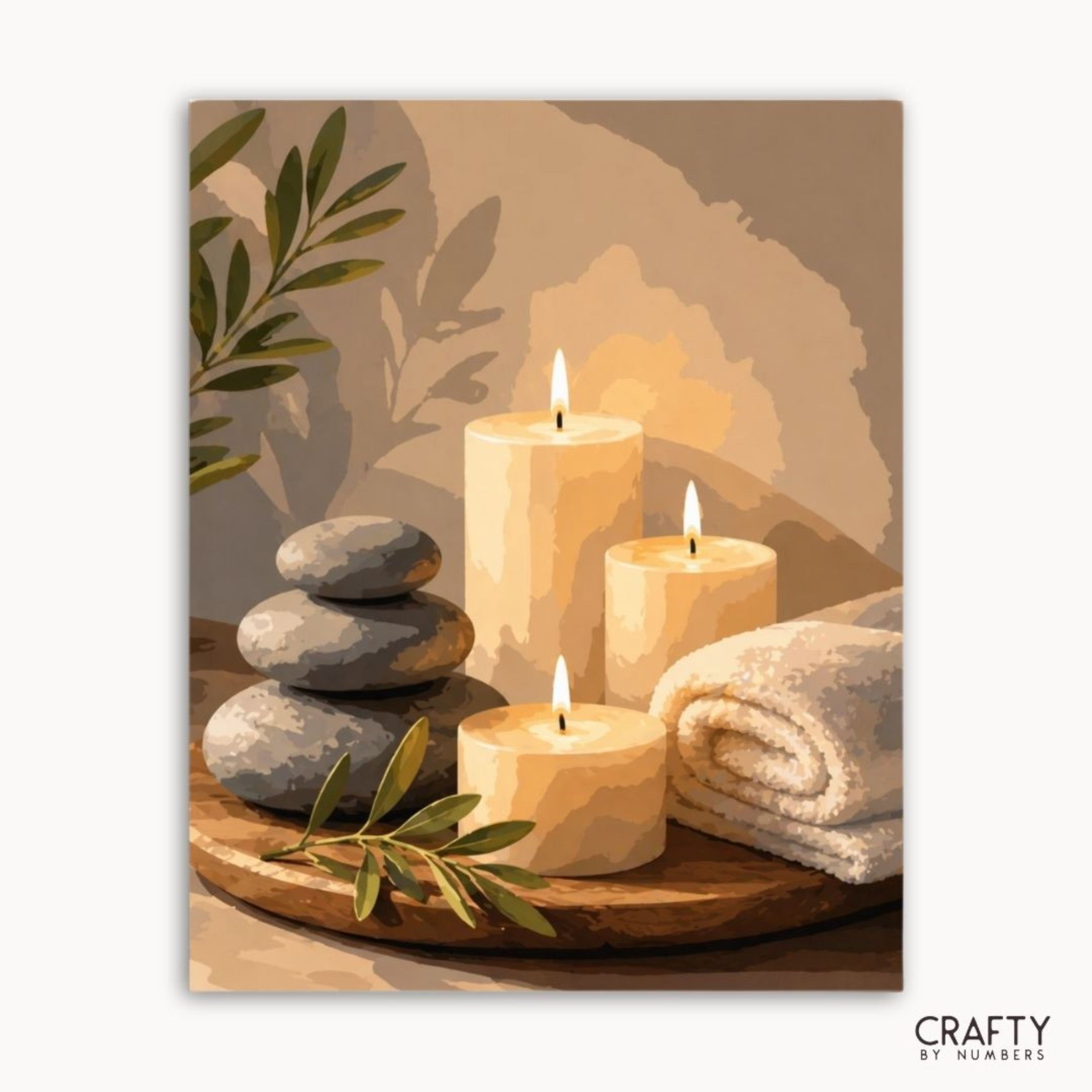
- A Spa Candles kit pairs a pre-printed design with a low-effort painting process, ideal for a scent-and-color sensory evening.
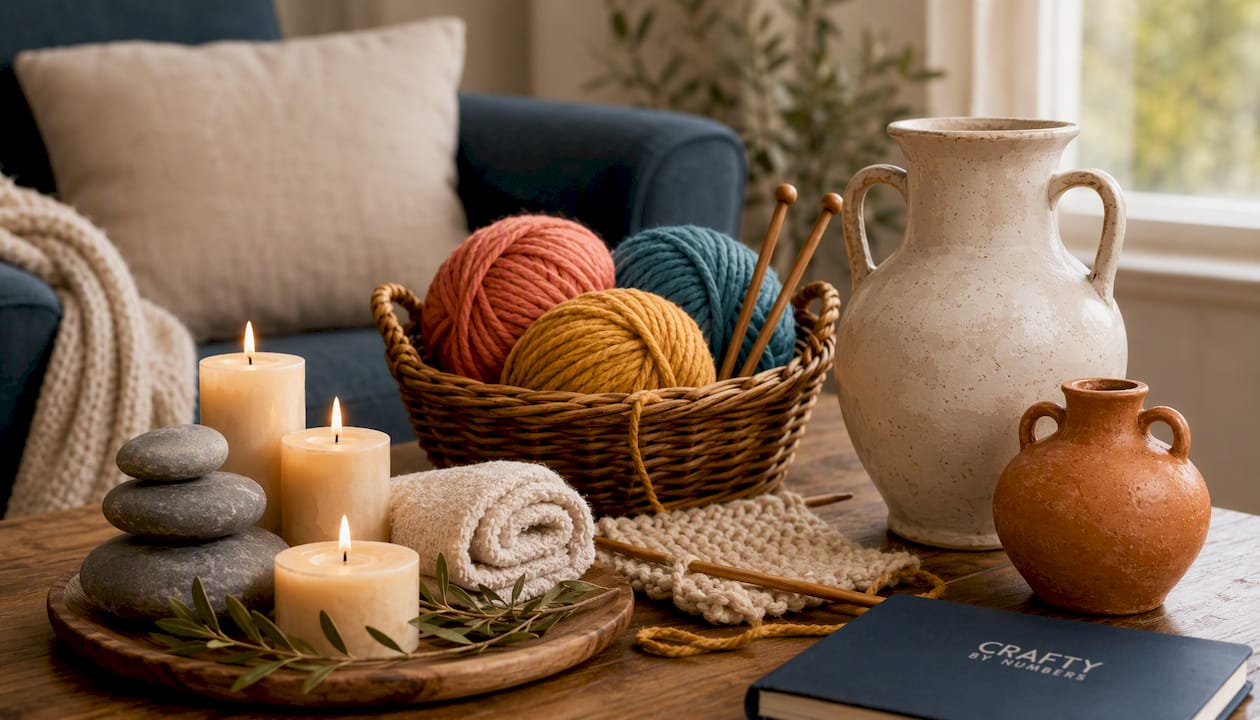
- A Knitting Basket kit gives fiber-craft fans a themed project without needing to learn stitches from scratch first.
- A Clay Vases kit introduces handbuilding through a guided, forgiving format rather than a spinning wheel.
Start with a smaller, simpler kit for your first two or three sessions, then move up to more detailed designs once you’ve built confidence. Aim for 30 to 45 minutes per sitting.
Quick Projects You Can Finish Tonight
Short on time? These take one sitting and almost no cleanup.
- A mini watercolor wash on a postcard-size sheet, a short session.
- A 30-minute knit square using thick yarn and big needles.
- A mandala doodled freehand or from a printed template, a quick creative reset.
- One single-pour candle from a starter kit, about 30 minutes.
- A mini clay pinch pot, no wheel needed, a brief tactile task.
- A one-page scrapbook frame around a single photo, 25 minutes.
Stop the moment you feel frustrated rather than absorbed. That’s the signal the session has done its job.
What You Actually Need to Get Started
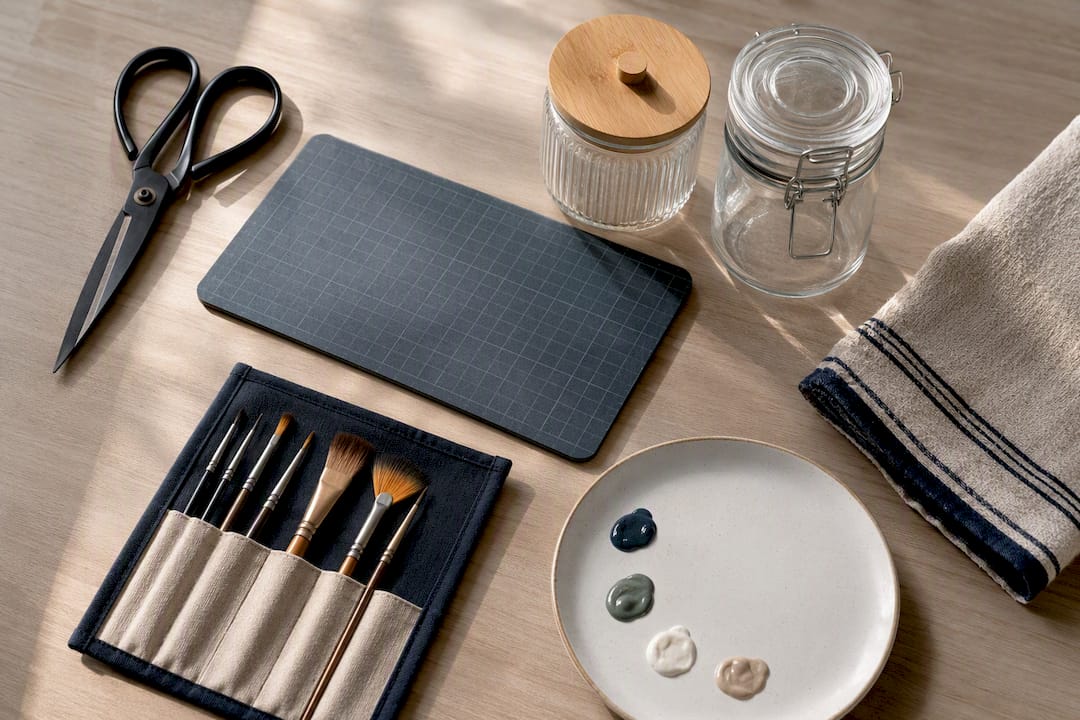
You don’t need a studio. Cross-craft basics: sharp scissors, a cutting mat, a small paintbrush set, and a few storage jars, cover most projects above, and cheaper substitutes (a dinner plate for a palette, an old towel for a mat) work fine while you’re testing what you like. If you try candle making, work near an open window or fan and stick to non-toxic wax and fragrance oils. Even short craft sessions have been tied to measurable mood improvement, so the barrier to entry is genuinely low.
Why We Keep Steering Beginners Toward Guided Kits
Readers consistently tell us the same thing: it’s not the craft itself that stresses them out, it’s not knowing where to start. A guided kit solves that in one move. It hands you a clear path and a finished piece you can actually be proud of, which is exactly what keeps someone coming back for a second project instead of shelving the first one half done. If you’ve never tried a paint by numbers project for stress relief, start small. You’ll know within one sitting whether it’s your kind of calm.
— Paula S.
Try a Guided Starter Kit This Week
If the list above left you overwhelmed by options, a guided kit solves that problem outright: someone else already made the decisions, you just show up and create. The Spa Candles kit offers a full sensory evening, scent, color, and a finished piece, in about 30 minutes. The Knitting Basket kit suits anyone who wants the rhythm of fiber crafting without hunting down patterns first. And the Clay Vases kit brings tactile, hands-in-the-material relaxation without a pottery wheel in sight.
Every kit ships with necessary materials included, so there’s no separate trip for supplies. New to crafting? Start with the smallest kit in a category you’re drawn to, and give yourself permission to make something imperfect. Browse the full kit range and pick your first project tonight.
Sources
For deeper reading beyond this list: the PMC review on creative activity and mental health covers the neuroscience behind repetitive handwork; Verywell Mind’s piece on gateway hobbies explains why beginner-friendly crafts protect against frustration; The Spruce Crafts’ list of soothing DIYs offers more step-by-step ideas; and Women’s Health Australia’s report on grandma hobbies breaks down the behavioral science. For a broader look at how focused, hands-on hobbies fit into a wider decompression routine, Geek Factor’s roundup of relaxing hobbies is worth a read too.
- PMC article on creative activities and mental health
- Verywell Mind — Cozy grandma hobbies
- The Spruce Crafts — Mentally soothing DIYs
FAQ
What is the hottest craft right now for adults?
Diamond painting and guided paint-by-numbers kits are two of the most popular relaxing crafts for adults right now, largely because they need no prior skill and deliver a finished, displayable piece.
What are some therapeutic crafts for adults?
Knitting, crochet, embroidery, and clay handbuilding are widely considered therapeutic because their repetitive, rhythmic motions help calm the nervous system.
What are some fun crafts I can do as an adult?
Candle making, watercolor painting, macramé, and scrapbooking are fun, low-pressure options that combine creativity with a quick sense of accomplishment.
What are some mindful crafts for adults?
Mandala doodling, zentangle, and guided painting kits work well as mindful crafts because they pull focus into the present moment through pattern and color rather than open-ended decisions.
0 comentarios