

A short session with a brush after work can help lower stress for many people, even without any art background. Try this tonight: set a timer for 15 minutes, pick one color and one brush, and paint whatever shape comes to mind. That’s the whole exercise. It borrows from the “intuitive exploration” method art teachers use with anxious beginners, and it works because there’s no goal to fail at.
Key Takeaways
A short, structured painting session after work lowers stress by shifting your attention from analysis to sensory focus, and consistency beats duration every time.
| Point | Details |
|---|---|
| Start small tonight | Set a 15-minute timer, use one brush and one color, and skip planning the outcome. |
| Follow the three-step routine | Prep for a few minutes, paint for 15 to 25 minutes, then close out with a short ritual. |
| Remove decisions to reduce pressure | Limit your palette, timebox sessions, or work one ongoing canvas across multiple nights. |
| Keep supplies minimal | A small canvas, one brush, a few paints, water, and a rag are enough for a 20-minute session. |
| Watch for bigger warning signs | Persistent sadness, disrupted sleep, or thoughts of self-harm call for professional support, not just a brush. |
| Try a structured kit for zero setup | Craftybynumbers kits like Rainy Window and Golden Shore Walk remove color and composition decisions entirely. |
Table of Contents
- How to Unwind With Painting After Work (And Why It Works)
- Your 3-Step After-Work Painting Routine
- 12 Quick Painting Ideas for a 15 to 30 Minute Session
- How to Keep Painting Relaxing Instead of Stressful
- What to Keep Within Reach for a 20-Minute Session
- When Painting Isn’t Enough
- Why Tiny and Nightly Beats Occasional and Long
- Pick a Kit That Matches Your Evening
- Sources
- FAQ
How to Unwind With Painting After Work (And Why It Works)
Your brain spends the workday in analysis mode. Painting pulls it somewhere else entirely. A focused, ten-minute gaze exercise built around quiet observation of an artwork has been shown to calm racing thoughts by shifting attention from rumination to pure sensory noticing. Painting does the same thing, just more actively. Mixing colors, watching a brush drag paint across paper, feeling water thin an edge. None of that requires the analytical part of your brain that’s been running all day.
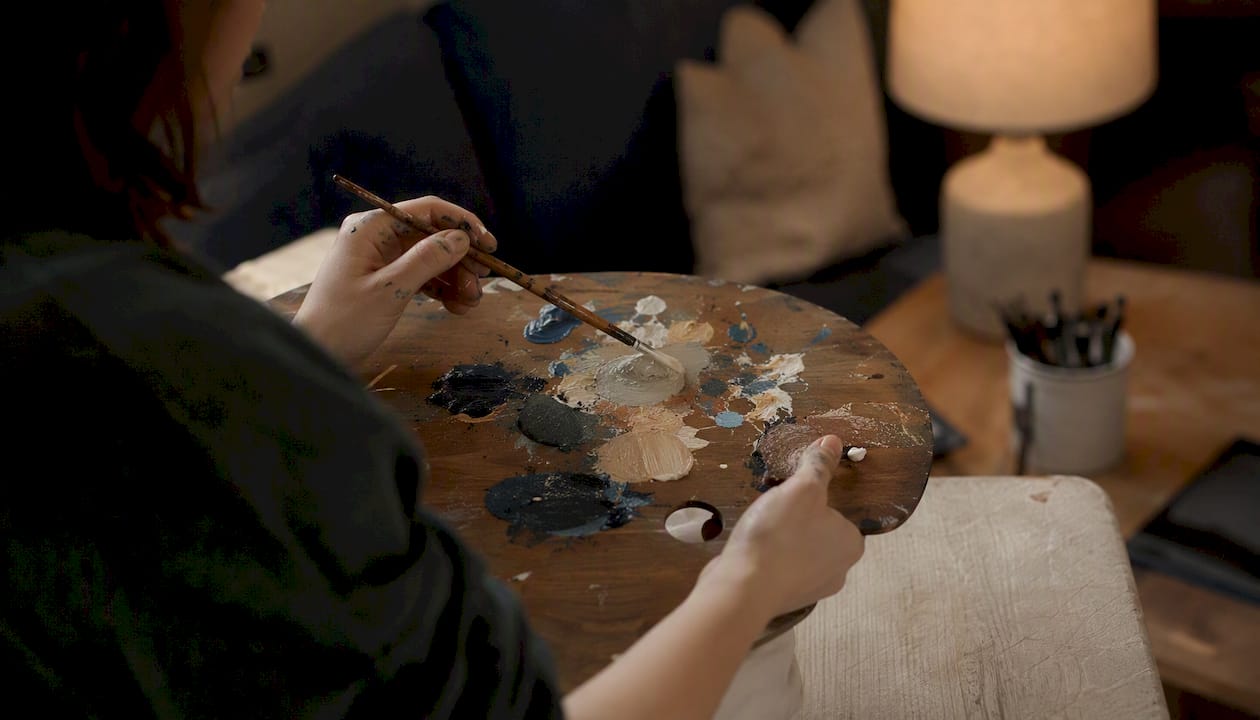
Salford Museum runs facilitated “slow looking” sessions that pair breathing exercises with guided observation of color and texture before a short hands-on activity. Participants report the structure helps them mentally disconnect. A University of Salford events page on the same program describes the same three-part rhythm: breathe, look slowly, then make something small. That sequence works at your kitchen table too.
Pro Tip: Don’t decide what you’re painting before you start. Load your brush, touch it to the surface, and let the first mark tell you what happens next. Deciding in advance is what turns a relaxing hobby into homework.
Your 3-Step After-Work Painting Routine
You don’t need a studio or a plan. You need three phases and a timer.
- Set up (3 to 5 minutes). Cover your table, fill a water cup, squeeze out three or four paint colors. Light a candle or start a playlist if that helps you switch gears, and something like the chillout playlists on Hot Mic Radio works well for this.
- Paint (15 to 25 minutes). No goal beyond finishing the timer. Follow the intuitive method of layering shapes and colors without a fixed outcome in mind.
- Close out (2 to 5 minutes). Rinse brushes, cap paints, and look at what you made for a few seconds before you walk away. This closing ritual is what separates a session from just messing around.
Short on space? A place mat and a folded towel work fine. If your brain resists sitting down, commit to five minutes only. Almost everyone keeps going once the brush is wet.
12 Quick Painting Ideas for a 15 to 30 Minute Session
Pick one based on your energy level, not your ambition. None of these require talent, and most take less time to paint than it took you to commute home.
- Color-block abstract. Three shapes, three colors, no plan. Ten minutes tops.
- Single flower study. One bloom from a photo on your phone, loose brushwork only.
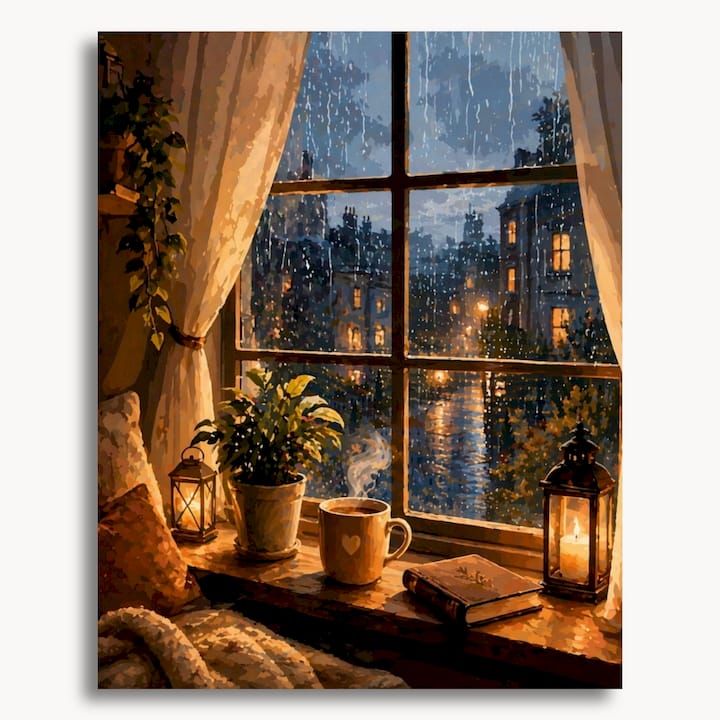
- Rainy window scene. Blur a cityscape or tree line behind streaks of gray and blue.
- Coffee mug still life. Set your actual mug on the table and paint it from life.
- Sunset gradient. Blend orange into purple across the page. Forgiving and fast.
- Ocean horizon line. One flat line splitting sky and water, two colors max.
- Paint-by-numbers kit. Zero decisions required, just numbered sections and matched paint.
- Watercolor wash. Wet the page, drop in color, watch it bloom on its own.
- Geometric pattern. Tape off triangles or stripes, fill with whatever colors feel right.
- Leaf or plant close-up. Grab something from your windowsill and paint just the texture.
- Digital symmetry drawing. A tablet app that mirrors your strokes automatically, no cleanup needed.
- One-color monochrome. Pick a single hue and paint only in its light and dark values.
For zero cleanup, the digital options win. For the fastest route to something you’re proud to hang up, paint-by-numbers and the beginner projects built for short sessions are hard to beat.
How to Keep Painting Relaxing Instead of Stressful
Perfectionism is the fastest way to turn a calming hobby into another performance review. A few guardrails fix that fast.
- Limit your palette. Three or four colors force decisions to happen quickly instead of spiraling.
- Timebox the session. A hard stop at 20 minutes means you finish before self-criticism kicks in.
- Work on one ongoing canvas. Add and cover layers across multiple sessions instead of chasing a finished piece every night.
- Try paint-by-numbers when your brain is fried. The structure removes composition and color decisions entirely, so you get the meditative brushwork without the blank-page pressure.
Pro Tip: If a piece looks muddy or overworked, stop fussing with details and paint one large, simple shape over the mess. Big shapes calm a piece down faster than any amount of fixing small ones.
What to Keep Within Reach for a 20-Minute Session
Cleanup kills momentum more than anything else, so keep your setup minimal.
- Small canvas or a pad of heavy paper (postcard size is plenty)
- One decent brush, medium round
- Three or four paint colors you actually like
- A water cup and an old rag
- A disposable foil palette, so nothing needs scrubbing after
No physical supplies on hand? A tablet with a basic drawing or color-by-number app gets you started in under a minute with no rinsing required. If you’re shopping for a kit, look for a pre-printed canvas, acrylic paints already matched to the numbers, and at least one detail brush. Skipping the color-matching step alone saves a solid ten minutes of setup.
When Painting Isn’t Enough
A nightly painting habit is a genuine stress-relief tool, not a treatment for something bigger. Watch for these signs that you need more than a brush and a timer:
- Sadness or flatness that doesn’t lift for weeks
- Sleep that’s consistently disrupted, whether that’s insomnia or oversleeping
- Any thoughts of self-harm or not wanting to be here
- Struggling to function at work or in daily life most days
If any of that sounds familiar, talk to your doctor or a therapist. In a crisis, contact a local crisis line immediately. Painting can lower everyday stress, but it isn’t equipped to carry what a mental health professional can.
Why Tiny and Nightly Beats Occasional and Long
The advice to “paint more” usually means an ambitious weekend session that never happens, because a free Saturday is rare and the pressure to make it count kills the relaxation before you’ve opened a tube of paint. A 20-minute weeknight habit works better precisely because it asks so little. There’s no full afternoon to protect, no “real” project to justify the time. Readers who’ve built a consistent habit around short sessions tend to stick with it far longer than anyone attempting a monthly marathon, and kits designed to remove setup friction are part of why over 120,000 customers have kept coming back to make this a regular practice instead of a one-off purchase.
Pick a Kit That Matches Your Evening
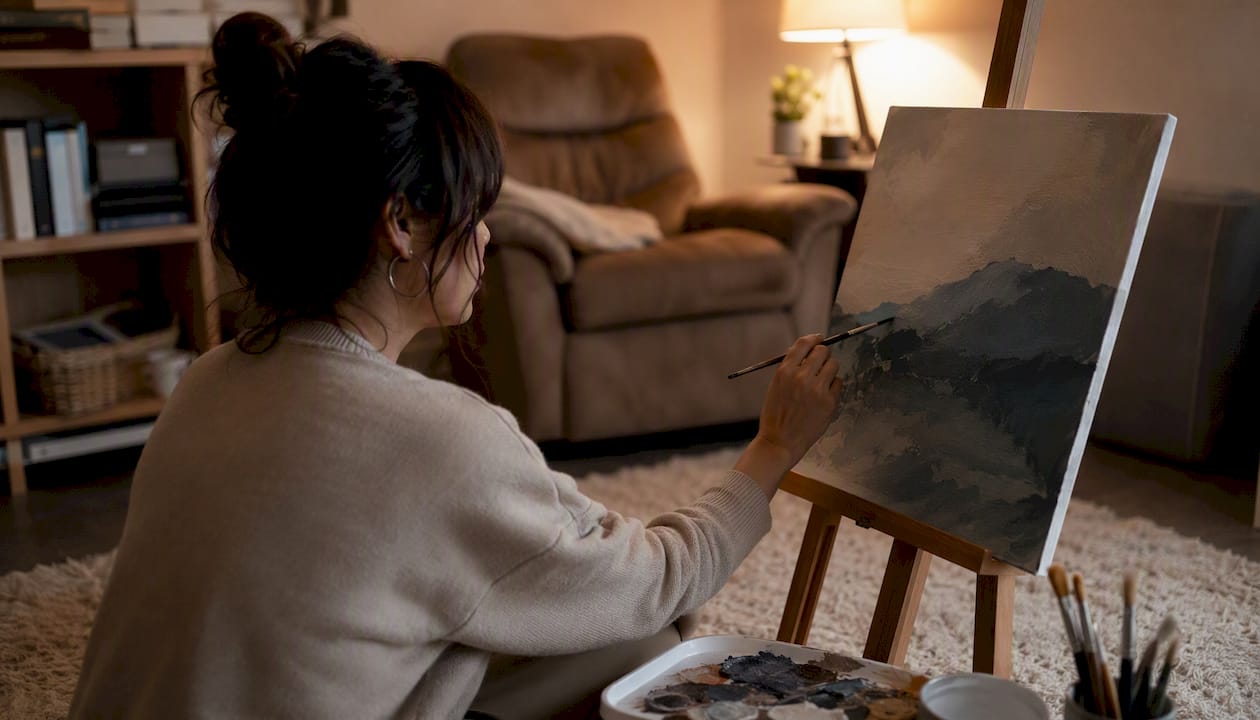
Some evenings call for a blank page and total freedom. Most evenings, after a full day at work, call for something with the decisions already made for you. That’s the entire premise behind a paint-by-numbers kit: a pre-printed canvas, acrylic paints matched exactly to each number, and a detail brush included, so you sit down and paint instead of prepping.
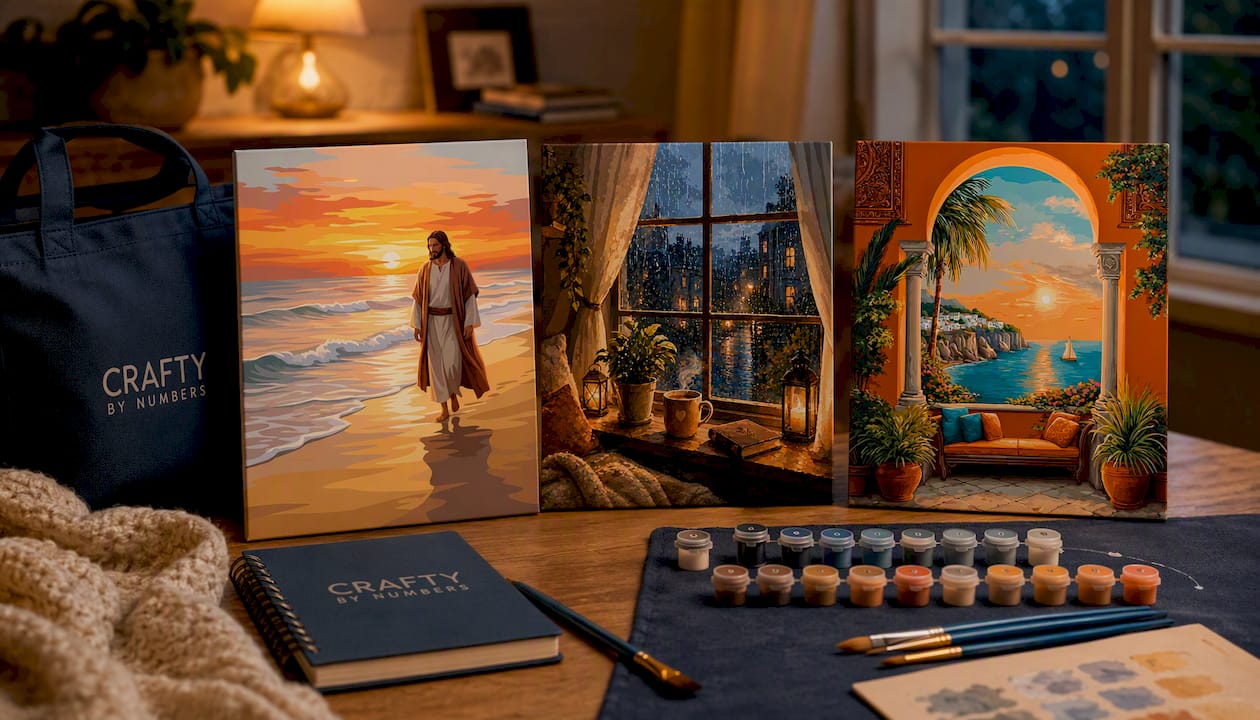
Match the kit to the time you actually have. If you’re working with a tight 15 to 20 minutes, Rainy Window is a compact, calming scene built for exactly that window. Want a gentle starting point with a bit more room to relax into? Golden Shore Walk keeps things simple without feeling babyish. And on a night when you’ve got a longer stretch and want something with more detail to sink into, Sunset on the Amalfi gives you that extra layer of challenge while still following the same numbered structure. Browse the current kits and pick the one that fits tonight’s schedule.
Sources
- Relax with Art - Salford Museum & Art Gallery
- Relax with art at Salford Museum and Art Gallery - University of Salford events
- Step by Step Intuitive Abstract Painting Tutorial for Beginners – Leensch
- Focus Painting - Art Contemplation Experience
This article is general information, not a substitute for advice from a qualified doctor. Consult a qualified healthcare professional about your own circumstances before acting on anything here.
FAQ
What’s a practical way to unwind after work?
A 15 to 20 minute painting session with a limited palette and no set outcome is one of the simplest ways to shift your brain out of work mode.
How long should I paint to unwind?
Fifteen to thirty minutes is usually enough to feel a difference, and a strict timer helps keep the session relaxing instead of open-ended.
How do I get rid of art burnout fast?
Switch to an ongoing single canvas you build up over several short sessions instead of forcing a finished piece each time, or try a paint-by-numbers kit that removes composition decisions entirely.
How do I unwind after a bad day at work?
Skip planning what to paint and just make marks for ten minutes with one color, following an intuitive, process-first approach rather than aiming for a finished result.
Is paint-by-numbers actually relaxing, or just for kids?
It’s a legitimate stress-relief tool for adults because the numbered structure removes color and composition decisions, letting you focus purely on the repetitive, meditative act of brushing paint into place.
0 comments