

Photos are the foundation of every meaningful custom art gift. The role of photos in custom art gifts goes far beyond decoration. A photo carries a specific moment, a real face, a shared memory. When that image becomes a painted canvas or a handcrafted artwork, it stops being a file on a phone and becomes something a person can hold, hang, and return to every day. The personalized gifting industry is worth $40.16 billion globally, and photo-based gifts are its fastest-growing segment. That growth reflects something simple: people want gifts that feel personal, not purchased.
How do photos serve as emotional anchors in personalized art gifts?
Photos become emotional anchors when they move from a digital screen to a physical object. A photo on a phone gets scrolled past. A photo painted onto canvas gets framed and hung in a living room. That shift from digital to physical changes how a memory is experienced.
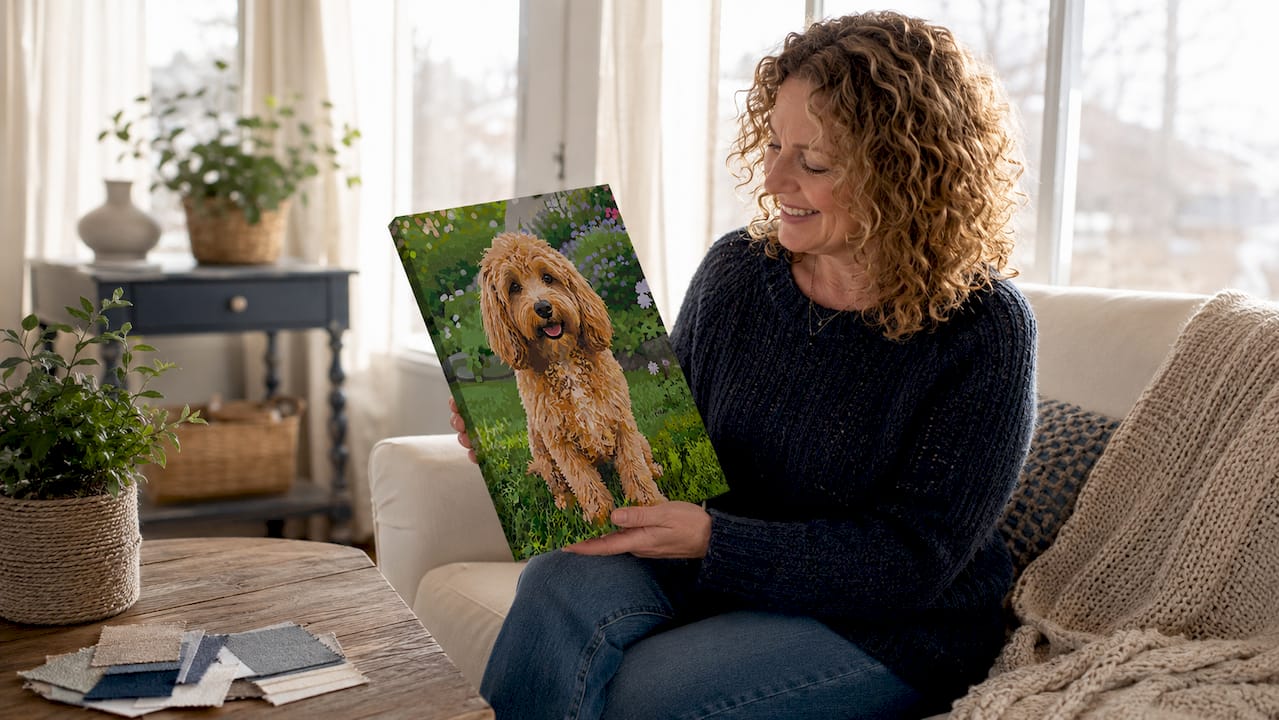
The reason this works is simple: physical objects integrate into daily life in a way that digital files never do. A person walks past a painted portrait of their dog every morning. They see it when they wake up and when they come home. The memory it holds becomes part of their environment, not just their camera roll.
Emotional recognition drives gifting success. When a recipient sees a moment they actually lived in, rendered as art, the response is immediate and genuine. That reaction is what separates a meaningful gift from a forgettable one.
- Milestone moments like weddings, graduations, and new babies carry the strongest emotional weight in photo gifts
- Candid photos create more emotional impact than posed studio portraits because they capture real, unguarded moments
- Relationship-specific images (a photo of two friends, a parent and child, a couple) make the recipient feel seen, not just gifted
- Travel photos transformed into art connect recipients to experiences they treasure, not just places they visited
Pro Tip: Choose a photo where the subject is doing something, not just standing still. Action and emotion in a photo translate directly into emotional resonance in the final artwork.
What technical and aesthetic photo qualities matter for custom art gifts?
Photo quality determines the quality of the final artwork. A blurry, low-resolution image produces a blurry, low-resolution painting. No artistic style or medium can fully compensate for a poor source file.
The most common technical failure is using a mobile-cropped or social media image. Social media images often fail the 300 DPI print resolution threshold because platforms compress files automatically. That compression degrades detail. The fix is straightforward: always use the original file from the camera or phone gallery, not a screenshot or downloaded copy.
Lighting matters just as much as resolution. Natural light produces clean shadows and true skin tones. Harsh flash photography flattens faces and creates unnatural highlights that are difficult to render in paint or print. A photo taken outdoors on an overcast day often produces better results than a perfectly composed indoor shot under artificial light.
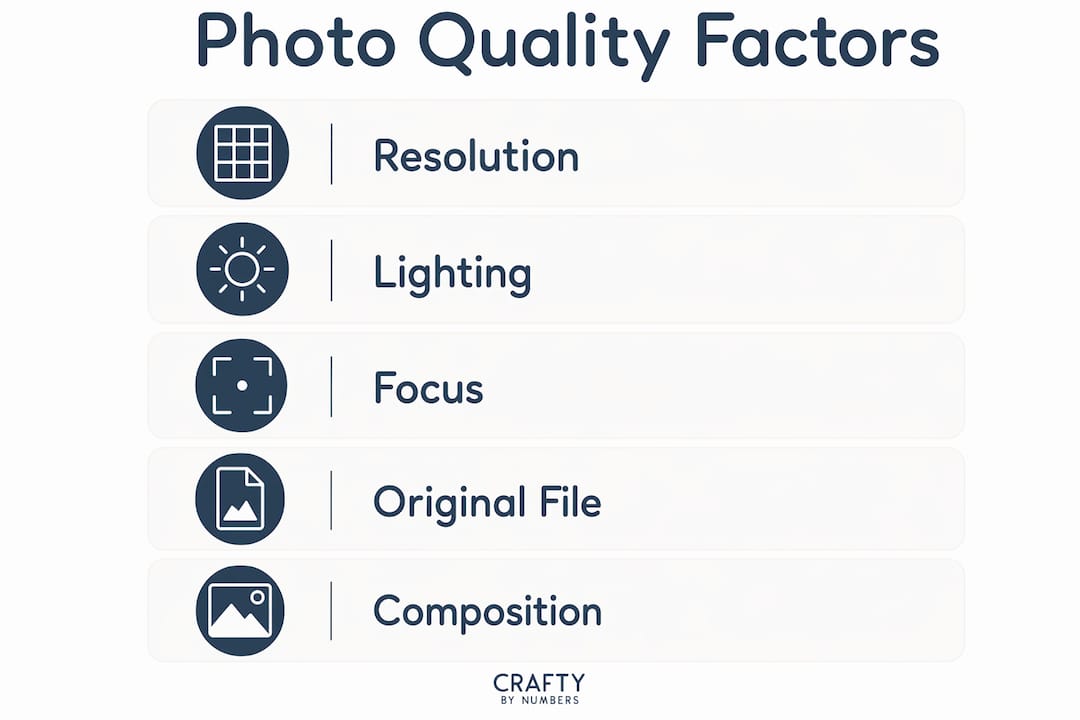
Here is a quick reference for evaluating photo suitability:
| Quality Factor | What to Look For | Common Pitfall |
|---|---|---|
| Resolution | Original file, minimum 300 DPI | Screenshots or downloaded social media images |
| Lighting | Natural, even light with soft shadows | Harsh flash, heavy backlighting |
| Composition | Subject centered or clearly framed | Cluttered backgrounds, partial faces |
| Focus | Sharp focus on the main subject | Motion blur, soft focus selfies |
| Emotional content | Genuine expression or candid moment | Forced poses, unflattering angles |
Pro Tip: If you only have a low-resolution photo of an important moment, test it by zooming in to 100% on your screen. If it looks pixelated at that zoom level, it will look pixelated in print.
The balance between emotional and technical suitability is real. A technically perfect photo of a forgettable moment makes a weak gift. A slightly imperfect photo of a deeply meaningful moment often makes a stronger one. Prioritize emotional content first, then technical quality.
What creative methods transform photos into unique custom artworks?
A straight photo print is not the same as custom art with personal pictures. The difference lies in artistic interpretation. When a photo is reinterpreted through a painting style, a medium, or a technique, it shifts from documentation to art. As photography scholars note, the distinction between a documentary photo and an art photo is intention. Art proposes a way of seeing, not just a way of recording.
The most popular methods for transforming photos into custom artworks each produce a distinct visual result:
- Canvas prints offer the highest display longevity. 41% of recipients still display canvas photo gifts after one year, making them the most durable format for long-term visibility in a home
- Watercolor and oil painting styles soften the image and add warmth, making them well suited to portraits and family scenes
- Acrylic and mixed media styles produce bold, high-contrast results that work well for landscapes, pets, and action shots
- Paint-by-numbers kits turn the photo into an interactive experience. The recipient or giver paints the artwork themselves, adding a layer of personal effort that no other format provides
The photo conversion to painting process matters because it changes how the recipient relates to the image. A painted version of a photo feels handmade. It carries the weight of time and attention in a way that a printed copy does not.
Matching the style to the recipient and setting is practical advice, not aesthetic theory. A bold acrylic portrait suits a modern apartment. A soft watercolor works in a nursery or a bedroom. A large canvas painting commands attention in a living room or hallway. Craftybynumbers offers custom paint-by-numbers kits that let you turn any photo into a detailed, paintable canvas with pre-mixed acrylic paints and brushes included.
How to select the best photo with the recipient’s perspective in mind?
The most common mistake in photo gifting is choosing a photo the giver loves rather than one the recipient will treasure. Gifts resonate strongest when they reflect what the recipient values, not the giver’s taste or aesthetic preference. A photo you find beautiful may not hold the same meaning for the person receiving it.
Recipient-centered photo selection requires a small shift in thinking. You are not curating your own memories. You are selecting a moment that belongs to the recipient’s story.
Here is a practical process for choosing the right photo:
- Start with photos the recipient has already shared publicly. Instagram posts, Facebook memories, and shared albums reveal which moments they consider worth displaying.
- Ask a mutual friend or family member. Someone close to the recipient often knows which photos or memories carry the most weight.
- Think about what the recipient talks about most. If they mention a trip, a pet, or a person constantly, a photo connected to that subject will land well.
- Avoid photos where the recipient looks unflattering. Even a meaningful moment loses its impact if the recipient feels self-conscious about how they look in the image.
- Cross-check emotional and technical suitability. Use the quality factors from the table above to confirm the photo will produce a strong final artwork.
Pro Tip: For milestone gifts like weddings or anniversaries, check the recipient’s own social media posts from that event. The photo they chose to share publicly is almost always the one they love most.
The process of creating custom paint by numbers from a photo works best when the image is chosen with the recipient in mind from the start. A well-chosen photo makes every subsequent decision, from size to style to medium, easier and more likely to succeed.
Key takeaways
Photos are the single most important variable in custom art gifts because they determine both the emotional resonance and the technical quality of the final artwork.
| Point | Details |
|---|---|
| Photos as emotional anchors | Moving a photo from digital to physical transforms a memory into a daily presence in someone’s life. |
| Technical quality matters | Use original files at 300 DPI minimum; social media images compress below professional print standards. |
| Candid beats posed | Candid photos create stronger emotional attachment than studio portraits in custom art gifts. |
| Recipient-centered selection | Choose photos the recipient already values, not photos the giver finds aesthetically pleasing. |
| Medium shapes meaning | Paint-by-numbers and canvas formats outperform straight prints for long-term display and emotional impact. |
Why the photo matters more than the medium
I have seen people spend hours choosing between canvas sizes and art styles while spending five minutes picking the actual photo. That order is backwards. The photo is the gift. Everything else is the frame.
The most memorable custom art gifts I have encountered share one quality: the recipient recognized the moment immediately and felt something. Not because the artwork was technically perfect, but because the photo captured something true. A grandmother laughing at a birthday party. A dog mid-leap in a backyard. A couple on a hike before they got engaged. Those images carry weight that no artistic style can manufacture from a mediocre source.
The technical side matters, but it is a floor, not a ceiling. Get the resolution right, avoid compressed files, and use natural light where possible. Once those basics are covered, stop optimizing and start feeling. Ask yourself honestly: does this photo make you feel something when you look at it? If the answer is yes, it will almost certainly make the recipient feel something too.
Personal storytelling beats technical perfection every time. A slightly imperfect photo of a deeply meaningful moment will always outperform a flawless image of a generic one. The importance of photos in art gifts is not about pixels. It is about presence. Choose the photo that makes the recipient feel seen, and the rest will follow.
— Paula S.
Craftybynumbers custom kits: your photo, painted by hand
Craftybynumbers turns your personal photos into detailed, paintable canvases that become one-of-a-kind gifts. Each custom paint-by-numbers kit includes a pre-printed canvas made from your photo, high-quality acrylic paints, and detail brushes. Over 120,000 customers have used Craftybynumbers to create gifts that get displayed, not stored.
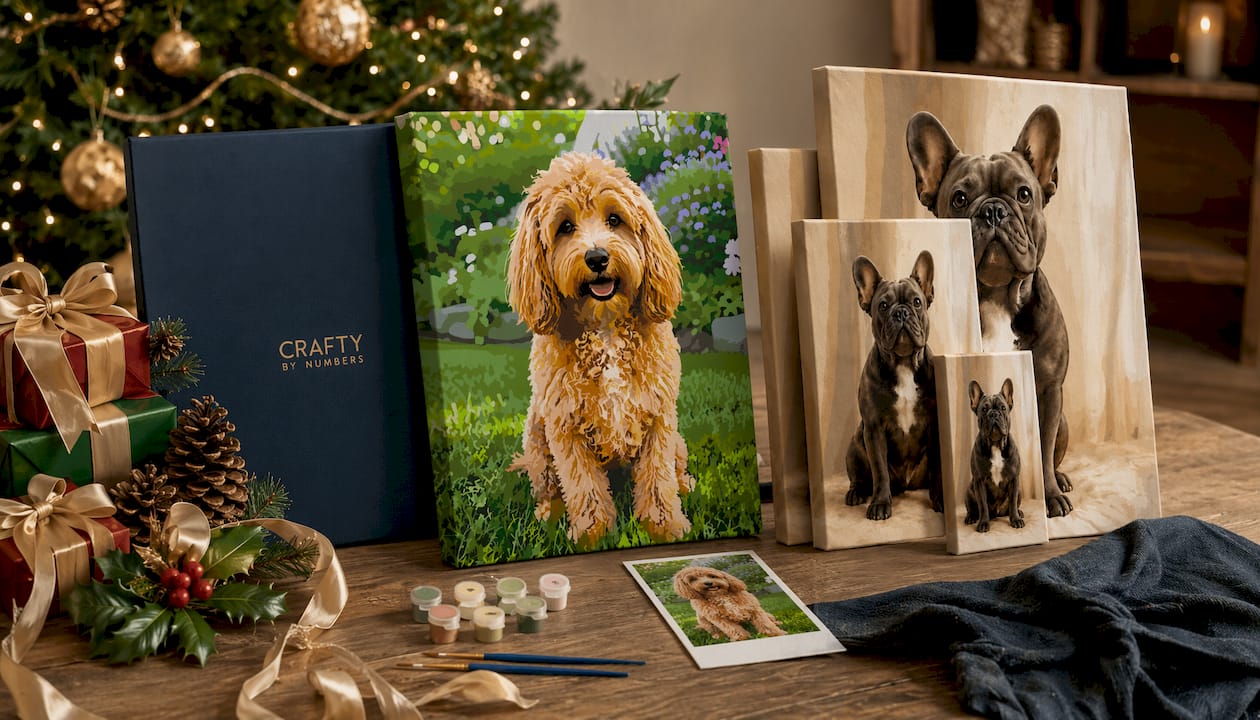
You can choose from multiple formats, including a multi-size custom kit that fits any wall or room. For something with a seasonal or decorative feel, the Gilded Gifts & Garland kit offers a specialty option worth exploring. Upload your photo, pick your size, and paint a gift that actually means something.
FAQ
What makes a photo good for a custom art gift?
A good photo has sharp focus on the main subject, natural lighting, and is sourced from the original camera file rather than a social media download. Emotional content matters as much as technical quality.
How do photos in personalized gifts differ from regular photo prints?
Personalized art gifts transform a photo through an artistic medium like painting, canvas, or acrylic, shifting it from documentation to art. That transformation adds emotional and aesthetic value a straight print cannot replicate.
What resolution does a photo need for a custom art gift?
Photos should meet a minimum of 300 DPI for professional print quality. Social media images often fall below this threshold due to automatic compression, so always use the original file.
How long does it take to receive a custom art gift?
Production and shipping for personalized art gifts can extend to two weeks or more. Order well in advance of any deadline to avoid delays.
Should I choose a candid or posed photo for a custom art gift?
Candid photos produce stronger emotional impact and longer display rates than posed studio portraits. Choose a photo that captures a real, unguarded moment for the best result.
0 comentarios