

For most adults chasing relaxation, real creativity, and something worth framing, painting wins over coloring books. Coloring gives you a faster reset when your nervous system is already fried. Painting gives you deeper immersion, genuine self-expression, and a finished piece you actually want on your wall.
- Relaxation: coloring calms faster; painting calms deeper
- Creativity: coloring stays inside the lines; painting lets you make real decisions
- Keepsake value: coloring pages get recycled; paintings get framed
A 2024 review of art therapy mechanisms found that active art making reshapes activity across the brain’s default mode, executive, and salience networks, a shift that coloring’s more repetitive, low-decision format doesn’t trigger to the same degree. If you’re exhausted and need five minutes of quiet, grab a coloring book. If you want a Sunday afternoon that leaves you with something to show for it, pick up a brush.
Key Takeaways
Painting delivers deeper relaxation, stronger creative expression, and a lasting keepsake, while coloring books remain the faster fix for acute, short-term stress.
| Point | Details |
|---|---|
| Painting reduces stress more deeply | Immersive art making reshapes brain networks tied to stress reduction more than repetitive coloring tasks. |
| Coloring wins on speed | Structured coloring removes open-ended decisions, making it faster for acute anxiety relief. |
| Cost stays comparable | Coloring sets run low cost; starter paint-by-numbers kits cost more. |
| Choose by goal, not habit | Quick reset favors coloring; planned relaxation and a keepsake favor painting. |
| Craftybynumbers removes the barrier | Pre-printed canvases, matched paints, and brushes let beginners start painting the same day they decide to. |
Table of Contents
- Why Painting Is Better Than Coloring Books for Deeper Relaxation
- Painting vs. Coloring Books: A Side-by-Side Comparison
- When Coloring Books Are Genuinely the Better Choice
- When Painting Is the Stronger Pick
- How to Choose Between Painting and Coloring Today
- Getting Started With Painting Without the Overwhelm
- The Research Behind Painting’s Deeper Benefits
- Why I Recommend Painting for Planned Relaxation
- Try Painting Without the Guesswork
- Sources
- FAQ
Why Painting Is Better Than Coloring Books for Deeper Relaxation
Both activities calm you down through the same basic route: focused attention, repetitive motor movement, and a low-stakes decision space that gives your brain permission to stop problem-solving. That’s why fifteen minutes of shading a mandala can feel like a mental exhale. Your prefrontal cortex, usually busy juggling deadlines and decisions, gets a break because coloring hands you a fixed structure.
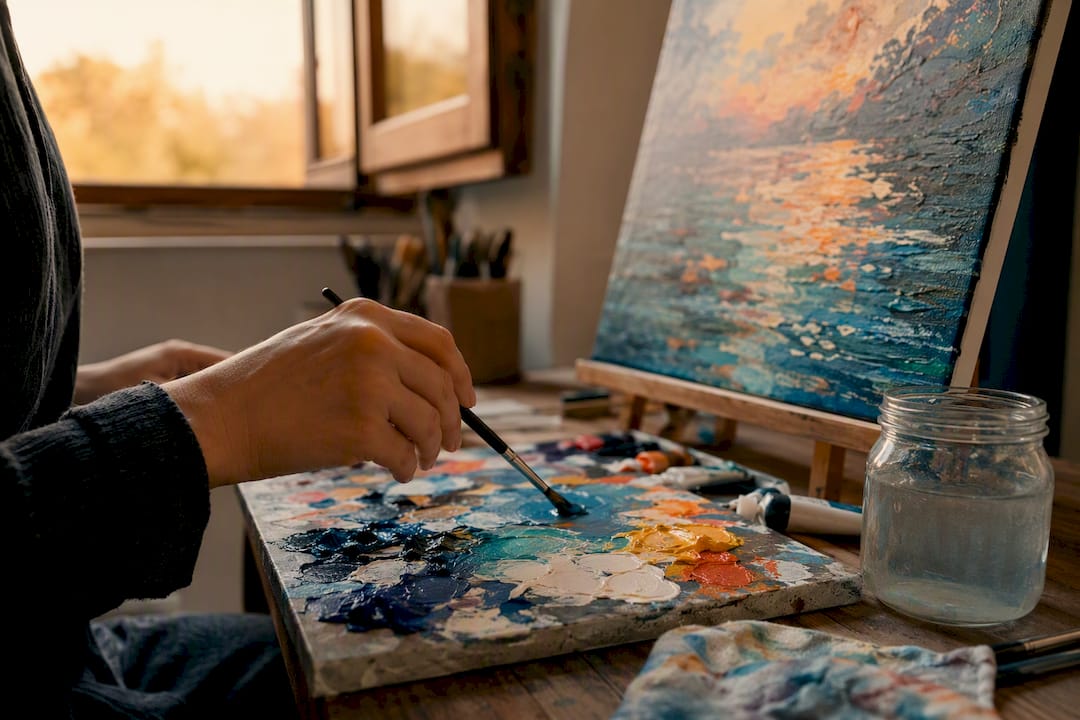
Painting activates the same pathway but pushes it further. Because you’re choosing color, pressure, and composition instead of filling a preset outline, the brain stays engaged longer, and that sustained engagement is tied to bigger drops in stress markers. A narrative review in Frontiers in Psychology links painting-based art making to measurable reductions in cortisol and improved emotional regulation, benefits that build with repeated, immersive sessions rather than quick ones. Sessions as short as 30 to 60 minutes have shown measurable reductions in cortisol and self-reported anxiety in creative-arts research.
Pro Tip: Reach for coloring when you have 10 minutes and a racing mind. Save painting for evenings or weekends when you can give it a full uninterrupted hour.
Painting vs. Coloring Books: A Side-by-Side Comparison
Coloring wins on speed. Painting wins on depth. That’s the tradeoff in one sentence, and it holds up across nearly every practical dimension adults care about.
Coloring requires zero setup, so the relaxation hits almost instantly. Painting takes a few extra minutes to prep paints and brushes, but the payoff is a longer, more absorbing state of focus. Coloring rarely produces anything you’d hang up. Painting, especially with a guided kit, regularly does.
| Dimension | Coloring Books | Painting |
|---|---|---|
| Relaxation immediacy | Fast, requires no setup | Slightly slower start, deeper effect |
| Immersion / flow | Light, short bursts | Sustained, especially with layering and drying time |
| Creativity & self-expression | Limited to color choice within lines | Full control over color, technique, and composition |
| Skill / learning curve | Minimal, no prior skill needed | Moderate, though guided kits flatten the curve |
| Portability & setup | Highly portable, no mess | Needs a stable surface, paints, and cleanup |
| Cost & materials | Roughly $10 to $30 per set | Modest cost for a starter kit |
| Keepsake value | Rarely displayed | Frequently framed or gifted |
| Therapeutic depth | Immediate anxiety relief | Deeper emotional processing over time |
A practical comparison of digital coloring and painting formats reaches the same conclusion: coloring wins for ease of entry, freeform painting wins for long-term satisfaction. That distinction shows up again and again once you actually try both for a month.
- Coloring: near-zero setup, near-zero cost, near-zero keepsake value
- Painting: modest setup and cost, high keepsake and skill payoff
When Coloring Books Are Genuinely the Better Choice
Reach for a coloring book when anxiety is spiking, you’re traveling, you’re low on energy, or you only have a few minutes to spare, like with a practical new portable coloring book that’s made for on-the-go use. Structured, contained patterns like mandalas reduce anxiety quickly because they remove open-ended decisions, which is exactly what an overstimulated brain needs.
- Commuting on a train or waiting at a doctor’s office
- A 10-minute reset between back-to-back meetings
- Acute stress spikes where decision fatigue is already high
- Travel days when packing a portable coloring set beats hauling paints
Cost and portability favor coloring outright here. A pocket-sized set slips into a bag, needs no water cup, and produces zero mess on a plane tray table.
When Painting Is the Stronger Pick
Choose painting when you want a planned wind-down session, real emotional processing, or a finished piece worth keeping. This is where painting pulls ahead: painting therapy interventions show measurable improvements in emotional regulation and executive function that go beyond what a quick coloring break delivers.
- A Sunday evening ritual instead of scrolling your phone
- Working through a specific mood or memory through color and composition
- Wanting something to hang on your wall or give as a gift
- Building an actual skill over months instead of repeating the same activity
Someone finishing a small canvas as a birthday gift gets two wins at once: the process calmed them down, and the product means something to the person receiving it. Paint-by-numbers kits work as an accessible bridge here, since they hand you the composition and color plan so you can focus purely on brush control and the relaxation itself.
Pro Tip: If a blank canvas feels intimidating, a guided kit removes that decision paralysis entirely, so you get the immersive benefits of painting without the beginner’s blank-page freeze.
How to Choose Between Painting and Coloring Today
Pick based on your current energy and your actual goal: a quick reset points to coloring, a longer-term creative practice points to painting.
- Check your energy. Low energy or high acute stress favors coloring’s instant structure.
- Check your time. Fifteen minutes or less favors coloring; an hour or more opens the door to painting.
- Check your goal. Want a mental break only? Coloring. Want a finished piece and skill growth? Painting.
- Check your tolerance for setup. If mess and prep feel like a barrier, start with a compact paint-by-numbers kit rather than open acrylics.
| Factor | Coloring Books | Painting |
|---|---|---|
| Typical cost | $10 to $30 per set | Modest cost for a starter kit |
| Time commitment | Minutes | Hours across one or more sessions |
| Setup effort | Low | Moderate |
These figures track closely with cost and time comparisons between the two hobbies, and they hold up whether you’re buying a basic set or a themed kit.
Getting Started With Painting Without the Overwhelm
The easiest entry point is a paint-by-numbers kit, since it hands you the composition and color-matched paints so you can focus entirely on the brushwork and the calm that comes with it. A one-hour beginner project works just as well if you already own basic acrylics.
- A pre-printed canvas kit with matched paints and a reference guide
- A set of premium detail brushes for cleaner lines and better paint control
- A water cup, paper towels, and a surface you don’t mind splattering
Two easy starting projects: a small floral canvas you can finish in two or three evening sessions, or a single-sitting abstract piece you can complete in under an hour. Either one gets you the patience and focus benefits painting is known for.
Pro Tip: Set up your paints and canvas on a surface near natural light before you sit down, not after. That five-minute prep step is usually what makes people skip painting altogether.
The Research Behind Painting’s Deeper Benefits
Active art making reshapes activity in large-scale brain networks and is tied to measurable drops in stress hormones, which is the core mechanism behind painting’s deeper relaxation effect compared to more repetitive tasks.
- A Mayo Clinic Platform summary notes that creative arts engagement can lower blood pressure and increase serotonin, and health systems now use it as part of patient-centered care.
- A comprehensive review of painting therapy documents reductions in depression and anxiety symptoms alongside gains in executive function across multiple study designs.
- The growing clinical literature treats painting as a genuine therapeutic intervention, though it’s worth being clear that recreational painting at home is not a substitute for clinical art therapy delivered by a trained practitioner.
Craftybynumbers has spent years watching beginners go from intimidated to confident with a brush in hand, and that pattern lines up with what the research describes.
Why I Recommend Painting for Planned Relaxation
Coloring earns its place for a fast reset, but when I’m thinking about a real wind-down ritual, painting is what I point people toward. It asks more of you in the moment and gives back more once you sit with it. Kits that hand you a pre-matched palette and a clear guide remove the one barrier that stops most beginners: not knowing where to start.
Try Painting Without the Guesswork
You don’t need art school or a studio to get painting’s deeper relaxation and keepsake payoff. A Craftybynumbers kit gives you the composition, the color-matched acrylics, and the brushes already sorted, so the only decision left is which design speaks to you.
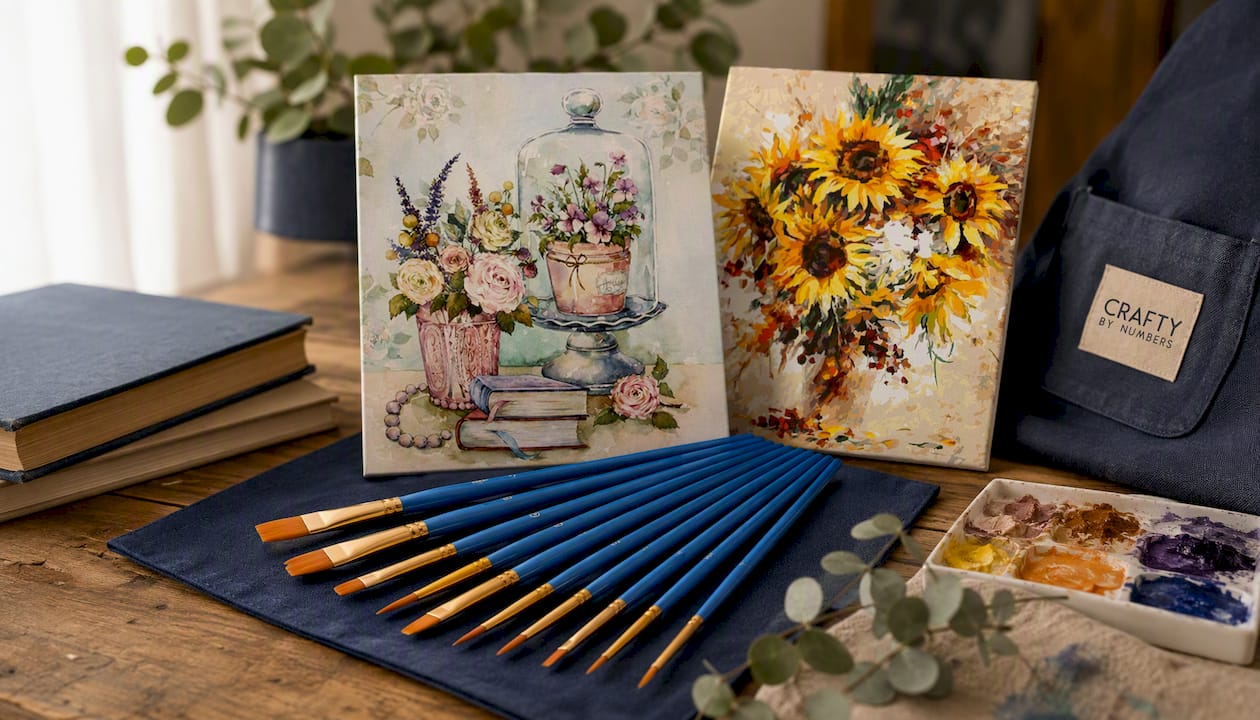
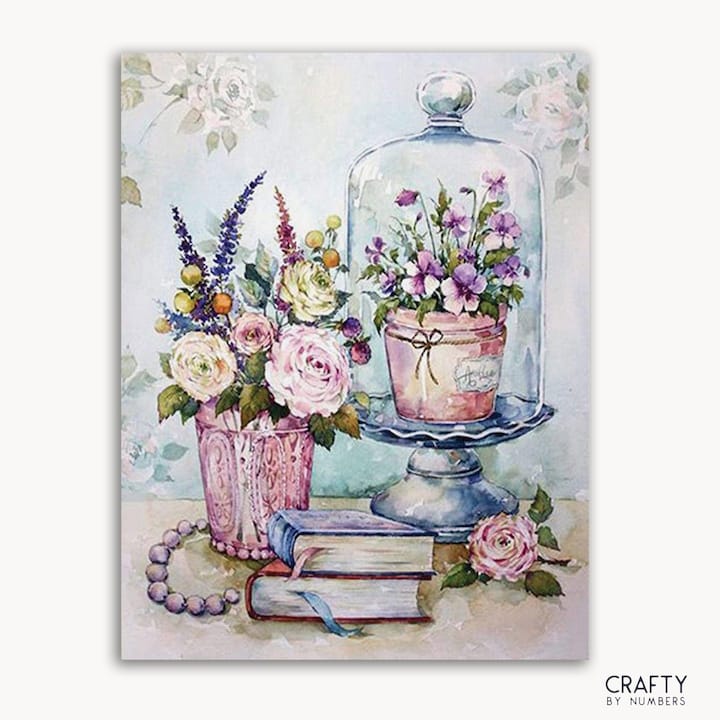
Every kit ships with a pre-printed canvas, matched paints, detail brushes, and a reference guide, so setup friction disappears. Browse the bold, display-ready Sunflower Burst kit, or start with the softer Books & Flowers design if you want something calmer for your first canvas. If you already paint and just want better control, the premium brush set upgrades your line work immediately. Pick a design, order the kit, and give yourself one evening this week to sit down and paint.
Sources
- Healing potential of art therapy: a narrative review of neuro-psycho-cultural mechanisms in mental health
- Healing potential of art therapy: a narrative review of neuro-psycho-cultural mechanisms in mental health — Frontiers in Psychology
- Painting Therapy as an Integrative Intervention for Emotional, Cognitive, and Neurological Well-Being A Comprehensive Evidence-Based Review
- The intersection of art and health: how art can help promote well-being — Mayo Clinic Platform
- Online Coloring Book vs Digital Painting Canvas: Which Is More Relaxing? | EveryFreeTool Blog
FAQ
Is Painting Better Than Coloring Books for Stress Relief?
Painting tends to produce deeper, longer-lasting stress reduction because it sustains focus longer, while coloring books deliver a faster but shallower reset for acute anxiety.
Why Do People With ADHD Like Coloring Books?
Coloring’s fixed structure removes open-ended decisions, which can quiet a restless mind quickly since there’s no blank page or planning required to begin.
Is Painting a Talent or a Skill?
Painting is primarily a skill that improves with practice; guided formats like paint-by-numbers let beginners build technique and confidence without needing natural artistic talent first.
What Are the Main Benefits of Coloring Books?
Coloring books offer fast, low-cost, portable stress relief with almost no learning curve, making them ideal for short breaks or travel.
At What Age Do Kids Typically Stop Liking Coloring Books?
Interest in traditional coloring books often fades around the preteen years as kids seek more open-ended or challenging creative outlets, though this varies widely by child.
0 Kommentare