

Paint by numbers for young children is a guided painting method where a pre-printed canvas displays numbered sections, each matched to a specific paint color. The system teaches children to follow visual cues, stay within boundaries, and complete a recognizable image step by step. Kits designed for younger painters boost motor skills, focus, and relaxation in ways that open-ended art projects rarely do. Craftybynumbers has built its entire product line around this principle, offering kits with pre-printed canvases, high-quality acrylic paints, and detail brushes that make the process accessible from the very first stroke.
Guided painting, the industry term for this structured approach, differs from free-form art because the outcome is predictable. Children see the finished image on the box before they begin. That preview matters more than most parents realize. Children’s engagement increases when they can see and understand the final artwork goal from the start. Knowing where they are headed keeps young painters motivated through the slower, more careful sections of a project.
What do paint by numbers kits for young children include?
Every quality kit for young children contains the same core components: a pre-printed canvas, numbered paint pots, and at least two brush sizes. The numbered canvas is the foundation. Each section carries a printed number that corresponds to a labeled paint color, so children never have to guess which color goes where.
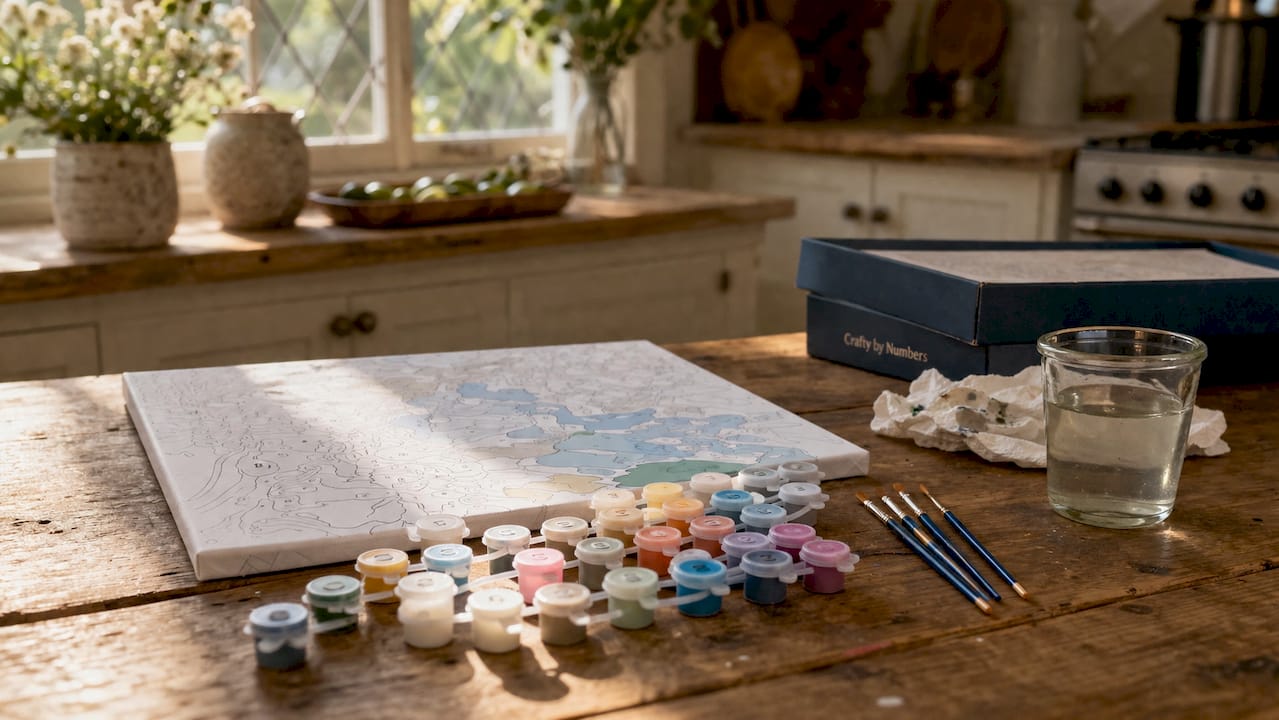
The materials inside the kit matter as much as the design on the canvas. Non-toxic, washable paints and child-friendly brushes are non-negotiable features for any kit used with young children. Washable formulas mean that spills on clothing or tables clean up without drama, which keeps the activity low-stress for parents.
What to look for in a kit
- Canvas size: Larger sections are easier for small hands to fill without crossing lines.
- Color count: Fewer colors reduce confusion. Kits with 6–10 colors work well for beginners.
- Brush quality: Flat brushes with short handles give young children better control.
- Instructions: Clear, picture-based guides outperform dense text for this age group.
- Paint labeling: Numbers printed directly on paint lids prevent mix-ups mid-session.
Workspace setup
Good lighting and a water cup for brush rinsing prevent color contamination and reduce eye strain during longer sessions. Set up at a table with a plastic sheet or newspaper underneath the canvas. Keep paper towels within reach. A tray or organizer for paint pots stops them from tipping and keeps colors sorted by number.
| Kit feature | Why it matters for young children |
|---|---|
| Large numbered sections | Easier to fill without crossing boundaries |
| Washable, non-toxic paint | Safe for skin contact; easy cleanup |
| Short-handled brushes | Better grip and control for small hands |
| Numbered paint lids | Reduces color confusion mid-painting |
| Picture-based instructions | Accessible without reading ability |
Pro Tip: Place a strip of masking tape along the canvas edge before starting. It keeps the canvas flat and gives children a clear visual boundary for the painting area.
How do you guide a young child through a paint by numbers project?
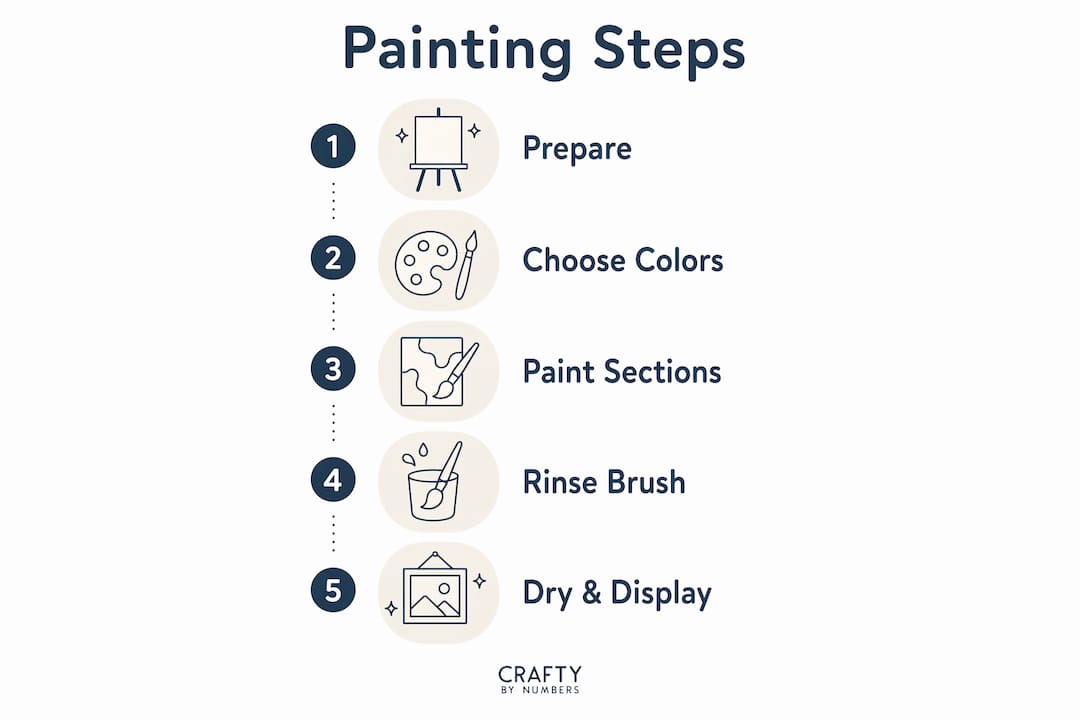
The process works best when you break it into short, manageable steps rather than treating the whole canvas as one task. Young children lose focus when a project feels too large. Framing each numbered section as its own small win keeps energy and interest high throughout.
Step-by-step process
- Lay out all materials. Set up the canvas, open the paint pots, and fill a cup with clean water before your child sits down. Starting with everything ready removes early frustration.
- Explain the numbered system. Point to a number on the canvas, then find the matching paint pot. Do this two or three times until your child connects the system independently.
- Start with the largest sections. Bigger areas are easier to fill and give children an early sense of progress. Background colors or large shapes work well as starting points.
- Use one brush per color group. Rinsing between every single color slows momentum. Group similar colors and rinse only when switching to a very different hue.
- Apply thin layers. A thin coat dries faster and covers more evenly than a thick glob. Show your child how to load the brush lightly before touching the canvas.
- Allow drying time between sections. Wet paint bleeds across number lines when children rush. A five-minute break between adjacent sections prevents smearing.
- Celebrate the finished piece. Frame it, hang it, or display it somewhere visible. Children who see their work displayed are more likely to attempt the next kit.
Video tutorials included with kits improve confidence and reduce the need for parental intervention. Visual demonstrations of brush stroke techniques teach young painters more effectively than printed instructions alone. If your kit does not include a video guide, a short search for the kit name often turns up a walkthrough.
Pro Tip: Let your child choose which numbered section to paint next after completing each one. That small sense of control keeps them invested in the project without disrupting the overall structure.
Structured creative activities with clear visual instructions reduce parental burden and increase child confidence over time. The numbered system does the heavy lifting. Your job is encouragement, not direction.
What are the most common mistakes when painting by numbers with young children?
Most problems with guided painting kits come from three sources: too much paint on the brush, skipping the number sequence, and not letting sections dry. Overpainting, rushing, and ignoring the number order are the top mistakes that lead to muddy results and frustrated children.
Common challenges and how to fix them
- Too much paint: Children often dip the brush too deep. Teach them to wipe one side of the brush on the pot rim before painting. This simple habit prevents blobs and drips.
- Color confusion: Young children who cannot yet read numbers may mix up sections. Use colored stickers on paint lids as a secondary visual cue alongside the printed numbers.
- Crossing boundary lines: This happens most often with small sections. Switch to a thinner brush for tight areas and slow the pace. Remind children that small mistakes are part of learning.
- Loss of focus: Sessions longer than 20–30 minutes often end in frustration for children under seven. Plan two or three short sessions rather than one long sitting.
- Paint drying in pots: Acrylic paint dries quickly when exposed to air. Keep lids on unused pots and add a single drop of water if a color thickens during a session.
Pro Tip: If your child loses interest mid-project, take a photo of the current progress and set it as a reminder. Seeing how far they have come often reignites motivation at the next session.
Pairing guided painting with other structured creative activities builds a broader creative routine that children look forward to. The consistency of a regular art session, even 20 minutes twice a week, compounds into real skill development over months.
What age is right for a paint by numbers kit?
Age-appropriate kit selection is the single biggest factor in whether a child enjoys or abandons guided painting. A kit that is too complex kills confidence. A kit that is too simple bores children within minutes.
Larger painting sections and fewer colors suit children aged 4–7 best, matching their motor skill development and shorter attention spans. Children in this range do well with bold, simple designs: animals, fruit, simple landscapes. The sections should be large enough that a child can fill them with a standard brush without needing to trace edges carefully.
Children aged 8 and up handle more detail, more colors, and smaller sections. Pixel-art style kits, for example, suit children aged 10–14 and can hold attention for 30–60 minutes per page. That jump in complexity reflects genuine cognitive and motor development, not just preference.
| Age range | Recommended kit features | Suitable themes |
|---|---|---|
| 4–6 years | 6–8 colors, very large sections, simple shapes | Animals, fruit, basic nature |
| 7–9 years | 10–14 colors, medium sections, some detail | Landscapes, cartoon characters |
| 10–14 years | 15+ colors, fine detail, mosaic or pixel styles | Portraits, complex scenes |
Design theme also affects engagement more than parents expect. A child who loves dogs will push through a harder kit featuring a dog than they would with an easier kit featuring a subject they find boring. Let your child pick the image whenever possible. The benefits of paint by numbers for kids grow when children feel ownership over their project from the start.
When a child consistently finishes kits ahead of schedule and asks for more detail, that is the signal to graduate to the next complexity level. Do not wait for a birthday or a milestone. Move up when the current level stops challenging them.
Key Takeaways
Paint by numbers kits give young children a structured, confidence-building path into art that develops fine motor skills, focus, and creative pride with every completed section.
| Point | Details |
|---|---|
| Age-matched complexity | Choose kits with larger sections and fewer colors for children aged 4–7. |
| Safe materials matter | Non-toxic, washable paints protect children and simplify cleanup for parents. |
| Short sessions work best | Plan 20–30 minute sessions to maintain focus and prevent frustration. |
| Video guides boost confidence | Kits with video tutorials reduce parental intervention and improve results. |
| Celebrate finished work | Displaying completed paintings motivates children to attempt the next kit. |
Why I think guided painting deserves more credit than it gets
Parents often treat paint by numbers as a rainy-day backup activity, something to pull out when screens feel like too easy an option. That undersells what these kits actually do. After watching children work through guided painting sessions, the motor skill improvements become visible within just a few projects. The brush control a child develops filling small numbered sections transfers directly to handwriting, cutting, and other fine motor tasks.
The other thing most articles miss is the emotional payoff. Children who struggle with open-ended art projects, the “draw whatever you want” assignments that can feel paralyzing, thrive with a numbered canvas. The structure removes the fear of a blank page. The finished image on the box tells them exactly what success looks like. That combination of structure and visible progress builds a kind of creative confidence that free-form projects rarely deliver as reliably.
Patience from the parent’s side matters enormously. Sitting nearby without correcting every brushstroke is harder than it sounds. Children who are allowed to make small mistakes and keep going develop more resilience than those who are redirected constantly. The imperfect painting that a child finished independently is worth more developmentally than the perfect one a parent helped too much. Pairing painting sessions with storytelling tips for children can extend the creative session naturally, turning art time into a richer, screen-free experience.
— Paula S.
Craftybynumbers kits that work well for young painters
Craftybynumbers designs kits with the full guided painting experience in mind: pre-printed canvases, high-quality acrylic paints, and detail brushes are included in every order. The Ivory Essence kit is a strong starting point for younger children, with clear instructions and a design that rewards patience without demanding it. For families who want a nature-themed option, the Garden of Dreams kit offers an engaging design that holds children’s attention across multiple sessions. Craftybynumbers has served over 120,000 customers and offers kid-friendly painting designs that make finished work genuinely display-worthy.

Every kit ships with everything needed to start painting the same day it arrives. No extra supply runs, no guesswork on materials.
FAQ
What age can children start paint by numbers?
Children as young as 4 can use guided painting kits designed with large sections and 6–8 colors. Kits with smaller sections and more colors suit children aged 8 and up.
Are paint by numbers kits safe for young children?
Quality kits use non-toxic, washable acrylic paints that are safe for skin contact and easy to clean from clothing and surfaces. Always check the kit label for age and safety certifications before purchasing.
How long does a paint by numbers session take for young children?
Sessions of 20–30 minutes work best for children under 7, matching their natural attention span. Older children aged 10–14 can sustain 30–60 minutes per sitting on more detailed kits.
Do children need painting experience to use these kits?
No prior experience is needed. The numbered system guides children through color selection and placement, making guided painting accessible to complete beginners.
How do I keep my child from getting frustrated mid-project?
Break the canvas into short sessions, start with the largest sections for early wins, and let your child choose which numbered area to tackle next. Displaying finished work also reinforces motivation for future projects.
0 comments