

Canvas art for home display falls into nine main categories: stretched canvas prints, gallery-wrapped canvases, framed canvas prints, photo canvas prints, rolled canvas prints, split canvas prints, giclée prints, fine art canvas prints, and hand-embellished canvases. Each type carries distinct visual qualities, production methods, and material properties that affect how it looks on your wall and how long it lasts.
Here’s a quick orientation before diving deeper:
- Stretched canvas prints: Pre-mounted on wooden stretcher bars, ready to hang
- Gallery-wrapped canvases: Image wraps around the edges for a frameless, contemporary look
- Framed canvas prints: Canvas set inside a decorative or floater frame for a polished finish
- Photo canvas prints: Personal photographs reproduced with a painting-like texture
- Rolled canvas prints: Unframed canvas shipped flat, ideal for custom framing
- Split canvas prints: One image divided across two or more panels (diptych, triptych)
- Giclée prints: High-resolution archival prints using pigment-based inks
- Fine art canvas prints: Museum-quality reproductions of original artwork
- Hand-embellished canvases: Machine-printed base with hand-applied paint for added texture
Canvas materials split into three main types: cotton (archival quality, authentic texture), linen (premium durability, slight grain), and synthetic or poly-cotton blends (vibrant color, affordable). Popular styles for home decor include abstract, landscape, botanical, portrait, geometric, modern minimalist, and vintage-inspired themes.
What are the main types of canvas art for home display?
1. Stretched canvas prints
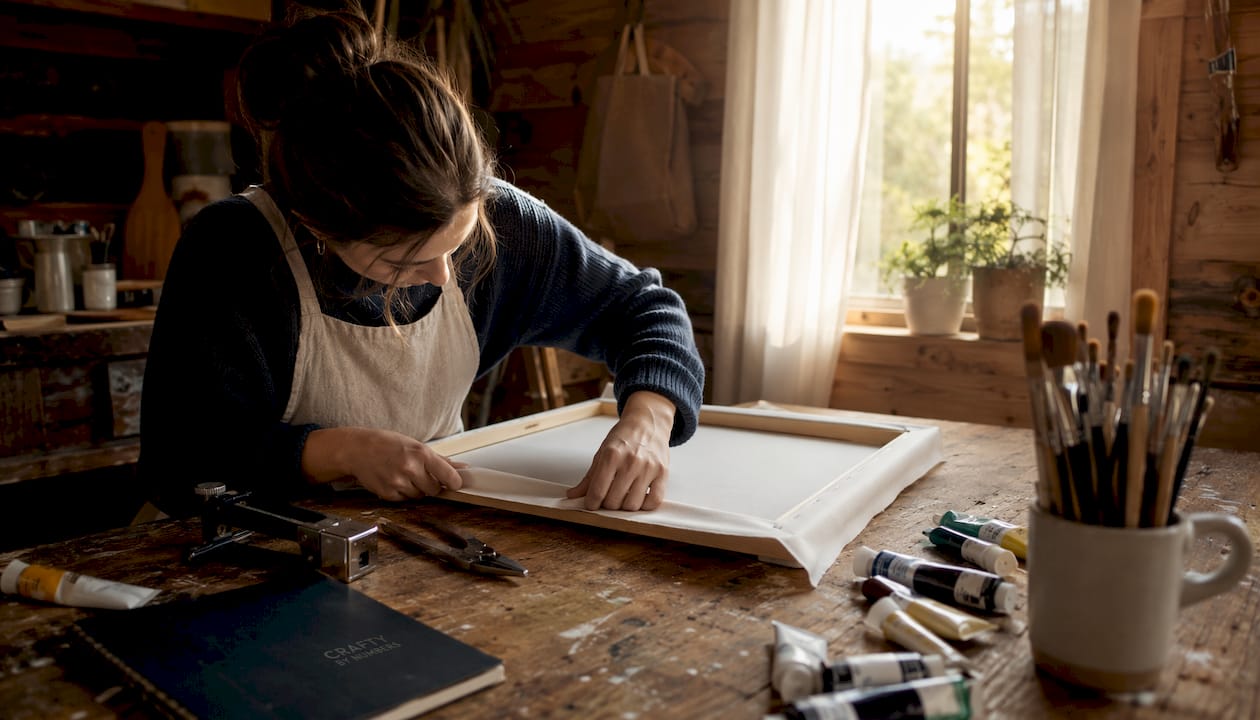
Stretched canvas prints are the most common format you’ll find. The canvas fabric is pulled taut over a wooden frame called a stretcher bar, then stapled at the back so the front surface stays smooth and display-ready. No additional framing needed. They suit virtually every room and decor style, from a farmhouse kitchen to a contemporary living room. If you want to understand the full process of preparing a stretched display, Craftybynumbers has a detailed walkthrough worth reading before you buy or hang.
2. Gallery-wrapped canvas prints
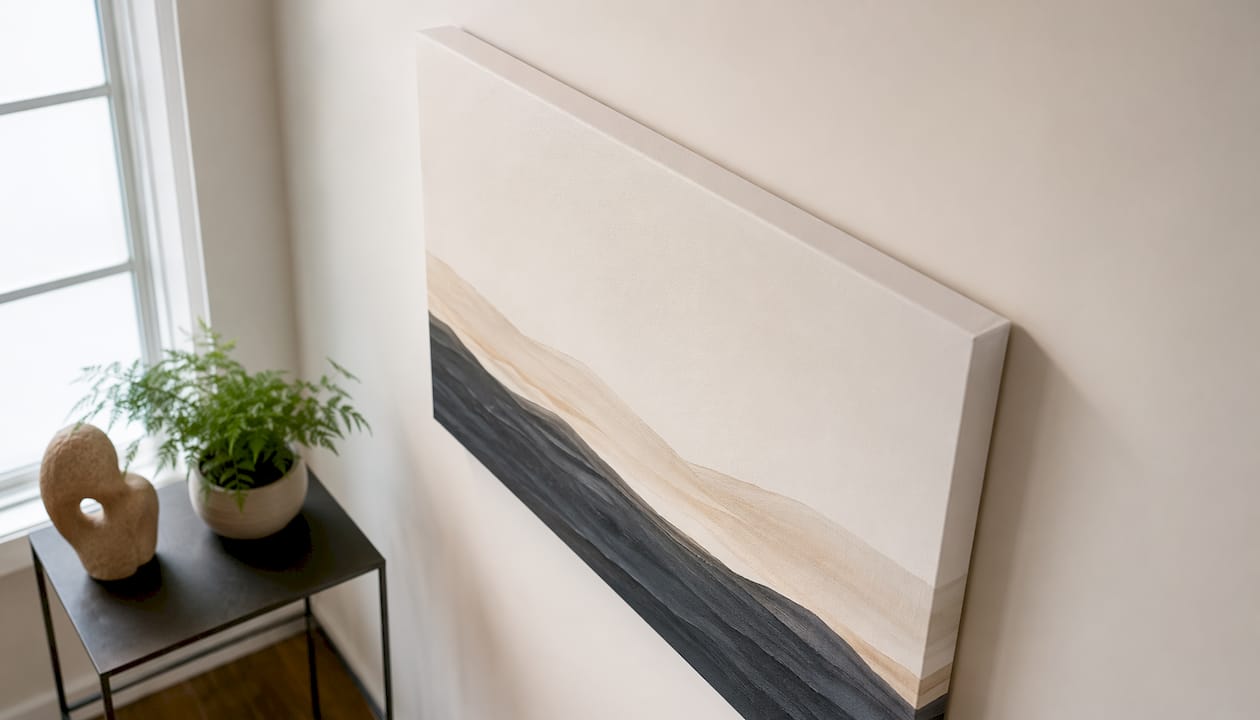
Gallery-wrapped canvases have the image printed around the edges, producing a frameless, contemporary appearance ideal for modern interiors. The sides of the canvas become part of the composition, so the piece looks finished from every angle. This format works especially well in minimalist spaces where you want the art to breathe without a frame border competing for attention.
3. Framed canvas prints
Framed canvas prints add a physical border around the canvas, ranging from traditional wood frames to slim floater frames. A floater frame mounts the canvas slightly recessed inside the frame, creating a small shadow gap that makes the artwork appear to float. This finish suits traditional, gallery-style, and contemporary rooms equally well. Craftybynumbers offers a framed canvas option that delivers this polished, gallery-ready look without requiring you to source a frame separately.
4. Photo canvas prints
Photo canvas prints take a personal photograph and reproduce it on canvas fabric, giving a flat digital image the texture and depth of a painting. The result reads as art rather than a snapshot. They work well as statement pieces in living rooms, hallways, and bedrooms, and they’re one of the most popular choices for custom, personalized wall art.
5. Rolled canvas prints
Rolled canvas prints are printed on canvas but shipped unframed and flat, without stretcher bars. This makes them lightweight, easy to store, and flexible for custom framing. Artists and collectors often prefer rolled canvas because it lets them choose their own frame style or have the piece professionally stretched to a specific size. They’re also a practical choice for anyone who moves frequently.
6. Split canvas prints
A split canvas print divides a single image across two or more separate panels. A diptych uses two panels; a triptych uses three. The panels hang together with small gaps between them, typically 1–3 inches, so the image reads as one cohesive composition while the spacing adds visual rhythm. Triptychs work particularly well for panoramic photography, abstract art, and cityscapes on large walls where a single canvas might feel insufficient.
7. Giclée canvas prints
Giclée printing uses high-resolution, archival pigment-based inks on quality canvas for long-lasting, vibrant fine art prints. The term comes from the French word for “to spray,” referring to the inkjet nozzle that deposits microscopic ink droplets with exceptional color accuracy. Galleries and museums use giclée prints because they reproduce the tonal range and detail of original artwork more faithfully than standard inkjet methods.
8. Fine art canvas prints
Fine art canvas prints are high-quality reproductions of original paintings or photographs, printed on canvas that mimics the texture of traditional painting surfaces. They’re designed to replicate the look and feel of the original as closely as possible. Limited-edition fine art prints carry collectible value, making them a favorite among interior designers who want pieces that hold aesthetic weight over time.
9. Hand-embellished canvas prints
Hand-embellished canvases start as machine-printed reproductions, then an artist applies additional paint by hand to add texture, depth, and brushstroke detail. The result sits somewhere between a print and an original painting. Each piece is slightly unique because of the hand-applied layer. They cost more than standard prints, but the tactile quality is immediately noticeable up close.
How do canvas materials and styles affect your choice?
Canvas materials compared
The fabric your canvas is printed on affects color, texture, longevity, and price. Cotton canvas offers the longest lifespan and the most authentic fine-art texture, though colors can appear slightly less saturated than on synthetic surfaces. Polyester canvas produces vibrant, saturated colors at a lower price point, but it tends to have a shorter lifespan and can look less authentic. Poly-cotton blends sit in the middle, offering good color fidelity, real texture, and solid durability at a mid-range price.
| Material | Appearance | Durability | Best for |
|---|---|---|---|
| Cotton | Authentic texture, slightly muted color | Archival quality | Fine art, giclée, long-term display |
| Polyester | Vibrant, smooth surface | Shorter lifespan | Affordable prints, temporary display |
| Poly-cotton blend | Balanced texture and color | Good long-term durability | Most home display uses |
| Linen | Visible grain, premium feel | Excellent | High-end fine art reproductions |
Pro Tip: When buying canvas prints for a sunlit room, choose cotton or poly-cotton with a matte finish. Matte surfaces reduce glare significantly, and cotton’s archival properties help resist UV fading over time.
Popular canvas art styles for home decor
Abstract canvas art is the most forgiving style for both buyers and DIY painters. Bold shapes and limited color palettes hide imperfections while looking intentional. Landscape canvases, particularly panoramic formats, suit horizontal walls above sofas and console tables. Botanical and floral prints work well in kitchens, bathrooms, and bedrooms where a softer, organic feel fits the room’s purpose. Geometric and modern minimalist canvases pair naturally with contemporary and Scandinavian-inspired interiors. Vintage-inspired prints, including aged maps and retro illustrations, add warmth to rustic and traditional spaces.
For room-specific ideas, Craftybynumbers covers how canvas art complements room decor in detail, including which styles work best in each space.
What should you consider when choosing canvas art for your home?
Choosing the right canvas art involves more than picking an image you like. Size, placement, material, and your room’s existing decor all shape whether a piece feels intentional or out of place.
Sizing to the wall: Canvas art should fill about 50–75% of the available wall space above furniture. For an 84-inch sofa, that means artwork or an arrangement spanning roughly 42–63 inches wide. A piece that’s too small floats awkwardly; one that’s too large crowds the room.
Matching canvas type to interior style:
- Minimalist and contemporary rooms: Gallery-wrapped canvases and frameless stretched prints keep the look clean and uncluttered.
- Traditional and formal rooms: Framed canvas prints, especially with floater frames or wood borders, add the structure these spaces call for.
- Rustic and farmhouse rooms: Linen canvas, vintage-style prints, and natural wood frames feel at home here.
- Eclectic and gallery-style rooms: Mix canvas types deliberately. A large fine art print anchors the wall; smaller photo canvases and split panels fill the surrounding space.
Lighting and finish: Matte finishes reduce glare in brightly lit rooms. Glossy finishes make colors pop in dimmer spaces. Avoid placing canvases directly opposite windows, where competing light sources flatten the image’s depth.
Practical care: Canvas prints don’t require glass, so dust them lightly with a dry cloth. Keep them away from walls that receive prolonged direct sun exposure, or use UV-filtering window treatments to protect the surface.
Pro Tip: Pull one accent color from your canvas into nearby textiles, like throw pillows or a rug, to create visual continuity. Avoid matching too precisely; a slight variation in shade reads as sophisticated rather than matchy.
For anyone considering a DIY approach, Craftybynumbers’ paint-by-numbers kits let you create a custom canvas in your exact color palette, so the finished piece integrates naturally with your room from the start.
How do you display canvas art effectively at home?
Getting the hanging height and spacing right makes the difference between art that anchors a room and art that looks like an afterthought.
Hanging height: Professional gallery standards recommend centering artwork at 57 inches from the floor, which aligns with average eye level. When hanging above furniture, leave an 8–10 inch gap between the furniture surface and the bottom edge of the canvas. For multi-panel arrangements, center the entire grouping at 57 inches rather than centering each individual panel.
Gallery walls: Lay all pieces on the floor first to test configurations before making any holes. Maintain consistent spacing of 2–4 inches between pieces, and choose a unifying element, such as consistent frame colors or a shared color palette, to keep the arrangement cohesive rather than chaotic. Start hanging from the center and work outward.
Renter-friendly options: Command Picture Hanging Strips, adhesive hooks, and leaning canvases on mantels are all practical choices for renters who need flexibility without wall damage. For heavy canvas art over 10 lbs, toggle bolts or metal Molly bolts provide the holding strength needed for long-term stability.
Clean hardware presentation: Adhesive strips hidden inside stretcher bars, or a wire strung tightly across D-rings, create a gallery-like presentation with no visible hardware. The canvas appears to float flush against the wall.
Lighting: Track lighting with adjustable heads lets you direct light precisely onto the canvas surface, which brings out the texture that makes canvas art distinct from paper prints. Picture lights mounted above the frame cast downward illumination that emphasizes this dimensionality.
Creating a focal point: Pair a large canvas with a console table and a few decorative objects below it. Repeating a distinctive color from the artwork in nearby textiles ties the whole vignette together. Mixing canvas with metal or wood prints in a gallery wall adds dimensional interest, as long as you group similar materials in clusters rather than alternating them randomly.
Pro Tip: Place self-adhesive bumpers on the back corners of any canvas you lean on a mantel or shelf. They prevent sliding and protect both the canvas backing and the surface beneath it.
If you want to go bigger, Craftybynumbers explores why large canvas paintings command attention in ways smaller pieces simply can’t, including specific placement strategies for oversized work.
Key Takeaways
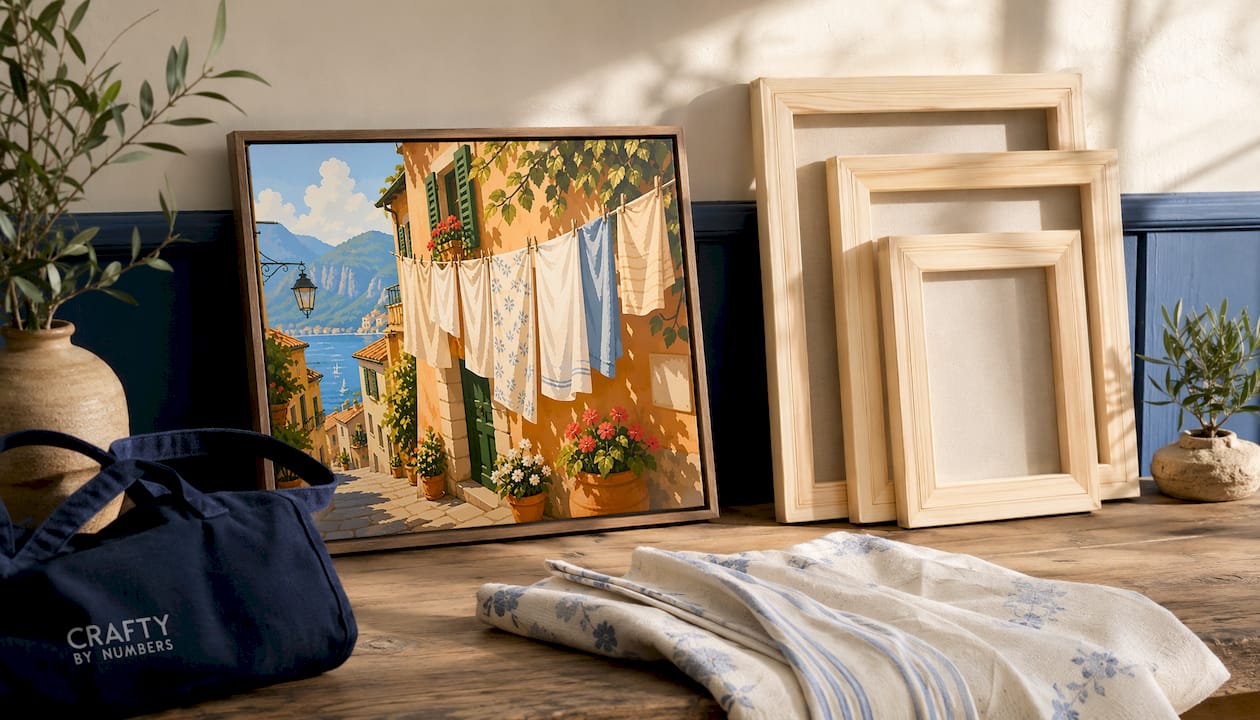
Gallery-wrapped and stretched canvas prints suit most modern homes, while giclée and fine art prints offer archival quality, and proper sizing, at 50–75% of available wall space, is the single most important display decision.
| Point | Details |
|---|---|
| Match canvas type to room style | Gallery-wrapped suits modern rooms; floater-framed canvases fit traditional or gallery-style spaces. |
| Size to the wall correctly | Canvas art should fill about 50–75% of the available wall space above furniture for balanced visuals. |
| Center at 57 inches from the floor | This gallery standard aligns artwork with average adult eye level in standing rooms. |
| Choose material for longevity | Cotton and poly-cotton blends offer the best balance of texture, color, and archival durability. |
| Use consistent spacing on gallery walls | Maintain 2–4 inches between pieces and unify with a shared color palette or frame color. |
FAQ
What are the main types of canvas art?
The nine main types are stretched canvas prints, gallery-wrapped canvases, framed canvas prints, photo canvas prints, rolled canvas prints, split canvas prints, giclée prints, fine art canvas prints, and hand-embellished canvases. Each differs in construction, framing, and visual finish.
What is a giclée canvas print?
A giclée print uses high-resolution, archival pigment-based inks sprayed onto quality canvas, producing exceptional color accuracy and a lifespan that rivals original artwork. Museums and galleries favor giclée for fine art reproductions.
How do you display canvas art at home?
Center the canvas at 57 inches from the floor for standing rooms, leave an 8–10 inch gap above furniture, and ensure the piece fills about 50–75% of the available wall space to achieve a proportional, intentional look.
What is the difference between gallery-wrapped and framed canvas?
A gallery-wrapped canvas has the image printed around the edges with no outer frame, giving a clean, modern appearance. A framed canvas, particularly with a floater frame, adds a border that creates a more polished, gallery-like finish suited to traditional or formal interiors.
Which canvas material lasts the longest?
Cotton canvas offers the best archival quality and resists sagging over time. Poly-cotton blends are a practical alternative, balancing durability with vibrant color reproduction at a lower price than pure cotton.
0 comentarios