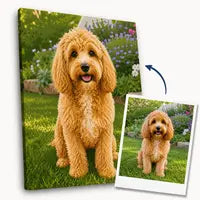


Beginner art projects for adults are accessible creative activities that anyone can start without prior experience, using simple techniques focused on relaxation and self-expression. Whether you want to unwind after a long week or discover a new hobby, creative activities for adults like mandala drawing, fluid acrylic pouring, and watercolor painting deliver real stress relief with minimal skill required. You do not need expensive supplies or formal training. You just need a project that matches where you are right now.
1. What are the best beginner art projects for adults?
The most rewarding easy art ideas for adults combine low technical demand with high visual payoff. Fluid acrylic pouring, alcohol ink art, and mandala drawing are among the most popular choices because they require no advanced drawing skills and focus on color flow and repetition for stress relief. Each of these projects typically takes 30–60 minutes per session, making them practical for busy adults.
Below are the top beginner-friendly art projects worth trying.
2. Fluid acrylic pouring
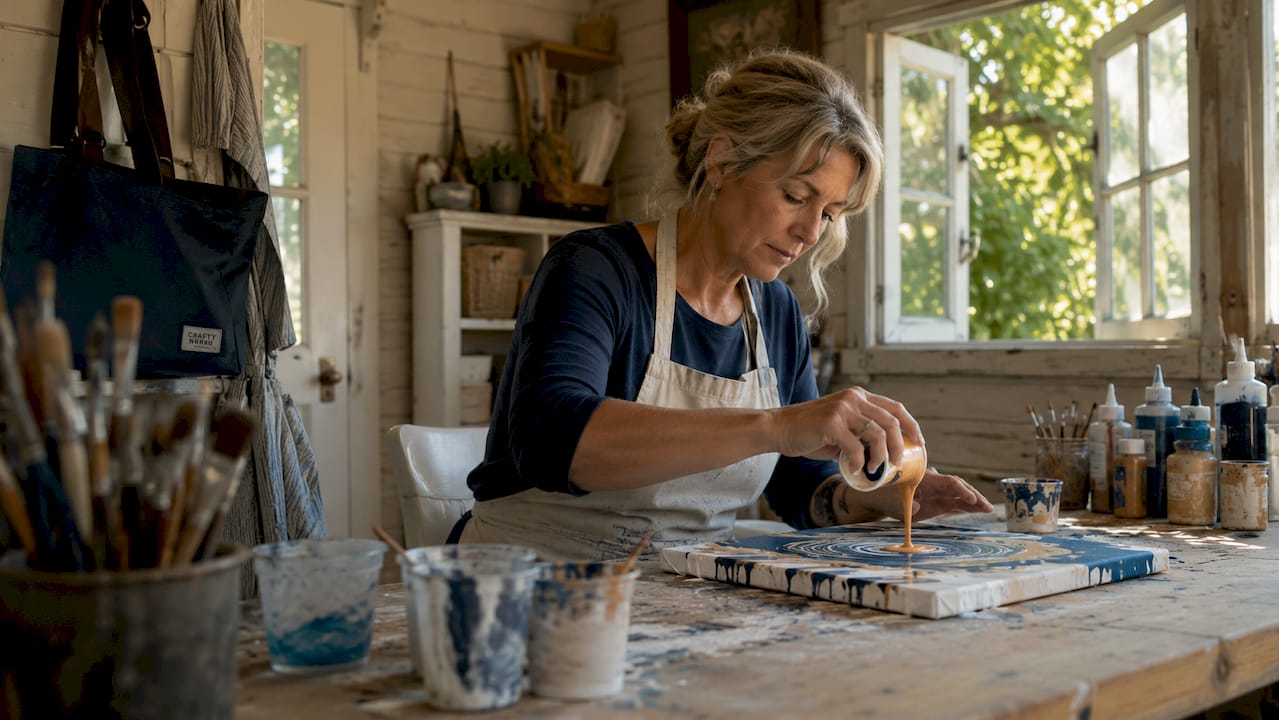
Fluid acrylic pouring is one of the most satisfying first art projects because the paint does the work for you. You mix acrylic paint with a pouring medium, pour it onto a canvas, and tilt the surface to create flowing, organic patterns. No brushwork is required. The result looks complex but takes almost no technical skill to produce.
- Materials needed: Acrylic paints, pouring medium, canvas, plastic cups, gloves
- Time to complete: 30–60 minutes, plus drying time
- Best for: Adults who want bold, colorful results fast
Pro Tip: Add a drop of silicone oil to your paint mixture before pouring to create dramatic cell patterns in the finished piece.
3. Mandala art
Mandala art is a calming creative practice focused on emotional regulation and mindfulness rather than technical skill or perfection. Beginners start with basic shapes, using fine-line pens and dotting tools, building layers slowly with breath awareness. The repetition of simple geometric shapes creates a meditative rhythm that quiets mental noise.
You do not need to draw freehand. A compass, a round plate, or a printed circle template gives you the structure you need. From there, you fill sections with dots, lines, and petals in any pattern you choose.
- Materials needed: Fine-line pens, dotting tools, compass or stencil, paper or cardstock
- Time to complete: 30–90 minutes depending on complexity
- Best for: Adults seeking mindfulness and a screen-free wind-down routine
4. Easy watercolor scenes
Watercolor painting is one of the most accessible adult painting projects because the supplies are inexpensive and the style rewards looseness over precision. Watercolor projects like mini coastal scenes use basic supplies such as 9x12 mixed media paper, round brushes, permanent markers, and common kitchen items for texture stamping. High-end equipment is not necessary, which makes this one of the most cost-effective creative activities for adults.
The key is to embrace soft edges and color bleeds rather than fight them. A wet-on-wet technique, where you apply paint to a damp surface, creates dreamy backgrounds in minutes. Sponges, crumpled plastic wrap, and salt all create texture effects that look intentional and impressive.
Pro Tip: Use a permanent marker to outline simple shapes like waves or a horizon line before adding watercolor washes. The marker prevents colors from bleeding into areas you want to keep clean.
5. Pebble art and melted crayon canvas
Pebble art and melted crayon canvas are tactile, beginner-friendly crafts requiring minimal, affordable materials that can be sourced from dollar stores and completed in under an hour. Some sponge-painted crafts in this category dry in 15–20 minutes, making them ideal for short creative sessions. These projects appeal to adults who prefer working with their hands over holding a brush.
Pebble art involves arranging stones, twigs, and natural materials into scenes or figures on a canvas or board, then gluing them in place. Melted crayon canvas uses a heat gun or hair dryer to melt crayons along the top edge of a canvas, letting color drip downward in vivid streaks. Both projects produce displayable results that look far more complex than they are.
6. Collage and mixed-media art
Collage and mixed-media projects celebrate imperfection and reuse scraps as creative materials, turning mistakes into assets and reducing material cost. Leftover paints on scrap paper can be cut into shapes for collages, encouraging experimentation. This makes collage the most forgiving starting point for adults who feel intimidated by blank canvases.
You can build a collage from magazine clippings, painted paper scraps, fabric, tissue paper, and found objects. There are no rules about what belongs. The process of selecting, arranging, and layering materials is itself a form of creative meditation.
7. Step-by-step acrylic painting tutorials
Structured acrylic painting tutorials are one of the clearest examples of satisfying first art projects because they remove guesswork entirely. Step-by-step acrylic painting structured into stages helps beginners avoid overwhelm and feel confident completing projects at a relaxed pace. Breaking a painting into parts like sky, water, and texture supports sequential focus for effective learning.
Sites like Step By Step Painting offer free tutorials organized by skill level. You follow along section by section, painting one area at a time. By the end, you have a finished piece that genuinely surprises you.
8. How do these projects compare in materials, time, and skill?
Choosing the right project depends on your available time, budget, and what kind of experience you want. The table below compares the most popular DIY art for beginners options across the factors that matter most.
| Project | Materials cost | Time to complete | Skill level | Best for |
|---|---|---|---|---|
| Fluid acrylic pouring | Low–Medium | 30–60 min | Very easy | Bold visual results fast |
| Mandala art | Very low | 30–90 min | Easy | Mindfulness and focus |
| Watercolor scenes | Low | 45–90 min | Easy | Loose, expressive style |
| Pebble art | Very low | 30–60 min | Very easy | Tactile, hands-on makers |
| Melted crayon canvas | Very low | 20–45 min | Very easy | Quick, colorful projects |
| Collage and mixed media | Very low | 30–60 min | Very easy | Imperfection-friendly start |
| Step-by-step acrylic | Low–Medium | 60–120 min | Easy–Moderate | Guided, structured learning |
Budget-friendly options like mandala art and pebble art require almost no financial investment. Fluid acrylic pouring costs slightly more because of the pouring medium, but a starter bottle costs under $10 at most craft stores.
9. What supplies do adult beginners actually need?
The barrier to starting simple craft projects is almost always friction, not skill. Maintaining a low-friction art kit with basic supplies encourages starting art sessions quickly. Even 10–15 minutes on pattern repetition aids emotional regulation. The goal is to have everything within arm’s reach so starting feels effortless.
Here is a practical starter supply list organized by project type:
For fluid acrylic pouring:
- Acrylic craft paints (any brand)
- Floetrol or a dedicated pouring medium
- Stretched canvas or wood panel
- Disposable cups and stir sticks
- Drop cloth or plastic sheeting
For mandala art:
- Fine-line black pens (Micron or Staedtler work well)
- Dotting tools or the back end of a paintbrush
- Compass or circular stencils
- Smooth cardstock or watercolor paper
For watercolor painting:
- A basic watercolor set (Winsor & Newton Cotman is a reliable starter)
- Round brushes in sizes 4 and 8
- 9x12 mixed media or watercolor paper
- A jar of water and paper towels
Pro Tip: Store your supplies in a clear plastic bin with a lid. When everything is visible and ready, you are far more likely to sit down and create for even 15 minutes between other tasks.
10. What mindset makes beginner art actually enjoyable?
The single most effective art technique for beginners is prioritizing process over product. Focusing on creative flow using traceables and stencils reduces fear of failure and enhances meditative benefits. When you stop trying to make something perfect and start trying to make something, the experience shifts entirely.
Loose, painterly styles reduce anxiety for beginners by focusing on color and composition rather than tight lines or precise techniques. Techniques like felt-marker blending and abstract collage make art visually impressive with minimal training. You do not need to master realism to make something worth hanging on your wall.
“The goal is not a perfect painting. The goal is 30 minutes where your brain stops running through tomorrow’s to-do list.”
Using traceables, stencils, or geometric guides minimizes technical drawing pressure and enhances meditative coloring benefits. Simple guides like circles for mandalas encourage creative flow and reduce blank canvas fear. Start with a shape you can trace, fill it with color, and build from there.
Short sessions work better than marathon painting days for most beginners. Aim for 10–60 minutes per session. Consistency matters more than duration when you are building a new creative habit.
Key takeaways
The most effective beginner art projects for adults combine low material cost, short time commitment, and a process-first mindset that removes the pressure to produce perfect results.
| Point | Details |
|---|---|
| Start with low-friction projects | Mandala art, pebble art, and collage require almost no investment and deliver fast results. |
| Process beats product | Focusing on creative flow rather than a perfect outcome reduces anxiety and builds habit. |
| Short sessions are enough | Even 10–15 minutes of pattern-based art aids emotional regulation and stress relief. |
| Stencils remove blank canvas fear | Geometric guides and traceables give beginners structure without limiting creativity. |
| Kits lower the barrier further | Guided kits like paint-by-numbers provide all materials and instructions in one package. |
Why I think most adults underestimate how quickly art pays off
I started with mandala drawing during a particularly stressful stretch at work. I expected to feel clumsy and frustrated. What I found instead was that the repetition of drawing small dots and petals in a circle was almost immediately calming. My brain had something to do that was not a problem to solve.
The projects I have seen work best for adult beginners are not the ones that produce the most impressive results. They are the ones with the lowest startup cost, both in money and mental energy. Fluid acrylic pouring surprised me most. You pour paint, tilt a canvas, and watch something beautiful happen. There is almost no way to fail at it, and that experience of making something without failing is genuinely powerful for adults who have spent years believing they are not creative.
The bigger insight is that these projects democratize art in a real way. You do not need talent. You need a Sunday afternoon, a few dollars in supplies, and permission to make something imperfect. Most adults never give themselves that permission. The ones who do tend to keep going, because the stress relief is real and the results are more satisfying than they expected.
Start with one project. Give yourself 30 minutes. The rest follows naturally.
— Paula S.
Start your first project with Craftybynumbers
If you want a guided, stress-free introduction to adult painting projects, Craftybynumbers makes it simple. Their custom paint-by-numbers kits come with a pre-printed canvas, high-quality acrylic paints, and detail brushes, so you have everything you need in one box. Over 120,000 customers have used these kits to create finished artwork they are proud to display.
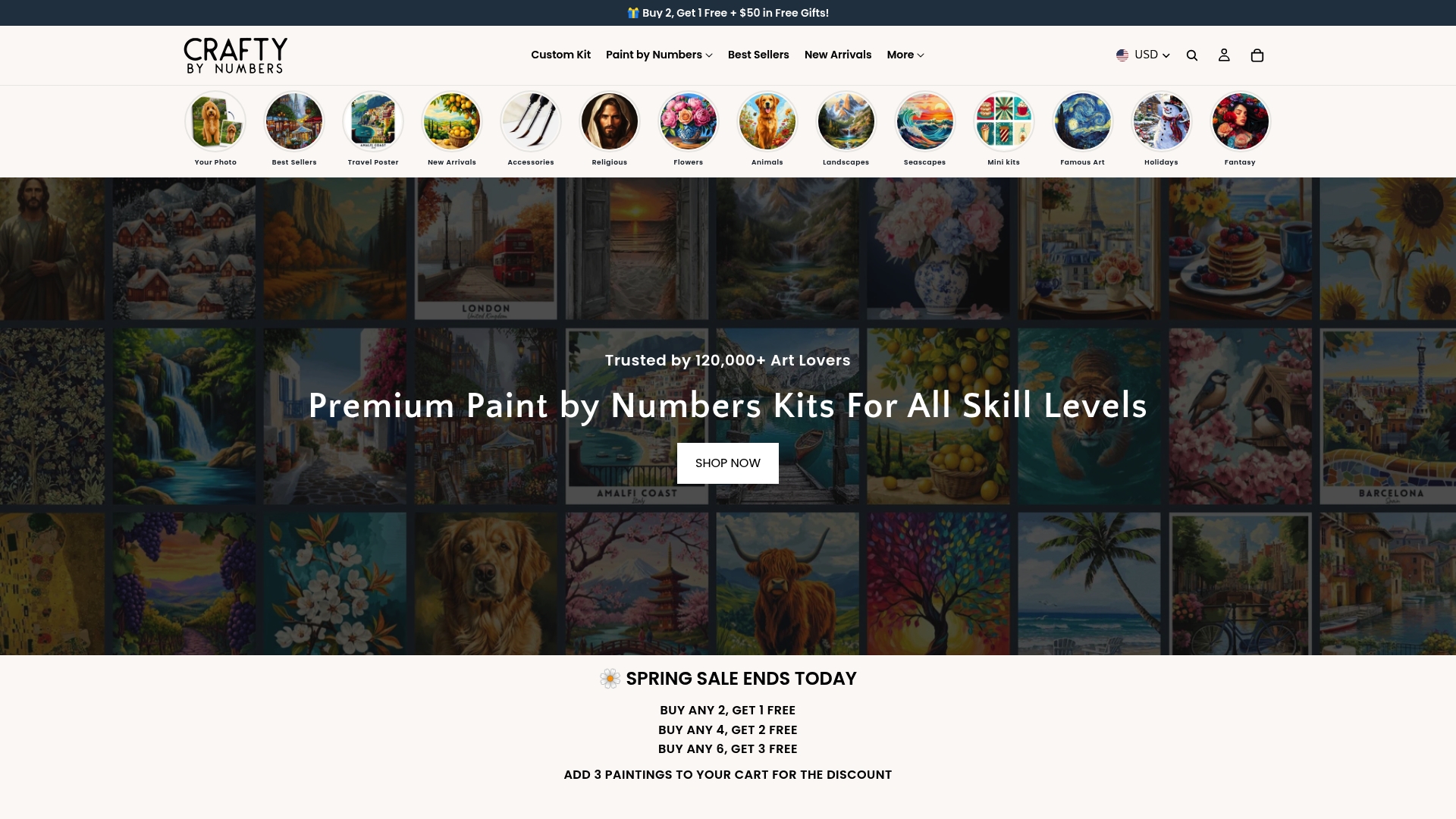
Craftybynumbers offers kits at every level, from florals like the Garden of Dreams to classic designs, each built around the same principle: structured guidance that builds real confidence. If you want to explore paint-by-numbers tips before committing to a kit, their blog covers techniques and advice tailored for adult beginners. This is the most direct path from “I want to try art” to a finished piece on your wall.
FAQ
What is the easiest art project for a complete beginner?
Fluid acrylic pouring and mandala art are the easiest starting points because neither requires drawing skills. Both projects take 30–60 minutes and produce visually striking results on the first attempt.
Do I need expensive supplies to start making art?
No. Pebble art, mandala drawing, and collage all use materials available at dollar stores or already in your home. A basic watercolor set and a pad of mixed media paper cost under $15 combined.
How long should a beginner art session last?
Sessions of 10–60 minutes are ideal for beginners. Short, consistent sessions build creative habit more effectively than occasional long ones, and even 15 minutes of pattern-based art provides measurable stress relief.
Can beginner art projects really reduce stress?
Yes. Mandala art specifically targets emotional regulation and mindfulness through repetitive mark-making. Loose, abstract techniques like acrylic pouring and collage reduce anxiety by removing the pressure of technical precision.
What is paint by numbers and is it good for beginners?
Paint by numbers is a guided painting method where a canvas is pre-divided into numbered sections, each corresponding to a specific paint color. It is one of the most beginner-friendly adult painting projects because the structure removes all guesswork and delivers a finished piece every time.
0 comments