

Common beginner painting mistakes are specific, predictable missteps that weaken your results before you even realize what went wrong. Most new artists struggle with the same handful of errors: over-thinning acrylic paint, skipping drying time between layers, ignoring tonal values, and starting with brushes that are too small. The good news is that every one of these beginner painting errors has a clear fix. This guide names each mistake, explains why it happens, and gives you practical steps to correct it so your painting sessions stay enjoyable and your skills keep growing.
1. What are the most common beginner painting mistakes?
Most beginner painting errors fall into seven categories. Recognizing them early saves you hours of frustration.
- Over-thinning acrylic paint with too much water. Adding too much water breaks down the polymer binder in acrylic paint. The result is a chalky, weak film that lifts when you paint over it.
- Not letting layers dry before adding the next one. Wet-on-wet layering in acrylics pulls color from the layer below. You end up with muddy, blended patches instead of clean color.
- Making every edge sharp. Painting all edges with equal crispness makes a composition look stiff and flat. Only your focal point needs a sharp edge.
- Starting with brushes that are too small. Small brushes push beginners into overworking tiny details before the big shapes are even established. Good paintings start with large shapes, not fine lines.
- Overmixing colors or using too many at once. Mixing too many colors together produces gray, lifeless mud. A simplified palette of 7–9 colors gives you more control and better harmony.
- Compressing tonal values into a midtone band. When lights and darks are too similar, the painting looks flat. Compressing tonal values into a narrow midtone band is one of the most common reasons beginner paintings feel lifeless.
- Quitting before completing 10 paintings. Most beginners quit before producing 10 paintings. Skill improvement typically shows up between the 7th and 12th work, so early canvases are practice material, not finished art.
2. How does controlling paint and water ratio affect acrylic results?
The water-to-paint ratio is the single most misunderstood variable in acrylic painting. Get it wrong and no amount of skill will save the finish.
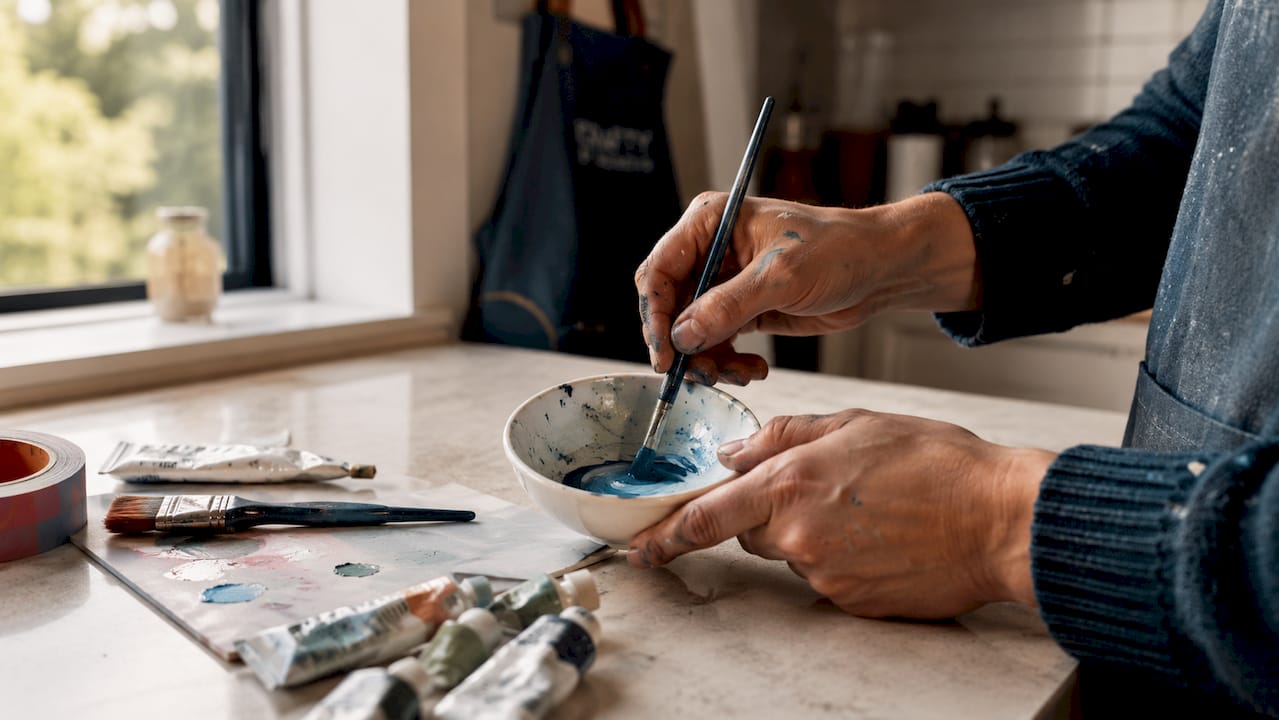
Acrylic paint is a pigment suspended in a polymer binder. Water thins the mixture, but too much water dilutes the binder itself. Overwatering beyond about 50% water by volume weakens the binder and causes a chalky, poorly adhered finish. That means your paint layer can lift, bead, or shift color as it dries.
The safe zone for thinning acrylics is roughly 30–40% water by volume. Beyond that, the paint behaves more like a weak stain than a proper film. Here are the key signs you have gone too far:
- Paint dries chalky or powdery instead of smooth
- Fresh paint beads up on the surface instead of spreading evenly
- Color looks noticeably lighter when dry than when wet
- Layers lift when you paint over them
Use clean water for mixing, not the murky water from your brush rinse cup. Dirty water introduces color contamination. For effects that need more thinning, use an acrylic medium such as a flow improver or glazing medium instead of extra water. These products thin the paint without attacking the binder.
Pro Tip: Keep two water containers on your table: one for rinsing brushes and one clean cup for mixing. This one habit prevents most water contamination problems.
Check out these beginner art project ideas for practical ways to apply water control techniques from your very first session.
3. Why are value range and edge control crucial for dynamic paintings?
Value is the lightness or darkness of a color. It is the single most powerful tool for creating depth, and most beginners underuse it.
When you compress all your tones into a midtone band, nothing in the painting stands out. Starting with about four value levels in a quick sketch before you paint gives you a map. That map prevents value drift as you work across the canvas. Working the whole canvas at once and comparing values keeps the relationships honest.
Edge control works alongside value to guide the viewer’s eye. Here is how to think about it:
- Sharp edges belong only at your focal point. They say “look here.”
- Soft edges push areas into the background. They create atmosphere and depth.
- Lost edges (where two shapes merge) add mystery and keep the eye moving.
Painting all edges sharp makes a painting look like a coloring book. Softening non-focal edges while the paint is still wet is the fix. Timing matters here. Acrylic dries fast, so you need to make edge decisions quickly. If the paint has already dried, softening requires a damp brush and a light touch, and you risk lifting the layer below.
Pro Tip: Step back from your canvas every 10 minutes and squint at it. Squinting blurs details and lets you see the value structure clearly. If everything looks the same tone, your range is too narrow.
4. How do brush size and layering technique influence painting quality?
Brush size controls how you think about a painting. Small brushes encourage small thinking. Large brushes force you to commit to big shapes first, which is exactly the right order.
Starting with small brushes leads to overworking details before the structure is in place. A painting built on weak large shapes cannot be rescued by careful detail work. Block in your major shapes with the largest brush that feels comfortable, then move to smaller brushes only when the foundation is solid.
Layering technique is equally important for avoiding muddy color. Follow these rules:
- Let each acrylic layer air dry for at least 15 minutes before glazing over it
- Acrylic paint dries in brush bristles in about 5 minutes, so keep your brush wet between strokes
- Never scrub a wet layer with a loaded brush; it pulls color up and creates mud
- For oil painters, follow the fat over lean rule: each successive layer should contain more oil than the one below to prevent cracking
Brush care is a separate issue that beginners often ignore until it is too late. Dried acrylic in bristles is nearly impossible to remove. Rinse brushes frequently during a session and never leave them sitting in water with bristles down.
Pro Tip: At the end of every session, wash your brushes with mild soap and reshape the bristles before they dry. A brush that holds its shape paints better and lasts far longer.
For a fun way to practice large-shape blocking with the whole family, the family painting night guide from Craftybynumbers has practical ideas that reinforce this exact skill.
5. What mindset and practice habits help beginners move past mistakes?
The biggest obstacle for most new painters is not technique. It is the expectation that early paintings should look good.
Your first paintings are not art. They are data. Each one teaches you something about how paint behaves, how colors interact, and how your hand responds to different brushes. Completing about 10 paintings before evaluating your progress is the standard recommendation from experienced painters. Skill improvement is not linear, but it does show up consistently between the 7th and 12th work.
Smaller canvases help beginners stay committed. An 8x10 inch canvas takes less time to complete than a 16x20, which means you reach that 10-painting milestone faster. Scope management is a real skill. Finishing a small painting beats abandoning a large one every time.
Mistakes are not failures. They are the mechanism by which painting skills develop. Treat each error as a question: why did this happen, and what would I do differently? That mindset turns frustration into progress.
Pro Tip: Keep a simple notebook next to your easel. After each session, write one thing that worked and one thing to try differently next time. This habit builds self-awareness faster than any tutorial.
Key takeaways
Avoiding common beginner painting mistakes comes down to understanding paint behavior, building structure before detail, and committing to consistent practice across multiple paintings.
| Point | Details |
|---|---|
| Control water ratio | Keep water below 50% by volume; use acrylic mediums for heavy thinning. |
| Let layers dry | Wait at least 15 minutes between acrylic layers to prevent muddy color pull. |
| Start with large brushes | Block big shapes first; small brushes too early cause overworking and weak structure. |
| Expand your value range | Use four value levels in a sketch before painting to prevent flat, lifeless results. |
| Commit to 10 paintings | Skill improvement shows between the 7th and 12th work; early canvases are practice, not finished art. |
What I have learned from watching beginners paint
By Paula S.
After watching hundreds of beginners work through their first paintings, the pattern is always the same. The frustration does not come from lack of talent. It comes from attacking the wrong problem at the wrong time.
The most common thing I see is someone spending 45 minutes on a face’s eye detail while the overall value structure is completely flat. The eye looks great in isolation. The painting looks weak as a whole. Big shapes and value relationships have to come first. Details are the reward for getting the foundation right, not the starting point.
The second thing I see constantly is panic about mistakes. A brushstroke goes wrong and the painter stops, stares, and loses momentum. The truth is that most mistakes in acrylic painting are fixable once the layer dries. Acrylic’s fast drying time is a feature, not a flaw. Let it dry, paint over it, and keep moving.
The painters who improve fastest are not the most talented. They are the ones who finish their paintings, even the bad ones, and start the next one immediately. Patience with the process and impatience with stopping early. That combination works every time.
— Paula S.
A structured start with Craftybynumbers

Craftybynumbers designs its kits specifically to help beginners sidestep the most common painting errors from the very first session. Each kit comes with a pre-printed canvas that guides you through large shapes before fine detail, which mirrors exactly the brush-size and layering advice in this article. The high-quality acrylic paints are pre-portioned to the right consistency, so you are not guessing at water ratios. Over 120,000 painters have used Craftybynumbers kits to build real confidence without the frustration of starting from scratch. The Ivory Essence kit is a strong starting point for anyone ready to put these techniques into practice with a guided, satisfying project.
FAQ
What is the most common mistake beginner painters make?
Over-thinning acrylic paint with too much water is the most frequent error. Adding more than 50% water by volume weakens the binder and causes a chalky, poorly adhered finish.
How many paintings does it take to improve as a beginner?
Most painters see clear skill improvement between their 7th and 12th completed painting. Finishing 10 paintings before evaluating your progress is the standard recommendation.
Why do my acrylic colors look muddy?
Muddy color usually comes from two causes: wet-on-wet layering before the previous layer has dried, or overmixing too many colors together. Let each layer dry for at least 15 minutes and limit your palette to 7–9 colors.
Should beginner painters use small or large brushes?
Start with large brushes to block in major shapes, then move to smaller brushes for detail. Starting small leads to overworking and a weak structural foundation.
How do I know if I have added too much water to acrylic paint?
Signs of over-thinning include paint that dries chalky, beads on the surface, or lifts when you paint over it. Keep your water ratio to roughly 30–40% by volume to stay in the safe zone.
0 comments