

Painting is most accessible when it requires broad shapes and expressive freedom rather than technical precision. The easiest painting styles for new artists share three traits: minimal drawing skills needed, forgiving techniques that allow corrections, and quick results that build confidence. Acrylic paint is the recommended starting medium because it dries fast, cleans up with water, and works on almost any surface. The styles covered here range from abstract geometric painting to loose florals, each offering a clear path to building foundational skills like color mixing, layering, and brush control.
1. What are the easiest painting styles for new artists?
Abstract geometric painting is the most accessible starting point for beginners, requiring no drawing skills and taking about 45 minutes to complete. You work with flat shapes, bold colors, and clean edges. There is no “wrong” composition, which removes the pressure that stops most beginners before they even start.
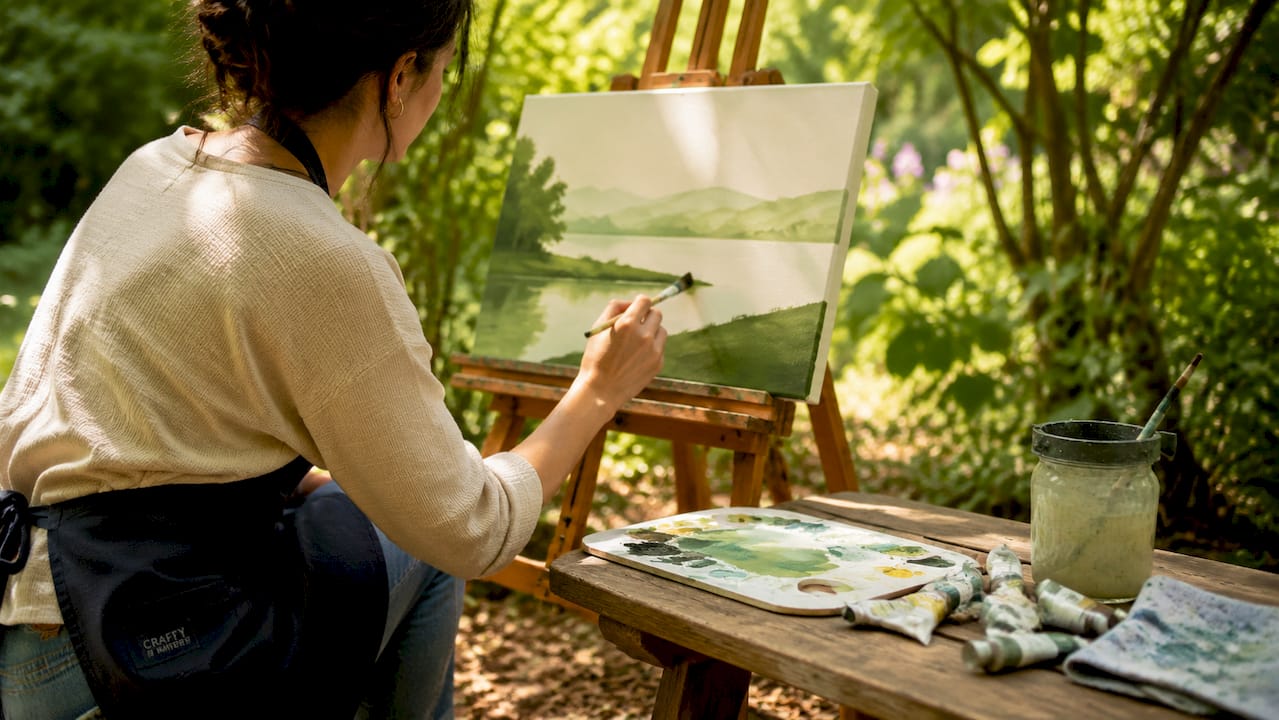
Minimalist landscapes use washes and silhouettes to teach blending and composition without demanding realistic detail. A simple sunset with a tree line takes roughly 90 minutes and produces a result worth hanging on a wall. The high contrast between sky and silhouette does most of the visual work for you.
Loose florals are forgiving organic shapes that focus on color harmony rather than botanical accuracy. You paint impressions of petals, not perfect replicas. This style trains your eye for color relationships without demanding precise brushwork.
Pointillism uses a simple dotting technique that improves brush control and color placement. You build an image one dot at a time, which sounds tedious but is actually meditative. The repetitive motion removes anxiety about making a “wrong” stroke.
Palette knife painting is a tactile, physical way to create textured art that completely bypasses traditional brush use. You spread and scrape paint with a flexible metal blade, which produces rich surface texture that looks impressive even on a first attempt.
Simple still life with one object, such as an apple or a mug, is the classic beginner method for learning form, light, and shadow. It takes around two hours but teaches observation skills that transfer to every other style.
Pro Tip: Pick the style that matches your personality first. If you love bold color, start with abstract geometric painting. If you prefer calm and quiet, try a minimalist landscape.
2. What techniques make painting easier for beginners?
Wet-on-wet blending is the single most important foundational technique for beginners, serving as a gateway to mastering other painting styles. You apply wet paint directly onto wet paint already on the canvas, which creates smooth gradients without visible brush lines. This technique teaches timing and brush pressure simultaneously.
Layering paints sequentially avoids muddy colors and keeps each layer fresh. You let one layer dry before adding the next, which preserves color clarity. Beginners who skip layering often end up with gray, overworked paint that loses all vibrancy.
Blocking in large shapes first prevents the stiffness that comes from painting details too early. Professionals call this the “beginner trap”: adding fine details before the composition is established results in disconnected, rigid artwork. Cover the canvas with flat color patches before touching a detail brush.
Managing acrylic drying times is a practical skill beginners often overlook. Fluid acrylics and water sprays extend blending time so you can work smoother gradients before the paint locks in. A simple spray bottle of water misted over the palette every few minutes makes a real difference.
Edge sharpness control separates flat-looking paintings from ones with depth. Sharpen edges only on your main focal point and soften edges everywhere else. This one adjustment makes a beginner painting look far more intentional.
Pro Tip: Keep a damp cloth next to your palette. Wipe your brush between colors to prevent accidental mixing that muddies your work.
3. How do easy painting styles compare in materials, time, and learning curve?
Choosing a style also means choosing a budget and a time commitment. The table below compares the most beginner-friendly options across four practical dimensions.
| Style | Materials needed | Time to complete | Learning curve |
|---|---|---|---|
| Abstract geometric | Canvas, fluid acrylics, palette knife or credit card | ~45 minutes | Very low, no drawing required |
| Minimalist landscape | Blending brushes, basic acrylics, water | ~90 minutes | Low, relies on washes |
| Loose florals | Round and flat brushes, acrylics | ~90 minutes | Low, organic shapes are forgiving |
| Pointillism | Round brushes, acrylics | ~2 hours | Low to moderate, requires patience |
| Palette knife painting | Palette knife, medium-body acrylics | ~60 minutes | Low, texture hides imperfections |
| Simple still life | Any brushes, acrylics, reference object | ~2 hours | Moderate, requires observation |
Starter acrylic kits cost between $30 and $50, which covers enough paint and brushes for several sessions. Abstract painting needs the fewest supplies: a canvas, a few tubes of fluid acrylics, and a palette knife or an old credit card for spreading paint. Still life requires more observation skill but no extra materials beyond a basic kit.
The time estimates matter because finishing a painting in one session builds confidence. A 45-minute abstract piece gives you a completed work before frustration sets in. Longer projects like still life are worth attempting once you have two or three quick wins behind you.
4. Pro tips for succeeding with beginner painting methods
The most common mistake new artists make is choosing a style based on what looks impressive rather than what suits their temperament. Abstract and expressive projects reduce pressure because there is no reference image to match. Structured styles like still life reward patience and observation. Knowing which type of person you are saves weeks of frustration.
- Start with emotion, not subject. Abstract painting benefits from guided emotional directions. Painting something “bright” or “restless” channels color and shape choices without pressure to be technically perfect. This approach removes the blank-canvas paralysis that stops many beginners.
- Practice wet-on-wet before layering. Blending is harder to learn after you have developed layering habits. Spend your first two sessions working wet-on-wet exclusively to build feel for paint consistency.
- Avoid overworking details early. Focus on big shapes for the first 80% of your painting time. Details added too early create stiffness that is nearly impossible to fix without repainting entire sections.
- Use affordable starter kits and experiment freely. Spending too much on materials early creates pressure to produce a “good” painting. A $30–$50 acrylic kit gives you enough material to make mistakes without guilt.
- Join guided classes or use curated kits. Structured learning accelerates skill development. Paint-by-numbers kits, for example, teach color placement and layering within a pre-designed composition, which is an excellent way to internalize technique before working freehand. Family painting nights using guided kits are also a low-pressure way to practice in a social setting.
Pro Tip: Set a timer for your first painting sessions. Giving yourself 45 minutes forces you to work loosely and avoid the overworking trap.
Color mixing and layering basics take 3 to 6 months for beginners to master with regular practice. That timeline is not discouraging. It means consistent, short sessions matter more than occasional marathon painting days.
Key takeaways
The most effective approach to beginner painting is choosing a forgiving style, mastering wet-on-wet blending first, and building paintings in layers rather than chasing immediate perfection.
| Point | Details |
|---|---|
| Start with abstract geometric painting | No drawing skills needed; a session takes about 45 minutes and builds immediate confidence. |
| Learn wet-on-wet blending first | This foundational technique teaches brush control and color mixing before any other method. |
| Block in large shapes before details | Painting details too early creates stiff, disconnected artwork that is hard to fix. |
| Use fluid acrylics and water sprays | Extending drying time gives beginners more control over blending and gradients. |
| Match style to your temperament | Expressive styles suit intuitive painters; structured styles suit patient, observational ones. |
Why simple styles changed how I think about painting
The conventional advice for new artists is to “just start.” That advice is not wrong, but it skips the most useful part: starting with the right style for your personality makes the difference between quitting after one session and coming back every week.
When I first tried painting, I went straight to still life because it seemed like the “correct” way to learn. I spent two hours staring at an apple and produced something that looked like a bruised potato. I nearly gave up. What changed everything was switching to abstract geometric painting for a month. No reference image, no pressure to match reality, just color and shape. Within a few sessions, I understood how paint behaves, how colors interact, and how much pressure to apply with a brush. Those sessions taught me more than the still life ever did.
The layering lesson took longer to absorb. I kept wanting to finish a painting in one go, which meant overworking wet paint into gray mud. Once I accepted that building in layers produces fresher, more vibrant results, my paintings improved immediately. The patience required for layering is actually a skill in itself.
My honest advice: ignore the pressure to paint “realistically” for at least your first three months. Loose florals, minimalist landscapes, and abstract work will teach you everything you need. Realism will come naturally once you have the fundamentals. Mistakes in expressive styles are features, not failures. A smeared edge in a loose floral painting looks intentional. The same smear in a portrait looks like an error. Give yourself the grace of a forgiving style while you find your footing.
— Paula S.
Craftybynumbers kits designed for new artists
Craftybynumbers has served over 120,000 customers with kits built specifically for the beginner experience. Each kit includes a pre-printed canvas, high-quality acrylic paints, and detail brushes, so you never have to guess what to buy first.

The Ivory Essence kit is a strong starting point for new artists who want a structured, confidence-building session. The Garden of Dreams kit combines simple shapes and color blocking for a stress-free creative experience. Both kits use vibrant color palettes that produce display-worthy results even on a first attempt. For beginners who want to extend blending time and practice smoother gradients, the acrylic medium gloss gel is a practical addition to any starter kit.
FAQ
What is the easiest painting style for a complete beginner?
Abstract geometric painting is the easiest style for absolute beginners because it requires no drawing skills and takes about 45 minutes to complete. Flat shapes and bold colors do the work without demanding technical precision.
How long does it take to learn basic painting skills?
Color mixing and layering basics take 3 to 6 months of regular practice to master. Painting balanced scenes from reference photos typically requires 1 to 2 years of consistent work.
What paint is best for beginners?
Acrylic paint is the best choice for beginners because it dries quickly, cleans up with water, and works on canvas, wood, and paper. Fluid acrylics are especially useful for blending and wash techniques.
Do I need drawing skills to start painting?
Abstract geometric painting and palette knife painting require no drawing skills at all. Styles like still life and portraiture benefit from basic drawing ability, but most beginner-friendly styles prioritize color and shape over line accuracy.
Can paint-by-numbers kits help new artists learn real techniques?
Yes. Paint-by-numbers kits teach color placement, layering, and brush control within a pre-designed composition. They are an effective structured method for internalizing technique before working freehand. You can find beginner-friendly tips to get the most from each session.
0 comments