

Most beginners finish a standard paint by numbers canvas in 10 to 40 active painting hours, which usually stretches across two weeks to two months at a relaxed pace of a few sessions per week. Mini kits can wrap up in a single afternoon, while large or highly detailed canvases can run past 40 hours and take a few months. The biggest swing factors are canvas size, how many tiny color sections it has, your own painting speed, and how many coats you need to fully cover the lines. The rest of this guide breaks each of those down and gives you a five-minute method to estimate your own kit.
TL;DR:
- Complex designs with many tiny sections and high detail significantly increase painting time, even within the same canvas size.
- Switching brushes frequently and applying multiple coats for coverage are common time sinks that can be minimized with proper workflow.
- Smaller kits, such as those under 30x30cm, typically take about 1 to 8 hours, while large, detailed canvases can require over 40 hours, often spread over months.
- A quick timing test on a representative section allows accurate estimation of total painting hours and helps plan the project schedule.
- High-quality kits with precise outlines and saturated pigments reduce rework and overall time needed to complete the painting.
Table of Contents
- How Long Does Paint by Numbers Take by Canvas Size?
- What Actually Changes Your Paint by Numbers Time
- A Simple Way to Estimate Your Own Canvas
- Tips to Paint Faster Without Cutting Corners
- Planning Sessions and Finishing Your Canvas
- Why Kit Quality Changes Your Time Estimate
- A Note on Pacing Your Project
- Find the Right Kit for the Time You Have
- Sources
- FAQ
How Long Does Paint by Numbers Take by Canvas Size?
Canvas size is the single biggest lever on total time, but complexity within a size class matters almost as much. A 40x50cm canvas packed with tiny detail sections can eat up nearly as many hours as a larger canvas with big, simple color blocks.
Here’s roughly what to expect across common formats:
- Mini kits (roughly 20x20cm or smaller): 1 to 3 hours total, which usually means one or two relaxed evening sessions.
- Small kits (around 30x30cm to 30x40cm): 3 to 8 hours, comfortable across three or four short sessions in a week.
- Standard kits (40x50cm, the most common size): 10 to 40 active painting hours, with the wide range coming down to how many colors and how fine the detail is. Some standard designs list as few as 10 to 16 hours on the product listing when the pattern is simpler.
- Large or highly detailed canvases (50x70cm and up, or anything with dense fine linework): 40+ hours, often spread across a month or two of regular sessions.
To put that in calendar terms: painting in 30 to 60 minute sessions, three times a week, turns a 20-hour standard kit into roughly a five to seven week project. Longer 90-minute weekend sessions can compress that same canvas into three or four weeks. Kids’ kits sit at the fast end of this range on purpose; beginner-focused illustration practices can help these kits finish faster as detailed in this practical guide. Designs like Ravensburger’s CreArt line use fewer, larger color zones so younger painters can finish without fighting tiny lines, which is worth remembering if you’re timing a project for a child rather than yourself.
What Actually Changes Your Paint by Numbers Time
Two people painting the identical canvas can finish six hours apart, and it’s rarely about talent. It comes down to a handful of factors, some of which you control and some you don’t.
Design complexity does more damage to your timeline than canvas size alone. A design with hundreds of tiny numbered cells and thin outlines takes far longer per square inch than a bold, graphic pattern, even at the same dimensions.
Color count and brush swaps add up fast. Switching brushes or rinsing between colors constantly is one of the most common time sinks, and it’s also one of the easiest to fix.
Coats and drying time stretch the calendar even when they don’t add much active effort. Thin acrylic paint often needs a second coat for full coverage, and each coat needs to dry before the next, which is dead time you can’t rush.
Experience and steadiness matter more early on. New painters tend to overwork small areas out of caution, which is normal and fades fast with practice.
Workspace and lighting quietly cost you time. Bad lighting causes missed spots and rework you won’t notice until the piece is nearly done.
- Interruptions, screen breaks, and multitasking stretch calendar time without adding real painting hours.
- Eyesight and fine motor comfort affect how long detail sections take.
- Personal standards (perfectionist edges vs. “looks great from across the room”) change the math significantly.
Pro Tip: Do your detail sections first, before your hand gets tired and your patience thins. Save the big, easy color blocks for when you want a quick sense of progress.
A Simple Way to Estimate Your Own Canvas
You don’t need to guess. A short timing test gets you a reasonably accurate total in minutes.
- Time a representative section. Pick one small numbered area, or a 1cm square in a moderately detailed zone, and time exactly how long it takes to paint cleanly.
- Estimate the total count. Count or eyeball how many similar-sized areas the whole canvas has, then multiply that by your per-section time.
- Add coats and finishing time. Tack on 20 to 30 percent for a second coat where needed, plus extra time for outlining and edge cleanup.
- Convert to a calendar plan. Divide your total hours by how long and how often you plan to paint each week.
Example A, a small kit: a section takes 90 seconds, the canvas has roughly 200 sections, giving 5 hours of raw painting. Add 25 percent for a second coat and touch-ups, and you land near 6.25 hours, about two weekend sessions.
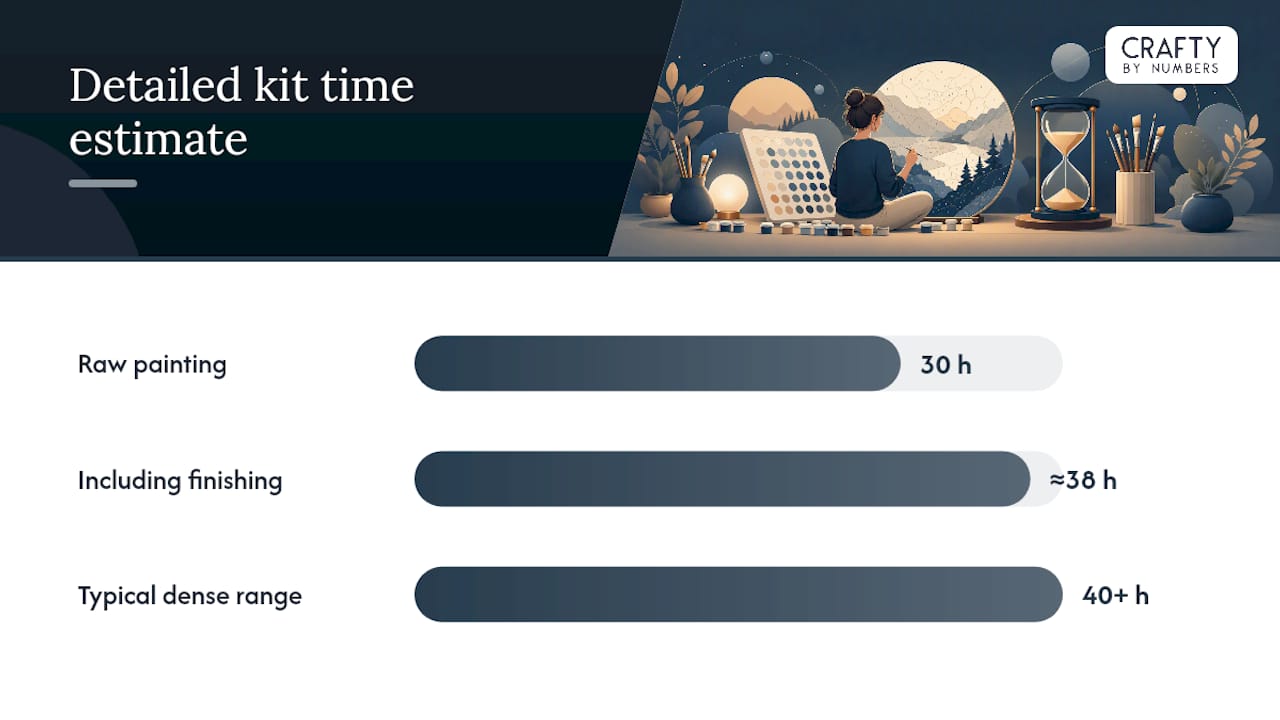
Example B, a large detailed kit: a section takes 2 minutes, with 900 sections, for 30 hours raw. Add finishing time and you’re near 38 hours, matching the 40+ hour range typical of dense designs.
Tips to Paint Faster Without Cutting Corners
Speed doesn’t have to mean sloppy work. Small workflow changes save real hours.
- Batch by color, not by location. Paint every section with the same number across the whole canvas before switching colors, instead of working area by area.
- Paint big blocks before small details, and generally work top to bottom so your hand doesn’t smudge finished sections below.
- Use thin, even coats. A second coat is often only needed where the base canvas color shows through, not everywhere.
- Match brush size to the section. A fine detail brush on a large block wastes time; a thick brush on tiny numbers creates messy edges you’ll have to fix.
- Let viewing distance set your standard. Edges that look imperfect up close often vanish completely once the canvas is framed and hung at a normal viewing distance.
Pro Tip: Keep a damp paper towel and a small mixing tray at your station. Most of the time lost in a session isn’t painting, it’s hunting for the right color or cleaning a brush.
Planning Sessions and Finishing Your Canvas
Fit your kit to the time you actually have, not the time you wish you had. Quick 30 to 45 minute sessions suit busy weeknights; focused 90 to 120 minute blocks make faster progress on standard and large canvases; weekend sessions work well for pushing through a big detailed section in one sitting.
- Track progress by percentage of numbered areas completed rather than hours logged. It feels more motivating.
- Clean stray paint marks with a damp cloth before the piece fully dries.
- If you plan to varnish, most acrylic varnishes need at least 24 hours of full cure time before framing.
- Comfortable setups and small, visible goals genuinely help hobbyists stick with and finish multi-week creative projects.
Why Kit Quality Changes Your Time Estimate
A kit’s materials shape how many hours you’ll actually log, not just how the finished piece looks. Author Paula S. covers this pattern across Crafty By Numbers’ guidance on canvas sizes and painting technique: better outlines and pigment quality cut down on rework.
Crafty By Numbers has built kits for more than 120,000 customers around that exact principle. Each kit includes:
- A pre-printed, numbered canvas with clean, color-matched outlines.
- Acrylic paints matched precisely to each numbered section, so coverage is consistent in fewer coats.
- Detail brushes sized for both fine linework and larger blocks.
- A reference guide showing the finished image for quick visual checks.
Sharper outlines and better pigment saturation mean fewer touch-ups and often just one coat instead of two, which trims real hours off the totals in the ranges above.
A Note on Pacing Your Project
The biggest planning mistake isn’t picking the wrong kit, it’s picking the wrong kit size for the free time you actually have this month. A detailed 50x70cm canvas is a wonderful project, but it becomes a guilt-inducing pile of paint tubes if you only get twenty free minutes a week. Match the canvas to your calendar first, and the hours take care of themselves. If you’re short on time right now, start smaller and enjoy finishing something. If you’ve got a slower season ahead, that’s exactly when a larger, more detailed canvas earns its place. The promo section below is a reasonable place to start looking.
— Paula S.
Find the Right Kit for the Time You Have
Once you know your rough hour budget, matching it to an actual kit is straightforward. Available kits are generally categorized by size and complexity ranges to help guide your choice.
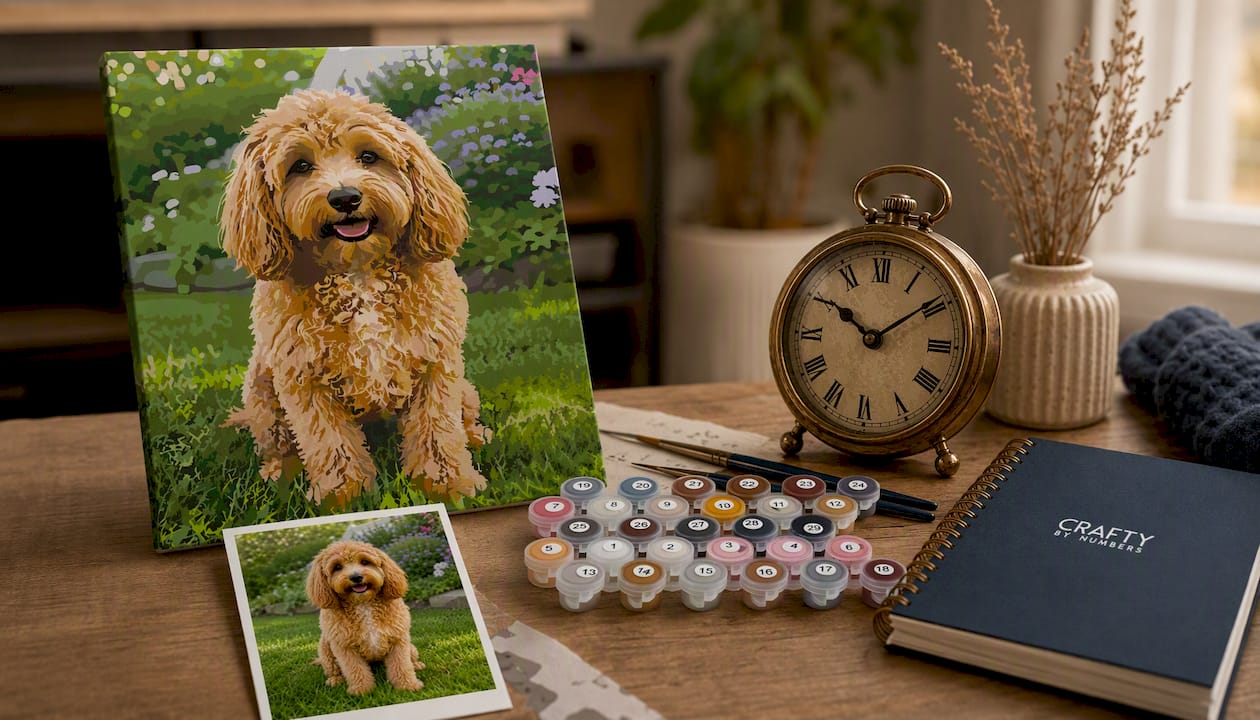
If you want something meaningful rather than generic, the Custom Paint by Numbers kit turns your own photo into a numbered canvas, typically landing in that standard 10 to 40 hour range depending on how much detail you request in the design. For a moderate, themed project with a satisfying finish, the Vintage Clock kit sits comfortably in the small to standard bracket, ideal if you want a defined weekend or two-week project rather than an open-ended one. Already have momentum and want to keep it going? The Extra Painting option lets you add another canvas to your order without starting a separate checkout.
Every kit ships with the pre-printed canvas, matched acrylics, and detail brushes already covered above, so there’s no separate shopping trip before you start. Check the product page for current processing and shipping windows before you order, then pick the size that actually fits your week.
Sources
- How Long Does Paint by Numbers Take? Beginner’s Guide — DaVincified
- Guideposts — craft and wellbeing resources
FAQ
Is There a Trick to Paint by Numbers?
Batching your work by color number instead of by location on the canvas is the single biggest time saver, since it cuts down on brush rinsing and mixing between colors.
How Long Does Paint by Numbers Take to Ship?
Shipping and processing times vary by seller and kit type, especially for custom designs made from your own photo; check the specific product page for current processing windows before ordering.
Is Painting by Numbers Difficult?
No, the numbered guide system removes the guesswork of color mixing and composition, which is why standard kits are approachable for complete beginners even at 10 to 40 hours of total painting time.
Are Paint by Numbers Kits Worth It?
For most people looking for a relaxing, low-pressure creative hobby, yes. Kits with pre-printed canvases and matched paints, like those from Crafty By Numbers, reduce setup friction and rework, which directly shortens the hours needed to finish a piece you’re proud to display.
0 comments