

The role of numbered canvas in learning art is to convert a blank, intimidating surface into a clear, step-by-step guide that anyone can follow. Each section of the canvas carries a number linked to a specific paint color, removing the guesswork that stops most beginners before they ever pick up a brush. This method, formally called paint-by-numbers, has been a recognized art education tool since Dan Robbins and Max S. Klein commercially popularized it in the 1950s. The technique builds real artistic skills, including brush control, color recognition, and hand-eye coordination, while also delivering measurable cognitive benefits backed by recent research.
What is the role of numbered canvas in learning art?
A numbered canvas works by dividing a pre-printed image into labeled zones. Each zone corresponds to a specific paint color, so the learner focuses entirely on applying paint accurately rather than making compositional decisions. This structure is the core educational value. It teaches execution before creativity, which is exactly the right sequence for a beginner.
The technique functions like training wheels for painting. A child learning to ride a bike does not start on a mountain trail. A beginner painter should not start with a blank canvas and a palette of 20 colors. Numbered canvases remove the variables that cause frustration and replace them with a clear path forward.
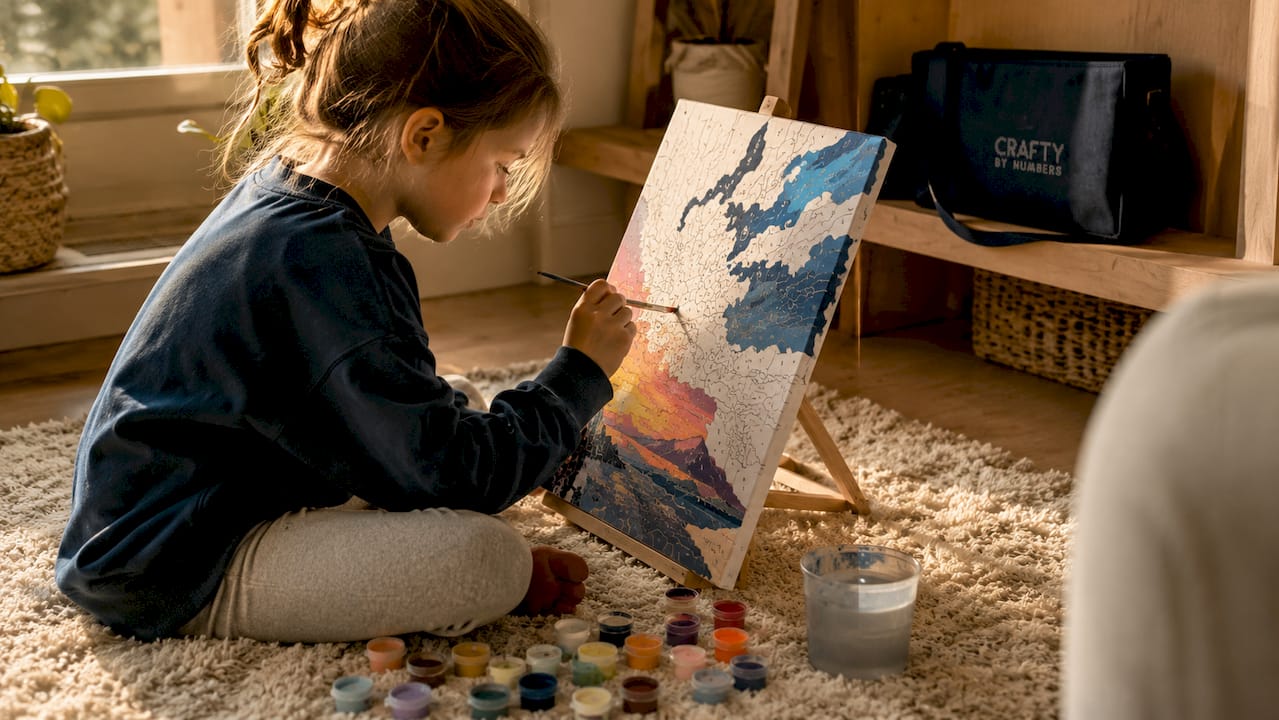
For children, this structure carries an extra layer of value. Numbered canvas activities connect visual attention to number recognition, making the activity educational in two directions at once. For adults, the benefit is confidence. Finishing a painting that looks genuinely good is a powerful motivator to keep going.
How do numbered canvases help develop essential artistic skills?
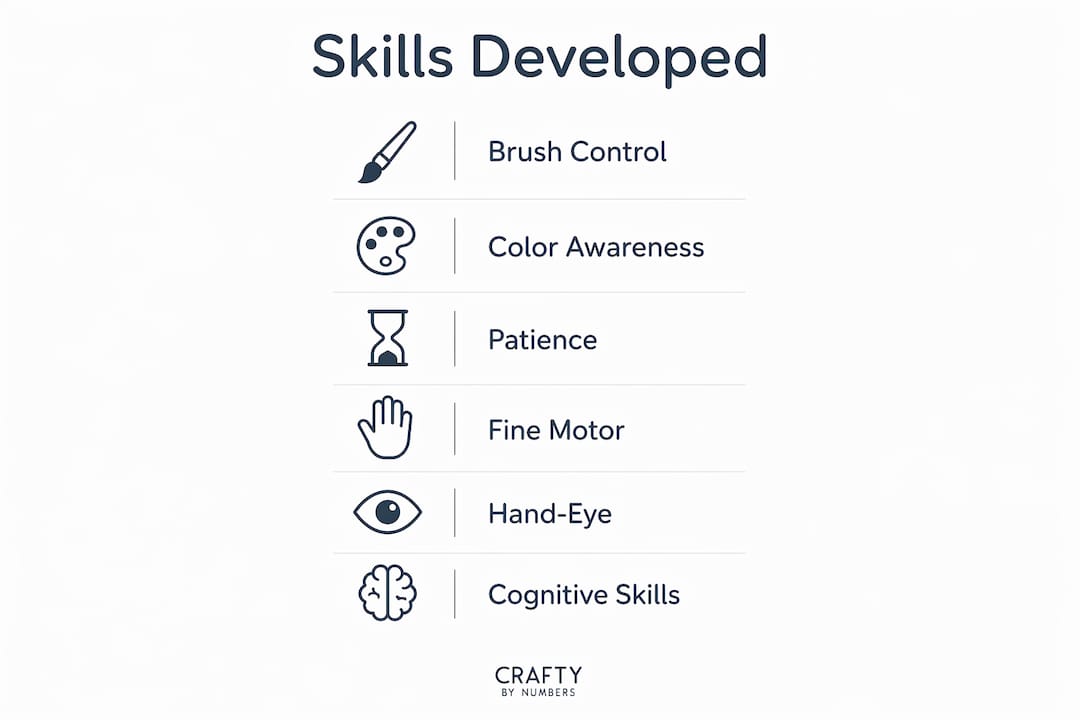
Paint-by-numbers builds four foundational skills that every painter needs: brush control, color awareness, patience, and attention to detail. These are not minor side effects. They are the mechanical core of painting, and they take most self-taught artists years to develop through freehand practice alone.
Brush control through repetition
Filling small, numbered sections repeatedly trains the hand to apply consistent pressure and stay within boundaries. This is the same principle behind music scales. You practice the motion until it becomes automatic. After completing several numbered canvas projects, most learners notice their lines are cleaner and their strokes are more deliberate.
Color recognition and shade matching
Each numbered zone teaches the learner to see color as a specific, identifiable choice rather than a vague impression. Over time, painters begin to recognize warm and cool tones, light and shadow, and the relationship between adjacent colors. This observational skill transfers directly to freehand work.
Fine motor skills and hand-eye coordination
Staying within the lines of a small numbered section requires precise coordination between what the eye sees and what the hand does. For children especially, this kind of fine motor practice builds the physical dexterity needed for writing, drawing, and other detailed tasks.
Key skills developed through numbered canvas practice:
- Brush pressure control: Learners adjust pressure naturally to fill sections without bleeding over edges.
- Color application: Repeated use of specific colors builds muscle memory for mixing and layering.
- Spatial awareness: Reading a numbered map and translating it to a canvas trains visual processing.
- Patience and focus: Completing a full canvas teaches sustained attention, a skill that benefits all learning.
Pro Tip: Start with a canvas that has larger numbered sections. Smaller zones demand finer control, so save those for your third or fourth project when your hand is more confident.
What cognitive benefits do numbered canvas activities offer children?
Numbered canvas activities do more than teach painting. A 2026 study on children aged 4–5 found that number painting activities produced measurable cognitive gains. Average cognitive scores rose from 56.33 to 85.67 after the intervention, a statistically significant result (p < 0.05). That kind of improvement in a short structured activity is difficult to achieve with passive learning methods.
“Number painting activities improve key cognitive markers tied to numeracy skills, including one-to-one correspondence, number symbol recognition, and comparison abilities in young children.” — 2026 study, Paudia Journal
The three cognitive skills strengthened by numbered canvas work are worth understanding individually. One-to-one correspondence means matching each number on the canvas to exactly one paint color. This is a foundational math concept. Number symbol recognition means reading “4” and understanding it as a distinct symbol with a specific meaning. Comparison skills develop when a child decides whether section 3 is lighter or darker than section 5.
These are not trivial gains. Early numeracy skills predict later academic performance across multiple subjects. Educators and parents who use numbered canvas activities as part of a learning routine are reinforcing math readiness through a medium children genuinely enjoy.
For educators, the practical recommendation is simple. Introduce numbered canvas projects alongside counting and number recognition lessons. The visual, hands-on format reaches learners who struggle with worksheets. For parents, a Craftybynumbers kit on a weekend afternoon does double duty as creative time and cognitive practice.
How does numbered canvas compare to freehand painting?
Numbered canvas and freehand painting teach different things. Understanding that distinction helps learners use each method at the right time.
Structured paint-by-numbers activities do not teach color mixing or composition. The colors are pre-assigned. The composition is pre-designed. What the learner practices is technical execution: applying paint cleanly, reading a visual map, and building patience. These are real skills, but they represent one part of painting, not the whole.
Freehand painting, by contrast, demands creative decision-making from the first stroke. The learner must choose a subject, decide on a composition, mix colors, and manage the entire process independently. For a complete beginner, that volume of decisions is often paralyzing.
| Skill area | Numbered canvas | Freehand painting |
|---|---|---|
| Brush control | Strong development | Develops over time |
| Color application | Structured practice | Open-ended practice |
| Color mixing | Not covered | Core skill |
| Composition | Pre-designed | Learner decides |
| Confidence building | High, immediate | Slower, gradual |
| Creative expression | Limited | Full |
The numbered canvas method works best as a foundation, not a ceiling. Educational art kits inspired by historic masters, such as the Hans Baldung color-by-number approach, demonstrate how numbered zones can teach Renaissance portrait composition and value-first painting techniques to older learners. That shows the method scales beyond beginner level when the design is intentional.
The honest framing is this: numbered canvas is a stepping stone. It builds the mechanical confidence that makes freehand painting feel possible rather than frightening.
How to get the most out of numbered canvas practice
Getting real learning value from a numbered canvas project requires a little intention. Painting mindlessly is still relaxing, but painting with awareness accelerates skill development.
- Study the full canvas before you start. Look at the numbered map and identify where light and shadow fall. Notice which colors appear next to each other. This trains compositional observation even within a structured format.
- Work light to dark. Apply lighter colors first, then layer darker tones over them. This mirrors professional painting technique and prevents muddying your palette.
- Vary your brush size deliberately. Use a wider brush for large sections and a fine brush for edges and small zones. Switching intentionally builds awareness of brush selection, a skill that matters in all painting.
- Try blending at section edges. Where two numbered sections meet, experiment with softening the boundary while the paint is still wet. This goes beyond the instructions and introduces a real painting technique.
- Combine numbered canvas with freehand sketching. After finishing a project, spend 10 minutes sketching the same subject freehand. The numbered canvas gives you a reference point. The sketch builds independent observation.
Completing a paint-by-number artwork provides a genuine sense of accomplishment that encourages persistence and continued learning. That psychological reward is not a small thing. Motivation is the variable that separates learners who improve from those who quit.
Pro Tip: Keep your finished canvases. Seeing your first project next to your fifth one is the clearest possible evidence of your own progress. That visual record is more motivating than any external encouragement.
For families looking for creative activities that bring people together, numbered canvas projects work well as shared experiences. The guided format means participants of different skill levels can work side by side without frustration.
Key Takeaways
Numbered canvas painting builds real artistic and cognitive skills through structured, guided practice that reduces beginner intimidation and produces measurable results.
| Point | Details |
|---|---|
| Skill foundation | Numbered canvases build brush control, color awareness, and fine motor skills through repetition. |
| Cognitive gains | A 2026 study found cognitive scores in children aged 4–5 rose from 56.33 to 85.67 after number painting activities. |
| Honest limits | Numbered canvases do not teach color mixing or composition; use freehand practice to fill those gaps. |
| Confidence building | Finishing a complete painting reduces fear of the blank canvas and motivates continued practice. |
| Best use strategy | Combine numbered canvas projects with freehand sketching and deliberate technique practice for the fastest growth. |
What I’ve learned from watching beginners pick up a brush
I have watched a lot of people sit down in front of a blank canvas for the first time. The look is always the same: excitement, then hesitation, then a kind of quiet panic. The blank surface asks too many questions at once, and most beginners freeze before they make a single mark.
Numbered canvases solve that specific problem better than any other beginner tool I have seen. They do not just simplify the task. They reframe it. Instead of asking “what do I paint?” they ask “can you follow this map?” Almost everyone can follow a map. That shift in framing is what builds confidence and keeps people coming back.
What surprises most people is how much they actually learn in the process. They expect a coloring book experience. They get a genuine introduction to how paint behaves, how colors interact, and how a brush responds to different pressures. Those lessons stick.
My honest recommendation is to treat numbered canvases as the first chapter, not the whole book. Finish three or four projects, then pick up a sketchbook and try something freehand. You will be shocked at how much more capable you feel. The structured practice transfers. The beginner art projects you complete with a numbered canvas give you a vocabulary for painting that you simply did not have before.
— Paula S.
Craftybynumbers kits: a practical starting point for art learners
Craftybynumbers has served over 120,000 customers with kits designed to make the paint-by-numbers experience genuinely rewarding. Each kit includes a pre-printed canvas, high-quality acrylic paints, and detail brushes sized for different sections of the design.

Two strong starting points are the Ivory Essence kit, which suits beginners and intermediate painters looking to develop technical skills, and the Garden of Dreams kit, which offers an inviting design ideal for practicing color application and brush control. Both kits are built around vibrant color palettes and detailed artwork that looks genuinely display-worthy when finished. Craftybynumbers also offers personalized options for learners who want to paint a subject that means something to them personally.
FAQ
What skills does a numbered canvas actually teach?
Numbered canvas painting builds brush control, color recognition, fine motor coordination, and patience through structured repetitive practice. These are foundational mechanical skills that transfer directly to freehand painting.
Is paint-by-numbers good for young children?
A 2026 study found that number painting activities significantly improved cognitive scores in children aged 4–5, strengthening one-to-one correspondence, number symbol recognition, and comparison skills. The format suits children well because it combines visual engagement with number learning.
Can numbered canvas replace traditional art lessons?
Numbered canvas practice complements traditional art lessons but does not replace them. It does not teach color mixing or composition, so pairing it with freehand practice and formal instruction produces the best results.
How do I progress beyond numbered canvases?
After completing several numbered canvas projects, try freehand sketching the same subjects you painted. Use what you learned about color relationships and brush pressure as a starting point for independent creative work.
Are numbered canvases useful for adults, or just for kids?
Numbered canvases benefit learners of all ages. Adults gain brush control, stress relief, and the confidence to pursue more advanced painting. The structured format removes the intimidation of a blank canvas regardless of the learner’s age.
Recommended
- Simple process, lots of fun! #paintbynumbers #paintbynumbers #painting #paintings #paints - YouTube
- How to Introduce Children to Canvas Painting – Crafty By Numbers
- Crafty by Numbers: High Quality Paint by Numbers Kits - YouTube
- Paint by Numbers Builds Painting Skills | Crafty by Numbers – Crafty By Numbers
0 comments