

An art kit is a curated collection of art supplies designed to enable creative expression, whether at home, in a studio, or outdoors. Knowing what does an art kit include helps you avoid buying the wrong materials and wasting money on supplies you will never use. Most kits fall into one of three categories: beginner, professional, or medium-specific. Each type contains a different mix of drawing tools, paints, brushes, and support materials. Brands like Craftybynumbers and Pentel build their kits around this logic, selecting supplies that work together rather than filling a box with random items.
What does an art kit include for beginners?
A beginner art kit includes drawing pencils, erasers, a sharpener, paper, paint, and brushes. These are the tools that cover the widest range of creative tasks without overwhelming a new artist.
The drawing side of a starter kit typically contains four graphite pencils: HB, 2B, 4B, and 6B. A typical drawing kit with these four grades covers roughly 90% of drawing applications during a beginner’s first year. HB works for light sketching, while 6B delivers deep, rich shadows. Two erasers round out the drawing tools: a kneaded eraser for lifting graphite without damaging paper, and a vinyl eraser for clean, sharp corrections.
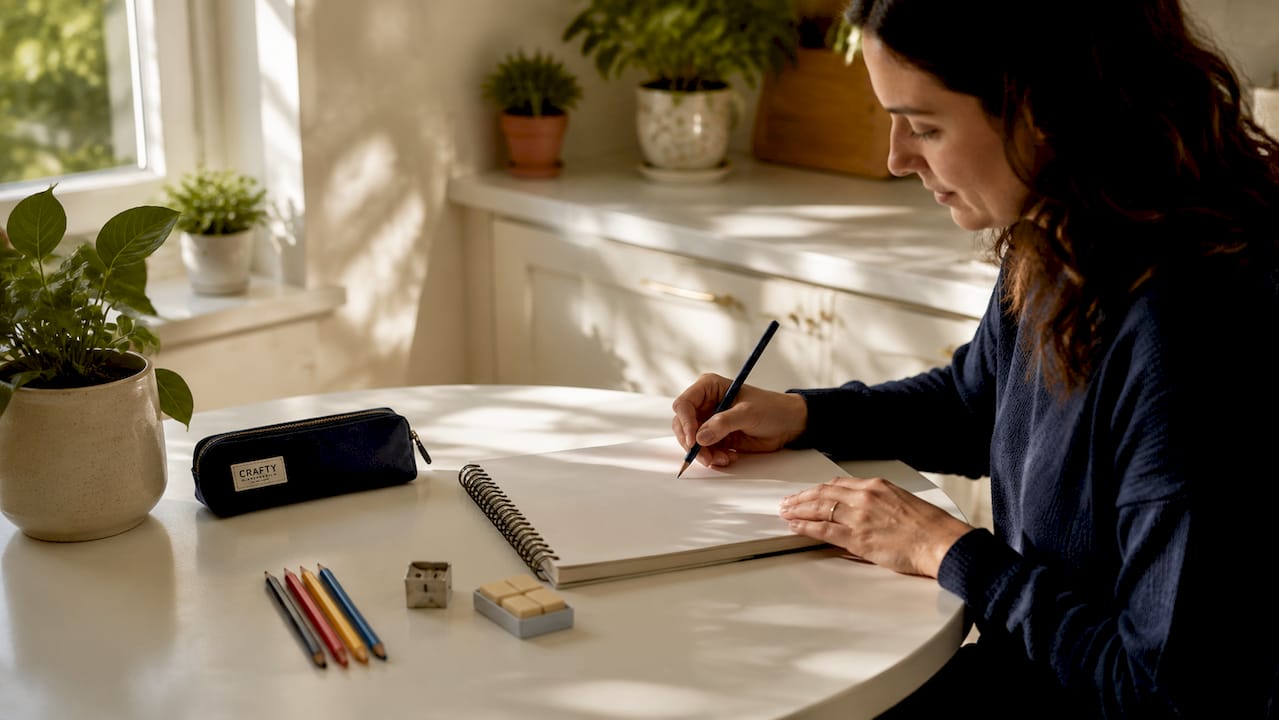
On the painting side, a beginner kit usually includes 6–8 acrylic or watercolor paint colors. Starting with 6–8 primary colors teaches color mixing far more effectively than a 48-color set where every shade is pre-made. Three brush types cover most painting needs: a flat brush for broad strokes, a round brush for detail, and a filbert brush for blending. A palette, a water container, and a sketchpad complete the core setup.
Entry-level art kits typically range between $50 and $85. That price point delivers a complete, functional setup without the clutter of a large generic set.
Pro Tip: Skip the 100-piece starter sets. A focused kit with 4 pencil grades, 2 erasers, 3 brushes, and 6–8 paint colors gives you more creative control than a box stuffed with low-grade supplies.
Common beginner art kit components include:
- Graphite pencils (HB, 2B, 4B, 6B)
- Kneaded eraser and vinyl eraser
- Manual pencil sharpener
- Sketchpad or drawing paper
- 6–8 acrylic or watercolor paint colors
- Flat, round, and filbert brushes
- Palette and water container
- Colored pencils, crayons, or markers
How do professional art kits differ from beginner sets?
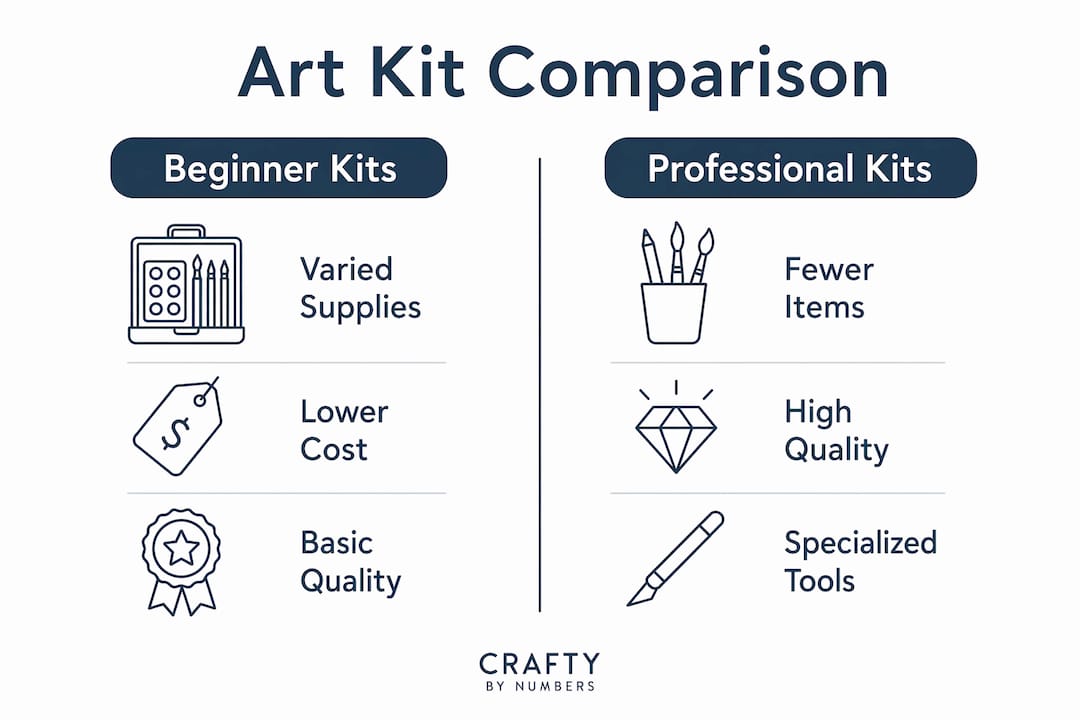
Professional art kits contain fewer items than beginner sets, but every item performs at a higher level. The shift from beginner to professional is about precision and longevity, not volume.
A professional drawing kit upgrades the pencil selection to premium graphite brands and adds specialty erasers like the Tombow MONO for ultra-clean corrections. The paper changes too. High-quality kits include acid-free paper, which prevents yellowing and extends the life of finished artwork by decades. Charcoal drawings get a fixative spray to lock in the medium and prevent smearing. These additions protect the final piece and are standard in professional-level kits.
Brushes in professional kits are often replaced by artists themselves. Experienced artists frequently swap generic kit brushes for one or two high-quality synthetic round brushes that deliver better precision and last longer. Professional kits also include instructional content. The Pentel Arts Crafts Pro Kit, for example, bundles curated video tutorials that teach workflow strategies beyond basic material use.
“Marketing often labels large supply collections as ‘essential,’ yet true essentials focus on a few high-quality, multi-purpose tools.” — artcraftworld.com
Professional kit additions often include:
- Premium graphite pencils with a wider grade range
- Acid-free drawing and watercolor paper
- Fixative spray for charcoal and pastel protection
- Odorless mineral spirits or linseed oil for oil painting
- Specialty erasers (Tombow MONO, kneaded, and vinyl)
- Instructional booklets or video tutorial access
How do art kit contents change by medium?
The medium you choose determines almost everything in your kit. A watercolor kit and an oil painting kit share almost no supplies, even though both produce paintings.
| Medium | Core supplies | Key extras |
|---|---|---|
| Drawing | Graphite pencils, charcoal, sketchbook, erasers | Fixative spray, blending stumps |
| Watercolor | Watercolor paints (tubes or pans), watercolor paper, brushes | Travel palette, water brush pens |
| Acrylic | Acrylic paint tubes, canvas or canvas paper, brushes | Palette, palette knife, retarder medium |
| Oil | Oil paint tubes, primed canvas, bristle brushes | Mineral spirits, linseed oil, palette knife |
| Plein air | Lightweight versions of any medium | Masking tape, portable easel, sharpener with reservoir |
Watercolor kits are the most travel-friendly. Watercolor paints in compact tubes or pans, paired with portable brushes and lightweight paper, make outdoor painting practical. Cold press watercolor paper is the standard choice because its texture holds water and pigment well.
Acrylic kits suit beginners who want bold, fast-drying results. Acrylics work on canvas, canvas paper, and even wood, which makes them flexible. Oil kits require more support materials. Mineral spirits clean brushes and thin paint, while linseed oil extends drying time and adds gloss.
Plein air kits, used for outdoor painting, prioritize portability above everything else. A manual pencil sharpener with a shavings reservoir prevents mess in the field. Masking tape serves multiple functions in a travel kit: it holds paper flat on a board, creates clean painted borders, and can even repair a torn sketchbook page.
Pro Tip: If you paint outdoors, add a small roll of masking tape to your kit. It holds your paper down in wind, keeps edges clean, and takes up almost no space.
How to choose the right art kit for your goals
Choosing an art kit starts with one question: what do you want to make? The answer narrows your medium, which narrows your supply list.
Skill level matters next. Beginners benefit more from fewer, higher-quality supplies than from large, low-grade all-in-one sets. A 12-color professional acrylic set outperforms a 48-color student set in both color accuracy and coverage. Buy less, but buy better.
Parents choosing kits for children need to prioritize safety and ease of use. A children’s art kit typically includes crayons, markers, colored pencils, construction paper, paint, brushes, and a smock. Look for non-toxic labels on all paint and marker products. Washable paints and markers reduce cleanup stress significantly. For kids interested in structured creativity, a paint-by-numbers kit removes the intimidation of a blank canvas while still building real painting skills. You can find beginner-friendly art projects that work well for both children and adults with minimal supplies.
For portability, keep your kit light. A family painting night at home needs different supplies than a solo plein air session in a park. Match your kit to your environment, not just your medium.
Follow these steps to build or select the right kit:
- Identify your preferred medium (drawing, watercolor, acrylic, or oil).
- Set a realistic budget. Entry-level kits run $50–$85; professional sets cost more.
- Choose quality over quantity. Three good brushes beat ten cheap ones.
- Check for safety labels if buying for children under 12.
- Add portability tools (sharpener with reservoir, masking tape) if you plan to paint outdoors.
- Store supplies in a dedicated case or box to keep them organized and ready.
Pro Tip: Organize your kit by medium, not by tool type. Keep all your watercolor supplies in one pouch and your drawing tools in another. You will set up faster and waste less time searching.
Key takeaways
A well-chosen art kit contains a small number of high-quality, medium-specific tools rather than a large collection of generic supplies.
| Point | Details |
|---|---|
| Core beginner supplies | Four pencil grades, two erasers, three brush types, and 6–8 paint colors cover most needs. |
| Quality over quantity | Fewer, better tools outperform large, low-grade sets for skill building and creative results. |
| Medium determines contents | Drawing, watercolor, acrylic, and oil kits each require a distinct set of supplies. |
| Children’s kits need safety focus | Non-toxic, washable supplies with variety encourage creativity and reduce cleanup stress. |
| Portability requires planning | Travel kits need lightweight materials, a sharpener with a reservoir, and masking tape. |
Why I think most people buy the wrong art kit
Most people walk into an art store or browse online and grab the biggest box they can afford. I understand the impulse. More supplies feel like more possibility. But after years of working with artists at every level, I have seen the same pattern repeat: the giant 120-piece set sits mostly unused, while the artist reaches for the same five tools every session.
The real mistake is buying for aspiration instead of practice. A 6B pencil and a quality sketchpad will teach you more in a month than a box of 60 colored pencils you rotate through once. The same logic applies to paint. Six primary colors force you to learn color mixing, which is one of the most valuable skills in painting. A 48-color set lets you skip that lesson entirely, and you pay for it later.
I also think people underestimate how much the paper matters. Cheap paper fights you. It buckles under watercolor, tears under eraser pressure, and makes every tool perform worse than it should. Acid-free paper and quality canvas are not luxuries. They are the surface that makes every other supply in your kit work correctly.
My honest recommendation: start with a focused kit, master those tools, then add one or two premium items as your skills grow. A single high-quality synthetic round brush will change how you paint more than any new color will.
— Paula S.
Craftybynumbers kits: everything you need in one box
Craftybynumbers takes the guesswork out of assembling an art kit. Each paint-by-numbers kit includes a pre-printed canvas, high-quality acrylic paints, and detail brushes selected for the specific design.

The kits suit all skill levels and work well as a family activity or a solo creative project. Over 120,000 customers have used Craftybynumbers kits to create display-worthy artwork without needing prior painting experience. The Blue Mediterranean Door kit and the Blue Mediterranean Doors kit are two popular options that include everything you need to paint a stunning finished piece. For guided tips on getting the most from your kit, the paint by numbers tips blog covers technique, color use, and finishing touches.
FAQ
What are the basic items in an art kit?
A basic art kit includes graphite pencils, erasers, a sharpener, paper, paint, and brushes. Most entry-level kits also add a palette, water container, and colored pencils or markers.
How much does a beginner art kit cost?
Entry-level art kits typically range between $50 and $85. That price covers a complete working setup with 6–8 paint colors, three brushes, and core drawing tools.
What does a children’s art kit include?
A children’s art kit includes crayons, markers, colored pencils, construction paper, paint, brushes, and often a smock. All supplies should carry a non-toxic label, and washable paints are strongly recommended.
What is the difference between a beginner and professional art kit?
Professional kits contain fewer items but at a higher quality level, including acid-free paper, fixative spray, premium pencils, and specialty erasers. Beginner kits prioritize variety and affordability over material performance.
Do art kits include instructions?
Many quality art kits include instructional booklets or access to video tutorials. Curated kits with expert guidance help beginners build technique and confidence faster than supplies alone.
0 comments