

A pre-printed canvas is a painting surface that already has outlines, numbers, or guides printed directly on it so you can paint over them without sketching anything yourself. It is made for painting, not display. That one distinction matters: a canvas print is a finished inkjet reproduction you hang on the wall, while a pre-printed canvas is a blank-to-fill kit waiting for your brush. Two quick signals tell you which you’re holding: printed guides on the surface (outlines, numbers, or symbols) and a primed, paintable finish underneath.
Table of Contents
- What markings do you actually find on a pre-printed canvas?
- How does a pre-printed canvas differ from a blank canvas or a canvas print?
- How do you use a pre-printed canvas step by step?
- What should you look for when buying a pre-printed canvas kit?
- What does a pre-printed canvas kit typically cost, and how long does it take?
- How do you care for a finished pre-printed canvas painting?
- What are the real benefits and limitations of pre-printed canvases?
- Key Takeaways
- Why pre-printed kits are the right place to start
- Craftybynumbers kits: what’s included and where to start
- Useful sources and further reading
- FAQ
What markings do you actually find on a pre-printed canvas?
The printed guides vary by kit style, and knowing what each type does changes how you paint.
- Numbered regions: Each section carries a number that matches a labeled paint pot. Classic paint-by-numbers kits use this system. You match number to color and fill the shape.
- Color-coded outlines: Some kits skip numbers and use lightly tinted borders to suggest which paint goes where, useful for kits with fewer, broader regions.
- Contour line art: Portrait and figure kits often print fine contour lines showing facial structure or clothing folds without numbering every tiny area.
- Symbol keys: A few kits replace numbers with small symbols (dots, dashes, triangles) to avoid cluttering intricate areas with digits.
- Faint tonal shading: Higher-detail kits sometimes include subtle gray shading beneath the outlines to suggest where shadows fall before you paint a single stroke.
Printing style shapes your technique in a real way. Thin, faint guide lines favor blending and soft edges because they disappear under a light wash of paint. Bold black outlines favor precise, clean filling because they stay visible through thin coats and keep regions separated. Choosing between them is not just aesthetic; it affects how forgiving the kit is for a first-timer.
How does a pre-printed canvas differ from a blank canvas or a canvas print?
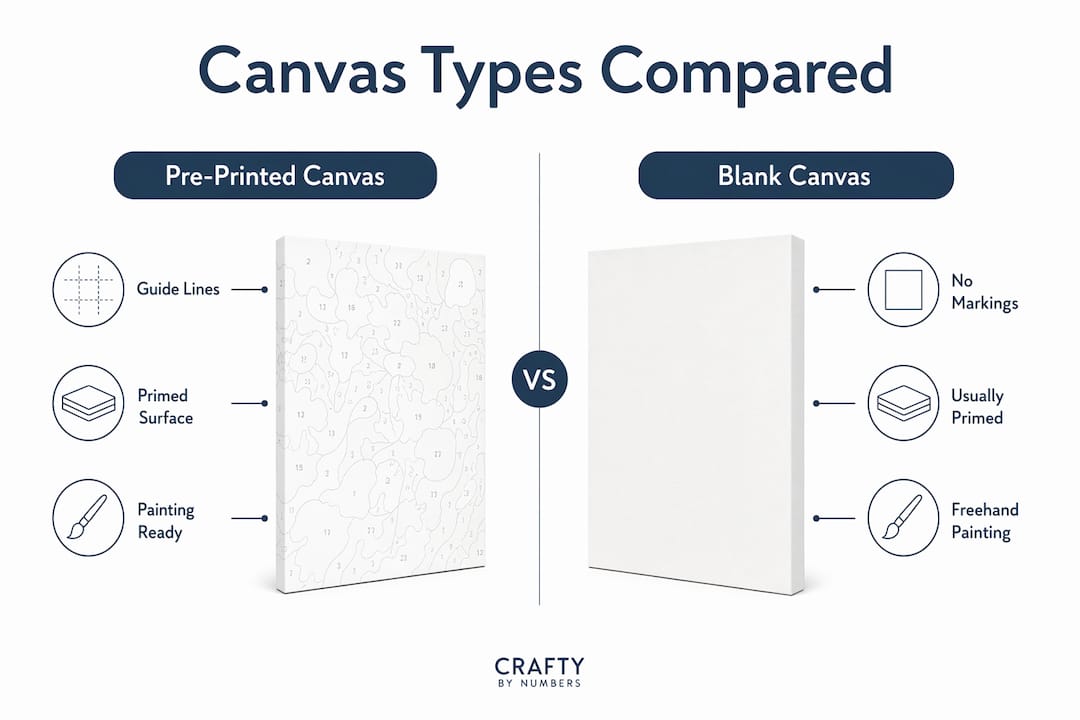
These three products share a name but serve completely different purposes.
A canvas print is produced by inkjet or giclée printing and arrives as finished wall art. You unbox it and hang it. A blank canvas is an unprimed or gessoed surface with nothing on it, intended for artists who sketch and compose their own work. A pre-printed canvas sits between the two: it has a primed, paintable surface like a blank canvas, but carries printed guides like a canvas print, except those guides are there to be covered with paint, not admired.
Key differences at a glance:
- User task: Canvas print = hang it. Blank canvas = sketch, then paint. Pre-printed canvas = paint directly over the guides.
- Surface finish: Canvas prints use a coating that accepts ink. Pre-printed canvases use gesso priming that accepts acrylic or oil paint and controls absorption.
- End result: A canvas print’s image is permanent ink. A pre-printed canvas becomes a hand-painted artwork, unique to whoever painted it.
The confusion is understandable because both products have something “printed” on them. The difference is intent: one is done, the other is a starting point.
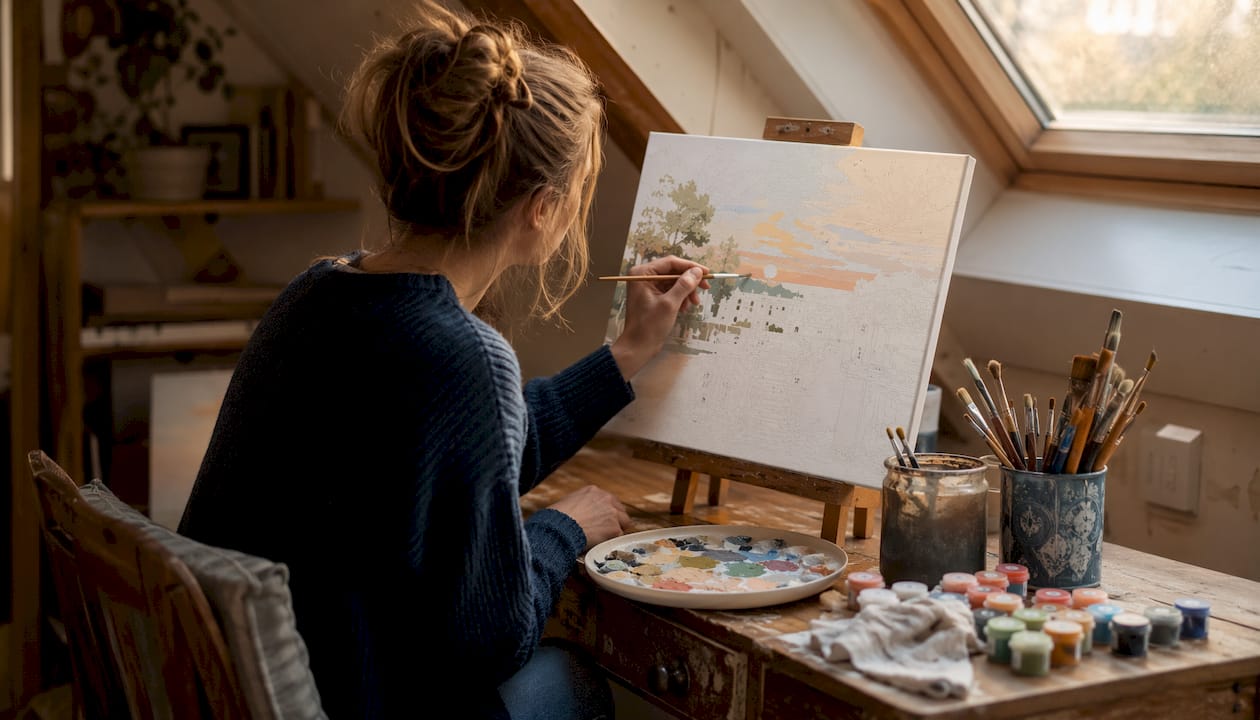
How do you use a pre-printed canvas step by step?
Opening a kit for the first time is straightforward when you follow a simple sequence.
- Unpack and check the kit. Lay out the canvas, paints, and brushes. Match every labeled paint pot to the color key on the canvas or reference sheet.
- Set up your workspace. Work on a flat board or easel. Keep a water cup, paper towels, and a mixing palette nearby.
- Read the color key first. Spend two minutes studying which numbers or symbols correspond to which colors before you open any paint.
- Start with the largest regions. Big background areas are forgiving and let you get comfortable with the paint consistency before tackling detail.
- Blend and layer as needed. Acrylic paint dries fast, so work one section at a time. A second coat covers any thin spots and deepens color.
- Add fine details last. Use a small round brush for numbered regions near edges, facial features, or thin lines.
- Let the painting dry fully. Allow at least a few hours, ideally overnight, before touching the surface.
- Varnish if desired. A finishing varnish protects the paint and unifies the sheen across the whole piece.
Supplies checklist:
- Acrylic paints (usually included in the kit)
- Round and flat brushes in at least two sizes
- Palette or mixing tray
- Water cup and paper towels
- Easel or flat board
- Finishing varnish (matte or gloss)
- Optional: stretcher bars or a frame
Pro Tip: Before you start painting, test your paint on the canvas edge or a scrap piece of paper. A properly gessoed surface controls how much paint the fabric absorbs, which keeps colors vivid and prevents the weave from showing through. If paint soaks in too fast, your canvas may not be well primed.
What should you look for when buying a pre-printed canvas kit?
Quality varies more than the price tags suggest. Here is what separates a kit worth buying from one you’ll regret.
- Canvas material: 100% cotton or linen holds paint better than polyester blends. Check the product listing for fiber content.
- Priming: Look for “triple-primed gesso” in the specs. It controls paint absorption and keeps colors from looking dull.
- Print clarity: Outlines should be sharp and numbers legible at arm’s length. Blurry or oversaturated guides make painting frustrating.
- Labeled paints: Each pot should carry a number or color name matching the canvas key. Unlabeled pots are a red flag.
- Brush variety: A kit with one tiny brush forces you to use the wrong tool for large areas. Look for at least two brush sizes.
- High-resolution previews: A vendor who publishes a clear finished-work image is showing you exactly what you’re buying. No preview often means a low-resolution print.
- Explicit what’s-included list: Clear kit listings reduce surprises. If the page doesn’t list canvas size, paint count, and brush types, shop elsewhere.
- Customer reviews with photos: Real finished-work photos from buyers tell you more than any product description.
Shoppers who check cotton or linen content, priming details, and real customer photos of finished work tend to have far fewer purchase regrets, especially when buying a first kit.
What does a pre-printed canvas kit typically cost, and how long does it take?
Price and time both scale with size and complexity.
- Small kits (8×10 in or similar): Generally the most affordable entry point. A simple design can be finished in one or two evenings.
- Medium kits (12×16 in range): Mid-range in price and effort. Expect a weekend or a few sessions spread across a week.
- Large or detailed kits (16×20 in and up): Higher price, more paint pots, and finer detail. Multi-week projects are common, especially for portraits or landscapes with many numbered regions.
Factors that stretch the timeline: high detail counts, slow-drying layered sections, and any blending work that requires waiting between coats. For custom or bulk-ordered canvases, production lead times can run roughly 15–30 days before the order even ships, so plan ahead for gifts or events.
Worth knowing: Complexity, not just size, drives time-to-complete. A small portrait with 40 numbered colors takes longer than a large abstract with 10.
How do you care for a finished pre-printed canvas painting?
A little attention after the last brushstroke keeps the painting looking good for years.
- Let the paint cure fully. Acrylic paint feels dry to the touch in minutes but continues curing for 24–72 hours. Avoid stacking or framing too soon.
- Apply a varnish. A matte varnish reduces glare and gives a gallery-flat look. Gloss varnish deepens colors and adds richness. Either protects the paint layer from dust and UV. Brush or spray varnish both work; spray is easier for beginners.
- Mount or frame the canvas. Stretcher bars keep the canvas taut for a frameless display. A float frame leaves a small gap around the canvas edge for a contemporary look. Both are widely available at craft stores.
- Hang away from direct sunlight. UV exposure fades acrylic paint over time. A wall that gets indirect light is better than one in direct afternoon sun.
- Clean gently. Dust with a soft, dry cloth. Avoid water or cleaning sprays on the painted surface.
For tips on achieving a result you’ll want to display, the beginner’s painting guide at Craftybynumbers covers finishing steps in more detail.
What are the real benefits and limitations of pre-printed canvases?
Benefits:
- Removes the fear of a blank canvas by giving you a clear starting point
- Teaches color placement, brush control, and layering in a low-pressure setting
- Delivers a satisfying, display-ready result even on a first attempt
- Bundled supplies mean no separate shopping trip for paints or brushes
- Proven relaxation and stress-relief benefits from the focused, repetitive process
Limitations:
- Compositional choices are made for you; you paint within a fixed design
- Mechanical filling can become habit if you never try freehand work afterward
- Thin paint application can leave guide lines visible in the finished piece
Pre-printed kits work best as a first step, not a permanent ceiling. Many painters use a few kits to build confidence, then move to lightly sketched canvases or blank surfaces once they trust their color eye and brush control. The paint-by-numbers guide for beginners at Craftybynumbers maps out that progression clearly.
Key Takeaways
A pre-printed canvas is a primed, guide-printed painting surface designed for hobbyists to paint directly over, not a finished wall decoration.
| Point | Details |
|---|---|
| Pre-printed vs canvas print | Pre-printed canvases are for painting; canvas prints are finished inkjet wall art. |
| Quality signals to check | Look for 100% cotton or linen, triple-primed gesso, sharp print clarity, and labeled paints. |
| Time and cost scale with size | Small kits finish in an evening; large or detailed kits can take several weeks. |
| Aftercare extends the life | Varnish, indirect light, and gentle cleaning keep a finished painting looking good for years. |
| Craftybynumbers kits | Over 120,000 customers have used Craftybynumbers kits, which include pre-printed canvas, labeled acrylics, and detail brushes. |
Why pre-printed kits are the right place to start
Most beginner painting advice skips straight to technique, as if the hardest part is holding a brush correctly. It isn’t. The hardest part is starting at all. A blank canvas with no guides is genuinely intimidating, and that intimidation stops more people from ever finishing a piece than any skill gap does.
Pre-printed kits solve that problem directly. They don’t dumb down the experience; they remove the one barrier that has nothing to do with artistic ability. Once you’ve finished a kit and seen a real painting come together under your hands, the blank canvas feels a lot less scary. That’s the actual value, and it’s worth more than any technique tip.
Pick a kit with a clear preview image and a full what’s-included list. Those two details tell you almost everything you need to know about whether a kit is worth your time.
Craftybynumbers kits: what’s included and where to start
If you want a complete kit with no guesswork about what arrives in the box, Craftybynumbers is a straightforward choice for anyone starting out.
Each kit includes a pre-printed cotton canvas with sharp, legible guides, a full set of labeled acrylic paints matched to the canvas key, and quality detail brushes sized for both broad areas and fine work. High-resolution artwork previews on the product pages show you exactly what the finished piece looks like before you buy. With over 120,000 satisfied customers and personalizable design options, the brand’s kits are built around the trust signals that matter most to first-time buyers: clear material specs, real preview images, and a complete what’s-included list.
The Framed Canvas product page is the best place to check current size options, kit contents, and shipping details before you order.
Useful sources and further reading
Before buying any kit, check the vendor page for a high-resolution finished-work preview and an explicit what’s-included list. These two details are the fastest way to judge kit quality.
- What is paint-by-numbers? A beginner’s guide — Craftybynumbers overview of how guided painting kits work
- Easy art projects for beginners — step-by-step project ideas and workflow tips
- Paint by numbers for adults — how guided kits build confidence for adult hobbyists
- Framed Canvas product page — current kit sizes, material specs, and what’s included
FAQ
What does pre-printed canvas mean in a paint-by-numbers kit?
A pre-printed canvas has outlines, numbers, or color guides printed on a primed surface so you can paint directly over them. It is a painting material, not a finished artwork.
Is a pre-printed canvas the same as a canvas print?
No. A canvas print is a finished inkjet reproduction meant to hang as wall decor. A pre-printed canvas is an unpainted surface with printed guides intended for manual painting.
What type of paint works best on a pre-printed canvas?
Acrylic paint is the standard choice. It dries quickly, covers guide lines well with two coats, and adheres reliably to a gessoed canvas surface.
How long does it take to finish a pre-printed canvas kit?
Small kits can be completed in one or two evenings. Medium kits typically take a weekend, and large or highly detailed kits often require several sessions spread across multiple weeks.
What should I check before buying a pre-printed canvas kit?
Look for 100% cotton or linen canvas, triple-primed gesso, sharp printed outlines, labeled paint pots, and a high-resolution preview of the finished design. Craftybynumbers lists all of these details on its product pages.
0 Kommentare