

Art kits are one of the most efficient skill-building tools available to parents and educators because they deliver scaffolded, low-barrier projects that intentionally practice motor, cognitive, social, and emotional skills in a single session. A child who sits down with a paint-by-numbers kit is not just making art. They are training grip strength, decoding visual sequences, practicing frustration tolerance, and building the kind of task persistence that shows up later in math and reading. The role of art kits in skill building is broader than most people realize, and the research backs it up.
The primary skill areas art kits develop:
- Fine motor control: brush strokes, scissor work, bead threading, and clay pinching all build hand strength and precision
- Cognitive sequencing and problem-solving: following multi-step instructions, planning ahead, and adjusting when materials behave unexpectedly
- Attention and executive function: completing a contained task with visible milestones trains sustained focus and delay of gratification
- Emotional regulation: repetitive, tactile hand motions calm the nervous system and lower stress
- Creativity and communication: choosing colors, sharing finished work, and explaining process builds vocabulary and confidence
Developmental research consistently lists creativity, fine motor skills, problem-solving, hand-eye coordination, social skills, and critical thinking among the measurable gains from arts and crafts. Craftybynumbers, with over 120,000 satisfied customers, has built its entire product line around exactly these outcomes.
Pro Tip: Before a child opens a kit, ask them to predict what the finished piece will look like. That single question activates planning and visual reasoning before the first brushstroke.
Key Takeaways
Art kits build fine motor control, cognitive sequencing, attention, emotional regulation, and creativity simultaneously, making them one of the most efficient skill-development tools available to parents and educators.
| Point | Details |
|---|---|
| Skills art kits build | Fine motor, sequencing, attention, emotional regulation, and creativity all develop through regular kit use. |
| Kit selection criteria | Match kit complexity to observed skill level, not just age; prioritize safety and realistic finish time. |
| Scaffolding approach | Use demo, supported practice, independent practice, and extension to turn one kit into multiple learning cycles. |
| Consistency beats intensity | Two 15-minute sessions per week produce more observable skill growth than one long session. |
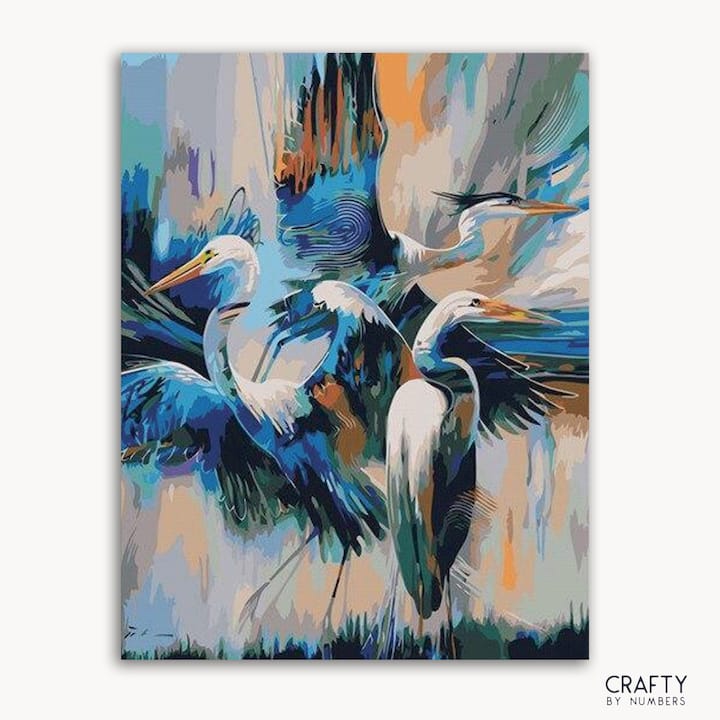
| Craftybynumbers recommendation | Kits like Garden of Dreams and Ivory Essence map directly to sequencing, brush control, and confidence-building goals. |
Table of Contents
- How do art kits build fine motor skills?
- How kit projects sharpen problem-solving and critical thinking
- Why kit projects build focus and patience
- Sensory and emotional regulation benefits of art activities
- How kits build creativity, confidence, and communication
- How to choose the right art kit for age and learning goals
- Practical activities mapped to skills and time boxes
- How to scaffold kit projects and track skill growth
- Why packaged kits often outperform loose supplies for beginners
- What does the research say about art kits and child development?
- How Craftybynumbers kits are designed for skill outcomes
- What I’ve seen when kits become part of the routine
- Craftybynumbers kits: a practical next step for parents and educators
- Sources
- FAQ
How do art kits build fine motor skills?
Fine motor development is where art kits deliver their most visible, measurable gains. Every time a child loads a brush, threads a bead, or presses clay into a shape, they are practicing the pincer grasp and bilateral hand coordination that underpin handwriting, buttoning clothes, and using scissors independently.
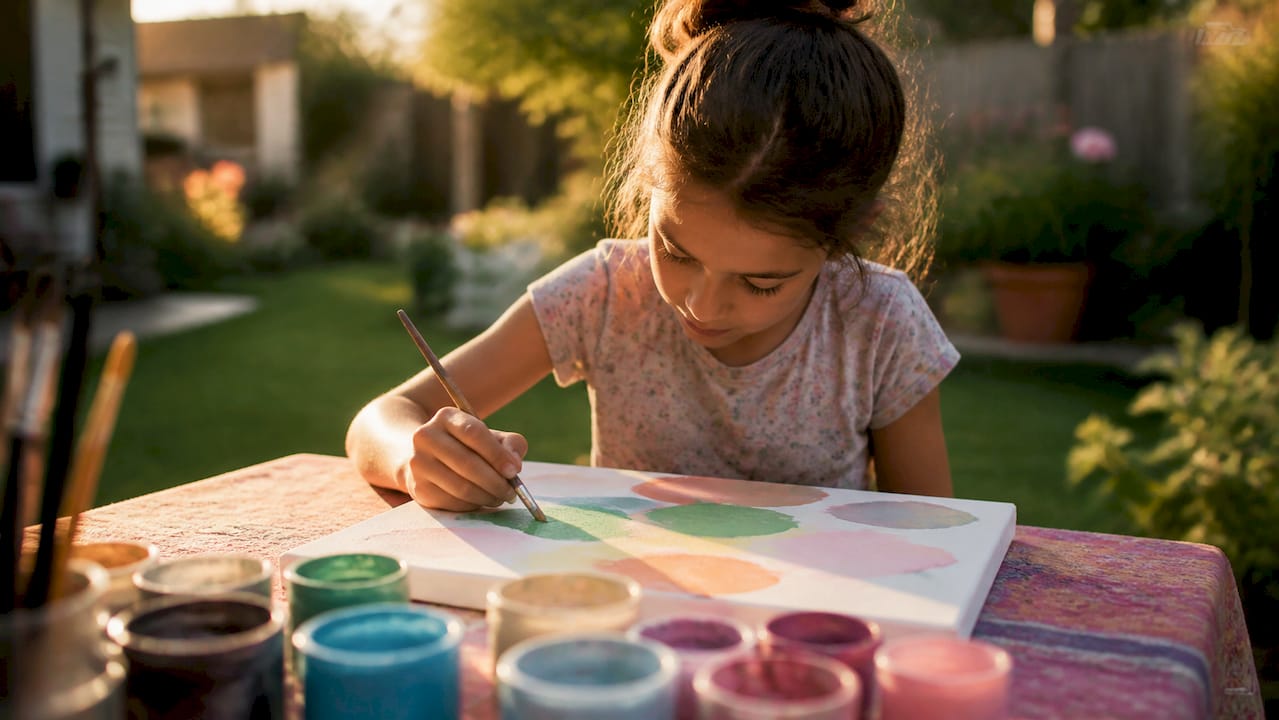
The specific tasks matter. Broad-brush water-paint pads suit preschoolers (ages 3–5) because they demand only gross grip and sweeping arm motion. Detailed paint-by-numbers projects, bead threading, and embroidery kits push early-elementary children into finer control: smaller brush tips, tighter color boundaries, and sustained wrist stability. Each step up in complexity is a deliberate motor challenge.
Signs parents and teachers can watch for:
- Strokes become more contained within printed lines after 3–4 sessions
- Scissor cuts follow a curved line without multiple stops and restarts
- The child switches the brush to their dominant hand consistently rather than alternating
- Independent focus time on a single task extends from 5 minutes to 10–15 minutes without prompting
Art-teacher resources note that routine short sessions produce steadier motor improvement than occasional long ones, which aligns with how motor memory actually consolidates.
Pro Tip: Keep sessions to 10–15 minutes for children under 6. Short, daily micro-sessions build motor memory faster than one long weekly session, and they end before frustration sets in.
How kit projects sharpen problem-solving and critical thinking
A paint-by-numbers project looks simple from the outside. Inside, it is a sequencing and decision-making exercise. The child has to read a numbered section, locate the matching paint, load the brush to the right saturation, fill the space without bleeding into adjacent sections, and then decide what comes next. That is four cognitive operations before the second color is touched.
Walk through a typical mini paint-by-numbers session and the planning moments stack up fast. The child scans the canvas to find all the sections labeled “3” before opening that paint pot, which is a search-and-sort task. When the paint bleeds slightly, they have to decide whether to wait for it to dry or work in a different area, which is adaptive problem-solving. When they finish one color and survey what remains, they are prioritizing and sequencing the remaining work.
These experiences transfer. Sequencing a painting project uses the same cognitive architecture as sequencing steps in a math word problem or organizing paragraphs in a written response. Research on kit-based projects supports the idea that structured kits with progressive complexity produce measurable improvements in problem-solving and motor control.
Prompts that build metacognition during kit work:
- “What’s the next step you’re going to take?”
- “What would you try if that color bleeds into the next section?”
- “How did you decide which area to paint first?”
- “What would you do differently if you started this again?”
Pro Tip: Let children make a small mistake and work through it rather than correcting immediately. The troubleshooting moment is where the deepest cognitive learning happens.
Why kit projects build focus and patience
Sustained attention is not a fixed trait. It is a skill, and kit-based projects train it through a specific mechanism: visible, incremental progress. When a child fills in one numbered section and sees the canvas change, that small completion triggers a reward signal that pulls them back to the next section. The task feels winnable, so they stay.
Three features of well-designed kits make this work:
- Clear visible progress: a partially completed canvas shows exactly how far the child has come and how much remains, which is more motivating than an abstract goal
- Short achievable milestones: finishing one color section is a micro-win that builds momentum toward the full piece
- Low setup friction: everything is in the box, so the child starts working within two minutes rather than spending energy gathering materials
Repeated small wins from kit sessions build what researchers call task persistence, the willingness to stay with a difficult task because past experience says effort pays off. That persistence is a core component of executive function, the same cognitive system that governs homework completion, impulse control, and long-term planning.
For classroom use, time-boxed sessions work well. A 20-minute kit warm-up at the start of an art period, followed by a brief reflection (“What did you finish today? What’s left?”), gives students a concrete attention anchor. Graduated difficulty across a kit series, moving from a 10-section beginner canvas to a 40-section intermediate one, safely extends attention span without creating the frustration that shuts engagement down.
Pro Tip: Use a visible timer and a simple progress tracker (a sticky note with boxes to check off per color completed). The physical act of checking a box reinforces the sense of accomplishment and keeps reluctant learners re-engaging.
Sensory and emotional regulation benefits of art activities
The tactile dimension of kit work is not incidental. Repetitive hand motions, the drag of a brush across canvas, the resistance of clay, the click of a bead onto a string, engage the sensory system in ways that calm the nervous system. This is why occupational therapists have long used craft activities as part of sensory diet programs for children who are either sensory-seeking or sensory-avoidant.
A 2024 report summarizing creative-activity research found that engaging in arts and crafts can significantly boost wellbeing and reduce physiological stress markers, including cortisol, though the authors note that study designs vary and effect sizes differ across populations. The directional signal is consistent: creative hand work tends to lower arousal and improve mood.
Engaging in creative activities can significantly boost wellbeing and reduce physiological stress markers such as cortisol, offering a low-cost, accessible tool for emotional regulation in both home and classroom settings.
Practical accommodations for different sensory profiles:
- Sensory-seeking children: clay kits, textured collage materials, and finger-painting pads provide the deep-pressure and varied-texture input they need
- Sensory-avoidant children: paint-by-numbers kits with brushes (no direct hand contact with paint) and pre-cut materials reduce tactile overwhelm while still engaging the creative system
- All children: rhythm-based tasks like repetitive brush strokes or bead threading activate the same calming pathways as rocking or humming, making them useful transition activities between high-stimulation periods
Craftybynumbers’ blog on mental health and paint by numbers explores this connection directly, noting that the structured, repetitive nature of numbered painting is particularly effective at reducing anxiety.
How kits build creativity, confidence, and communication
Structured kits and open-ended creativity are not opposites. A paint-by-numbers canvas tells a child where to put color, but not how to hold the brush, how thick to load it, or which section to paint first. Those micro-decisions, repeated dozens of times per session, are exactly the low-stakes creative choices that build confidence in children who freeze in front of a blank page.
The finished artifact matters too. A display-worthy completed canvas gives a child something concrete to talk about: what they chose, what was hard, what they would change. That conversation builds vocabulary, narrative structure, and the ability to give and receive feedback, all social-communication skills. Practitioner reporting ties routine creative time to improved mood and family bonding, and notes that kits producing display-worthy finished pieces are particularly effective at boosting confidence.
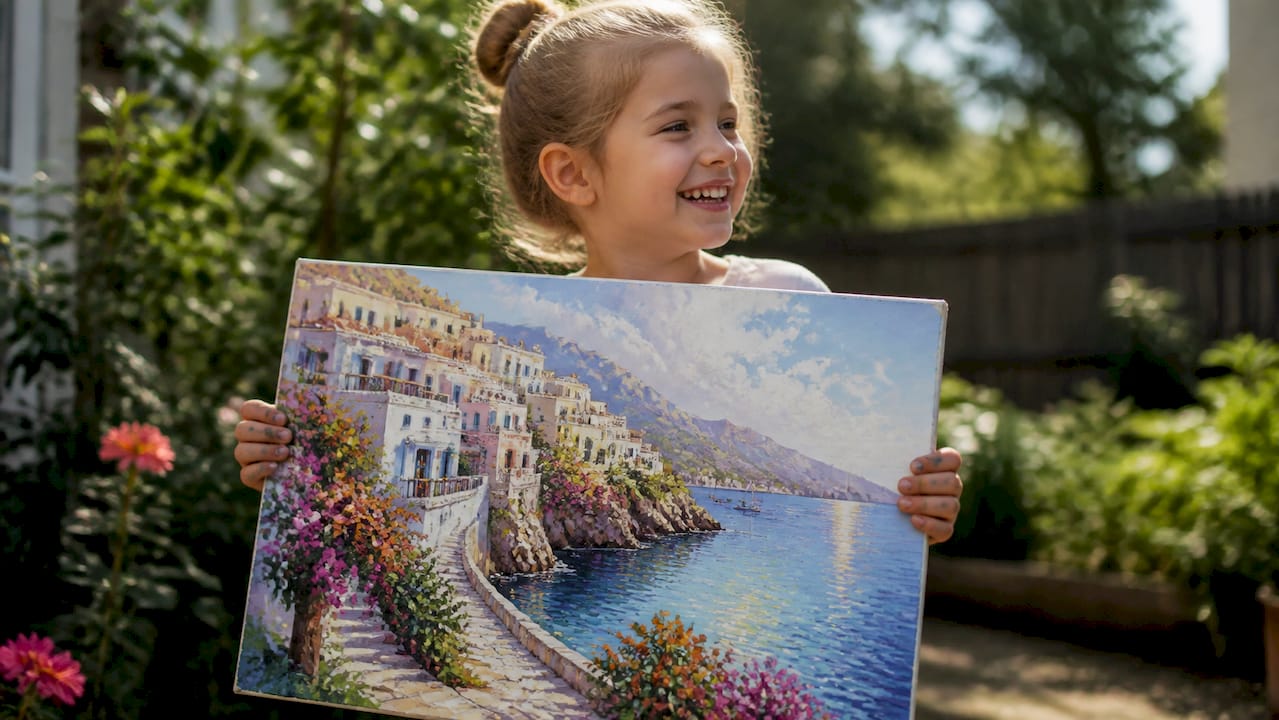
Turning finished work into a wall display amplifies this effect: when a child sees their completed piece framed and hung, the message is that their effort produced something worth keeping.
Classroom social strategies that work:
- Paired critique: two students share their finished sections and name one thing they notice about the other’s technique (not just “I like it”)
- Show-and-tell with process focus: the child explains one decision they made, not just the result
- Collaborative panels: split a large canvas between four students, then discuss how the sections connect
Pro Tip: Frame critique prompts around strategy, not aesthetics. “What did you try when the paint was too thick?” teaches children to talk about process, which is the skill that transfers to academic peer review.
How to choose the right art kit for age and learning goals
The wrong kit creates frustration. The right one creates flow. Selection criteria that actually matter:
- Age labeling vs. skill labeling: age labels are a starting point, but a child’s fine motor development may be 12–18 months ahead of or behind their chronological age. Match to observed skill, not the number on the box.
- Component quality: cheap brushes that shed bristles mid-stroke interrupt focus and produce poor results, which undermines confidence. Look for firm-bristle brushes and pre-matched paints.
- Safety: avoid kits with small loose parts for children under 4. Parents.com’s review of art kits emphasizes that choosing kits by realistic complexity and safety improves learning outcomes.
- Realistic finish time: a kit that takes 6 hours is not appropriate for a 7-year-old’s first project. Match time-to-complete to the child’s current attention span, then gradually extend.
- Required adult support: some kits need significant setup or supervision. Be honest about how much support you can provide consistently.
Matching kit type to skill goal:
- Paint-by-numbers: best for sequencing, brush control, visual decoding, and patience
- Bead threading kits: best for pincer grasp, patterning, and bilateral coordination
- Clay modeling kits: best for bilateral coordination, 3-D spatial reasoning, and sensory regulation
- Collage and cutting kits: best for scissor control, spatial planning, and creative composition
Avoiding common selection mistakes is as important as knowing what to look for. Kits that are too complex for the child’s current skill level produce avoidance, not growth.
Pro Tip: Prefer kits that come in a series or offer progressive difficulty levels. A child who completes a beginner canvas and immediately has a slightly harder one available is far more likely to keep practicing than one who finishes and has nothing to build toward.
Practical activities mapped to skills and time boxes
These activities work in classrooms and at home. Each is mapped to target skills, age range, and time required.
-
20-minute paint-by-numbers warm-up (ages 6–10): one color section per session. Skills: brush control, sequencing, sustained attention. Materials: beginner paint-by-numbers kit. Differentiation: advanced students complete two sections; beginners trace the outline first with a dry brush.
-
45-minute collaborative canvas challenge (ages 8–12): four students each paint one quadrant of the same design, then assemble. Skills: social negotiation, spatial reasoning, collaborative problem-solving. Materials: large-format kit or four matching mini kits. Differentiation: assign roles (color-keeper, timer, assembler, photographer).
-
Clay sculpt mini-lesson (ages 4–8): build a simple 3-D shape from a kit prompt card. Skills: bilateral coordination, spatial reasoning, sensory regulation. Materials: air-dry clay kit. Time: 30 minutes. Reflection question: “What was the hardest part to shape?”
-
Sensory collage station (ages 3–6): free-choice collage from a kit with pre-cut textures, fabric scraps, and foam shapes. Skills: fine motor, sensory exploration, creative decision-making. Time: 20 minutes. Differentiation: provide tweezers for children ready for a pincer challenge.
-
Bead patterning challenge (ages 5–9): replicate a pattern card using a bead threading kit, then create an original pattern. Skills: pincer grasp, patterning, sequencing. Time: 25 minutes. Reflection question: “How did you decide what came next in your pattern?”
-
Family portrait paint session (ages 7–adult): use a family portrait kit to paint together. Skills: social bonding, patience, communication. Time: 60–90 minutes across two sessions. Differentiation: each family member takes one section.
-
Embroidery rhythm session (ages 9–14): complete one row of stitches using a beginner embroidery kit. Skills: bilateral coordination, rhythm-based focus, frustration tolerance. Time: 30 minutes. Note: the repetitive stitch motion has a documented calming effect.
Lesson template for educators: Objective: practice [target skill] through [kit activity]. Materials: [kit name]. Steps: (1) model the first step aloud, (2) students attempt independently for 10 minutes, (3) pause and share one challenge, (4) continue for 10 more minutes, (5) reflection question. Assessment: observe grip, step-following, and re-engagement after a mistake.
How to scaffold kit projects and track skill growth
Scaffolding follows a four-stage model that works for any kit type: demo, supported practice, independent practice, extension.
- Demo: the adult completes the first step aloud, narrating decisions (“I’m looking for all the sections labeled ‘1’ before I open this paint”)
- Supported practice: the child attempts the next step while the adult stays close, prompting rather than correcting (“What do you think comes next?”)
- Independent practice: the child works alone while the adult observes; intervene only when the child is stuck for more than 2–3 minutes
- Extension: the child applies the same skill in a new context (a harder canvas, a different kit type, or a self-directed variation)
A simple 3-point observational rubric for tracking progress:
| Skill | Level 1 | Level 2 | Level 3 |
|---|---|---|---|
| Motor control | Strokes frequently outside lines; grip shifts | Strokes mostly within lines; grip inconsistent | Strokes consistently within lines; stable grip |
| Following steps | Skips steps or needs repeated prompting | Follows steps with one reminder | Follows steps independently in sequence |
| Persistence | Stops at first difficulty; needs adult re-engagement | Attempts one self-correction before seeking help | Works through difficulty independently; self-corrects |
Coaching prompts that move children from trial-and-error to deliberate practice: “What did you notice when that didn’t work?” “What’s one thing you’d try differently?” “How is this step different from the last one?” These questions build metacognitive awareness, the habit of thinking about one’s own thinking, which is one of the strongest predictors of academic progress.
Why packaged kits often outperform loose supplies for beginners
Loose art supplies are wonderful for advanced exploration. For a child who is just building skills, they can be paralyzing. Three evidence-backed advantages of packaged kits:
- Lower barrier to start: everything is included and matched, so the child begins creating within minutes rather than spending cognitive energy on material selection. Practitioner-focused research confirms that reducing startup friction significantly increases the chance a child will engage independently.
- Clearer success signal: a kit has a defined finished product. The child knows what “done” looks like, which provides a concrete goal and a completion experience that builds confidence.
- Structured skill sequence: kit instructions break a complex project into ordered steps, which is exactly the scaffolding that early learners need to practice sequencing without being overwhelmed.
Compare a kit-based paint-by-numbers session to a loose-paint session for a 7-year-old. With loose paints, the child must choose colors, decide what to paint, mix if needed, and manage a blank canvas with no guidance. Many children stall at the blank-canvas stage. With a kit, those decisions are pre-made, and the child’s full attention goes to the actual skill practice: brush loading, stroke control, and section sequencing.
Open-ended supplies become the right choice once a child has enough skill confidence to direct their own work, typically after completing several kit projects. The best classroom approach combines both: kits for structured skill-building cycles, loose supplies for free exploration periods.
Pro Tip: After a child completes a kit, offer the same canvas again with no number guidance. That second pass, painting freely over the numbered template, is a natural bridge from structured to open-ended work.
What does the research say about art kits and child development?
The evidence base is solid in direction, though most individual studies are observational or small-scale rather than large randomized trials. Here is what the strongest findings show:
- Creative activity and wellbeing: A 2024 CNN report summarizing recent research found that arts and crafts engagement can significantly reduce cortisol and boost mood. Effect sizes vary by study design, but the directional finding is consistent across populations.
- Developmental skill gains: Highlights/Parents lists creativity, fine motor skills, problem-solving, hand-eye coordination, social skills, and critical thinking as documented outcomes of regular arts and crafts participation.
- Kit structure and engagement: Club Hub UK’s practitioner coverage finds that bundled materials and matched instructions increase independent engagement rates compared to unstructured supply access.
- Progressive complexity and skill gains: WenHouse Crafts summarizes educator recommendations that sequencing kits from simple to complex produces measurable improvements in both motor control and problem-solving without the frustration spikes that come from premature difficulty jumps.
- Rhythm-based craft and stress reduction: structured kits involving repetitive hand motions, such as embroidery or bead threading, show a calming effect consistent with sensory-regulation research, though most supporting data comes from occupational therapy case observations rather than controlled trials.
Art and craft activities consistently appear across developmental research as one of the most accessible, low-cost tools for building the fine motor, cognitive, and emotional skills children need for school readiness and beyond. The evidence is not perfect, but the direction is clear.
Cognitive science perspectives on art add another layer: the meaning-making process that happens when a child interprets a visual prompt and translates it into physical action engages multiple brain systems simultaneously, which may explain why art-based skill gains tend to transfer across academic domains.
How Craftybynumbers kits are designed for skill outcomes
Craftybynumbers builds its kits around the same features that educational research identifies as most effective for skill development: pre-printed canvases that remove the blank-page barrier, numbered guidance that scaffolds sequencing, matched acrylic paints that eliminate material-matching decisions, and difficulty tiers that support progressive challenge.
Four kits worth knowing for specific skill goals:
- Ivory Essence: a calm, detail-rich design suited for brush control practice and focused attention sessions. Works well as a morning warm-up for ages 10 and up.
- Garden of Dreams: a multi-section design with varied color areas that makes it ideal for sequencing practice and patience-building over two or three sessions.
- Blossoming Cottage: a display-ready finished piece that builds confidence; particularly effective for classroom settings where the finished work goes on the wall.
- Gentle Sakura: a softer-themed, lower-complexity design that suits sensory-friendly practice and younger or more anxious learners.
Use-case examples:
- Morning warm-up: 15 minutes on one color section of Ivory Essence before a writing lesson primes fine motor control and focus
- Independent center: Garden of Dreams set up as a self-directed station; students return to it across multiple sessions, building persistence
- Family bonding project: Blossoming Cottage completed across two family evenings, with each person taking a section
- Extension activity: after completing Gentle Sakura once with guidance, a child repeats it without looking at the reference image, applying what they learned
Paint by numbers for kids offers hands-on guidance for classroom and home use, including tips for adapting sessions to different age groups.
Pro Tip: Use the same kit twice: once with full numbered guidance, once with the numbers covered. The second pass is a genuine assessment of how much the child has internalized the skill.
What I’ve seen when kits become part of the routine
The shift I notice most often is not in the finished product. It is in how a child approaches the next hard thing.
After a few weeks of regular kit sessions, children who previously abandoned tasks at the first sign of difficulty start doing something different: they pause, look at what they have, and try a different approach. That is not a small change. It is the beginning of a growth mindset in action, and it shows up in math, in writing, and in how they handle social conflict.
The practical adjustment that makes the biggest difference is consistency over intensity. Two 15-minute sessions per week produce more observable skill growth than one 90-minute session. The brain needs repetition spaced over time, not a single long exposure. A kit that lives on the table, ready to pick up, makes that consistency easy.
Craftybynumbers kits: a practical next step for parents and educators
If you have been looking for a structured, skill-building activity that works at home and in the classroom without requiring art expertise from the adult in the room, Craftybynumbers delivers exactly that. Each kit arrives with a pre-printed numbered canvas, matched acrylic paints, and detail brushes, so setup takes under two minutes and the child is building real skills from the first stroke.

For classroom centers, Garden of Dreams and Blossoming Cottage are strong starting points: both produce display-ready finished pieces that double as confidence builders. For sensory-friendly or younger learners, Gentle Sakura offers a lower-complexity entry point. For focused brush-control practice, Ivory Essence is the one to choose. Browse the full range at Craftybynumbers and find the kit that matches your learner’s current skill level and next growth goal.
Sources
- Engaging in creative activities boosts wellbeing and reduces stress markers — CNN
- Parents
- Why art kits are the perfect creative activity for kids — Club Hub UK
- 5 developmental skills kids can learn from arts and crafts — Highlights/Parents
- Unlock creativity: top benefits of craft kits for kids — WenHouse Crafts
FAQ
What skills do art kits build in children?
Art kits build fine motor control, cognitive sequencing, sustained attention, emotional regulation, and social communication skills. Developmental research consistently identifies creativity, problem-solving, hand-eye coordination, and critical thinking as measurable outcomes of regular arts and crafts participation.
What are the developmental benefits of arts and crafts for kids?
Regular arts and crafts activity supports school readiness by training the grip strength and hand precision needed for writing, the sequencing skills used in math and reading, and the frustration tolerance that underlies academic persistence. A 2024 report also links creative activity to reduced stress markers, including cortisol, though effect sizes vary by study design.
How do I choose the right art kit for my child’s age and skill level?
Match kit complexity to your child’s observed fine motor ability rather than relying on age alone, and prioritize kits with clear instructions, quality materials, and a realistic finish time for their current attention span. Parents.com recommends avoiding small loose parts for children under 4 and choosing kits that produce a display-ready finished piece to reinforce confidence.
Why do packaged kits work better than loose supplies for beginners?
Packaged kits remove the blank-canvas barrier by providing matched materials and step-by-step instructions, which directs the child’s full attention to skill practice rather than material decisions. Practitioner research finds that this reduction in startup friction significantly increases the likelihood of independent engagement and task completion.
Which Craftybynumbers kit is best for building focus and brush control?
Ivory Essence is designed for focused brush-control practice with a calm, detail-rich design suited to ages 10 and up, while Garden of Dreams works well for multi-session sequencing and patience-building across varied color areas.
0 comentarios