

Brush control is defined as the ability to direct a brush with consistent pressure, angle, and speed to produce intentional strokes. Painting kits teach brush control by giving you a structured, low-stakes environment where the only job is to move paint from brush to canvas. The numbered sections on a pre-printed canvas act as built-in brush control exercises, directing which brush to use, how much area to cover, and where to stop. This removes the mental load of composition and color mixing, so your hand and eye can focus entirely on the mechanics of brushwork. Craftybynumbers has helped over 120,000 customers build exactly this kind of confidence through guided painting.
How painting kits teach brush control through structured practice
Painting kits are training wheels for brushwork because they isolate the three core skills of brush control: pressure, paint flow, and stroke direction. A blank canvas forces you to make dozens of decisions at once. A numbered canvas removes all of them except one: how to move the brush.
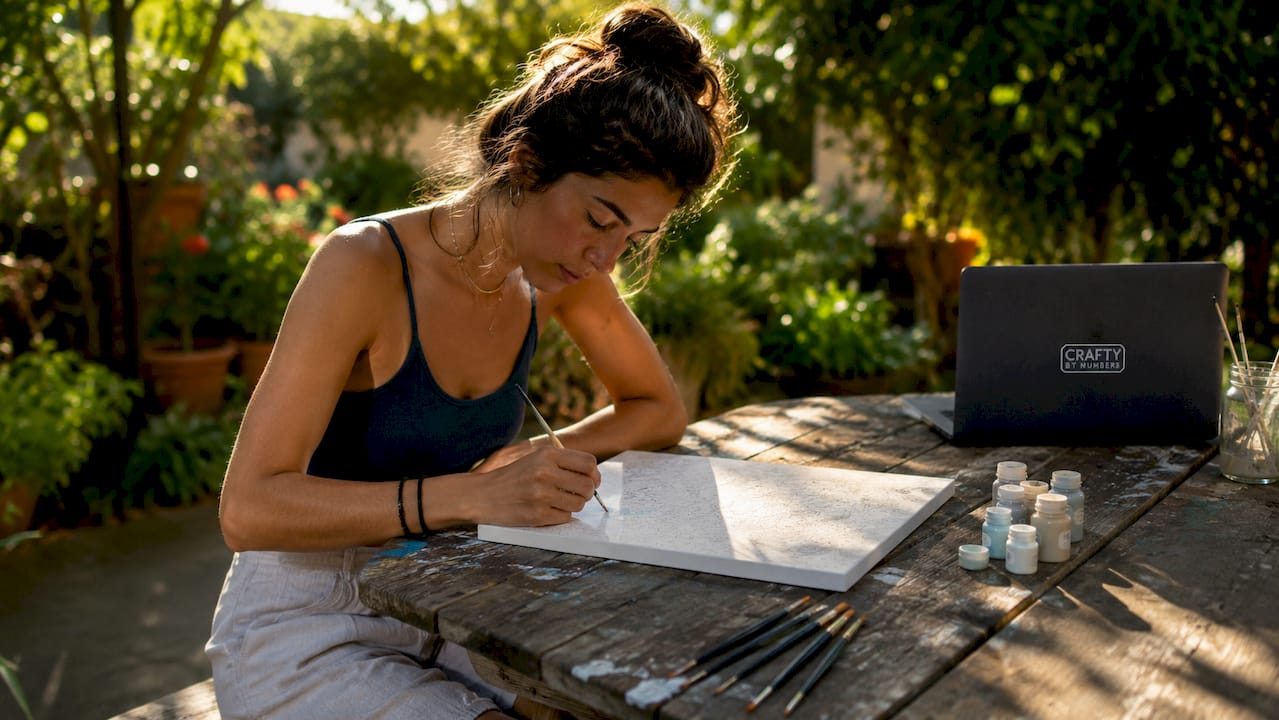
The numbered and color-coded sections in a kit do something clever. They tell you which brush size to pick up before you even dip it in paint. Small numbered sections signal a thin brush. Wide open areas signal a standard flat brush. That implicit instruction trains your eye to match brush size to task, which is one of the most underrated skills in painting.
Repetition is the real teacher here. Filling identical shapes over a 20–60 minute session builds the muscle memory that makes strokes feel natural rather than forced. Your hand learns the right amount of pressure without you consciously thinking about it. That is exactly how motor skills develop in any physical discipline.
- Numbered sections direct brush size selection automatically, training visual judgment.
- Color-coded areas teach you to work within boundaries, which sharpens edge control.
- Repetitive filling builds hand muscle memory and hand-eye coordination.
- No composition decisions means your full attention stays on how the brush moves.
Pro Tip: Start every painting session by dry-brushing a few strokes on scrap paper before touching the canvas. This warms up your hand muscles and gives you a feel for the brush before paint is involved.
What brush handling skills do painting kits teach implicitly?
Most painting kits for beginners include at least two brushes: a thin liner brush and a standard flat or round brush. Adult-focused kits typically cost $25–$60 and include this two-brush setup specifically to teach the difference between outlining and filling. That distinction is fundamental to brush technique.
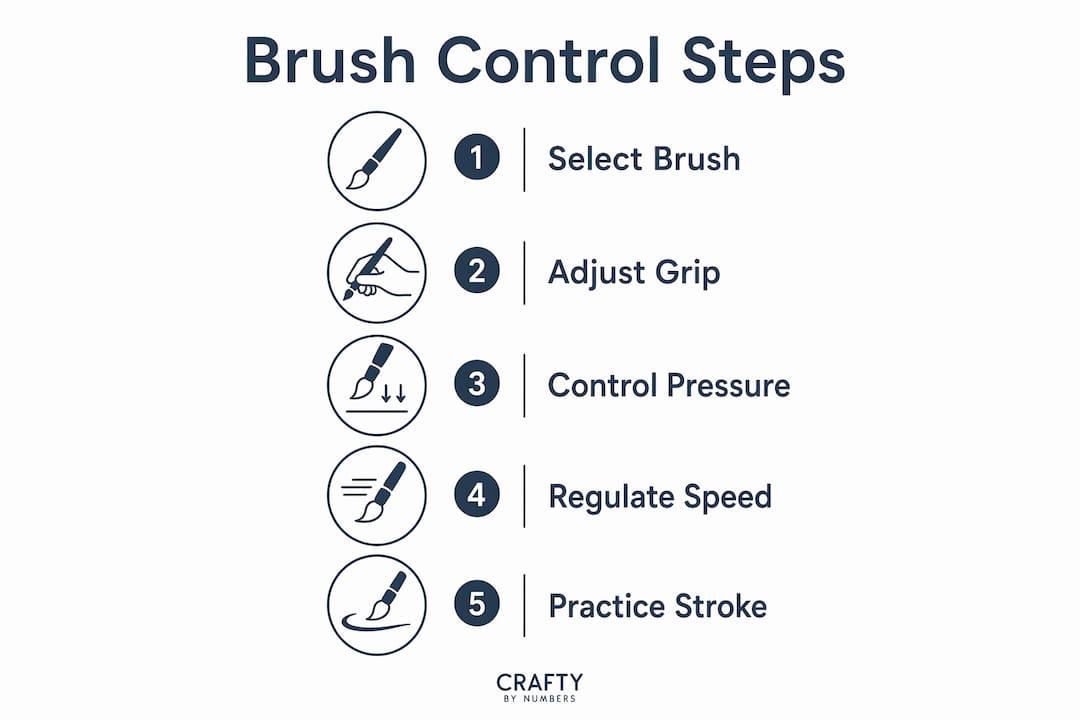
The way you hold a brush changes everything about the stroke you produce. Holding a brush close to the ferrule, the metal band that connects bristles to handle, mimics the pencil grip most people already know. That grip gives you precision for fine details and keeps your strokes short and controlled. Sliding your hand toward the end of the handle loosens control but adds fluidity, which works well for larger areas.
Brush control is also about body mechanics, not just finger movement. Moving your whole arm rather than bending only at the wrist produces longer, smoother strokes without fatigue. Painting kits train this naturally because large numbered sections require arm-level movement, while tiny detail sections pull your grip closer to the ferrule.
- Pick up the thin brush for any section smaller than a fingernail. Use the flat brush for everything larger.
- Grip near the ferrule when working on edges or outlines to maximize precision.
- Shift your grip toward the handle end when filling large areas to allow freer arm movement.
- Rotate the canvas rather than twisting your wrist into an awkward angle. This keeps your stroke direction consistent.
- Tap excess paint off the brush on the palette rim before each stroke to avoid overloading.
Pro Tip: Hold the brush the same way you hold a pen when outlining small sections. The familiar grip reduces tension in your hand and produces steadier lines immediately.
What brush control challenges do beginners face, and how do kits fix them?
The three most common beginner mistakes are gripping the brush too tightly, using only tiny brushes for every section, and painting with paint that is too thick. These errors cause loss of control and produce choppy, uneven results that frustrate new painters quickly.
Thick paint is the most fixable problem. Mixing paint to a cream-like consistency on a palette before applying it lets the bristles glide across the canvas without dragging or splaying. Paint straight from a tube or bottle is often too dense for smooth application. Thinning it slightly with water reduces friction and gives you clean, controlled lines.
Shaky strokes are usually a grip problem, not a coordination problem. A death-grip on the brush transfers every small tremor in your hand directly to the canvas. Loosening your fingers and using your non-dominant hand to steady your painting wrist reduces shake dramatically. Painting kits encourage slower, more deliberate strokes because the numbered sections have clear boundaries. That built-in pacing is exactly what shaky-handed beginners need.
“Paint-by-numbers removes performance anxiety and enables faster brush control skills acquisition by focusing solely on the mechanics of brushwork. Clear structure allows newcomers to practice brush control without cognitive overload from composition.”
Overloading the brush with paint is the third major issue. Dipping only the bottom third of the bristles and tapping the excess off prevents drips and gives you consistent coverage. Painting kits teach this indirectly because overloaded brushes cause paint to bleed outside the numbered lines, and that visible feedback trains you to load less.
Practical tips for parents and adults to maximize brush control with painting kits
Getting the most out of a painting kit means treating it as a deliberate practice session, not just a relaxing activity. Both things can be true at once. You can build real brush technique while enjoying the process, as long as you apply a few focused habits.
Practicing fundamental strokes for 15 minutes before starting a kit session accelerates skill development. Draw straight lines, curved arcs, and small circles on scrap paper. These warm-up exercises make stroke shapes automatic, so your attention stays on color and pressure when you move to the canvas.
- Use both brushes in the kit. Beginners default to the thin brush for everything. Switching to the flat brush for large sections teaches you how different bristle shapes behave.
- Steady your dominant hand with your non-dominant hand when working on fine details. Place your non-dominant hand flat on the canvas and rest your painting wrist on it. This reduces shake without restricting movement.
- Work large sections first. Filling big areas early gives your hand a warm-up and builds confidence before you tackle the small, precise sections.
- Keep your grip relaxed. If your knuckles are white, you are holding too tight. A relaxed grip lets the brush do the work and produces smoother strokes.
- Use whole-arm movement for long strokes. Bend at the shoulder, not the wrist. This prevents fatigue and keeps lines consistent across the full length of a stroke.
Skill transfer is the long-term payoff. Completing painting kits builds confidence and reveals personal style, which makes the transition to freehand painting feel natural rather than intimidating. Parents who paint alongside kids get the same benefit: shared practice reinforces technique for both.
Pro Tip: After finishing a kit, try reproducing one small section of the design freehand on a blank piece of paper. This bridges structured practice and independent painting, and it shows you exactly how much your brush control has improved.
You can find step-by-step guidance on technique in this painting by numbers tutorial, which walks through brush handling from the first stroke to the final detail.
Key Takeaways
Painting kits teach brush control by isolating brushwork mechanics, removing creative decisions, and building fine motor skills through deliberate, repetitive practice.
| Point | Details |
|---|---|
| Structured sections train brush selection | Numbered areas direct which brush size to use, building visual judgment automatically. |
| Grip near the ferrule for precision | Holding close to the metal band mimics a pencil grip and steadies fine detail work. |
| Thin paint for smooth strokes | Mix paint to cream consistency on a palette to prevent bristle splaying and dragging. |
| Load only the bottom third of bristles | Tapping off excess paint prevents overload, drips, and paint bleeding outside lines. |
| Warm up before every session | Fifteen minutes of stroke practice on scrap paper makes brush movements automatic. |
What I’ve learned from painting kits that art classes never taught me
Paula S.
I picked up my first painting kit expecting a mindless evening activity. What I got was a genuine lesson in how brushes actually work. The numbered sections forced me to slow down and pay attention to things I had always rushed through: how much paint was on the brush, where my elbow was, whether I was bending my wrist instead of moving my arm.
The skill transfer surprised me most. After finishing several kits, I noticed my freehand sketching had improved too. Developmental specialists confirm that painting kits refine fine motor skills beyond painting, including handwriting. I felt that directly. My lines got steadier across everything I did with a pen or brush.
My honest recommendation: do not treat the kit as a product to finish. Treat it as a practice session with a built-in feedback system. When paint bleeds outside a line, that is information. When a stroke feels smooth, that is muscle memory forming. The kit is just the structure. You are the one building the skill.
If you want to go further, pairing kit practice with abstract art for beginners projects is a natural next step. Abstract work rewards the same loose, confident strokes that kits train, and it removes the pressure of realism entirely.
— Paula S.
Craftybynumbers kits and brushes for building real brush technique
Craftybynumbers designs its kits specifically to develop the skills covered in this article. Every kit ships with a pre-printed canvas, high-quality acrylic paints, and detail brushes sized for both outlining and filling, so you practice both grip types from the first session.
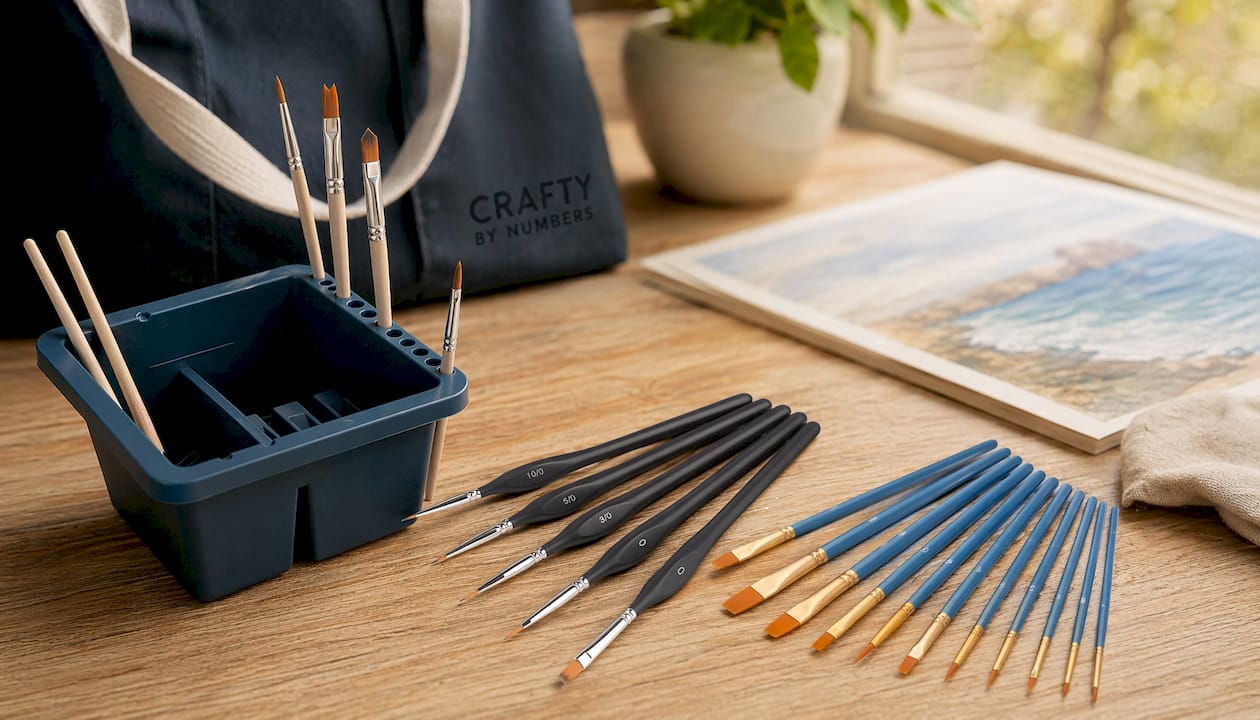
For painters ready to go beyond the included brushes, Craftybynumbers offers professional brushes built for control and durability, and a set of 10 premium brushes that covers every stroke type from broad washes to fine line work. Keeping those brushes clean between sessions is easy with the Craftybynumbers brush washer, which preserves bristle shape and extends brush life. Explore the full range of painting skills resources on the Craftybynumbers site to find the kit that fits your skill level.
FAQ
How do painting kits improve brush control for beginners?
Painting kits improve brush control by guiding users through repetitive, structured brushwork that builds muscle memory and fine motor coordination. The numbered sections direct brush size and stroke boundaries, isolating technique from creative decision-making.
What brush grip works best for fine detail sections?
Holding the brush close to the ferrule, the metal band above the bristles, gives the most control for small sections. This grip mirrors the way you hold a pencil and reduces unwanted movement.
How thick should paint be for smooth brush strokes?
Paint mixed to a cream-like consistency on a palette produces the smoothest strokes. Paint that is too thick drags the bristles and causes splaying, which breaks stroke integrity.
Can painting kits help kids develop brush control too?
Painting kits build fine motor skills and hand-eye coordination in both children and adults. The slow, deliberate movements required to stay within numbered sections strengthen hand muscles and improve overall dexterity.
When should I switch from kit painting to freehand painting?
Switch when filling numbered sections feels automatic and your strokes are consistently clean. Completing several kits builds the confidence and technique needed to approach a blank canvas without anxiety.
0 comments