

Most paint by numbers mistakes are fixable, and the fix depends entirely on whether the paint is still wet or has already dried. If it’s wet, act in the next few minutes with a damp cloth or cotton swab. If it’s dry, you’ll cover it with thin coats, soften it with a solvent, or scrape it away. Crafty By Numbers makes this easier with a few purpose-built tools: the Number Remover Marker, its free gift version, and Revive Dry Paints for pots that have gone thick or gummy.
TL;DR:
- Using a damp cloth or cotton swab within five to fifteen minutes of wet paint can efficiently fix small mistakes and prevent them from drying.
- For dried paint, applying multiple thin coats over the mistake area is faster and less risky than attempting chemical removal or scraping.
- When removing cured paint, alcohol softens the material but requires rinsing and ventilation; acetone should be a last resort due to potential damage.
- Texture issues can often be fixed by smoothing with a damp brush or palette knife, or by reviving or replacing thick, gummy paint pots.
- Preventative habits such as rinsing brushes between colors and working in one direction significantly reduce the likelihood of mistakes.
Table of Contents
- How Do You Fix Paint by Numbers Mistakes While the Paint Is Wet?
- How to Fix Mistakes After the Paint Has Dried
- Fixing Thick, Lumpy, or Streaky Paint Texture
- How Can You Prevent Paint by Numbers Mistakes Before They Happen?
- Pro Tips for Blending Fixes So They Disappear
- An Editor’s Take on Fixing Paint by Numbers Mistakes
- Fix Kit-Specific Mistakes with the Right Tools
- Sources
- FAQ
How Do You Fix Paint by Numbers Mistakes While the Paint Is Wet?
Acrylic gives you a window, but it’s a short one. Thin strokes typically stay workable for about 5 to 15 minutes before they start to skin over, and that’s the entire margin you have to correct a slip before it becomes a dry-paint problem. The Painted Hinge notes that acrylic is forgiving precisely because this window exists, so the first rule is simple: don’t panic, and don’t reach for anything until you’ve stopped painting.
Here’s the sequence that actually works:
- Stop painting immediately. Set the brush down before you make things worse by trying to “fix” a wet mistake with more wet paint.
- Blot, don’t rub. Press a clean, slightly damp paper towel or cotton swab straight down onto the mistake. Rubbing drags pigment sideways and turns a small dot into a smear, a point Pinot’s Palette makes clearly.
- Lift from the outside in. Work from the edges of the smudge toward its center, not the reverse, so you’re not pushing paint further onto clean canvas.
- Use a clean damp brush for fine detail. A small, barely damp detail brush can lift color out of tight corners or along a number’s edge with more control than a cotton swab.
- Switch to a palette knife for thick blobs. If you’ve dropped a heavy glob of wet paint rather than a thin smear, gently scrape it up with the flat edge of a palette knife before it spreads.
- Let the area dry completely before repainting. Even if it looks clean, touching fresh paint onto a still-damp patch usually reactivates the mistake underneath.
Keep a rinse cup and a fresh towel corner on hand at all times. Working outside in and switching to a clean towel section for each lift keeps you from smearing one mistake into three.
How to Fix Mistakes After the Paint Has Dried
Once acrylic cures, you’re choosing between covering it and removing it, and that decision should happen before you touch a solvent. Try covering first. It’s less risky to the canvas, and for most paint by numbers errors, it’s genuinely the faster route.
Layering to cover a dried mistake:
- Apply thin coats rather than one thick one. A single heavy layer tends to look streaky, uneven, and prone to peeling, while several thin coats build smooth, reliable coverage.
- Let each coat dry fully before adding the next. Rushing this step is the single most common reason a “fixed” area still shows a shadow of the old color.
- For pale numbers, prime the spot with white or titanium white first, then add your two or three coats on top. PaintOnNumbers recommends this specifically for light colors, where dark numbers underneath tend to ghost through otherwise.
- Expect several coats for full opacity on light or bright shades, and fewer for darker, more saturated colors.
If the mistake is textural, raised, or simply too big to bury under paint, removal is the better call.
- Patch test first. Dab a small amount of isopropyl alcohol on a hidden corner of the canvas before treating the actual mistake.
- Dab, soften, lift. Isopropyl alcohol softens cured acrylic on primed canvas within a minute or two of contact. Once it softens, lift the paint with a cotton swab or the edge of a palette knife.
- Rinse and re-dry the spot. Residual alcohol will interfere with new paint adhesion if you skip this.
- Work in a ventilated space and wear gloves. Isopropyl alcohol is a mild solvent, but it’s still a chemical you’re applying repeatedly with your hands.
Pro Tip: Skip acetone unless nothing else works. It strips gesso and can damage canvas fibers outright, so treat it as a last resort rather than a first move, as StainRemovalGuides warns.
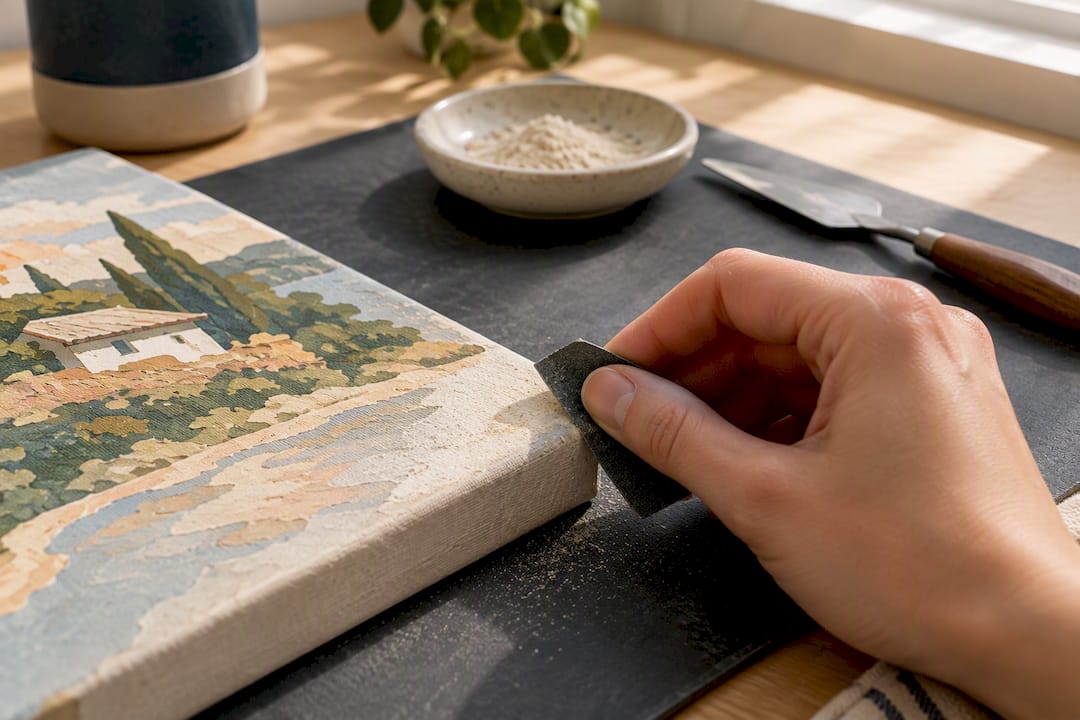
For stubborn dried paint that alcohol won’t budge, gentle mechanical removal is your next option: light scraping with a palette knife, or sanding with 400 to 600 grit paper. PlasticRanger points out that this method often takes some gesso with it, so plan to re-prime the spot before repainting.
Fixing Thick, Lumpy, or Streaky Paint Texture
A blotchy patch often isn’t a color mistake at all. It’s a texture problem, and it needs a different fix than pigment correction.
- Smooth wet paint in one direction. If the paint is still workable, drag a damp brush or the flat side of a palette knife across the lump in a single, consistent stroke direction rather than scrubbing back and forth.
- Revive a skinned-over pot before blaming your technique. Add one or two drops of distilled water and stir thoroughly, or use Revive Dry Paints to bring a gummy pot back to workable consistency overnight.
- Sand only when necessary. Light sanding at 400 to 600 grit can knock down a dry lump, but be ready to re-prime that patch afterward.
- Prefer thin top coats over aggressive sanding. For minor streaking, two thin coats usually fix the surface without touching the canvas underneath.
- Load your brush evenly before repainting. A brush with paint pooled on one side reintroduces the same streaking you just fixed.
How Can You Prevent Paint by Numbers Mistakes Before They Happen?
Most paint by numbers problems trace back to setup habits, not skill. PaintOnNumbers found that small process changes head off the majority of common errors before a brush ever touches canvas.
- Rinse brushes the second you switch colors. Dried paint at the base of the bristles ruins a brush faster than anything else.
- Never leave brushes bristles-down in the rinse cup. They bend permanently and stop holding a fine point.
- Store brushes flat to dry. If bristles have already dried stiff, a warm water soak for a few minutes often brings them back.
- Work in one direction, top to bottom. Pick left-to-right or right-to-left and stick with it so your hand never drags across wet paint you just laid down.
- Keep only one pot open at a time. An open palette of six colors is how smudges and cross-contamination happen.
- Set up a dedicated rinse cup and blotting towel before you start. Good lighting matters here too. You’ll catch a stray stroke in seconds under a bright lamp instead of noticing it an hour later.
- Prime very pale sections with white first, or plan on two to three thin coats from the start rather than one thick, uneven layer.
Our own step-by-step painting guide walks through this order in more detail if you’re setting up a workspace for the first time.
Pro Tips for Blending Fixes So They Disappear
A repair that’s technically correct but visually obvious is still a problem. The goal is a fix nobody can spot.
While the new paint is still tacky, feather the edge with tiny zig-zag strokes rather than a hard line. This blends the repaired patch into the surrounding color instead of leaving a visible seam. Photograph the canvas once it’s dry. Camera flash and a phone screen expose value and proportion errors your eye glosses over in person.
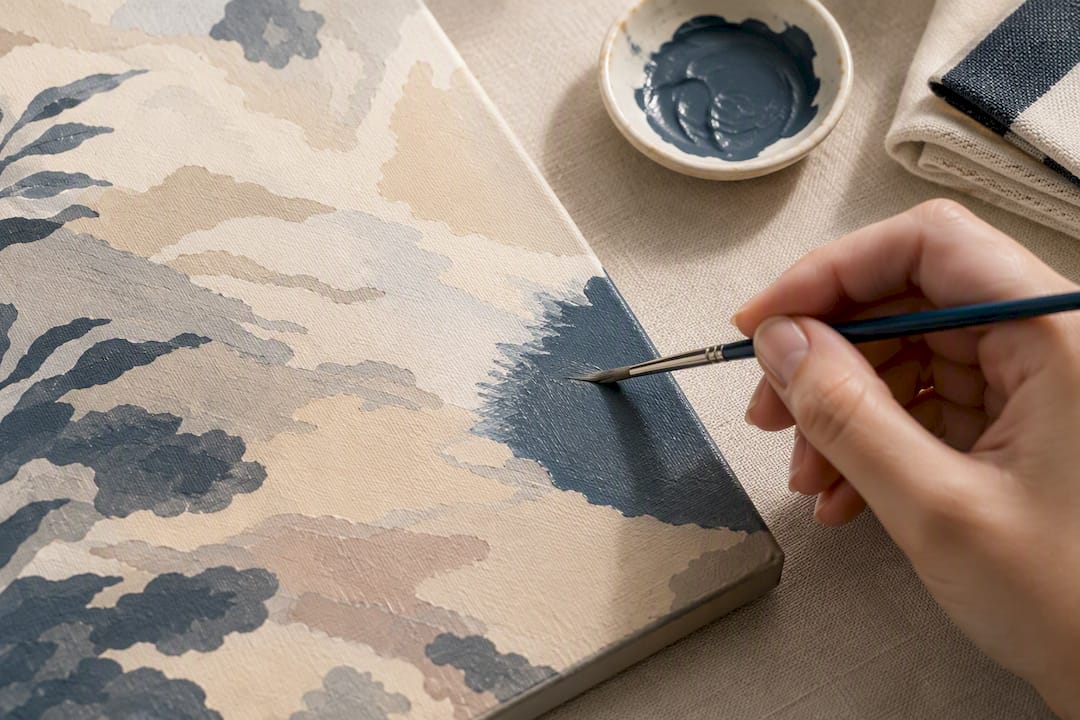
Save a bit of your original pot for the final topcoat rather than mixing a fresh batch, since even a slightly off match will show under the right light. If you’re blending base colors for underlayers, mixing similar tones first, then correcting the top layer gives cleaner results than trying to nail the color in one pass.
Pro Tip: A little texture or imperfection in a background area can actually read as brushwork rather than error. Save the perfectionism for foreground detail, where the eye actually lands first.
An Editor’s Take on Fixing Paint by Numbers Mistakes
The anxiety around paint by numbers mistakes is almost always bigger than the mistake itself. Acrylic dries into a forgiving surface: it layers, it lifts, it sands, and it primes back over. The real skill isn’t avoiding every slip. It’s knowing which of the fixes above matches the problem in front of you, instead of freezing up over a smudge that a damp cotton swab would have solved in ten seconds.
Many suppliers have worked with a large customer base on kits ranging from mini sets to highly detailed custom designs, and paint pot issues come up often enough that they have developed specific fixes rather than leaving people to guess. If a pot arrives dried out or a color runs short, support options are typically available rather than leaving the canvas unusable.
— Paula S.
Fix Kit-Specific Mistakes with the Right Tools
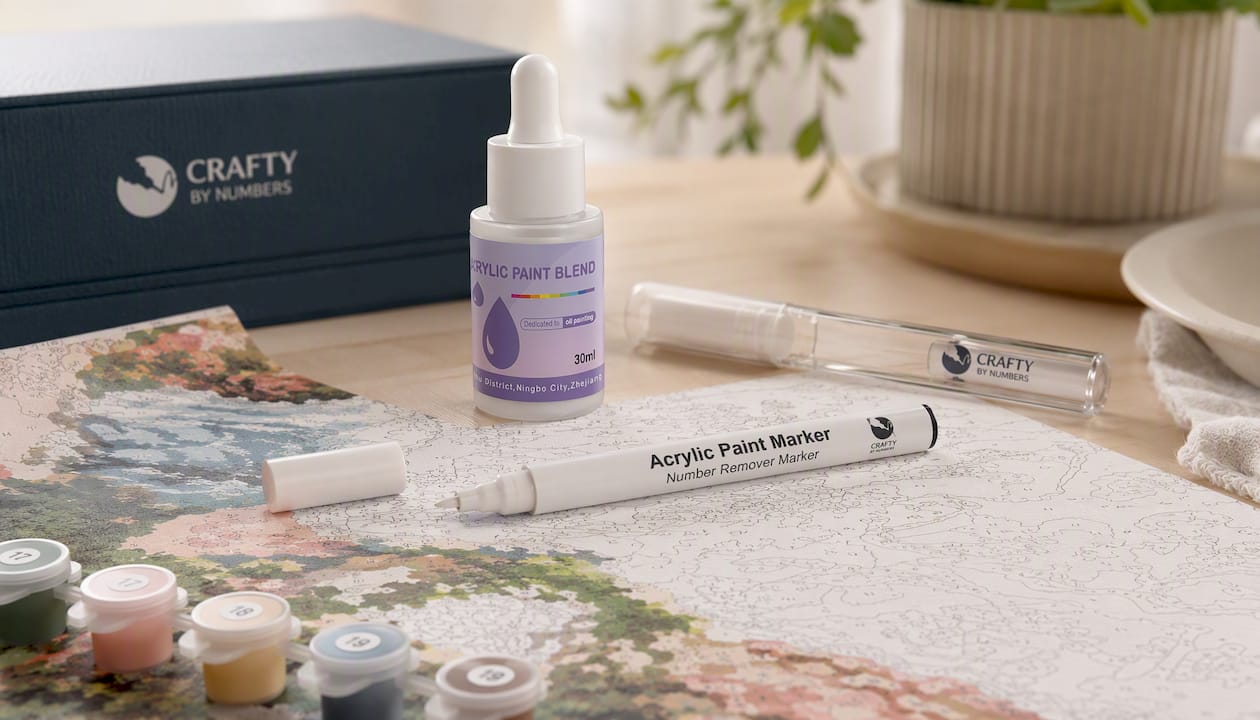
Beyond alcohol and cotton swabs, a few tools take the guesswork out of common fixes. The Number Remover Marker is built specifically to lift small marks and stray pencil numbers without disturbing the paint around them, which makes it faster than a swab-and-solvent approach for tiny errors. It’s currently available as a free gift add-on with select orders too. For pots that have gone thick, skinned, or gummy between sessions, Revive Dry Paints brings them back to a workable consistency instead of forcing you to mix a match from scratch.
If a color has run out entirely rather than just dried up, replacement pots and full kits are available across our paint by numbers collection, including landscape, animal and pet, and famous painting designs. Browse the repair tools and spare paints while you’ve got your current canvas in front of you, and you’ll have what you need before the next mistake happens instead of scrambling mid-session.
Sources
For deeper detail on the steps covered above, The Painted Hinge covers general mistake correction, StainRemovalGuides breaks down solvent safety, and PlasticRanger explains mechanical removal and re-priming. PaintOnNumbers rounds out coverage and prevention habits.
- How to Fix Mistakes on a Paint by Numbers Canvas — The Painted Hinge
- How to remove acrylic paint from canvas — StainRemovalGuides
- How to Fix Acrylic Painting Mistakes — Pinot’s Palette
- How to remove acrylic paint from canvas — PlasticRanger
FAQ
What Should You Do If Paint by Numbers Paint Dries Out?
Add a drop or two of distilled water to the pot and stir thoroughly, or use Revive Dry Paints to rehydrate a skinned-over pot overnight. If the paint still won’t loosen up, a replacement pot is faster than fighting dead paint.
How Do You Hide Numbers on a Paint by Numbers Canvas?
Apply two or three thin coats of the matching color rather than one thick layer, since thin coats cover more evenly and resist streaking. For very pale sections, prime with white or titanium white first so the printed number doesn’t ghost through the final color.
Is There a Trick to Getting Paint by Numbers Right the First Time?
Work top to bottom in one consistent direction, either left to right or right to left, and keep only one paint pot open at a time. These two habits alone prevent most of the smudging and cross-contamination that leads to mistakes in the first place.
Can You Get Replacement Paint for a Paint by Numbers Kit?
Yes. If a color runs out or a pot is unusable even after trying to revive it, replacement pots and full kits are available through the Crafty By Numbers paint by numbers collection. Reach out through customer support if a specific pot arrived faulty rather than simply used up.
0 comments