

Painting your own decor saves money primarily by cutting out labor costs, which commonly make up the largest portion of a professional painting job’s total price. When you do it yourself, that entire line item disappears. You also skip retail markups on finished decor, which often significantly increase the price above manufacturing cost. The savings are real, but they come with tradeoffs worth understanding before you pick up a brush.
Here is what you actually save by painting your own decor:
- Labor fees: Eliminated entirely when you do the work yourself
- Retail markup: Avoided by buying raw materials instead of finished pieces
- Professional prep fees: Skipped when you handle surface prep on your own
- Framing costs: Reduced by using standard frames, which cost under $20 versus custom framing that typically exceeds $100
- Design fees: Not applicable when you choose your own colors and style
The tradeoff is your time and effort. A simple painting project takes a few hours for a beginner; more complex pieces can require significantly more time. That is the honest starting point.
Key cost-saving factors when painting your own home decor
The biggest financial lever in DIY painting is labor elimination. Professional painter labor can be up to 70% of total project costs, so removing it entirely changes the math dramatically. What remains is mostly materials, and those you control.
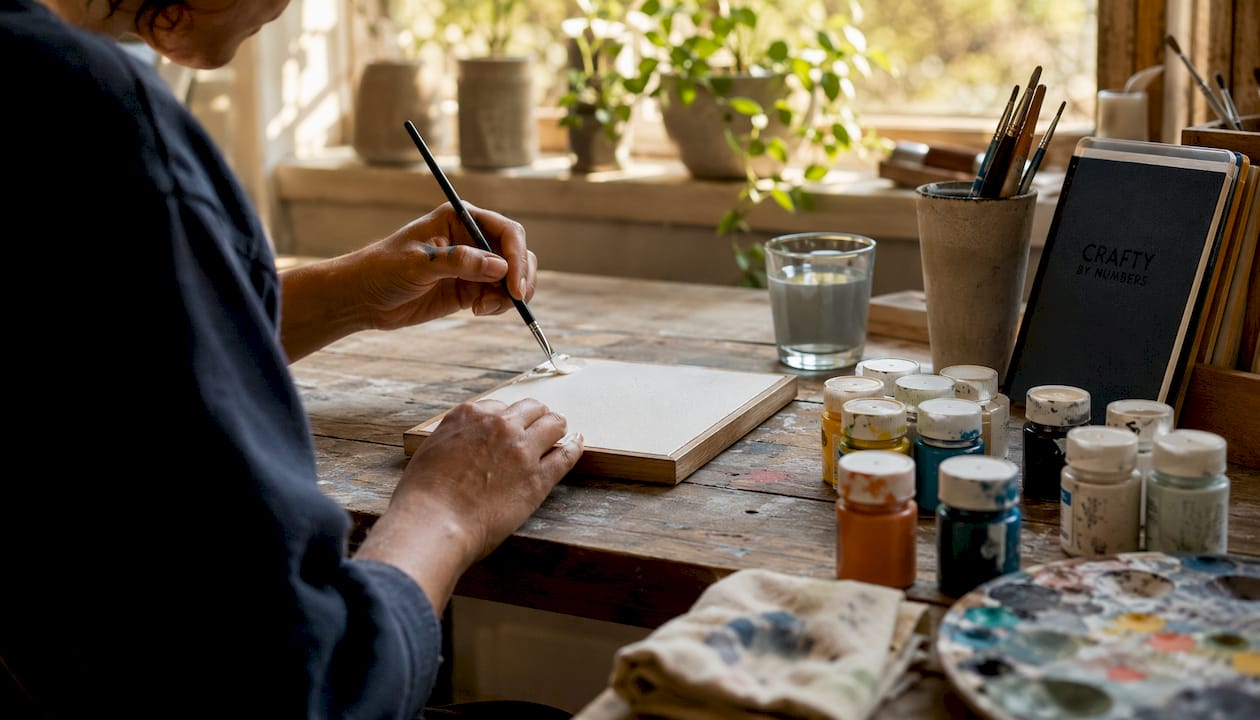
DIY materials for a typical decor project generally cost substantially less than buying comparable finished pieces. A canvas, a few tubes of acrylic paint, and a brush set run a fraction of what a framed print or gallery piece costs at retail. The gap widens when you factor in gallery fees, artist commissions, and shipping that come with store-bought art.
Where costs creep back in:
- Tools: First-time buyers spend $200–$500 on ladders, brushes, drop cloths, and prep supplies for room-scale projects
- Protective gear: Gloves, masks, and eye protection add a small but real cost
- Mistakes: Hidden costs average 10%–15% over the initial budget when beginners account for wasted materials and extra supply runs
- Equipment rental: Sprayers or specialty tools for larger jobs add to the total
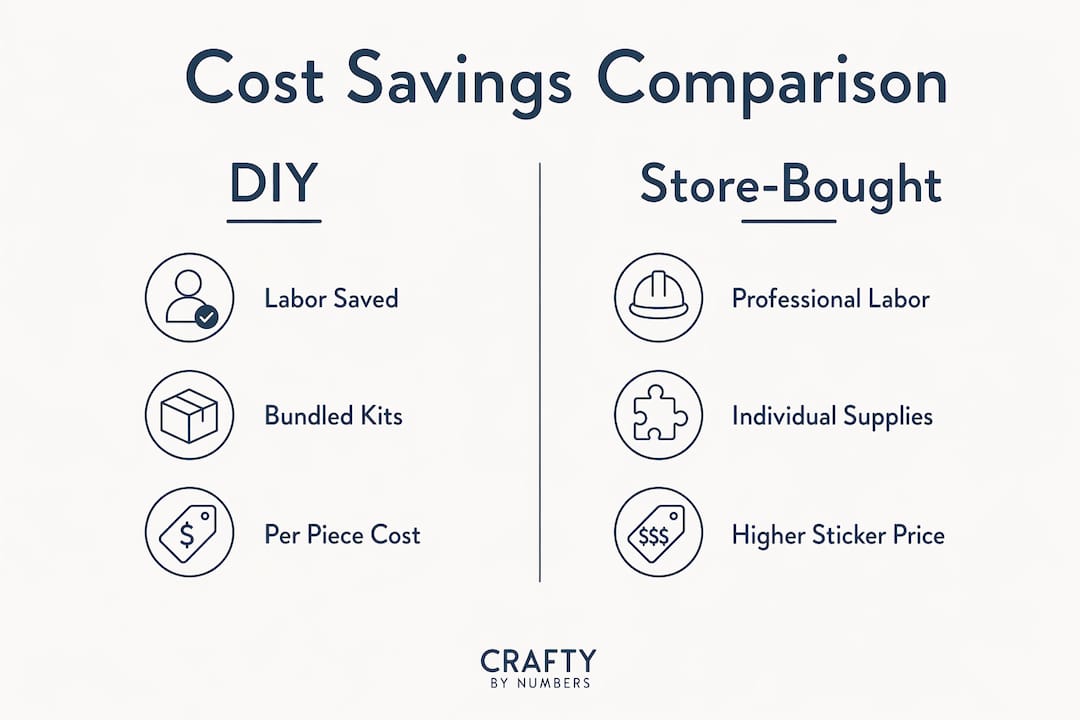
Pro Tip: Buy bundled kits rather than individual supplies. Bundled kits can reduce per-project cost by up to 30%, especially when combined with seasonal sales around holidays.
DIY cost savings also follow a threshold effect: the more pieces you create, the lower your per-piece cost becomes as tools get amortized and you buy materials in bulk. A single piece rarely delivers the full savings picture.
Tips to maximize savings when painting your own decor
Surface preparation is where most DIYers lose money without realizing it. Skipping or rushing prep leads to peeling, uneven coverage, and repainting, which doubles your material spend. Proper prep and quality paint can extend paint life by several years, which cuts long-term maintenance costs considerably.
Practical steps that keep costs down:
- Choose mid-range paint, not the cheapest option. Budget craft paints fade in 2–3 years without UV protection; artist-grade acrylics last significantly longer and cost only a little more per project.
- Reuse and care for your tools. Clean brushes thoroughly after every session. A $15 brush that lasts 20 projects costs far less than replacing cheap brushes repeatedly.
- Use standard-sized canvases and frames. Standard frames from discount stores cost under $20 and fit most canvases perfectly, while custom framing regularly exceeds $100.
- Batch your projects. Buying paint in larger quantities and working on multiple pieces at once drops your per-piece cost sharply after the first few projects.
- Set up your workspace before you start. A clear, well-lit surface with drop cloths already down means fewer accidents and no mid-session scrambling.
Pro Tip: Pull two or three colors directly from your existing room decor before buying paint. Matching your palette to what is already in the space makes DIY art look intentional, and it prevents buying colors you will never use again.
A weekend-sized project is an ideal scope for working homeowners. A single room or a few decor pieces completed over a short period keeps the time investment manageable and savings tangible.
Is painting your own decor worth the time and effort?
The honest answer depends on what your time is actually worth. If you earn $80,000 a year, your after-tax hourly rate is roughly $28–$40. A 12-hour DIY project at that rate carries an opportunity cost of $336–$480, which can close the gap with professional pricing on larger jobs. For small decor pieces, the math still favors DIY clearly.
Factors that determine whether DIY is worth it for you:
- Project size: Small decor pieces and single rooms favor DIY; whole-house repaints often do not
- Skill level: Experienced painters work faster and waste less material
- Timeline: A project that stretches across months costs more in disruption than it saves
- Leisure value: If you enjoy the process, the time investment becomes recreation, not just labor
- Customization need: When you need a specific color, size, or style that retail does not carry, DIY is the only path
Personal satisfaction adds real value that does not show up in a cost comparison. Handmade decor creates a unique ambiance and personal connection that store-bought pieces simply cannot replicate. Guests notice. You notice.
Beyond savings: the creative and personal value of painting your own decor
Painting your own decor gives you something no retail purchase can: art that carries a memory. The piece you painted on a rainy Saturday, the colors you pulled from a favorite vacation photo, the canvas you finished while the kids were asleep. Those details accumulate into a home that feels genuinely yours.
Paint by numbers kits offer a particularly accessible entry point. They bypass artist commissions and gallery fees entirely, putting gallery-quality results within reach for anyone regardless of prior experience. The numbered system guides every brushstroke, so the learning curve that intimidates most beginners disappears.
Creative and economic advantages of painting your own decor:
- Unlimited customization to match your exact color palette and room dimensions
- Therapeutic benefits including stress reduction and improved focus
- Skill development that makes every subsequent project faster and cheaper
- Conversation-starting artwork with a genuine story behind it
- No shipping costs, no assembly, no returns
There is also a broader principle at work. Honest craftsmanship produces objects with character that mass production cannot replicate. When you paint something yourself, you understand exactly what went into it, and that knowledge changes how you relate to your own space.
Cost comparison: DIY decor vs. buying finished pieces
The numbers tell a clear story once you look past the sticker price.
| Scenario | DIY Cost | Store-Bought / Professional Cost |
|---|---|---|
| First DIY canvas (tools + materials) | — | $13–$30 for a comparable print |
| Fifth piece onward (tools amortized) | substantially less than initial cost | stable cost per piece for prints |
| Standard frame | inexpensive | custom framing can cost considerably more |
| Single-room interior repaint (materials) | modest materials cost | total cost with labor is significantly higher |
| Thrifted furniture repaint | low supplies cost | purchasing an equivalent new piece is usually more expensive |
The breakeven point for wall art sits at roughly 4–6 pieces. Before that threshold, buying prints is often cheaper per piece. After it, DIY cost per piece drops to $8–$12 while print costs stay flat at $13–$30. For room-scale painting, DIY saves $1,500–$4,500 on a typical 1,500–2,000 sq ft interior repaint compared to hiring professionals, though it requires 40–80 hours of your time.
A thrifted coffee table painted white illustrates the furniture side well. Total supply cost of $8 plus a $15 thrift store find equals $23. A comparable new piece from a major retailer runs $80–$120. That $57–$97 gap on a single piece is hard to argue with.
Long-term cost considerations: maintenance and repainting frequency
The cheapest paint job is not always the most economical one over time. Budget craft paints without UV protection fade or warp in 2–3 years, particularly near windows. A $20 UV-resistant professional print lasts 8–10 years at roughly $2 per year on the wall. A $15 DIY piece using budget materials and no sealant costs $5–$7.50 per year once you account for replacement frequency.
Investing in proper prep and mid-range materials changes that calculation. Quality acrylics with a UV-protective varnish push a DIY piece to $25–$40 but extend its life to 5–8 years, making it genuinely competitive with professional prints on a cost-per-year basis. The key is that proper prep and quality paint can extend paint life by 2–3 years compared to rushing the job with whatever is cheapest.
For room-scale projects, a poor amateur finish can reduce a home’s appraised value by 1%–3%. On a $400,000 home, that is $4,000–$12,000 of value at risk. If you are preparing to sell, hire a professional. If you are staying put for years, a careful DIY job on a single room or decor pieces is a sound long-term investment.
Key Takeaways
Painting your own decor saves the most money when you create multiple pieces, use quality materials, and treat prep work as non-negotiable rather than optional.
| Point | Details |
|---|---|
| Labor is the biggest saving | Professional labor can be up to 70% of total painting costs; DIY eliminates it entirely. |
| Breakeven at 4–6 pieces | DIY wall art becomes cheaper than prints per piece only after tools are amortized across multiple projects. |
| Hidden costs are real | Budget 10%–15% above your initial material estimate for mistakes, extra supply runs, and wasted paint. |
| Quality materials pay off | Proper prep and mid-range paint extend paint life by 2–3 years, lowering long-term maintenance costs. |
| Small projects win clearly | A single-room repaint saves $1,500–$4,500 versus hiring pros, making weekend-scale DIY the sweet spot. |
FAQ
Does painting yourself actually save money?
Yes, primarily by eliminating labor costs, which can be up to 70% of a professional job’s total price. For small decor projects and single-room repaints, DIY consistently delivers real savings.
Is it worth it to paint your house yourself?
For single rooms and decor pieces, yes. For a full-house repaint, it depends on your hourly rate and available time, since the project requires 40–80 hours versus a professional crew finishing in 5–7 working days.
What are the benefits of painting as a hobby?
Beyond cost savings, painting offers stress relief, creative satisfaction, and skill development. It also produces personalized decor with genuine character that mass-produced pieces cannot replicate.
What color makes a home look expensive?
Deep, saturated tones like navy, forest green, and charcoal on a single accent wall tend to read as high-end, especially when paired with crisp white trim. The paint color matters less than the quality of the application and prep work underneath it.
How do paint by numbers kits fit into budget decorating?
Kits like those from Craftybynumbers provide a pre-printed canvas, paints, and brushes in one package, bypassing artist commissions and gallery fees while guiding you to a finished piece worth displaying. They are one of the most cost-effective ways to create custom wall art without prior experience.
0 comments