

Never pour wet acrylic paint or unfiltered washwater down the drain. It dries into a plastic film that clogs pipes and can pass through treatment systems into waterways. Instead, use one of three safe paths: dry small amounts and bin them, separate solids from washwater by settling, filtering, or mixing with cat litter, or take large volumes to a household hazardous waste site. Manufacturer guidance like Golden Artist Colors and studio habits at Craftybynumbers both start from the same rule: the less paint you waste, the less you ever need to dispose of.
TL;DR:
- Small amounts of dried acrylic paint can be safely disposed of in household trash once fully dried and settled, with removal of residues from containers.
- Rinsing brushes and palettes in stages and filtering washwater prevents most pigment from reaching drains, reducing pollution from studio waste.
- Large volumes, unidentified paints, or hazardous pigments require treatment at a household hazardous waste facility instead of regular disposal methods.
- Using lids, labels, and minimal paint outlay during painting sessions significantly cuts down waste and disposal needs over time.
- Proper brush and palette cleaning routines, along with kit design, minimize leftover paint and waste generation in home studios.
Table of Contents
- How Do You Dispose of Acrylic Paint Safely in Small Amounts?
- How Do You Treat and Dispose of Acrylic Paint Washwater?
- When Should You Use a Hazardous Waste Facility Instead?
- Studio Habits That Cut Down What You Ever Have to Throw Away
- What’s the Best Way to Clean Brushes and Palettes With Minimal Mess?
- Quick Dos and Don’ts for Paint Disposal
- Why Prevention Beats Cleanup Every Time
- Cleanup Gear and Kits That Make This Easier
- Where to Go for More Guidance
- Sources
- FAQ
How Do You Dispose of Acrylic Paint Safely in Small Amounts?
Dried dregs, half-used tubes, or anything under a small amount don’t need a special trip anywhere. Acrylic paint is water-based, and once it’s fully dry, it behaves like solid plastic rather than a liquid pollutant, which is why most UK councils allow it in household rubbish once it’s cured.
Here’s the process that actually works:
- Air-dry it first. Leave the lid off in a ventilated spot, away from kids and pets, and spread thick paint into a thin layer on cardboard or a paper plate. A shallow puddle dries in a day or two; a full tube can take a week. Our drying time guide breaks down timing by thickness.
- Speed it up if needed. Stir in cat litter, sawdust, or shredded newspaper to soak up moisture and solidify the paint faster, especially useful before a bin collection day.
- Check the container. Empty metal or plastic cans with lids off usually go in recycling; caked residue inside is fine, but sloshing liquid isn’t.
- Consider donating instead. Passable paint, meaning it hasn’t skinned over or separated, can go to a school, community art group, or scout troop rather than the bin.
How Do You Treat and Dispose of Acrylic Paint Washwater?
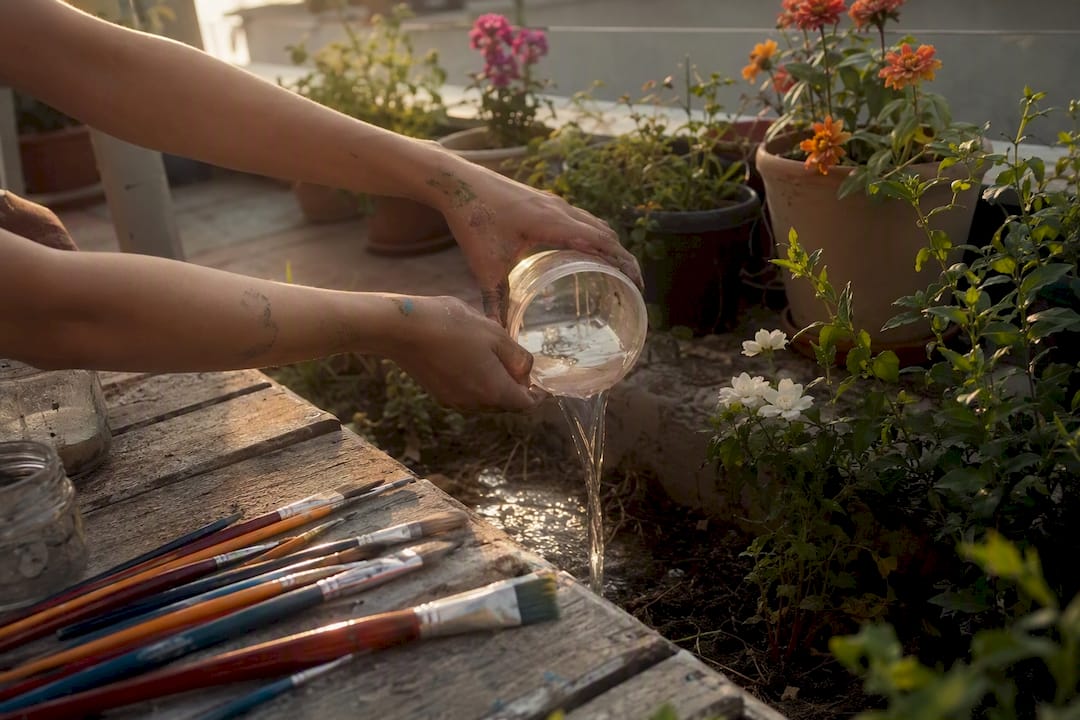
This is where most hobby painters get it wrong, and it’s the single biggest source of paint pollution from home studios. The fix is a simple multi-stage rinse that traps pigment before water ever reaches a drain.
- Wipe first. Drag your brush across a paper towel to remove the bulk of the paint before it touches any water.
- Rinse in a primary jar. This jar gets murky fast and holds most of the pigment load.
- Move to a settle jar. Let it stand for a few hours, or overnight for stubborn colors, until solids sink to the bottom.
- Decant the clear layer. Pour the top water into a filter, not straight down the sink.
- Filter it. A coffee filter, cheesecloth, or even a clean pair of pantyhose set inside a sieve catches the fine solids that settling misses, a trick confirmed by David M. Kessler Fine Art. Shape the filter like a funnel so sediment collects in the center and dries faster instead of smearing across the mesh.
- Do a final rinse only once water runs nearly clear.
For a faster option on smaller jars, stir in clumping cat litter or a commercial paint hardener directly into the washwater. It solidifies within an hour or two; once it’s firm enough that a spoon won’t sink in, scoop it into a bag and bin it, as wikiHow’s disposal guide outlines.
Pro Tip: Only ever pour water down the sink once it’s genuinely clear, not just lighter. If you’re on a septic system or unsure how your local wastewater plant handles fine pigment, skip the sink entirely and let that last rinse evaporate outdoors instead.
When Should You Use a Hazardous Waste Facility Instead?
Home methods work for jars and tubes, not for gallons. Treat these as your cue to escalate:
- A full or nearly full can rather than dried dregs
- Multiple liters accumulated from a big project or studio clean-out
- Paint you can’t identify, especially older tins with no visible ingredient label
- Any paint labeled as containing cadmium, cobalt, or other pigments flagged as hazardous on the container
Call your local household hazardous waste (HHW) site or council waste line before you go. Some accept water-based paint free of charge; others run scheduled drop-off events or charge a small fee for large volumes. Solvent-based paints and mediums are a different category entirely and generally can’t go down any drain or in general rubbish, according to wikiHow. While you wait for a drop-off slot, store cans upright, lids sealed, somewhere dry and out of children’s reach.
Studio Habits That Cut Down What You Ever Have to Throw Away
The best acrylic paint disposal is the disposal you never need to do. A few habits from the Craftybynumbers studio floor make a real dent:
- Keep a covered, moisturizing palette rather than an open tray. Paint stays workable for days instead of skinning over within hours.
- Squeeze out only what a session needs, and scrape leftovers back into the pot rather than letting them dry on the palette.
- Label partially used pots with the date, so nothing gets forgotten at the back of a supply box.
- Rinse brushes in stages: wipe first, then a dedicated first rinse jar, then a cleaner second jar, so the sink only ever sees the last, near-clear water.
Our storage guide covers pot care in more depth, and it’s the same thinking behind how Craftybynumbers designs its kits, sized to match the canvas so there’s rarely much left over once a piece is finished.
What’s the Best Way to Clean Brushes and Palettes With Minimal Mess?
Keep a stack of paper towels and two jars of water within reach every time you paint. It turns cleanup from a five-minute scrub into a routine you barely think about.
- Wipe the brush on a paper towel until most color transfers off.
- Swirl it in the primary rinse jar; this is the one that gets dark fast.
- Move to the secondary jar for a cleaner rinse, and only touch the tap once that water stays mostly clear.
- For dried-on paint, soak the brush in warm water for a few minutes and work it gently with your fingers rather than reaching for solvents, which most acrylic brushes don’t need at all.
Palette film that’s dried overnight peels off in one piece; scrape it into the bin and only rinse the palette once the bulk of it is gone.
Quick Dos and Don’ts for Paint Disposal
- Don’t pour wet paint, gray washwater, or solids into sinks, storm drains, or garden soil.
- Don’t dump unidentified solvent-based products into household rubbish without checking first.
- Do call your local waste authority before disposing of unusual pigments or anything beyond a small tube’s worth.
Why Prevention Beats Cleanup Every Time
Most disposal guides jump straight to “how do I get rid of this,” and skip the more useful question: why did you end up with this much leftover paint in the first place? In our experience running a kit business built around acrylics, the painters who waste the least aren’t using fancier disposal tricks. They’re squeezing out less at the start.
That’s not a moral point, it’s just math. A palette with a lid stays wet for days instead of hours. A pot labeled with a date doesn’t get abandoned and thrown out unused six months later. None of this requires new gear or a lecture on the environment, just a slightly different habit at the start of a session instead of a scramble at the end of one.
— Paula S.
Cleanup Gear and Kits That Make This Easier
A lot of paint waste comes down to tools that don’t hold up. Frayed brushes shed bristles into your rinse water and dry out faster, which means more half-used pots get abandoned. A set like the Premium Paint Brushes (Set of 10) is built to clean up fully between sessions instead of clogging with pigment, so fewer brushes get tossed and fewer jars need filtering.

If a pot has started to skin over but isn’t fully dried out, Revive Dry Paints can bring it back to a workable consistency instead of going straight in the bin. And if you’re picking a new project, kits like Ivory Essence, Garden of Dreams, Blossoming Cottage, Gentle Sakura, Cozy Armchair, and Spa Candles come with acrylics measured for the canvas size, which means less leftover paint to manage once the piece is framed. For anything beyond a home studio’s worth of paint, always default to your local hazardous waste service. Browse the full collection at Craftybynumbers to find a kit sized right for your next project.
Where to Go for More Guidance
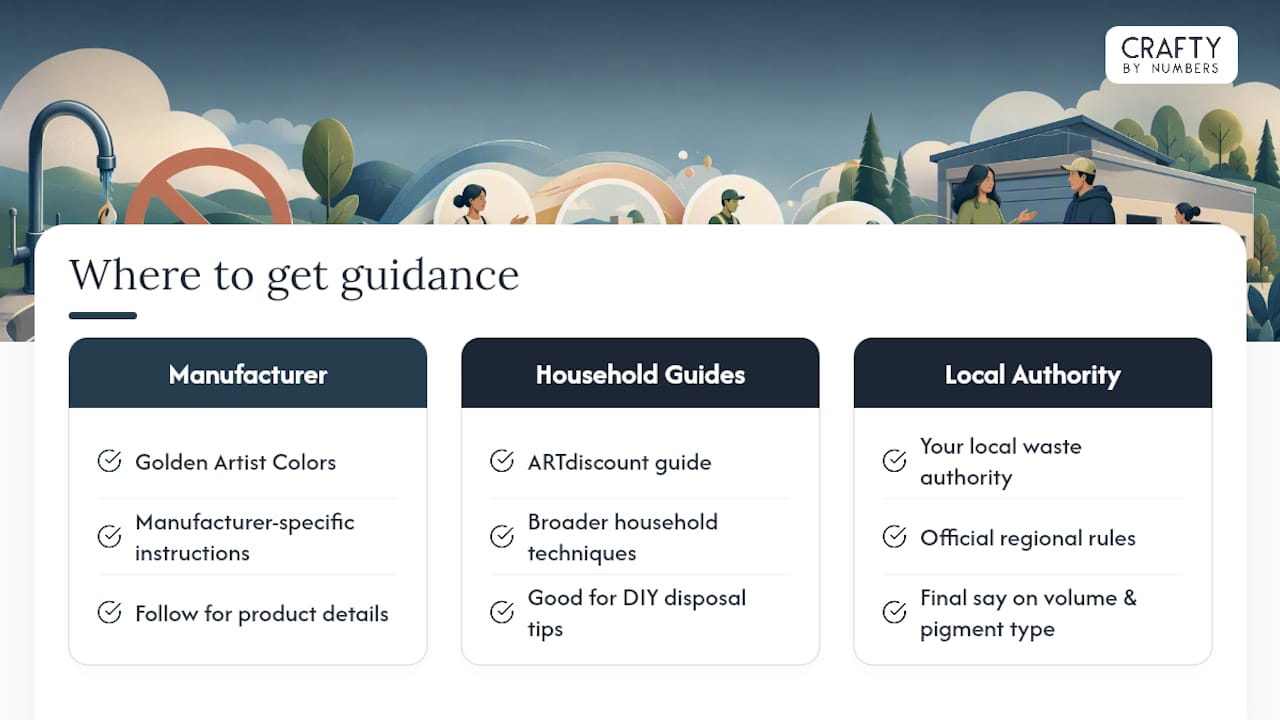
For manufacturer-specific instructions, check Golden Artist Colors’ disposal page. For a wider range of household techniques, see the ARTdiscount guide. When in doubt about volume or pigment type, your local waste authority has the final say.
Sources
- How Do You Safely Dispose of Waste Acrylic Paint? – ARTdiscount
- Disposing of wastes generated while painting – Golden Artist Colors
- How to Dispose of Acrylic Paint: Safe Disposal Guide – wikiHow
FAQ
What can I do with leftover acrylic paint?
Use it up on scrap canvas or a test piece, donate usable paint to a school or community group, or let small amounts dry fully before binning them.
Can you throw acrylic paint in the bin?
Yes, once it’s completely dry. Wet paint should never go straight into general rubbish or down the drain since it can leak and contaminate other waste.
What should you do with old, dried acrylic paint?
Dried acrylic paint is inert plastic and safe for household waste; just peel or scrape it off containers and check that the container itself qualifies for recycling.
What can you mix into paint so it’s safe to throw away?
Clumping cat litter, sawdust, or a commercial paint hardener will solidify wet acrylic paint within an hour or two, making it safe to scoop into the trash.
Is it ever okay to pour acrylic washwater down the sink?
Only once you’ve settled, decanted, and filtered it so the water runs genuinely clear; cloudy or pigmented water should never reach the drain.
0 Kommentare