

A medium for acrylic paint is a transparent acrylic binder that changes how paint behaves, including its viscosity, sheen, drying time, and texture, without weakening the paint film. Most painters reach for water when they want to thin their acrylics, but water alone cannot do what a proper medium does. Acrylic mediums share the same polymer emulsion base as the paint itself, which means they bond with pigment and preserve the durability and crack resistance of your finished work. Think of them as paint without pigment. The most common types include gloss medium, matte medium, gel medium, flow improver, retarding medium, and pouring medium, and each one solves a specific painting problem.
What types of acrylic mediums are available?
Acrylic painting mediums fall into six practical categories. Knowing what each one does saves you money and prevents frustration at the easel.
- Flow improvers and fluid mediums. These reduce surface tension in the paint, letting it spread more easily without thinning the color. They are the go-to choice for fine detail work, watercolor-style washes, and airbrushing effects on canvas.
- Glazing mediums. A glazing medium extends drying time and adds transparency. You apply it in thin, translucent layers over dried paint to build depth and luminosity. Old Masters used oil-based glazes for this effect; glazing medium gives acrylic painters the same result.
- Gel mediums. These are the most versatile category. Gel mediums come in gloss, matte, and semi-gloss finishes, and the finish you choose affects texture, sheen, and how the dried surface catches light. Heavy gel builds thick, sculptural impasto peaks. Soft gel blends smoothly for subtle texture.
- Retarding mediums. Acrylics dry fast, which is a problem when you need to blend colors on the canvas. A retarding medium slows the drying process, giving you extra working time without changing the paint’s color or finish.
- Pouring mediums. These create a self-leveling consistency perfect for fluid art and pour painting. They reduce cratering and help cells form in acrylic pours.
- Matte and gloss mediums. These are simple finish modifiers. Gloss medium adds sheen and depth. Matte medium reduces shine for a flat, gallery-style look.
Starting with a basic flow aid plus a matte or gloss medium costs under $20 and solves the most common beginner challenges. Expanding to a retarding medium and texture gel runs $40–$50 and covers nearly every technique a developing artist needs.
How do acrylic mediums compare to water thinning?
Water is free and always available, so painters use it constantly. The problem is that water dilutes the acrylic binder along with the pigment.
Professional artists recommend staying below 30% water dilution by volume for everyday use. Going above 50% water by volume produces a chalky, fragile paint film that can crack or flake after drying. That is a real risk on stretched canvas or wood panels.
| Thinning method | Effect on binder | Adhesion | Finish | Best use |
|---|---|---|---|---|
| Water (under 30%) | Slight dilution | Good | Unchanged | Quick washes, general thinning |
| Water (over 50%) | Significant loss | Weak, chalky | Flat, dull | Not recommended |
| Flow improver | Binder preserved | Strong | Unchanged | Detail work, washes |
| Gloss medium | Binder extended | Strong | Adds sheen | Glazing, layering |
| Matte medium | Binder extended | Strong | Reduces sheen | Flat finishes, collage |
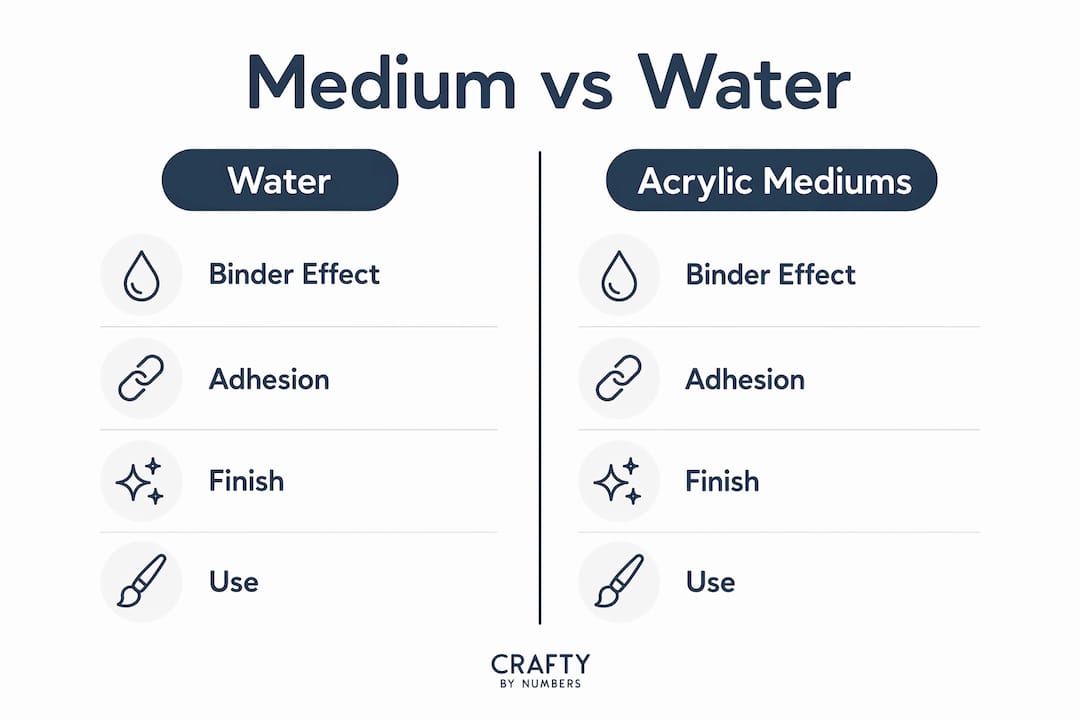
Mediums extend paint performance better than water because they preserve the acrylic binder while adjusting viscosity. That means your colors stay vibrant, your layers stay flexible, and your finished painting holds up over time. Water has its place for quick, light washes. For anything requiring durability or a specific finish, a medium is the better choice.
How to select the right acrylic medium for your style
Medium selection depends on your painting style first. Detail-oriented painters benefit from extended drying times, while expressive, gestural painters need better flow. Matching the medium to your technique produces better results than buying every product available.
Here is how to narrow down your options:
- Assess your drying time needs. If you blend colors wet-on-wet or work slowly, a retarding medium gives you more control. If you layer quickly and want fast dry times, a flow improver or standard gloss medium works better.
- Choose your finish based on display context. Gloss mediums deepen color and add richness, which suits bold, saturated paintings. Matte mediums create a soft, non-reflective surface that works well under gallery lighting or in bright rooms.
- Consider transparency for layering. Glazing medium and gloss medium both increase transparency, which is useful for building color depth in portraits or landscapes. Matte medium reduces transparency slightly.
- Build texture with gels and pastes. Heavy gel and modeling paste create raised, sculptural surfaces for impasto techniques. These are the right tools for thick, expressive brushwork that holds its shape after drying.
- Match your budget to your stage. Beginners get the most value from a single flow improver and one finish medium. Advanced painters working in mixed media or large-scale pieces benefit from investing in a full range of gel mediums in different finishes.
Pro Tip: Always test a new medium on a small scrap of canvas or paper with your specific paint brand before using it on a finished piece. Gel mediums vary widely between manufacturers, and testing gel medium finishes on samples prevents surprises in texture and sheen on your final work.
If you are new to painting and want to avoid common beginner painting mistakes, starting with a simple gloss or matte medium is the safest path. These two mediums cover the widest range of techniques without requiring much technical knowledge.
Creative techniques using acrylic mediums
Acrylic mediums do far more than thin paint. Artists use them as adhesives, transfer agents, texture builders, and paint extenders.
-
Collage adhesive. Gel medium works as an effective adhesive for attaching paper, fabric, and found objects to canvas or board. Apply a thin layer under the collage element and another layer on top to seal it. The dried gel is clear and flexible.
-
Photo transfers. Gel medium transfers printed images onto canvas or wood. Apply multiple thin coats of gel over a laser-printed image, alternating the direction of each coat. After drying, wet the paper and rub it away to leave the image embedded in the gel. Deep knowledge from experienced mixed media artists recommends up to 6 coats for durability, which prevents tearing during fiber removal.
-
Texture building. Heavy gel and modeling paste create raised surfaces that hold brushstroke and palette knife marks. These are ideal for landscapes with thick foliage, seascapes with wave texture, or abstract work where physical dimension adds visual interest.
-
Extending paint volume. Mixing gel medium into paint increases the volume of your mixture without changing the color significantly. This reduces paint consumption on large canvases and is a practical cost-saving technique for artists working at scale.
-
Surface preparation for different supports. On paper, a thin coat of matte medium seals the surface and reduces absorbency before painting. On wood panels, a gloss medium layer prevents the wood grain from pulling moisture out of the paint too quickly.
Pro Tip: Glossy mediums can cause art journal pages to stick together. Place wax paper between pages while the medium cures, or switch to a matte medium for journal work where pages need to stay separate.
Avoid applying thick gel medium layers in a single coat. Thick single applications trap moisture and take much longer to dry, sometimes staying tacky for days. Thin, successive layers dry faster and produce a stronger, clearer result. This is especially true for photo transfer work and collage sealing.
Key takeaways
The best medium for acrylic paint is the one that matches your specific technique, whether that means extending drying time, building texture, or preserving a gloss or matte finish without weakening the paint film.
| Point | Details |
|---|---|
| Mediums preserve the binder | Unlike water, acrylic mediums maintain polymer strength and prevent chalky, fragile paint films. |
| Water has a hard limit | Stay below 30% water dilution by volume to protect adhesion and color vibrancy. |
| Match medium to technique | Detail painters need retarders; expressive painters need flow improvers; texture artists need gel. |
| Gel medium is multi-purpose | Use it for collage adhesion, photo transfers, texture building, and paint volume extension. |
| Test before committing | Always sample a new medium on scrap material before applying it to a finished piece. |
What I’ve learned from years of working with acrylic mediums
The single biggest mistake I see painters make is buying a full set of mediums before understanding what they actually want to change about their paint. A retarding medium is useless if you already work slowly. A flow improver adds nothing if your paint is already fluid enough. Before spending anything, ask yourself one question: what is frustrating me about how my paint behaves right now?
My honest recommendation for anyone starting out is two products: a flow improver and either a matte or gloss medium depending on the finish you prefer. Those two cover the majority of painting challenges at a fraction of the cost of a full medium collection. Once you know what each one does to your specific paint brand, adding a gel medium or retarding medium becomes a logical next step rather than a guess.
The part most guides skip is brand compatibility. Mediums from one manufacturer do not always behave identically when mixed with paint from another. I have seen perfectly good gel mediums turn stringy or uneven when mixed with certain paint lines. Small-scale testing is not optional. It is the only way to know what you are actually working with before it matters.
Texture work with heavy gel is where mediums become genuinely exciting. Building a surface that has physical dimension, where light catches raised brushstrokes and creates shadow, changes what a painting can do. If you have only ever used mediums to thin paint, try building texture once. It changes how you think about the medium entirely.
— Paula S.
Painting supplies worth adding to your kit
Craftybynumbers carries everything you need to put these techniques into practice, from detail brushes that hold up to gel medium work to premium acrylic paint collections with rich, vibrant pigments.

The Ivory Essence kit pairs beautifully with gloss and matte mediums, giving you a detailed canvas to practice layering and glazing techniques. For painters who want professional results from the start, the professional brushes set handles everything from fine detail work to broad gel medium application. Craftybynumbers has served over 120,000 satisfied customers and offers personalized options that make every painting project feel like your own. Whether you are building your first kit or expanding an existing collection, the range covers every skill level.
FAQ
What is a medium for acrylic paint?
A medium for acrylic paint is a clear acrylic polymer binder without pigment that modifies paint properties such as flow, texture, drying time, and finish. It shares the same base as acrylic paint, so it bonds permanently without weakening the paint film.
Can I use water instead of a medium to thin acrylic paint?
Water works for light thinning below 30% by volume, but exceeding 50% water dilution weakens the acrylic binder and produces chalky, fragile dried paint. A flow improver or fluid medium thins paint without those risks.
What does gel medium do for acrylic paint?
Gel medium adds body and texture to acrylic paint and comes in gloss, matte, and semi-gloss finishes. It also works as a collage adhesive and a photo transfer agent when applied in multiple thin layers.
How do I choose between gloss and matte medium?
Gloss medium deepens color and adds sheen, which suits bold paintings displayed in low-light settings. Matte medium reduces shine for a flat finish that works well under bright or gallery lighting.
Is acrylic medium safe for beginners?
Acrylic mediums are water-based and non-toxic, making them safe for painters at all levels. Beginners get the most value from starting with a single flow improver and one finish medium before expanding their collection.
0 Kommentare