

A painting habit is defined as a consistent, scheduled practice of creating art that builds skill and confidence over time. You can build a painting habit as a beginner by committing to just 10–15 minutes of daily practice. Consistency matters far more than session length. Short, regular sessions train your brain through neuroplasticity, meaning the act of showing up daily rewires how you see, think, and create. The result is real progress, genuine relaxation, and a creative outlet that fits into any schedule.
How to build a painting habit as a beginner: tools and setup
The right supplies lower the barrier to starting. A starter acrylic kit costs around $30–50 and includes everything you need to begin. Acrylic paint is the best choice for beginners because it dries fast, cleans up with water, and lets you paint over mistakes without starting over.
What you need to get started
Here is what belongs in your beginner kit:
- Paints: A set of 10–12 acrylic colors covers most subjects. Look for a basic palette with primary colors, black, and white.
- Brushes: A set of 3–5 brushes in varied sizes handles detail work and broad strokes. Craftybynumbers offers professional brushes designed specifically for acrylic painting.
- Canvas or paper: Canvas pads are affordable and reusable for practice. Pre-printed canvases remove the intimidation of a blank surface.
- Palette: A simple plastic palette or a disposable paper palette keeps your colors organized.
- Water jar and paper towels: These are non-negotiable for keeping brushes clean between colors.
Setting up your workspace
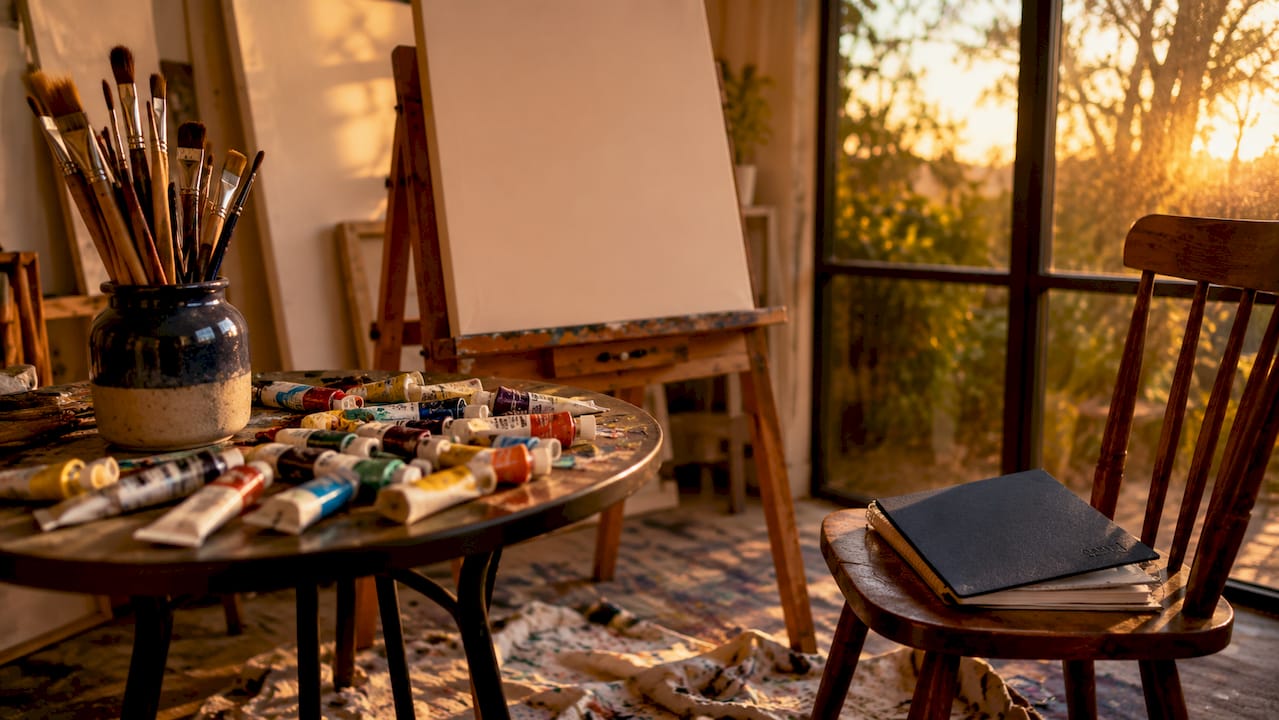
A dedicated workspace removes friction from your practice. You do not need a full studio. A small table, good lighting, and a shelf where your supplies stay ready is enough. The goal is to make starting as easy as possible. When your brushes and paints are already out, you are far more likely to sit down and paint.
| Supply | Estimated Cost | Why It Matters |
|---|---|---|
| Acrylic paint set (10–12 colors) | $10–20 | Covers all basic mixing needs |
| Brush set (3–5 brushes) | $8–15 | Handles detail and broad strokes |
| Canvas pad or pre-printed canvas | $8–12 | Affordable practice surface |
| Palette and water jar | $3–5 | Keeps colors fresh and brushes clean |
| Paper towels | $2–3 | Protects brushes and workspace |
How do you schedule painting practice to make it stick?
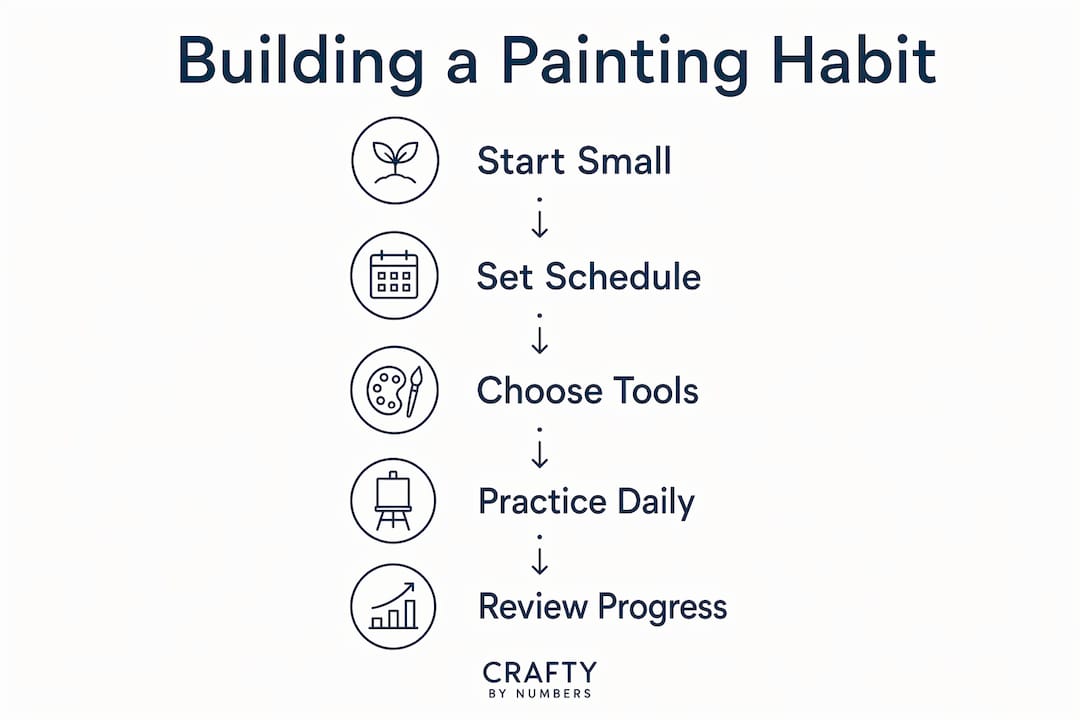
Scheduling is the difference between painting once and painting consistently. Fixed time cues and daily routine attachment are the most reliable ways to build a lasting art habit. Consistency over at least three weeks creates an internal rhythm that makes practice feel automatic.
Follow these steps to build your painting practice schedule:
- Pick a fixed time. Morning, lunch, or evening all work. The key is choosing the same time every day so your brain starts to expect it.
- Attach it to an existing habit. Paint right after your morning coffee or before your evening wind-down. Habit stacking makes the new behavior easier to remember.
- Start with 10–15 minutes. Short sessions build momentum better than marathon sessions. They also reduce excuses and keep enthusiasm high.
- Set a timer. A timer removes the pressure of watching the clock. When it goes off, you can stop without guilt or keep going if you are in the flow.
- Prepare your materials the night before. Lay out your brushes, open your paints, and set your canvas. Reducing setup time removes one more reason to skip.
- Commit to fixed days if daily feels impossible. Three sessions per week still builds real skill. The habit loop matters more than the frequency.
Pro Tip: Treat your painting session like a meeting you cannot cancel. Put it in your calendar with a reminder. The more seriously you treat it, the more consistently you will show up.
What painting projects work best for beginners?
The best beginner projects are ones you actually want to paint. Choosing subjects aligned with personal interests improves both motivation and skill-building. Simple, relatable subjects like household objects, minimal landscapes, and abstract shapes reduce intimidation and keep you engaged session after session.
Three beginner paths that work well:
- Abstract geometric shapes: No drawing skills required. Practice blocking in color, mixing tones, and creating contrast. This path builds confidence fast.
- Minimal sunset landscapes: A horizon line, a gradient sky, and a simple silhouette. You practice color blending and washes without needing fine detail.
- Simple still life: A single apple, a coffee mug, or a vase of flowers. This path trains observation, value focus, and basic form. The Craftybynumbers Sunflowers in a Vase kit is a perfect first structured project.
Why painting “badly” is part of the process
Intentional “bad” painting sessions reduce performance anxiety and promote risk-taking. The idea is simple: set out to make the worst painting you can. This removes the pressure of perfection and often produces surprisingly interesting results. Detaching your self-worth from early output quality is one of the most important skills a beginner can develop.
Commit to completing at least ten paintings before judging your progress. The first few will feel awkward. That is normal and expected. By painting ten, you give yourself enough data to see real improvement and enough practice to develop your own instincts. You can find accessible painting styles that match your current skill level and keep the process enjoyable.
Pro Tip: Keep all your early paintings, even the ones you dislike. Reviewing them after two months shows you concrete proof of progress, which is one of the strongest motivators to keep going.
How do you stay motivated when your painting habit gets hard?
Every beginner hits a wall. Motivation drops, sessions get skipped, and the inner critic gets loud. The solution is not willpower. It is a system that makes continuing easier than stopping.
- Value process over product. A painting session that produces a bad result still trained your eye, your hand, and your color sense. The output is secondary to the practice.
- Use art prompts to beat creative blocks. Art prompts remove decision fatigue by giving you a starting point. Instead of staring at a blank canvas, you simply respond to a prompt. This keeps the focus on technique, not ideas.
- Schedule breaks intentionally. Burnout comes from pushing through exhaustion. Plan one rest day per week and one full week off every two months. Breaks protect the habit long-term.
- Track your sessions. A simple calendar where you mark each completed session creates a visual streak. Breaking the streak feels worse than painting for 10 minutes. That friction works in your favor.
- Lean into the mental health benefits. Painting activates a flow state, a mental condition where time disappears and stress fades. The relaxation benefits of painting are well documented and give you a reason to practice that goes beyond skill.
Beginners who stick with consistent practice typically feel comfortable with basic principles like color theory within 3–6 months. The progression from hobbyist to emerging artist takes 1–2 years of consistent, feedback-driven work. That timeline is encouraging, not discouraging. Real growth is measurable within months.
What are the best daily exercises to jumpstart your painting sessions?
Simple exercises remove the pressure of starting from scratch every session. Structured exercises like gesture drawing, value shading, and contour drawing build foundational observation skills efficiently. They also give you a warm-up routine that gets your hand and eye working before you tackle a full painting.
Try rotating through these exercises each week:
- Paint a household object. A coffee cup, a piece of fruit, or a shoe. Focus on shape and shadow, not perfection. This trains observation.
- Limited color palette study. Restrict yourself to three colors and mix everything from them. This builds color mixing confidence faster than using a full palette.
- Value-only painting. Use only black, white, and gray. Paint any subject with the goal of capturing light and dark accurately. Value is the foundation of realistic painting.
- Non-dominant hand painting. Paint with your weaker hand for five minutes. This kills perfectionism instantly and makes mark-making feel playful.
- Timed gesture sketches in paint. Set a two-minute timer and paint a loose impression of any subject. Speed forces you to capture the essential shapes without overthinking.
Rotating these exercises keeps sessions fresh and targets different skills each day. You can also explore how oil paintings inspire creative practice to expand your visual vocabulary beyond acrylics. Variety prevents boredom and ensures you develop a well-rounded skill set rather than repeating the same comfortable moves.
Key Takeaways
Building a consistent painting habit as a beginner requires short daily sessions, the right supplies, and a system that makes showing up easier than skipping.
| Point | Details |
|---|---|
| Start with 10–15 minutes daily | Short sessions prevent burnout and build habit faster than occasional long ones. |
| Set up your workspace in advance | Laying out supplies the night before removes friction and increases follow-through. |
| Choose projects you actually enjoy | Personal interest in your subject improves motivation and accelerates skill development. |
| Paint “badly” on purpose | Intentional low-pressure sessions reduce anxiety and build risk-taking confidence. |
| Use prompts to beat creative blocks | Art prompts remove decision fatigue and keep focus on technique rather than ideas. |
What I have learned from painting every day as a beginner
When I started painting daily, I expected rapid improvement. What I got instead was a slow, humbling, and surprisingly rewarding process. The first two weeks felt awkward. My brushwork was stiff, my colors looked muddy, and I wanted to quit after every session.
What kept me going was the decision to stop caring about the result. I gave myself permission to make ugly paintings. That single shift changed everything. Once the pressure to produce something “good” was gone, I started experimenting. I mixed colors I would never have tried. I painted loose, gestural marks that felt alive in a way my careful, controlled work never did.
The mental health benefit surprised me most. After ten minutes of painting, the noise in my head quieted. It was not meditation, but it was close. That feeling became the real reason I kept showing up, not skill development or finished pieces. If you are struggling to stay consistent, focus on how painting makes you feel during the session, not on what the painting looks like when it is done. The beginner mistakes you make are not failures. They are the actual curriculum.
— Paula S.
A simple way to start your painting habit today
Craftybynumbers has helped over 120,000 beginners move from blank canvas anxiety to finished, display-worthy art. Their kits include a pre-printed canvas, high-quality acrylic paints, and detail brushes, so you spend your session painting, not hunting for supplies.

The Sunflowers in a Vase kit is an ideal first project. It gives you a guided structure that builds confidence without removing the joy of painting. Pair it with the Craftybynumbers premium brush set for better control and a more enjoyable experience from your very first session. A great kit does not replace practice, but it removes every excuse not to start.
FAQ
How long should a beginner paint each day?
Beginners need just 10–15 minutes of daily practice to build meaningful skill. Consistency matters more than session length for habit formation and neuroplasticity.
What is the best paint type for beginners?
Acrylic paint is the best starting point for beginners. It dries fast, cleans up with water, and allows you to paint over mistakes easily.
How long does it take to get good at painting?
Beginners typically feel comfortable with basic principles like color theory within 3–6 months of consistent practice. The progression to emerging artist level takes 1–2 years of regular, feedback-driven work.
What should a beginner paint first?
Simple subjects like household objects, abstract geometric shapes, or minimal landscapes work best. Choosing a subject you find personally interesting improves motivation and makes the learning process more enjoyable.
How do I stay motivated when I want to quit?
Use art prompts to remove decision fatigue, track your sessions on a calendar to build a visual streak, and focus on how painting feels during the session rather than on the quality of the finished piece.
0 comments