

Hanging canvas art without damaging walls is fully achievable when you match the right method to your canvas weight and wall surface. The wrong approach leaves holes, peeled paint, or fallen frames. The right one keeps your walls pristine and your art secure. Whether you rent or own, the techniques below work for smooth drywall, plaster, and textured surfaces alike. Craftybynumbers customers regularly display their finished paint-by-number canvases using these exact methods, and the results speak for themselves.
What are the best damage-free hanging methods for canvas art?
The best damage-free hanging methods are adhesive strips, monkey hooks, pin nails, gallery rail systems, and leaning. Each one suits a different canvas size and weight. Choosing the wrong method is the most common reason art falls or walls get damaged.
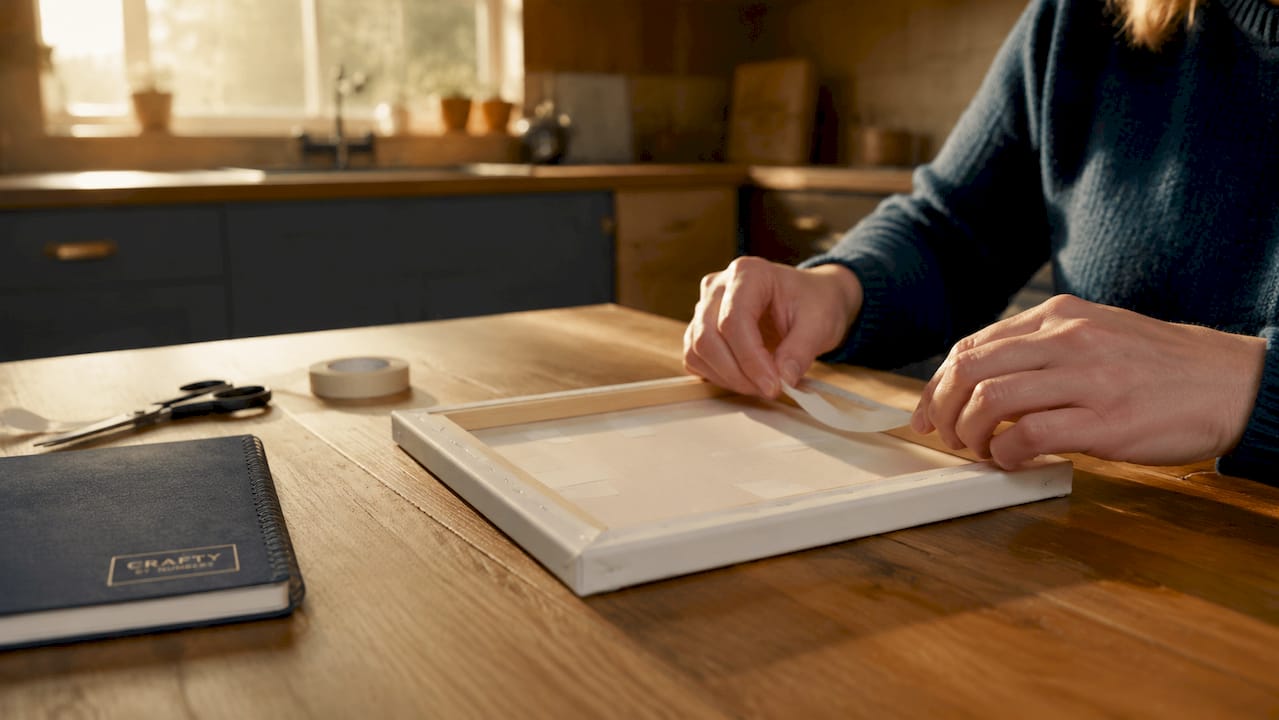
Adhesive strips are the go-to option for lightweight canvases. Adhesive strips hold up to 16 pounds when you use four pairs on a clean, smooth surface. That weight limit scales with the number of strips you apply, so always check the packaging before hanging anything heavier than a small canvas.
Monkey hooks step in where adhesive strips fall short. Monkey hooks support up to 35 pounds with minimal drywall damage by using the back of the drywall for leverage. They leave a tiny hole, but that hole is far easier to patch than the damage caused by a fallen canvas.
Pin nails are another low-impact option. A single pin nail leaves a hole smaller than a thumbtack and holds canvases up to about 20 pounds on standard drywall. They work especially well on plaster walls where adhesive strips tend to fail.
Gallery rail systems eliminate wall contact entirely. A rail mounted once along the ceiling or upper wall lets you hang and rearrange multiple canvases using adjustable wires. This is the preferred setup for renters who want flexibility without repeated patching.
Leaning is the zero-damage solution for large or heavy pieces. Leaning canvas art against a wall is the most reliable no-damage method, with easels available as an alternative for around $15–$60. It also works beautifully for oversized canvases that exceed any adhesive or anchor capacity.
- Adhesive strips: best for canvases under 16 lbs on smooth drywall
- Monkey hooks: best for medium canvases up to 35 lbs on drywall
- Pin nails: best for plaster or textured walls with light to medium canvases
- Gallery rail systems: best for renters who rearrange art frequently
- Leaning or easels: best for large, heavy, or oversized canvases
Pro Tip: Before buying any hanging product, weigh your canvas on a bathroom scale. Knowing the exact weight takes the guesswork out of choosing between adhesive strips and a monkey hook.
How do you choose the right method for your wall and canvas?
Matching the hanging method to your wall type and canvas weight is the core principle professionals follow. There is no single solution that works for every situation. Applying an adhesive strip to a textured or plaster wall, for example, almost always ends in failure.
Identifying your wall type
Start by pressing your fingernail lightly into the wall. Drywall gives slightly and feels hollow when you knock on it. Plaster feels hard and dense with no give. Textured walls have a rough surface that prevents adhesive strips from bonding properly. A stud finder helps you locate wooden studs behind drywall, which are the strongest anchor points for heavier canvases.
Weight categories and recommended methods
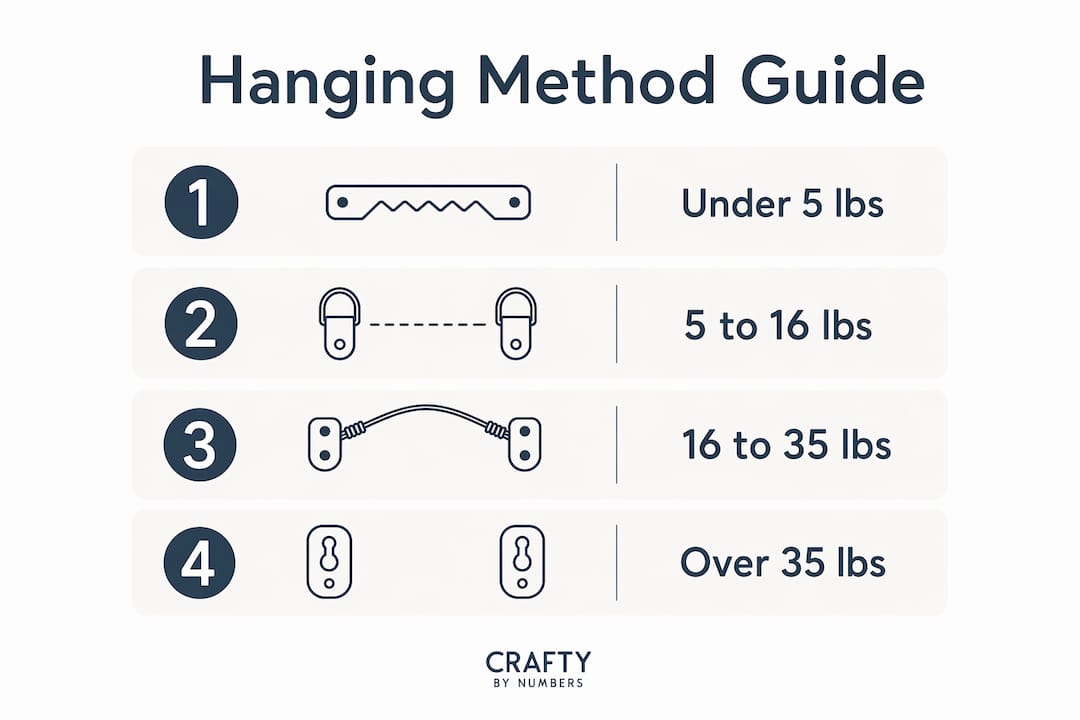
- Under 5 lbs: Standard adhesive strips on smooth drywall. Two strips are sufficient.
- 5–16 lbs: Four pairs of adhesive strips, or a single monkey hook on drywall.
- 16–35 lbs: Monkey hooks or pin nails. Two hooks spaced apart for stability.
- Over 35 lbs: French cleat systems or gallery rails. French cleat systems distribute weight evenly and are the professional standard for canvases over 50 lbs.
| Canvas weight | Wall type | Recommended method |
|---|---|---|
| Under 5 lbs | Smooth drywall | Adhesive strips (2 pairs) |
| 5–16 lbs | Smooth drywall | Adhesive strips (4 pairs) or monkey hook |
| 16–35 lbs | Drywall or plaster | Monkey hooks or pin nails |
| Over 35 lbs | Any | French cleat or gallery rail system |
Surface cleanliness matters as much as method selection. Dust, grease, or moisture on the wall prevents adhesive from bonding. Wipe the surface with isopropyl alcohol before applying any strip or hook. For canvas size guidance that helps you plan your display before you even pick up a strip, Craftybynumbers has a dedicated resource worth checking.
Step-by-step guide to wall-safe canvas hanging
Preparation is where most people cut corners, and it is exactly where most failures begin. Follow these steps and your canvas will stay level and secure.
- Weigh your canvas. Use a bathroom scale. This single step determines every decision that follows.
- Identify your wall type. Knock on the wall and press lightly. Use a stud finder for heavier pieces.
- Clean the surface. Wipe the hanging area with isopropyl alcohol and let it dry completely. Skipping this step causes most adhesive strip failures.
- Apply adhesive strips. Press each strip firmly for 30 seconds. Attach the matching strips to the canvas back. Press the canvas to the wall for another 30 seconds. Then remove the canvas and wait at least one hour before rehanging. This curing time is non-negotiable.
- Install monkey hooks or pin nails. Push the hook into drywall at a slight downward angle until the curved end grips the back of the board. For pin nails, use a small hammer and drive at a 45-degree angle downward.
- Use two hanging points for stability. Two hooks spaced about 20 cm apart prevent the canvas from drifting off-level over time. Single-point hanging causes tilt, especially with wider canvases.
- Check level before finalizing. Use a small bubble level or a free smartphone app. Adjust while the adhesive is still fresh or before tightening any wire.
Pro Tip: For canvases with picture wire on the back, upgrade to wire rated heavier than your canvas weight. A good hanging system also uses D-rings placed about one-third from the top of the frame, which keeps the canvas flush against the wall.
For large canvases, leaning against a low shelf or using a floor easel is a genuinely elegant solution. You can see how large canvases displayed this way create a gallery feel without a single nail. The visual impact is often stronger than a wall-mounted piece.
How do you fix common problems with canvas hanging?
Most canvas hanging problems fall into four categories: crooked art, adhesive failure, paint damage during removal, and hardware failure on heavier pieces.
Crooked canvases are almost always caused by single-point hanging. Switch to two hooks or two adhesive strip pairs placed at equal heights. A small piece of painter’s tape on the wall marks your target points before you commit.
Adhesive failures happen for three reasons: the wall was not clean, the curing time was skipped, or the canvas exceeded the strip’s weight rating. Renters frequently misuse adhesive products by ignoring weight ratings and skipping proper removal steps. Check the rating on the strip packaging every time.
Removing strips without damaging paint requires patience. Pull the adhesive tab downward, parallel to the wall surface, in a slow and steady motion. Pulling outward or at an angle tears paint. If a strip feels stuck, warm it gently with a hair dryer for 10–15 seconds to soften the adhesive.
“The single biggest mistake people make when removing adhesive strips is pulling outward from the wall. Always pull the tab straight down, parallel to the surface, stretching it slowly until it releases. This preserves the paint finish and leaves the wall ready for the next piece.”
Hardware failures on heavier pieces signal that you need to upgrade. If a monkey hook is bending or a wire is fraying, move to a French cleat or a gallery rail system. These systems distribute weight over a wider wall area and are the professional standard for canvases over 50 lbs. Checking your hardware every six months takes less than two minutes and prevents falls.
- Crooked canvas: switch to two-point hanging at equal heights
- Adhesive failure: clean wall, cure for one hour, verify weight rating
- Paint damage on removal: pull tab downward, parallel to wall
- Hardware failure: upgrade to French cleat or gallery rail for heavy pieces
- Wire fraying: replace with heavier-rated picture wire and D-rings
Key Takeaways
The most reliable way to hang canvas art without damaging walls is to match your hanging method to the canvas weight and wall type, then follow proper surface preparation and installation steps.
| Point | Details |
|---|---|
| Match method to weight | Use adhesive strips under 16 lbs, monkey hooks up to 35 lbs, and French cleats above 50 lbs. |
| Clean before you hang | Wipe the wall with isopropyl alcohol and allow adhesive strips to cure for at least one hour. |
| Use two hanging points | Two hooks spaced 20 cm apart prevent tilt and keep canvases level long-term. |
| Remove strips correctly | Pull the tab downward, parallel to the wall, to avoid peeling paint on removal. |
| Lean or use rails for large pieces | Leaning and gallery rail systems are the best zero-damage options for heavy or oversized canvases. |
What I’ve learned from hanging dozens of canvases the right way
The advice I see repeated most often is “just use adhesive strips.” That is fine for a small canvas on smooth drywall. It is a disaster on plaster, textured paint, or anything heavier than a medium-sized print. I learned this the hard way after a canvas came down at 2 AM and left a chunk of paint on the floor with it.
The real skill in wall-safe canvas hanging is patience during preparation. Cleaning the wall feels unnecessary until you realize that a thin layer of dust is the reason your strip failed. Waiting an hour for adhesive to cure feels excessive until you skip it once and watch your canvas slide down the wall.
Two-point hanging changed how I approach every canvas over 12 inches wide. A single hook creates a pivot point. Two hooks create a stable platform. The canvas stays level for months without adjustment, which matters when you have spent hours painting a Craftybynumbers kit and want it displayed perfectly.
My honest recommendation: invest in quality hardware once. A set of monkey hooks, a box of pin nails, and a roll of picture wire rated to 50 lbs costs less than $20 total. That kit handles 90% of canvases most people will ever hang. For anything larger, lean it or use a rail. The walls thank you, and so does the art.
— Paula S.
Ready to display your next canvas?
Craftybynumbers creates paint-by-number kits that produce finished canvases worth showing off. Every kit includes a pre-printed canvas, high-quality acrylic paints, and detail brushes, so the result is display-ready the moment you finish.

Whether you want a calming floral piece like Ivory Essence or a vibrant scene that anchors a living room wall, Craftybynumbers has options for every skill level and room size. With over 120,000 satisfied customers, the quality shows in every finished piece. Browse the full collection at Craftybynumbers and find your next wall-worthy canvas. You can also explore canvas wall art options for additional display inspiration alongside your finished kit.
FAQ
What is the safest way to hang canvas art without nails?
Adhesive strips are the safest no-nail option for canvases under 16 lbs on smooth drywall. For heavier or larger pieces, leaning against the wall or using a gallery rail system eliminates wall contact entirely.
Can adhesive strips hold a large canvas securely?
Adhesive strips hold up to 16 lbs when you use four pairs on a clean, smooth surface. Canvases heavier than that require monkey hooks, pin nails, or a French cleat system for reliable support.
How do I remove adhesive strips without damaging paint?
Pull the adhesive tab straight downward, parallel to the wall, in a slow and steady motion. Pulling outward or at an angle tears the paint surface.
Do monkey hooks damage drywall?
Monkey hooks leave a very small hole in drywall, far smaller than a standard nail. They support up to 35 lbs and are considered a minimal-impact option for renters and homeowners alike.
When should I use a French cleat instead of hooks?
Use a French cleat for canvases over 50 lbs or any piece where long-term security and even weight distribution matter. French cleats are the professional standard in galleries for heavy or valuable artwork.
0 comments