

Canvas texture, often called “tooth,” is the microscopic surface roughness created by the weave of the fabric and the primer coat on top. For paint-by-numbers buyers, that roughness controls everything: how well acrylic paint grips, whether it pools in corners, and how cleanly you can stay inside small numbered areas. The short version: finer tooth gives you crisper detail and easier blending; medium tooth adds energy and holds thicker paint without slipping. Craftybynumbers designs its pre-printed, pre-primed canvases to hit that sweet spot for hobbyists, and over 120,000 satisfied customers have painted on them.
Table of Contents
- What is canvas texture (tooth) and what creates it?
- Why does canvas texture affect how your paint behaves?
- Which texture level fits your painting goal?
- How to check a kit’s canvas texture before you buy
- Practical painting tips for different canvas textures
- Can you modify a kit canvas? Sanding, priming, and varnishing
- How Craftybynumbers handles canvas texture in its kits
- Key Takeaways
- Why texture choice matters more than most buyers realize
- Ready to pick your next kit?
- Useful sources
- FAQ
What is canvas texture (tooth) and what creates it?
The National Gallery of Art defines texture as the look and feel of a surface, shaped by the materials and techniques used to build it. On a painting canvas, three things combine to produce that feel: the fiber type, the tightness of the weave, and how much primer (gesso) is applied on top.
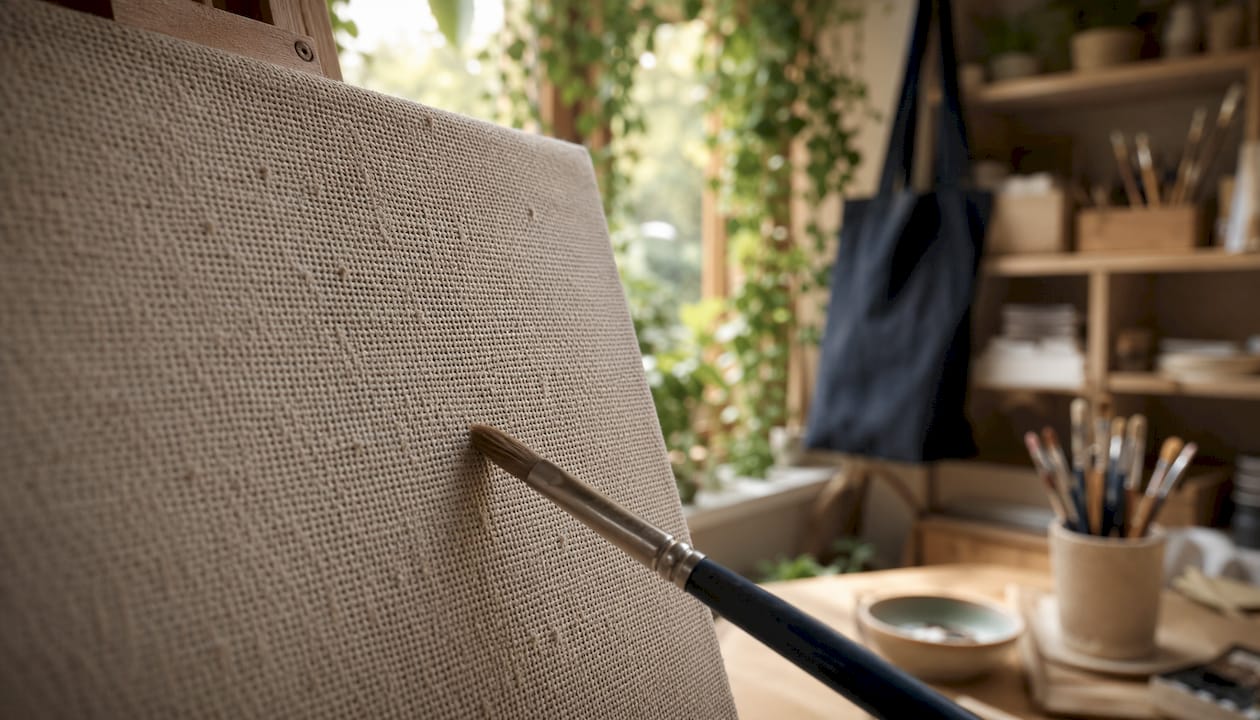
Cotton is the most common fiber in kit canvases. It gives a medium, consistent texture at an affordable price. Linen is finer and stronger, with a naturally tighter weave that tends to produce a smoother painting surface, though it absorbs primer differently and usually needs a thinner first coat to avoid pooling in the weave. Most paint-by-numbers kits use cotton.
Weave tightness and priming work together. Tighter weaves plus more primer coats produce a smoother surface; coarser weaves with less primer leave more visible texture. Factory-applied gesso is typically a thin coat or two, enough to protect the fabric but still leaving some tooth for paint to grip.
“Canvas tooth is the microscopic roughness of a primed surface. Paint physically grips into it.” — Russell Collection
Pro Tip: When reading product photos, zoom in on the canvas surface. If you can see a clear grid-like weave pattern, the texture is medium to coarse. If the surface looks uniform and matte with no visible grain, the primer has filled most of the weave and you’re looking at a finer tooth.
Why does canvas texture affect how your paint behaves?
Tooth gives acrylic paint a mechanical anchor. Without it, paint may slide, pool, or lift off the surface rather than bonding to it. For paint-by-numbers kits, this matters in very specific ways.
Correctly primed surfaces reduce binder absorption significantly compared to raw canvas, protecting color vibrancy and sheen throughout the painting process.
Here is what different texture levels actually do when you’re working inside numbered sections:
- Coverage: Rougher surfaces need more paint to fill the valleys between fibers. You may need two coats on a coarser canvas to get solid, opaque color.
- Edge crispness: Finer tooth keeps paint where you put it. On a coarser surface, paint can wick slightly along fibers and blur the edge of a numbered area.
- Blending: Smooth surfaces let you blend colors more easily because the brush glides. Textured surfaces create drag, which can be useful for expressive strokes but tricky for soft gradients.
- Drying time: More surface area on a rougher canvas means paint dries slightly faster, so work in smaller sections to avoid hard edges when blending.
- Brush control: In small numbered compartments, a finer tooth gives you more control. Coarser surfaces can catch bristles and pull paint outside the lines.
Avoiding common beginner painting mistakes often comes down to understanding this one relationship: surface roughness and paint behavior are linked.
Which texture level fits your painting goal?
| Feature | Fine tooth | Medium tooth | Coarse tooth |
|---|---|---|---|
| Best for | Detailed realism, portraits | General-purpose, scenic | Expressive, impasto, abstract |
| Brush control | High — paint stays precise | Balanced | Lower — more drag and spread |
| Paint amount needed | Less — fills easily | Moderate | More — valleys need filling |
| Typical primer level | 3+ coats, often sanded | 2 coats standard | 1–2 coats, weave visible |
| Cotton vs. linen | Linen or fine cotton | Standard cotton | Coarse cotton |
Smooth surfaces favor precision and glazing; textured surfaces favor expressive, forgiving mark-making. For most paint-by-numbers scenes with small numbered areas and fine color transitions, a fine to medium tooth is the practical choice. If you want the finished piece to show visible brushwork and a more painterly feel, medium to coarse works well.
Pro Tip: When in doubt, go smoother. You can always add texture with thick paint application, but you cannot remove texture from a canvas once it’s there. A finer surface gives you more options.
How to check a kit’s canvas texture before you buy
- Look at close-up product photos. Zoom into any macro shot of the canvas. Visible grid lines mean medium to coarse weave; a flat, uniform surface means finer tooth.
- Read the description for primer language. Words like “pre-primed,” “gesso-coated,” or “fine texture” signal a smoother surface. No mention of primer often means factory-minimum coating.
- Check the fiber listed. Cotton is standard and gives medium texture. Linen signals finer tooth and higher quality.
- Look at the reference image scale. If the printed design has very small numbered areas, a finer canvas will make those sections easier to fill cleanly.
- Use the product Q&A. Ask the seller directly: “Is the canvas fine, medium, or coarse texture?” or “Can you share a close-up photo of the canvas surface?”
Pro Tip: Phrases like “smooth finish,” “no grain,” or “fine weave” in a product description reliably indicate a finer tooth. “Natural texture,” “visible weave,” or “linen-look” signal a coarser surface. If the description says nothing about texture, assume medium cotton.
Practical painting tips for different canvas textures
- Match your brush to the surface. Fine tooth works best with smaller, softer brushes and thinner paint. Coarse tooth handles stiffer bristles and thicker application without the paint sliding.
- Adjust paint consistency. On a fine canvas, slightly thinned paint flows into numbered areas cleanly. On a coarser surface, use paint straight from the pot or slightly thicker to fill the valleys.
- Work in thin layers. Two thin coats always beat one thick one, regardless of texture. Thick paint on a coarse canvas can dry with an uneven surface and obscure fine detail.
- Let layers cure before adding the next. Coarser canvases have more surface area, so paint dries faster on top but may stay wet in the valleys. Wait until the surface is fully dry to the touch before layering.
- Fill small numbered areas from the center outward. This prevents paint from pushing over the printed lines. On a textured surface, a light second pass after the first coat dries fills any gaps left by the weave.
Pro Tip: If paint pools at the edge of a numbered section and dries with a raised ridge, let it dry completely, then lightly drag a dry brush across the ridge to flatten it before adding the next coat. This works on both fine and medium tooth surfaces.
For more ideas on getting the most from your brushwork, nature-inspired painting tips from The Zoofamily offer useful technique suggestions that translate well to kit painting.
Can you modify a kit canvas? Sanding, priming, and varnishing
Minor adjustments are possible, but the printed number guides are the hard limit. Heavy re-priming will obscure them.
Sanding: Use 220–320 grit sandpaper very lightly across the surface before you start painting. This knocks down the highest fiber peaks and reduces drag without adding material. Wipe away dust with a barely damp cloth and let it dry fully.
Adding a gesso coat: If the canvas feels too rough, one thin extra coat of acrylic gesso can smooth it slightly. Apply with a wide, flat brush in long strokes. Let it dry for at least two hours. More than one extra coat risks filling in the printed numbers.
Before modifying any kit canvas, test your sanding or priming technique on a separate canvas panel first. Once printed numbers are obscured, they cannot be recovered.
Varnishing: After the painting is complete and fully dry (allow 24 hours minimum), a thin coat of acrylic varnish protects the surface and evens out sheen differences between thick and thin paint areas. Craftybynumbers has a full guide on finishing your paint-by-numbers piece with varnishing steps.
How Craftybynumbers handles canvas texture in its kits
Craftybynumbers designs its kits with pre-printed, pre-primed cotton canvases chosen to balance grip and detail for hobbyists at every skill level. Each kit includes a pre-printed canvas, matched acrylic paints, and detail brushes, so the surface and the paint are already calibrated to work together.
Here are six kits that show the range of finishes available:
- Ivory Essence: Detail-oriented design suited to buyers who prefer a finer, smoother surface for precise color placement.
- Garden of Dreams: Scenic kit with balanced medium texture, a strong general-purpose choice.
- Blossoming Cottage: Expressive, textured finish that rewards visible brushwork.
- Cherry Blossoms: Floral detail work that pairs well with medium to fine tooth for clean petal edges.
- Coastal Daydream: Landscape design where a slightly pronounced texture adds depth to water and sky.
- Extra Painting: An add-on for buyers who expect to use more paint on rougher surfaces or larger coverage areas.
Pro Tip: If you’re new to paint-by-numbers, start with a kit labeled for beginners or intermediate skill. These typically use a finer to medium tooth canvas that makes staying inside numbered areas much easier.
The numbered canvas itself is a teaching tool, and the surface texture is part of how it works.
Key Takeaways
Canvas texture (tooth) is the single biggest factor in how acrylic paint behaves on a kit canvas, and matching it to your goal makes the difference between a frustrating session and a finished piece you want to hang.
| Point | Details |
|---|---|
| Tooth controls paint grip | Microscopic surface roughness anchors acrylic paint and prevents sliding, pooling, or lifting. |
| Fine tooth for detail | Smoother surfaces keep paint inside small numbered areas and make blending easier. |
| Check before buying | Look for close-up photos, primer language, and fiber type in product descriptions. |
| Priming matters | Correctly primed surfaces reduce binder absorption by over 65% versus raw canvas. |
| Craftybynumbers kits | Pre-printed, pre-primed canvases in kits like Ivory Essence and Garden of Dreams are calibrated for hobbyist results. |
Why texture choice matters more than most buyers realize
Most beginners assume that if a painting looks wrong, the problem is their technique. Often, it’s the surface. A canvas with too much tooth for a detail-heavy design will fight you at every step: paint wicks along fibers, edges blur, and small numbered areas need three coats to look solid. That’s not a skill gap. It’s a mismatch between surface and goal.
The conventional wisdom says “any canvas will do for a kit.” That’s true in the sense that you’ll finish the painting. But the experience is completely different on a well-matched surface. A finer tooth canvas makes a beginner feel competent. A coarser one makes an experienced painter feel like they’re fighting the material.
Craftybynumbers gets this right by pre-selecting surfaces that work for the designs in each kit. That’s not a small thing. It’s the reason the finished pieces look good enough to display, not just good enough to finish.
Ready to pick your next kit?
Craftybynumbers takes the guesswork out of surface selection by pairing each design with a canvas that fits it. Whether you want the clean precision of Ivory Essence, the scenic balance of Garden of Dreams, or the expressive feel of Blossoming Cottage, the canvas is already matched to the artwork. Every kit ships with pre-printed canvas, matched acrylic paints, and detail brushes, ready to open and paint.

Browse the full collection at Craftybynumbers and find the kit that fits your preferred finish and skill level.
Useful sources
- Elements of Art: Texture — National Gallery of Art: Authoritative definition of texture as an element of art; supports the opening definition and the role of surface feel in painting.
- How to Prep the Canvas for Acrylic Paint — Russell Collection: Core technical source for tooth, mechanical grip, priming absorption data, and sanding guidance.
- Choosing the Right Canvas for Your Painting — Jackson’s Art Blog: Explains how weave, weight, and priming determine fine, medium, or rough surfaces; used for texture-by-goal mapping.
- Types Of Artist Canvas — Canvas ETC: Cotton vs. linen comparison and how fiber type affects tooth and primer absorption.
- Smooth vs. Textured Surfaces: The Great Canvas Debate — Trekell: Artist perspectives on smooth vs. textured surfaces for precision versus expressive work.
- Key Differences in Canvas Textures for Artists — Russell Collection: Practical breakdown of how weave patterns and primer applications affect brush stroke definition and paint absorption.
FAQ
What is canvas tooth and why does it matter for kits?
Canvas tooth is the microscopic roughness of a primed surface that gives acrylic paint something to grip. Without it, paint can slide, pool, or lift, which makes staying inside small numbered areas much harder.
Should I choose a fine or medium texture canvas for paint-by-numbers?
Fine tooth is better for detailed, realistic designs with small numbered sections. Medium tooth works well for scenic or expressive kits where visible brushwork adds to the finished look.
Can I change the texture of a kit canvas before painting?
Light sanding with 220–320 grit paper can reduce tooth slightly, and one thin extra gesso coat can smooth the surface. Avoid more than one extra coat, as it risks obscuring the printed number guides.
Does cotton or linen canvas give a finer texture?
Linen typically produces a finer, more responsive tooth than cotton and is preferred for detail work. Most paint-by-numbers kits use cotton, which gives a consistent medium texture at an accessible price point.
Which Craftybynumbers kits suit a finer texture preference?
Ivory Essence is designed for detail-oriented painting and suits buyers who prefer a smoother surface. Cherry Blossoms also pairs well with fine to medium tooth for clean floral detail.
0 comments